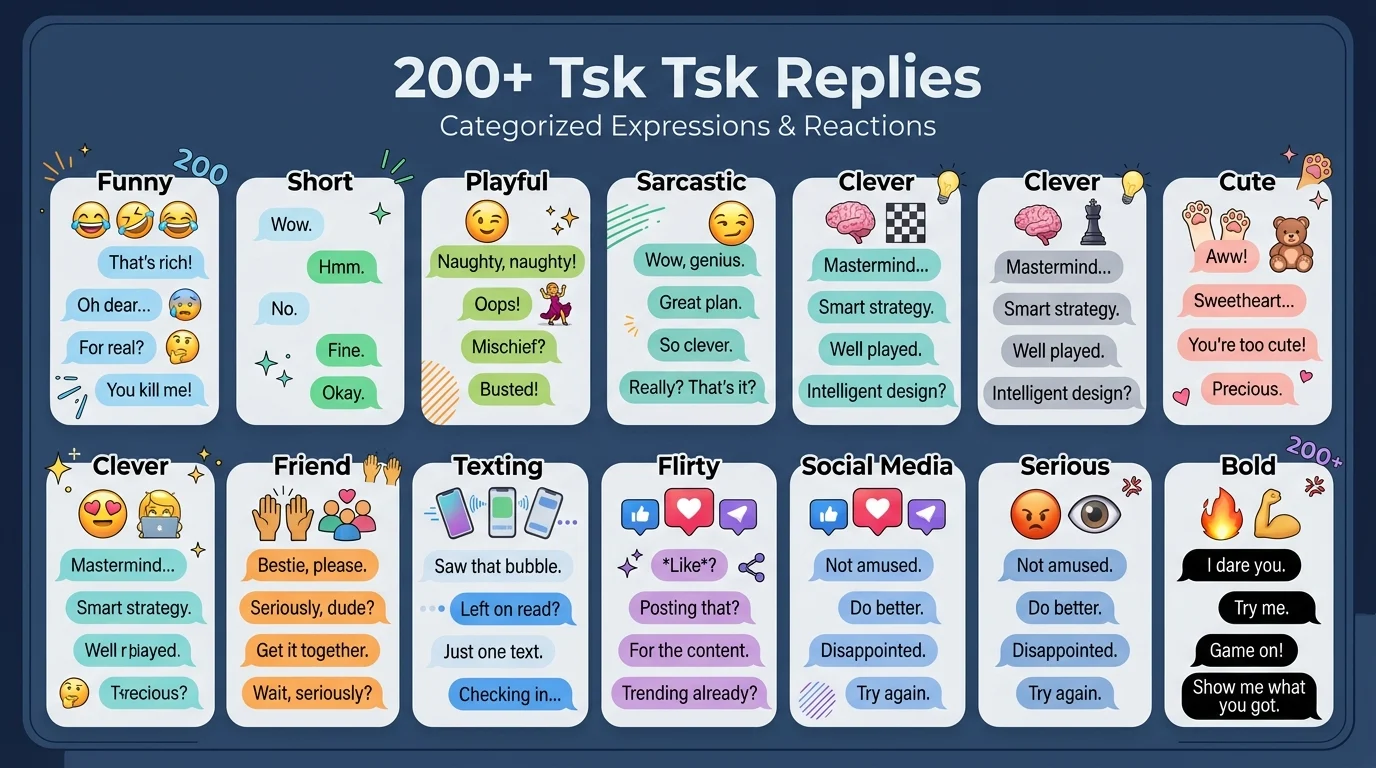
Quick Ans: If someone sends you “Tsk tsk,” your response can be funny, playful, flirty, sarcastic, or completely innocent. For a quick comeback, try “What did I do now?” If you want humor, say “That sounds dangerously judgmental.” For a playful reply, try “Don’t tsk me unless you’re ready for an explanation.” Meanwhile, a flirty response could be “You sound cute when you’re pretending to be disappointed.” Ultimately, the best response depends on the context and your relationship with the person.
A simple “Tsk tsk” can communicate a surprising amount. Depending on the conversation, it might mean playful disappointment, teasing, mock judgment, mild annoyance, disbelief, or even flirtation. Because of that, figuring out the right response can sometimes be harder than it seems.
For example, when a close friend sends “Tsk tsk,” they may simply be teasing you about something silly. On the other hand, someone you barely know might genuinely be expressing disapproval. Likewise, a crush could use it as a playful way to get your attention. Therefore, your reply should match both the tone and the relationship.
Fortunately, you do not have to overthink it. A short response can work perfectly, while a witty comeback can turn the exchange into a fun conversation. Moreover, you can use “Tsk tsk” as an opening for humor, flirting, teasing, or even a little harmless drama.
Below, you will find ready-to-send Tsk tsk replies for texts, social media, friendships, flirting, awkward moments, and everyday conversations.
Funny Tsk Tsk Replies
When someone says “Tsk tsk” in a playful way, humor is usually the easiest route. These responses turn their mock disapproval into something funny.
- What did I do now?
Use this when you want to play innocent.
Meaning: You are jokingly asking what earned their disapproval. - That sounds dangerously judgmental.
Use this when someone is clearly teasing you.
Meaning: You are humorously calling out their judgment. - Please save the dramatic disappointment.
Use this when their “tsk tsk” feels exaggerated.
Meaning: You are joking that they are being overly dramatic. - Was that a tsk or two tsk’s?
Use this when you want to make their message sillier.
Meaning: You are pretending the number of tsk’s matters. - I feel judged from here.
Use this when you want a playful response.
Meaning: You are joking that their message feels disapproving. - And here I thought we were friends.
Use this when a friend teases you.
Meaning: You are pretending their playful judgment betrayed the friendship. - I reject this level of tsking.
Use this when you want an exaggerated comeback.
Meaning: You are humorously protesting their reaction. - That tsk had attitude.
Use this when their message sounds particularly dramatic.
Meaning: You are joking about the tone behind their response. - Okay, grandma, calm down.
Use this only with someone close enough for playful teasing.
Meaning: You are jokingly portraying their reaction as old-fashioned disapproval. - I’ll pretend I didn’t hear that.
Use this when you want a lighthearted response.
Meaning: You are playfully refusing to acknowledge their judgment. - Not the double tsk!
Use this when they send “tsk tsk.”
Meaning: You are humorously exaggerating how serious their reaction sounds. - I suddenly feel like I’m in trouble.
Use this when you want to play innocent.
Meaning: You are joking that their response sounds authoritative.
Short Tsk Tsk Replies
Sometimes, the best response is short and effortless. These options work especially well for text messages and quick social media exchanges.
- What?
Use this when you want to sound genuinely curious.
Meaning: You are asking why they reacted that way. - Oops.
Use this when you want to playfully admit something.
Meaning: You are lightly acknowledging whatever caused the reaction. - Guilty.
Use this when you want to own the situation.
Meaning: You are jokingly admitting responsibility. - Oh no.
Use this when you want to exaggerate the situation.
Meaning: You are playfully pretending their reaction is serious. - My bad.
Use this for a casual apology.
Meaning: You acknowledge the issue without making it dramatic. - Excuse me?
Use this when you want playful attitude.
Meaning: You are humorously challenging their judgment. - Noted.
Use this when you want a dry response.
Meaning: You acknowledge the message without necessarily agreeing. - Okay, judge.
Use this with a friend who is teasing you.
Meaning: You are playfully calling them judgmental. - I see you.
Use this when you want a teasing response.
Meaning: You recognize their playful disapproval. - Fair.
Use this when their reaction is understandable.
Meaning: You acknowledge their point without overexplaining. - Tsk yourself.
Use this when you want to return the teasing.
Meaning: You are playfully sending the same reaction back. - And?
Use this when you want confident energy.
Meaning: You are challenging them to explain their reaction.
Playful Tsk Tsk Replies
If the conversation is friendly, you can use their “tsk tsk” as an invitation to tease them right back. Consequently, the exchange can become much more entertaining.
- Don’t tsk me like you’re disappointed.
Use this when their reaction is clearly playful.
Meaning: You are teasing them for acting disapproving. - You sound very concerned.
Use this when they are reacting dramatically.
Meaning: You are playfully exaggerating their concern. - Are we judging now?
Use this when you want to challenge them jokingly.
Meaning: You are calling attention to their mock judgment. - That little tsk is not intimidating.
Use this when they are trying to tease you.
Meaning: You are playfully refusing to be affected. - Careful, I might tsk back.
Use this when you want to escalate the banter.
Meaning: You are threatening a playful retaliation. - You’re enjoying this way too much.
Use this when they seem amused by your situation.
Meaning: You are teasing them for enjoying your embarrassment. - I know that tsk came with a smirk.
Use this when you know they are joking.
Meaning: You are pretending to see their facial expression through text. - That sounded personal.
Use this when they send an exaggerated “tsk tsk.”
Meaning: You are joking that their reaction has become dramatic. - Should I be worried?
Use this when you want playful suspense.
Meaning: You are pretending their reaction sounds serious. - You really practiced that tsk, didn’t you?
Use this when you want to tease them.
Meaning: You are joking that they deliberately perfected the reaction. - Okay, drama referee.
Use this when someone is acting like they are judging your behavior.
Meaning: You are playfully giving them an exaggerated title. - Fine, I’ll behave… maybe.
Use this when you want a mischievous response.
Meaning: You are pretending to accept their warning while keeping the teasing alive.
Sarcastic Tsk Tsk Replies
A sarcastic response can work well when someone is being overly judgmental. However, use these with people who understand your humor so the message does not sound genuinely hostile.
- Thank you for your valuable judgment.
Use this when someone is mock-criticizing you.
Meaning: You are sarcastically pretending their opinion is official advice. - I’ll alert the committee immediately.
Use this when their reaction feels overly serious.
Meaning: You are joking that their tsk requires formal action. - Your disappointment has been officially documented.
Use this when you want dry humor.
Meaning: You are exaggerating their reaction for comedic effect. - I’ll try to recover from this devastating tsk.
Use this when they are teasing you.
Meaning: You are pretending their reaction deeply affected you. - Please give me a moment to process this judgment.
Use this when you want theatrical sarcasm.
Meaning: You are joking that their opinion is extremely serious. - How will I ever move past this?
Use this when their “tsk” is clearly harmless.
Meaning: You are dramatically exaggerating your response. - I’ll take that under absolutely no consideration.
Use this when you want playful defiance.
Meaning: You are joking that you have no intention of changing. - Your concern has been noted and ignored.
Use this when the relationship allows dry humor.
Meaning: You acknowledge their reaction while refusing to take it seriously. - Such disappointment. Such drama.
Use this when they are making a big deal out of something small.
Meaning: You are mocking the dramatic tone. - Please, contain your judgment.
Use this when you want a short sarcastic comeback.
Meaning: You are pretending their reaction is excessive. - I expected better from you, honestly.
Use this when you want to reverse the teasing.
Meaning: You are jokingly making them the guilty party. - That tsk really thought it was going to change me.
Use this when you want confident sarcasm.
Meaning: You are saying their disapproval will not influence you.
Flirty Tsk Tsk Replies
When “tsk tsk” comes from someone you like, you can easily turn it into flirtation. In fact, playful disagreement often creates an easy way to build chemistry.
- You sound cute when you’re disappointed in me.
Use this when the conversation is already flirty.
Meaning: You are turning their teasing into a compliment. - Are you flirting with me through judgment now?
Use this when they keep teasing you.
Meaning: You are playfully suggesting their teasing is flirtation. - That tsk almost sounded adorable.
Use this when you want a soft flirt.
Meaning: You are complimenting their reaction. - You only tsk because you like my attention.
Use this when you want confident teasing.
Meaning: You are suggesting their reaction comes from interest in you. - I can behave if you ask nicely.
Use this when you want a playful flirt.
Meaning: You are inviting them to engage more directly. - Careful, that tsk is making me want to tease you more.
Use this when the banter is strong.
Meaning: Their reaction is encouraging you to continue flirting. - You’re kind of cute when you pretend to be disappointed.
Use this when you want affectionate teasing.
Meaning: You are complimenting them while challenging their seriousness. - Do you really want me to behave?
Use this when the conversation is playful.
Meaning: You are teasing them and inviting a response. - That tsk sounds like you want my attention.
Use this when they keep reacting to you.
Meaning: You are suggesting they enjoy engaging with you. - I think you secretly like when I misbehave.
Use this only when the relationship supports that level of flirting.
Meaning: You are playfully implying they enjoy your mischievous side. - You can keep tsking if it means you keep talking to me.
Use this when you want a softer flirt.
Meaning: You are saying you enjoy their attention regardless of the teasing. - I might behave if you give me a good reason.
Use this when you want playful mystery.
Meaning: You are inviting them to keep the conversation going.
Cute Tsk Tsk Replies
Sometimes “tsk tsk” is not serious at all. Instead, it is an adorable way of teasing someone. These replies match that softer energy.
- Aww, are you disappointed in me?
Use this when you want to sound playfully innocent.
Meaning: You are pretending their teasing matters deeply. - Don’t be mad at me.
Use this when the other person is joking.
Meaning: You are playfully asking them to stop pretending to be upset. - I’m trying my best!
Use this when you want an innocent response.
Meaning: You are jokingly defending yourself. - Okay, I’ll be good.
Use this when you want to play along.
Meaning: You are pretending to accept their playful warning. - Oopsie.
Use this for a cute, casual response.
Meaning: You are lightly admitting fault. - Fine, you caught me.
Use this when they noticed something you did.
Meaning: You are playfully accepting responsibility. - But I’m too cute to be in trouble.
Use this when you want cute confidence.
Meaning: You are joking that your charm should protect you. - Forgive me?
Use this when you want a tiny playful apology.
Meaning: You are asking for forgiveness in a cute way. - I promise I’m innocent.
Use this when you want to pretend you did nothing wrong.
Meaning: You are playfully denying responsibility. - Okay, okay, I get the message.
Use this when you want a lighthearted response.
Meaning: You acknowledge their teasing. - That tsk hurt my feelings.
Use this when you want exaggerated cuteness.
Meaning: You are jokingly pretending to be emotionally wounded. - Can I make it up to you?
Use this when you want to continue the playful exchange.
Meaning: You are inviting them to keep talking.
Clever Tsk Tsk Replies
If you prefer witty wordplay, these responses can make a simple “tsk tsk” conversation much more interesting.
- Was that judgment or applause in disguise?
Use this when you want to confuse the meaning playfully.
Meaning: You are questioning what their reaction really means. - Interesting choice of punctuation.
Use this when they send “tsk tsk” as a text.
Meaning: You are humorously analyzing their message. - I detect disappointment with a hint of affection.
Use this when someone close is teasing you.
Meaning: You are suggesting their judgment is not entirely serious. - That reaction deserves a backstory.
Use this when you want them to explain themselves.
Meaning: You are asking why they reacted that way. - A fascinating response from someone who knows me.
Use this when a friend judges you.
Meaning: You are teasing them for acting surprised. - That was a very editorial tsk.
Use this when their response sounds dramatic.
Meaning: You are joking that their tsk feels like commentary. - I see we’ve entered the judgment phase.
Use this when they start teasing you.
Meaning: You are playfully naming the moment. - Should I expect a formal review next?
Use this when someone seems overly critical.
Meaning: You are exaggerating their judgment for humor. - Your tsk has been received loud and clear.
Use this when you want a polished joke.
Meaning: You acknowledge their reaction without taking it seriously. - That was a whole paragraph disguised as two words.
Use this when “tsk tsk” clearly communicates a lot.
Meaning: You are joking about the emotional weight behind their response. - I feel a strongly worded message coming.
Use this when their reaction seems serious.
Meaning: You are teasing them about what they might say next. - Noted for future mischief.
Use this when you want a clever comeback.
Meaning: You are joking that their reaction has inspired more playful behavior.
Tsk Tsk Replies for Friends
Friends can usually handle more teasing, exaggeration, and playful attitude. Therefore, these responses work well in casual chats.
- Oh, here we go.
Use this when your friend starts judging you.
Meaning: You expect more teasing from them. - Don’t start with me.
Use this when you want playful resistance.
Meaning: You are pretending they are about to cause trouble. - You know me too well.
Use this when they caught you doing something predictable.
Meaning: You are admitting they understand your habits. - I knew you were going to say that.
Use this when their reaction was predictable.
Meaning: You are playfully acknowledging their personality. - You sound like my disappointed parent.
Use this with a very close friend.
Meaning: You are joking about how serious their reaction sounds. - One little tsk and suddenly you’re in charge.
Use this when they act authoritative.
Meaning: You are teasing them for pretending to have authority over you. - Friendship revoked for excessive judgment.
Use this when you want exaggerated humor.
Meaning: You are jokingly threatening to end the friendship. - I expected support, not tsking.
Use this when they tease you instead of defending you.
Meaning: You are pretending to be disappointed in their response. - Okay, I’ll add “stop tsking me” to the friendship rules.
Use this when you want a silly comeback.
Meaning: You are inventing a humorous rule for the friendship. - You love having something to tease me about.
Use this when their teasing is affectionate.
Meaning: You recognize that their judgment is part of your friendship dynamic. - Fine, but I’m still doing it.
Use this when you want playful defiance.
Meaning: You hear their opinion but intend to continue. - That tsk was personal, bestie.
Use this for a close friend.
Meaning: You are joking that their reaction hit differently because they know you well.
Tsk Tsk Replies for Someone Who Is Annoyed
If the “tsk tsk” sounds genuinely annoyed, a calmer response may prevent the conversation from becoming more tense. First, figure out whether they want an explanation, an apology, or simply acknowledgment.
- Okay, I hear you.
Use this when you want to acknowledge their frustration.
Meaning: You are showing that you are listening. - I understand why that bothered you.
Use this when their reaction is understandable.
Meaning: You are validating their feelings. - Fair enough. I could have handled that better.
Use this when you recognize your mistake.
Meaning: You are accepting responsibility without overexplaining. - My bad. I didn’t mean to annoy you.
Use this when the situation was accidental.
Meaning: You are apologizing sincerely. - I get it. I’ll be more careful next time.
Use this when you want to move forward.
Meaning: You acknowledge their concern and offer to adjust. - Okay, point taken.
Use this when you want a concise response.
Meaning: You accept the message behind their reaction. - I didn’t realize it came across that way.
Use this when there was a misunderstanding.
Meaning: You are explaining without becoming defensive. - Thanks for telling me. I’ll keep that in mind.
Use this when you want a mature response.
Meaning: You appreciate their honesty and acknowledge the feedback. - I’m sorry about that.
Use this when a direct apology is appropriate.
Meaning: You accept that your action caused an issue. - Let’s talk about it instead of tsking at each other.
Use this when you want to move toward a real conversation.
Meaning: You prefer communication over passive frustration. - I hear the disappointment.
Use this when their tone is clearly serious.
Meaning: You recognize their emotional reaction. - I understand. Let’s sort it out.
Use this when you want to resolve the situation.
Meaning: You are offering cooperation instead of arguing.
Sarcastic Tsk Tsk Replies for Texting
Text messages make “tsk tsk” especially easy to exaggerate. You can respond with dry humor, dramatic reactions, or playful one-liners.
- The judgment has arrived.
Use this when someone suddenly starts teasing you.
Meaning: You are humorously announcing their disapproval. - Should I prepare my defense?
Use this when they seem ready to criticize you.
Meaning: You are pretending the situation is a formal trial. - I request legal representation.
Use this when you want absurd humor.
Meaning: You are joking that their tsk requires a formal defense. - I have nothing to say without my lawyer.
Use this when you want exaggerated sarcasm.
Meaning: You are pretending the situation is much more serious than it is. - Objection, Your Honor.
Use this when you want to turn the conversation into a joke.
Meaning: You are playfully challenging their judgment. - That tsk will be mentioned in my memoir.
Use this when their reaction is funny.
Meaning: You are dramatically pretending it was a life-changing event. - I’ll be recovering from this for several business days.
Use this when you want modern sarcastic humor.
Meaning: You are exaggerating the emotional impact. - I need a minute to process this level of disappointment.
Use this when their reaction is playful.
Meaning: You are pretending their tsk was devastating. - Please submit your complaint in writing.
Use this when you want dry humor.
Meaning: You are joking that their judgment requires official paperwork. - Your tsk has been escalated to management.
Use this when you want workplace-style humor.
Meaning: You are pretending the complaint is being formally handled. - I’ll pretend this never happened.
Use this when you want a light response.
Meaning: You are playfully dismissing their reaction. - That sounded expensive.
Use this when you want an absurd comeback.
Meaning: You are joking that their disapproval carries serious consequences.
Tsk Tsk Replies for Social Media Comments
When someone comments “tsk tsk” on your post, a short response is usually best. After all, social media banter works better when the comeback is quick.
- Caught me.
Use this when their comment refers to something obvious.
Meaning: You are playfully admitting what they noticed. - No regrets.
Use this when you stand by what you posted.
Meaning: You are confidently refusing to feel guilty. - You love it.
Use this when their comment is clearly teasing.
Meaning: You are suggesting they secretly enjoy your behavior. - Stay tuned.
Use this when more playful content is coming.
Meaning: You are joking that the situation is not over. - The tsk has been noted.
Use this when you want dry humor.
Meaning: You acknowledge their comment without taking it seriously. - I knew you’d comment.
Use this when their reaction was predictable.
Meaning: You expected them to tease you. - That’s engagement, thanks.
Use this when you want social-media humor.
Meaning: You are joking that their criticism still helps your post. - The audience has spoken.
Use this when multiple people are reacting.
Meaning: You are playfully treating the comments like a public vote. - You could have scrolled, but here we are.
Use this when someone is teasing you in the comments.
Meaning: You are joking that they chose to engage anyway. - I’ll take that as attention.
Use this when you want confident humor.
Meaning: You are turning their reaction into a sign that they noticed you. - Tsk received. Chaos continues.
Use this when you want a playful social reply.
Meaning: Their reaction will not stop your fun. - Thanks for stopping by.
Use this when you want polite sarcasm.
Meaning: You are jokingly treating their comment like a visitor.
FAQs About Tsk Tsk Replies
What does “tsk tsk” mean in texting?
“Tsk tsk” usually expresses disapproval, disappointment, teasing, or mild annoyance. However, the exact meaning depends on context, tone, and the relationship between the people involved.
Is “tsk tsk” rude?
Not always. Among friends, it can be playful or affectionate. Nevertheless, if someone uses it during a disagreement, it may communicate genuine disapproval.
What is the best response to “tsk tsk”?
A simple response such as “What did I do?” works in many situations. If the tone is playful, “You sound very judgmental” can add humor.
How do I respond to “tsk tsk” from my crush?
You can make it flirty. For example, say “You sound cute when you’re disappointed in me.” Alternatively, try “I think you secretly like my mischief.”
What is a funny response to “tsk tsk”?
Try “Was that a tsk or two tsk’s?” Another funny option is “I’ll be recovering from this devastating tsk.” Both exaggerate the situation for humor.
Can I reply with “tsk tsk” back?
Absolutely. Saying “Tsk yourself” or simply “Tsk tsk right back” can create playful banter, especially with friends.
What should I say if someone is genuinely annoyed?
If their tone seems serious, avoid escalating the situation. Instead, try “Okay, I hear you” or “I understand why that bothered you.” A sincere response is usually more helpful than sarcasm.
Is “tsk tsk” passive-aggressive?
It can be, depending on context. If someone uses it instead of directly explaining their frustration, it may come across as dismissive. However, friends often use the phrase purely for playful teasing.
What is a short reply to “tsk tsk”?
You can say “Oops,” “Guilty,” “What?” “Fair,” “Noted,” or “And?” The best choice depends on whether you want to sound innocent, confident, or playful.
Can “tsk tsk” be flirty?
Yes. In a playful conversation, it can be an easy way to tease someone. Consequently, a flirty response such as “You only tsk because you like my attention” can keep the chemistry going.
How do I respond without sounding rude?
Choose a light response that acknowledges the message without attacking the sender. For example, “Okay, okay, I get the message” works well when you want to keep things friendly.
What is a clever response to “tsk tsk”?
Try “That was a whole paragraph disguised as two words.” It is clever because it jokes about how much emotion can be communicated through a tiny expression.
Conclusion
A “tsk tsk” message can mean many different things, so your response should match the situation. If a friend is teasing you, a funny or playful comeback can keep the conversation entertaining. Meanwhile, if your crush sends it, you can easily turn the moment into light flirting. On the other hand, if someone sounds genuinely annoyed, a calm acknowledgment may work much better than sarcasm. Fortunately, you have plenty of options, from quick replies like “Guilty” and “Noted” to witty lines like “That was a whole paragraph disguised as two words.” Ultimately, the best reply is the one that sounds natural for you and fits the tone of the conversation.

Emma Writes is a passionate content writer at ResponsCraft.com, creating practical, well-researched articles that help readers make informed decisions. She enjoys turning complex topics into clear, engaging and easy-to-follow content.