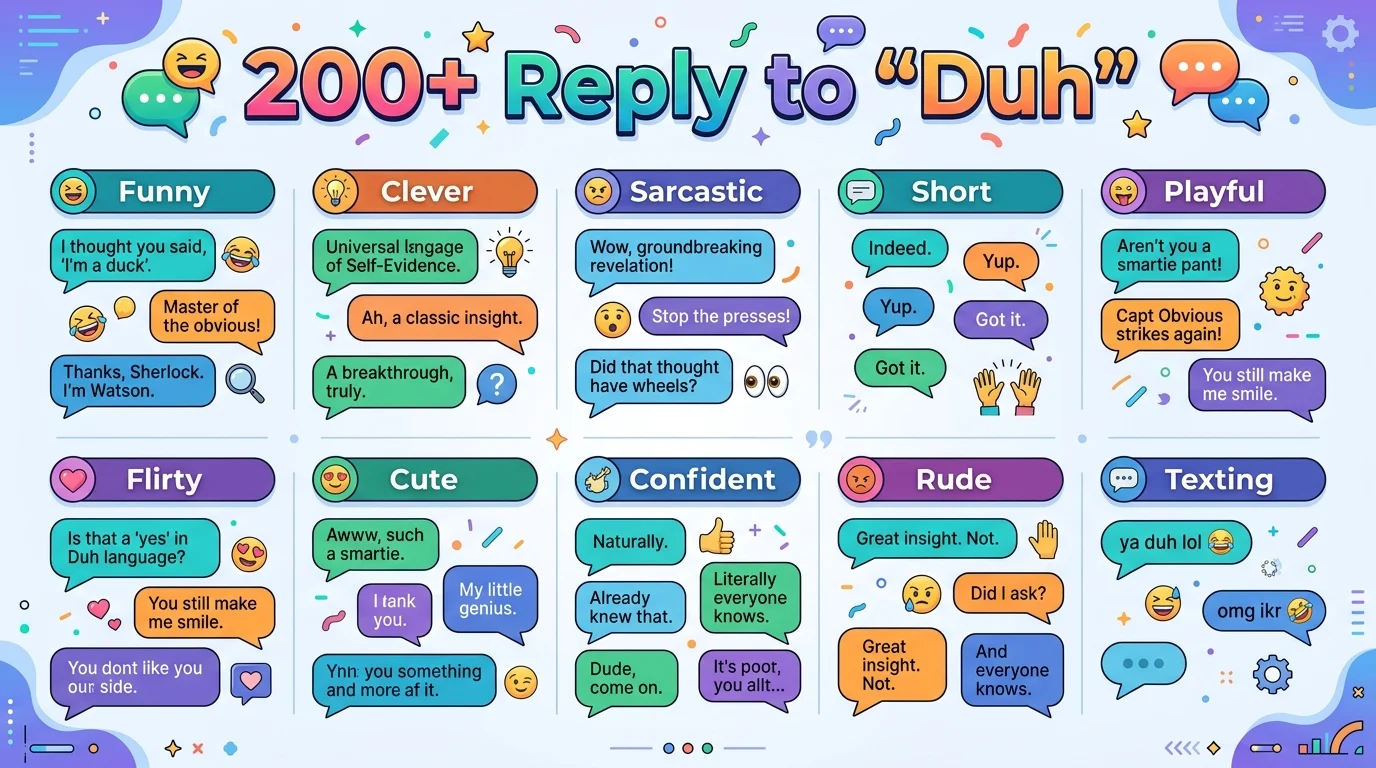
Quick Ans: If someone says “duh” to you, the best reply depends on their tone. If they are joking, you can answer with “Wow, thank you for that groundbreaking information.” For a playful comeback, try “I knew you’d understand eventually.” If you want something short, “Glad we agree.” works perfectly. Meanwhile, a flirty reply could be “Cute when you’re confident, huh?” If their “duh” feels dismissive, you can stay calm with “No need to make it sound obvious.” Therefore, whether you want to be funny, clever, sarcastic, flirty, cute, or confident, there is a response for every kind of “duh.”
The word “duh” can mean very different things depending on the conversation. Sometimes, it is playful and harmless. A friend might say “duh” because the answer was obvious, while someone else might use it to tease you. However, in a different tone, “duh” can sound dismissive or slightly condescending.
That is why your response matters. Instead of getting annoyed, you can match their energy with a witty comeback. For example, you can joke about their obvious observation, tease them back, or simply agree and move on. Likewise, if the conversation is flirty, you can turn “duh” into an opportunity for playful chemistry.
Fortunately, you do not have to overthink it. Whether you need a funny text, a clever comeback, a sarcastic response, or a short one-liner, this guide has plenty of ready-to-send replies to “duh.” Choose the one that fits your personality, relationship, and the mood of the conversation.
Funny Replies to “Duh”
A funny comeback is perfect when the person is clearly teasing you. Instead of taking “duh” seriously, you can make the moment even more entertaining.
- Wow, thank you for that groundbreaking information.
Use this when you want to jokingly exaggerate how obvious their statement was.
Meaning: You are pretending their comment was an important discovery. - Glad we finally established that.
Use this when you want a dry and playful response.
Meaning: You are humorously acting as though the obvious fact needed official confirmation. - Breaking news: You figured it out.
Use this when someone is acting overly confident.
Meaning: You are playfully teasing them for stating something obvious. - Congratulations, detective.
Use this when their “duh” sounds like a big revelation.
Meaning: You are joking that they deserve credit for noticing something obvious. - Thank you for your valuable contribution.
Use this when you want a sarcastic but light response.
Meaning: You are pretending their one-word comment was extremely helpful. - Your genius is showing again.
Use this when joking with a friend who loves being right.
Meaning: You are playfully exaggerating their intelligence. - I was waiting for your expert opinion.
Use this when you want to tease them.
Meaning: You are pretending their obvious response was highly anticipated. - And there we have it, folks.
Use this when you want to make the exchange dramatic.
Meaning: You are humorously presenting their statement like an important announcement. - You solved the mystery. Impressive.
Use this when they point out something obvious.
Meaning: You are playfully congratulating them. - Okay, professor, calm down.
Use this when they sound overly certain.
Meaning: You are teasing them for acting like an expert. - That confidence deserves its own award.
Use this when they respond with obvious certainty.
Meaning: You are joking about how confidently they said it. - Thank goodness you were here to clarify.
Use this when you want exaggerated humor.
Meaning: You are pretending their comment rescued the situation.
Clever Replies to “Duh”
Sometimes, a clever answer works better than a basic joke. These responses are witty without being unnecessarily harsh.
- I knew that. I was testing you.
Use this when you want to playfully reverse the situation.
Meaning: You are joking that you already knew the answer. - I was giving you a chance to feel smart.
Use this when the other person is being smug.
Meaning: You are teasing them while turning their confidence into a joke. - Excellent observation. Gold star.
Use this when they point out something obvious.
Meaning: You are playfully rewarding their observation. - And yet, here we are discussing it.
Use this when the conversation is going in circles.
Meaning: You are pointing out that obvious things can still be discussed. - Obviously, but your enthusiasm is appreciated.
Use this when you want a polite witty reply.
Meaning: You acknowledge the obvious answer while teasing their delivery. - I was looking for confirmation, not a lecture.
Use this when “duh” sounds dismissive.
Meaning: You wanted a simple response rather than attitude. - Correct. You may proceed.
Use this when you want a mock-authoritative tone.
Meaning: You are humorously acting like you are approving their answer. - Thank you for confirming my suspicions.
Use this when their response supports what you already thought.
Meaning: Their answer has confirmed something you already believed. - That was almost too obvious to say out loud.
Use this when you want dry humor.
Meaning: You are joking about how obvious the statement was. - I appreciate the confidence.
Use this when they sound very sure of themselves.
Meaning: You are teasing their certainty without directly arguing. - We agree. Miracles do happen.
Use this when you want a playful twist.
Meaning: You are joking about reaching agreement. - Glad your obviousness is working overtime today.
Use this with someone who enjoys sarcastic banter.
Meaning: You are playfully teasing them for stating the obvious.
Sarcastic Replies to “Duh”
When “duh” comes across as dismissive, sarcasm can help you push back without turning the conversation into a serious argument.
- Oh, I’m sorry. I forgot you invented obviousness.
Use this when they are acting overly superior.
Meaning: You are sarcastically challenging their attitude. - Thank you, captain obvious.
Use this for playful sarcasm.
Meaning: You are calling out how obvious their response is. - Your contribution has been noted.
Use this when you want dry humor.
Meaning: You are acknowledging their comment without giving it much importance. - I’ll alert the press immediately.
Use this when their statement is ridiculously obvious.
Meaning: You are exaggerating the importance of what they said. - Groundbreaking. Truly groundbreaking.
Use this when you want obvious sarcasm.
Meaning: You are pretending their comment is a major discovery. - Please, save some genius for the rest of us.
Use this when they are acting too clever.
Meaning: You are teasing them for showing off. - What would we do without your wisdom?
Use this when you want exaggerated sarcasm.
Meaning: You are pretending their comment was essential. - I’ll try to survive this level of intelligence.
Use this with a friend who enjoys banter.
Meaning: You are jokingly exaggerating their confidence. - Thank you for explaining the obvious to me.
Use this when “duh” feels condescending.
Meaning: You are directly pointing out that their response was unnecessary. - Noted, your majesty.
Use this when you want playful sarcasm.
Meaning: You are joking that they are acting superior. - I’m deeply moved by your insight.
Use this when you want dry humor.
Meaning: You are pretending their obvious statement was profound. - That attitude came with the answer, I see.
Use this when their tone matters more than their words.
Meaning: You are subtly calling attention to their dismissive attitude.
Short Replies to “Duh”
If you are texting, you may not want to write a whole paragraph. Fortunately, these short responses can keep the conversation moving.
- Obviously.
Use this when you want to match their energy.
Meaning: You are agreeing while keeping the response brief. - Glad you noticed.
Use this when you want playful confidence.
Meaning: You are teasing them for finally recognizing something. - Exactly.
Use this when you want to agree naturally.
Meaning: You confirm that their observation is correct. - We agree, then.
Use this when you want a calm response.
Meaning: You are turning the exchange into agreement. - You got it.
Use this when you want to keep things casual.
Meaning: You acknowledge their point without overexplaining. - Gold star.
Use this when you want playful sarcasm.
Meaning: You are jokingly congratulating them. - Good catch.
Use this when they noticed something correctly.
Meaning: You are acknowledging their observation. - Look at you.
Use this when you want to tease them.
Meaning: You are playfully commenting on their confidence. - Big brain moment.
Use this when you want internet-style humor.
Meaning: You are jokingly praising an obvious observation. - You’re learning.
Use this when you want a teasing comeback.
Meaning: You are joking that they are gradually figuring things out. - Correct, genius.
Use this when you want playful sarcasm.
Meaning: You are humorously praising them for stating the obvious. - As expected.
Use this when you want a dry response.
Meaning: You are implying that their answer was predictable.
Playful Replies to “Duh”
If the conversation is friendly, you can use a response that keeps the banter going. Moreover, playful replies can show that you are not bothered.
- You make “duh” sound adorable.
Use this when you want to soften the exchange.
Meaning: You are turning their teasing into something cute. - Okay, smart one.
Use this when they are confidently teasing you.
Meaning: You are playfully acknowledging their confidence. - Look at you being all certain.
Use this when you want to tease them.
Meaning: You are joking about how confident they sound. - I knew you’d say that.
Use this when their response was predictable.
Meaning: You are playfully showing that you know them well. - You’re enjoying this way too much.
Use this when they keep teasing you.
Meaning: You are pointing out that they are having fun with the exchange. - Okay, okay, you win this round.
Use this when you want to keep the interaction friendly.
Meaning: You are playfully admitting their point. - Fine, I’ll give you that one.
Use this when they make a fair observation.
Meaning: You are conceding while keeping a playful tone. - Someone woke up confident today.
Use this when their “duh” sounds particularly bold.
Meaning: You are teasing their unusually strong confidence. - I see we’re feeling clever today.
Use this when they are being smug.
Meaning: You are playfully calling out their attitude. - Don’t get too proud of yourself.
Use this when they seem pleased with being right.
Meaning: You are teasing them for enjoying the victory. - Okay, professor, I hear you.
Use this when they are acting knowledgeable.
Meaning: You are playfully exaggerating their expertise. - Fine, you got me. Happy now?
Use this when you want to pretend they won.
Meaning: You are keeping the exchange light while acknowledging their point.
Flirty Replies to “Duh”
If the person saying “duh” is someone you like, you can use the moment to flirt. Instead of defending yourself, turn their confidence into chemistry.
- Cute when you’re confident.
Use this when you want a subtle flirt.
Meaning: You are complimenting their confidence while teasing them. - You’re adorable when you say it like that.
Use this when the conversation is already affectionate.
Meaning: You are turning their teasing into a compliment. - I like that confidence.
Use this when you find their attitude attractive.
Meaning: You are directly complimenting their self-assurance. - Careful, that confidence is attractive.
Use this when you want a slightly bolder flirt.
Meaning: You are telling them their attitude appeals to you. - You sound pretty cute saying “duh.”
Use this when you want playful affection.
Meaning: You are making their teasing part of the flirtation. - Is that your way of flirting with me?
Use this when their teasing feels intentional.
Meaning: You are inviting them to admit romantic interest. - Keep talking like that and I might start liking you more.
Use this when there is already chemistry.
Meaning: You are playfully suggesting their confidence is attractive. - You’re pretty confident for someone who likes talking to me this much.
Use this when they keep engaging with you.
Meaning: You are teasing them about their obvious interest. - I see you’ve got attitude. I kind of like it.
Use this when you enjoy their playful personality.
Meaning: You are openly admitting that their confidence appeals to you. - You can say “duh” if you keep being this cute.
Use this when you want a sweet flirt.
Meaning: You are rewarding their teasing with affection. - That little attitude might get you somewhere.
Use this when you want playful chemistry.
Meaning: You are teasing them while showing interest. - Okay, I’ll let you be right this time. You’re cute.
Use this when you want a light romantic response.
Meaning: You are combining playful surrender with a compliment.
Cute Replies to “Duh”
Sometimes the best response is soft and affectionate. These replies are especially useful with close friends, siblings, partners, or someone who naturally jokes with you.
- Okayyy, smartie.
Use this when you want a cute teasing response.
Meaning: You are playfully acknowledging their confidence. - Aww, look at you knowing things.
Use this when you want affectionate teasing.
Meaning: You are jokingly praising them. - Someone’s feeling clever today.
Use this when their confidence is amusing.
Meaning: You are teasing them in a lighthearted way. - Fine, you’re right. Happy now?
Use this when you want to playfully surrender.
Meaning: You are acknowledging their point without making it serious. - Okay, little genius.
Use this when you want a sweet joke.
Meaning: You are affectionately exaggerating their intelligence. - I’ll give you that one.
Use this when their response is fair.
Meaning: You are admitting they have a point. - You’re funny when you get like this.
Use this when you enjoy their teasing.
Meaning: You are telling them their confidence is entertaining. - Alright, smarty pants.
Use this with a close friend or partner.
Meaning: You are playfully calling them clever. - Okay, I see you.
Use this when you want a casual, affectionate response.
Meaning: You acknowledge their confidence with playful approval. - Don’t let that one answer go to your head.
Use this when they seem proud.
Meaning: You are teasing them before their confidence grows too much. - You’re pleased with yourself, aren’t you?
Use this when they are clearly enjoying being right.
Meaning: You are playfully calling out their satisfaction. - Fine, you win. Here’s your imaginary trophy.
Use this when you want cute humor.
Meaning: You are jokingly rewarding their victory.
Confident Replies to “Duh”
You do not have to match someone’s attitude with more attitude. Instead, you can respond confidently and keep control of the conversation.
- Yes, I know. I was simply making a point.
Use this when they misunderstand your intention.
Meaning: You are calmly clarifying that you already knew. - Exactly, so we’re on the same page.
Use this when you want to move forward.
Meaning: You are turning their response into agreement. - Glad we agree.
Use this when you want to stay composed.
Meaning: You are refusing to let the tone bother you. - No worries, I just wanted to make sure.
Use this when you were seeking confirmation.
Meaning: You explain your reason without becoming defensive. - I know. I wanted your take on it.
Use this when you were asking for their opinion.
Meaning: You are reminding them that you wanted conversation, not correction. - You can be right without being dismissive.
Use this when “duh” genuinely bothers you.
Meaning: You are calmly setting a boundary around their tone. - I understand. There’s no need for the attitude, though.
Use this when their response feels unnecessarily rude.
Meaning: You are addressing the delivery rather than the content. - Fair enough. Let’s move on.
Use this when you do not want an argument.
Meaning: You acknowledge their point and close the issue. - I appreciate the confirmation.
Use this when you want to remain polite.
Meaning: You are keeping your response controlled and neutral. - Yes, obviously. I was just asking.
Use this when they misunderstood a simple question.
Meaning: You are clarifying that you were not confused. - We got there eventually.
Use this when you want mild humor.
Meaning: You are acknowledging the agreement without escalating. - Good, then we understand each other.
Use this when you want a mature ending.
Meaning: You are focusing on mutual understanding.
Comebacks to “Duh” From a Friend
Friends often use “duh” as playful teasing. Therefore, your response can be equally casual, dramatic, or sarcastic.
- You’re lucky I like you.
Use this when your friend is being cheeky.
Meaning: You are joking that their attitude would otherwise annoy you. - Keep talking and I’ll start charging for my patience.
Use this when you want playful exaggeration.
Meaning: You are joking about tolerating their teasing. - You really woke up ready to be annoying today.
Use this when your friend is especially teasing.
Meaning: You are playfully calling out their behavior. - And this is why I keep you around.
Use this when you secretly enjoy their attitude.
Meaning: You are turning the teasing into affection. - Okay, comedian, relax.
Use this when they are enjoying their joke.
Meaning: You are playfully telling them not to get carried away. - Your confidence is doing a lot today.
Use this when they sound particularly smug.
Meaning: You are teasing them about their attitude. - I can hear the smugness through the screen.
Use this for a text conversation.
Meaning: You are joking that their confidence is obvious even in writing. - You’re enjoying this way too much.
Use this when they keep teasing you.
Meaning: You know they are having fun at your expense. - Okay, you got your little moment.
Use this when you want to jokingly end their victory.
Meaning: You are allowing them a brief moment of being right. - I’ll remember this attitude.
Use this when you want playful mock revenge.
Meaning: You are joking that you will tease them later. - Noted. I’m adding this to your friendship résumé.
Use this when you want absurd humor.
Meaning: You are jokingly documenting their behavior. - Fine, you win this round.
Use this when you want to keep the exchange friendly.
Meaning: You are playfully admitting their point.
Replies to “Duh” When They Are Being Rude
Sometimes “duh” is not playful at all. If the other person is being dismissive, you can respond clearly without escalating the situation.
- You could answer without the attitude.
Use this when their tone feels unnecessarily rude.
Meaning: You are directly asking for more respectful communication. - I was asking, not making a statement.
Use this when they misunderstand your question.
Meaning: You are explaining why their response was unnecessary. - There’s no need to be dismissive.
Use this when their wording feels disrespectful.
Meaning: You are calmly identifying the problem with their tone. - If you know the answer, just say it.
Use this when you want direct communication.
Meaning: You are asking them to respond without condescension. - You can correct me without talking down to me.
Use this when you want to establish a boundary.
Meaning: You are asking for respectful treatment. - I understand the point. I do not appreciate the tone.
Use this when you want a mature response.
Meaning: You separate the information from the disrespectful delivery. - A simple answer would have worked.
Use this when “duh” was unnecessary.
Meaning: You are explaining that their attitude added nothing useful. - No problem, but you could have said that differently.
Use this when you want to stay calm.
Meaning: You are giving feedback without escalating. - I asked because I wanted clarification.
Use this when they mock your question.
Meaning: You are explaining your reason for asking. - Being obvious does not require being rude.
Use this when you want a firm comeback.
Meaning: You are pointing out that confidence does not justify disrespect. - I got the answer. You can lose the attitude now.
Use this when the exchange has become tense.
Meaning: You want the information without continued hostility. - Let’s keep the conversation respectful.
Use this when you want to end the issue maturely.
Meaning: You are setting a clear expectation for communication.
Funny Replies to “Duh” in Texts
Text messages leave plenty of room for exaggerated humor. Because tone is harder to read through text, a playful reply can also make your intention clearer.
- Duh? Please, I need a full PowerPoint presentation.
Use this when you want to exaggerate your need for information.
Meaning: You are joking that their one-word answer is not enough. - Thank you for this extremely detailed explanation.
Use this when their response is very brief.
Meaning: You are sarcastically pretending they gave you extensive information. - I’ll treasure this wisdom forever.
Use this when you want dramatic humor.
Meaning: You are exaggerating the importance of their response. - Screenshotting this historic moment.
Use this when they finally agree with you.
Meaning: You are joking that their agreement is significant. - Adding “duh” to my vocabulary immediately.
Use this when you want absurd humor.
Meaning: You are pretending their word choice is revolutionary. - Wow, my question has been thoroughly answered.
Use this when their response is intentionally minimal.
Meaning: You are teasing them for giving little information. - I expected an essay, but okay.
Use this when they respond with “duh.”
Meaning: You are joking about their extremely short answer. - Your communication skills are truly inspiring.
Use this when you want sarcastic humor.
Meaning: You are joking about how unhelpful their response is. - Duh noted. Very educational.
Use this when you want a short sarcastic text.
Meaning: You are pretending their response taught you something. - I’ll contact you again when I need another expert opinion.
Use this when they are acting like an expert.
Meaning: You are playfully exaggerating their authority. - Thank you for solving absolutely everything.
Use this when their response is amusingly obvious.
Meaning: You are pretending their comment solved a much bigger problem. - Your work here is done, detective.
Use this when you want a playful ending.
Meaning: You are joking that they successfully solved the obvious mystery.
FAQs About Replying to “Duh”
What does “duh” mean in texting?
“Duh” usually means that something seems obvious to the person saying it. However, it can be playful, sarcastic, teasing, or dismissive depending on the relationship and tone.
Is “duh” rude?
It can be. Among close friends, “duh” may simply be playful banter. However, when someone says it with a dismissive tone, it can feel condescending. Therefore, consider the context before responding.
What is a funny reply to “duh”?
You can say “Congratulations, detective.” Another option is “Wow, thank you for that groundbreaking information.” Both responses turn their obvious comment into a joke.
What is a good short reply to “duh”?
Try “Obviously.”, “Exactly.”, “Glad you noticed.”, or “Gold star.” These work especially well in quick text conversations.
How do I reply to “duh” from my crush?
A flirty answer could be “Cute when you’re confident.” You could also say, “Careful, that confidence is attractive.” These responses turn teasing into playful chemistry.
How do I respond if “duh” feels rude?
Stay calm and address the tone. For example, say “You can answer without the attitude.” Alternatively, try “I understand the point, but I do not appreciate the tone.”
Can I respond with sarcasm?
Yes, especially if the relationship already includes sarcastic humor. For example, “Groundbreaking. Truly groundbreaking.” works when you want to tease them for stating something obvious.
What does it mean if a friend says “duh”?
Usually, a friend saying “duh” is simply teasing you or pointing out something obvious. Nevertheless, their tone still matters. If they are laughing or joking, a playful response is usually appropriate.
What should I say when someone says “duh” after I ask a question?
If you genuinely need an answer, you can say “I know it seems obvious. I was asking for confirmation.” This explains why you asked without creating unnecessary tension.
How can I make my response sound confident?
Keep it brief and avoid overexplaining. For example, “Exactly. Glad we agree.” sounds confident because it does not invite unnecessary argument.
Is “duh” ever a compliment?
Not directly, although it can be playful. Sometimes a person says “duh” because they assume you already know something or because they are teasing you affectionately.
What is the best overall reply to “duh”?
There is no single perfect response because context matters. If you want humor, try “Congratulations, detective.” If the tone is rude, “You can answer without the attitude.” is clearer and more direct.
Conclusion
A simple “duh” can create completely different reactions depending on who says it and how they say it. Sometimes, it is harmless teasing between friends. Other times, it may sound dismissive. Therefore, your response should match the mood instead of automatically escalating the conversation. If you want to keep things funny, try a playful line such as “Congratulations, detective.” If you are flirting, turn their confidence into chemistry with “Cute when you’re confident.” Meanwhile, if the tone feels disrespectful, calmly say that you would prefer a straightforward answer. Ultimately, the best reply to “duh” is one that sounds natural, fits the relationship, and keeps the conversation moving in the direction you want.

Emma Writes is a passionate content writer at ResponsCraft.com, creating practical, well-researched articles that help readers make informed decisions. She enjoys turning complex topics into clear, engaging and easy-to-follow content.