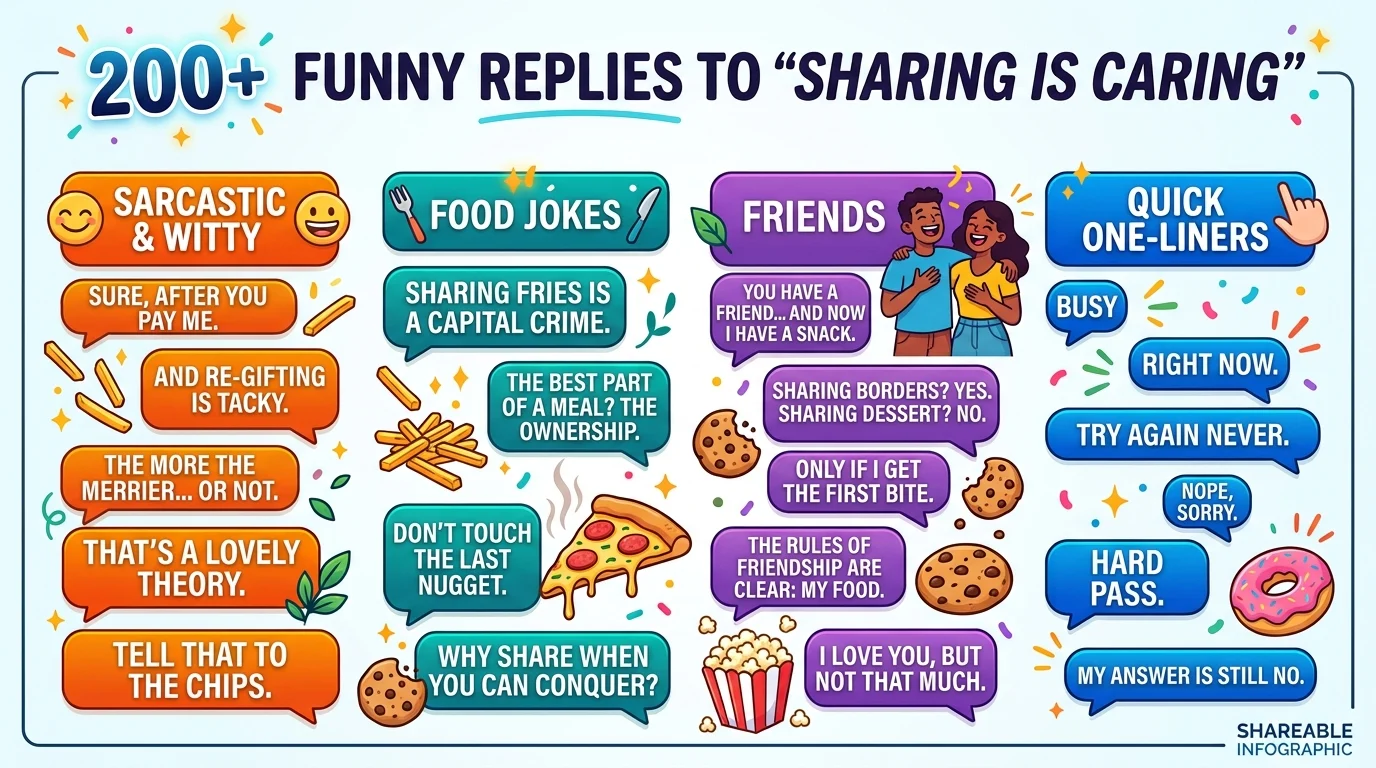
Quick Ans: When someone says “Sharing is caring,” they are usually trying to convince you to share food, money, information, attention, or something else they want. A funny reply lets you play along without giving in too easily.
Try these quick comebacks:
- “Caring has limits, especially with fries.”
- “I care about you, but I care about this snack too.”
- “Sharing is caring. Keeping it is self-care.”
- “Sure, you can have one. Choose wisely.”
- “My food and I have an exclusive relationship.”
- “I care deeply. I also care about my portion.”
- “Sharing is optional. Snacks are not.”
- “That sounds like something a hungry person would say.”
- “I share memories, not my fries.”
- “Fine, but I’m keeping the good stuff.”
Whether you want something sarcastic, playful, cute, witty, or completely ridiculous, the best response depends on the situation and your relationship with the person.
“Sharing is caring” sounds sweet and wholesome until someone says it while reaching for your fries.
Suddenly, a simple little saying becomes a negotiation.
That is exactly why it is such an easy phrase to answer with humor. You can agree dramatically, reject the idea completely, or pretend you are running a highly professional sharing department with strict rules and regulations.
For example, if a friend asks for a bite of your food, you can tease them about having their own meal. Meanwhile, if your crush says “sharing is caring,” you can turn it into a cute or flirty exchange. Likewise, if someone wants your personal information, you can use a witty response to make it clear that not everything is available for public distribution.
So, if you need the perfect comeback to “sharing is caring,” this list has you covered. From food jokes and sarcastic comebacks to cute responses and clever one-liners, these replies are easy to use in texts, DMs, group chats, comments, and everyday conversations.
Short Funny Replies to “Sharing Is Caring”
“Keeping it is self-care.”
Use this when someone wants something you would rather keep for yourself.
Meaning: You are joking that protecting your own stuff is also important.
“I care, but I’m selfish.”
Use this when you want a short, honest, and playful comeback.
Meaning: You are admitting that you are not particularly interested in sharing.
“Only when I feel generous.”
Use this when you want to make sharing sound like a rare event.
Meaning: You are saying that generosity depends on your mood.
“I care from a distance.”
Use this when someone is asking for something you want to keep.
Meaning: You are joking that caring does not automatically mean giving things away.
“My sharing department is closed.”
Use this when you want a mock-official response.
Meaning: You are humorously announcing that nothing is currently available.
“Sharing is negotiable.”
Use this when you want to leave room for a deal.
Meaning: You might share, but they need to convince you.
“Depends what we’re sharing.”
Use this when you want a playful answer with a little mystery.
Meaning: You are open to sharing some things but not everything.
“I care about my stuff.”
Use this when someone is reaching for your belongings.
Meaning: You are politely but humorously protecting what belongs to you.
“That sounds expensive.”
Use this when someone asks you to share something valuable.
Meaning: You are pretending that sharing comes with a price tag.
“I’ll care tomorrow.”
Use this when you want a deliberately lazy response.
Meaning: You are jokingly postponing your generosity.
“Cute theory.”
Use this when you want a dry, sarcastic comeback.
Meaning: You are humorously refusing to accept their argument.
“Noted. Still keeping it.”
Use this when you want to shut down the request without sounding serious.
Meaning: You heard them, but your decision has not changed.
Sarcastic Replies to “Sharing Is Caring”
“So is respecting personal boundaries.”
Use this when someone is being too eager to take your stuff.
Meaning: You are reminding them that caring also means respecting limits.
“Wonderful. You can share yours first.”
Use this when someone wants something from you.
Meaning: You are challenging them to demonstrate their own generosity.
“I care enough to let you admire it.”
Use this when someone wants your food or belongings.
Meaning: They can look, but they are not getting anything.
“That sounds suspiciously convenient for you.”
Use this when someone uses the saying to benefit themselves.
Meaning: You are pointing out that their argument conveniently supports their request.
“Interesting. Who hired you as the sharing ambassador?”
Use this when someone keeps insisting you share.
Meaning: You are teasing them for taking the idea far too seriously.
“I appreciate the motivational speech.”
Use this when someone gives you a lecture about sharing.
Meaning: You are pretending their argument was inspirational while ignoring it.
“My lawyer says otherwise.”
Use this when you want exaggerated sarcasm.
Meaning: You are pretending that your decision is a serious legal matter.
“I’ll share the concept, not the item.”
Use this when you want intellectual-sounding sarcasm.
Meaning: You understand sharing as an idea, but you are not practicing it right now.
“Please submit your request in writing.”
Use this when someone asks for something casually.
Meaning: You are pretending that access to your belongings requires official paperwork.
“Sharing is caring, but I’m currently unavailable for caring.”
Use this when you want a dramatic refusal.
Meaning: You are jokingly claiming that generosity is temporarily offline.
“That sounds like a you problem.”
Use this when someone forgot to bring their own snack.
Meaning: You are making their lack of preparation their responsibility.
“I care deeply about your hunger. From over here.”
Use this when someone wants your food.
Meaning: You sympathize with them but still refuse to share.
Funny Food Replies to “Sharing Is Caring”
“Not when fries are involved.”
Use this when someone reaches for your fries.
Meaning: Fries are a special category where your sharing rules disappear.
“You may have one fry. This is a historic moment.”
Use this when you want to make a tiny favor sound enormous.
Meaning: You are joking that even one fry is a major sacrifice.
“I share recipes, not portions.”
Use this when someone asks for your food.
Meaning: You are happy to share ideas but not the meal itself.
“My pizza has a strict no-sharing policy.”
Use this when you want to protect your pizza playfully.
Meaning: You are jokingly treating your food like private property.
“The snacks voted against it.”
Use this when you want a ridiculous excuse.
Meaning: You are pretending your food has made the decision for you.
“My fries are emotionally attached to me.”
Use this when someone asks for a bite.
Meaning: You are using exaggerated affection to justify keeping your food.
“I would share, but my stomach has already made plans.”
Use this when you are genuinely hungry.
Meaning: You need every bit of food for yourself.
“Sharing this sandwich would create unnecessary paperwork.”
Use this when you want an absurd excuse.
Meaning: You are pretending splitting food is an administrative disaster.
“The cookie is under witness protection.”
Use this when someone wants your dessert.
Meaning: You are joking that the cookie is completely unavailable.
“I bought it with my own money and my own hunger.”
Use this when someone feels entitled to your food.
Meaning: You are reminding them that you paid for it and planned to eat it.
“I care about you enough to tell you to order your own.”
Use this when a friend keeps asking for your meal.
Meaning: You are teasing them while encouraging them to get their own food.
“Sharing fries is how friendships get tested.”
Use this when you want playful exaggeration.
Meaning: You are joking that stolen fries can create serious tension.
Funny Replies for Friends
“You have your own. I checked.”
Use this when your friend asks for something they already have.
Meaning: You are playfully pointing out that their request is unnecessary.
“Friendship has limits, and apparently fries are one of them.”
Use this when your friend reaches for your food.
Meaning: You are joking that even close friendships have boundaries.
“I’d share, but I know you.”
Use this when your friend is likely to take more than promised.
Meaning: You do not trust them to take only a small amount.
“One bite becomes your entire meal with you.”
Use this when your friend always takes too much.
Meaning: Their definition of sharing is suspiciously generous to themselves.
“Sharing privileges have been temporarily suspended.”
Use this when your friend has abused their sharing rights.
Meaning: They have lost access to your stuff for humorous reasons.
“You had your chance. You chose poorly.”
Use this when they failed to bring their own food.
Meaning: You are teasing them for not preparing ahead.
“I care enough to offer you moral support.”
Use this when you refuse to share.
Meaning: You are willing to support them emotionally, just not with your snacks.
“Best I can do is let you smell it.”
Use this when you want an exaggerated food joke.
Meaning: You are offering the absolute minimum amount of sharing.
“Our friendship is strong enough to survive this no.”
Use this when your friend is disappointed.
Meaning: You are joking that refusing them should not damage the friendship.
“You want some? Start negotiating.”
Use this when you are willing to make a playful deal.
Meaning: They might get some, but they have to earn it.
“You’re asking the wrong friend with the right snack.”
Use this when you have something especially tempting.
Meaning: They chose the wrong person to ask for food.
“I share laughs. The snacks are separate.”
Use this when you want a wholesome but funny boundary.
Meaning: Your friendship is generous, but your food is protected.
Cute Replies to “Sharing Is Caring”
“Fine, but only because I care about you.”
Use this when you want to make a small favor sound sweet.
Meaning: You are sharing because the person matters to you.
“Okay, but you owe me a hug.”
Use this when you want a cute trade.
Meaning: You are turning sharing into a playful affectionate exchange.
“I’ll share if you share your smile.”
Use this when you want a wholesome response.
Meaning: You are asking them to give you something cheerful in return.
“Only with my favorite people.”
Use this when you want to make them feel special.
Meaning: Sharing is something you reserve for people you genuinely like.
“You can have some. Don’t get used to it.”
Use this when you want cute teasing.
Meaning: You are agreeing while pretending it is a rare privilege.
“Sharing is caring, especially with you.”
Use this when you want a warm and direct reply.
Meaning: You are saying that you are happy to be generous with them.
“Fine, little snack thief.”
Use this when someone is asking for your food.
Meaning: You are playfully accusing them of stealing your snacks.
“You get the first bite.”
Use this when you want to be extra sweet.
Meaning: You are giving them priority because you care about them.
“Okay, but we’re sharing everything equally.”
Use this when you want a cute agreement.
Meaning: You are making the exchange fair while keeping it playful.
“I guess you’re worth sharing with.”
Use this when you want a teasing compliment.
Meaning: You are suggesting that the person is special enough to make an exception.
“Fine. Your cute face convinced me.”
Use this when you want affectionate teasing.
Meaning: You are pretending their appearance persuaded you to share.
“Sharing makes the snack taste better anyway.”
Use this when you want a wholesome answer.
Meaning: You are suggesting that enjoying something together makes it more meaningful.
Flirty Replies to “Sharing Is Caring”
“I’ll share my attention with you.”
Use this when someone you like wants your attention.
Meaning: You are offering them your focus in a sweet, flirty way.
“Depends. Are we sharing or flirting?”
Use this when the conversation already has chemistry.
Meaning: You are playfully suggesting that the situation could become romantic.
“I care, but I might want you all to myself.”
Use this when you want a possessive-sounding but playful flirt.
Meaning: You are hinting that you enjoy having their attention exclusively.
“I’ll share my snacks if you share your time.”
Use this when you want to suggest spending time together.
Meaning: You are turning food sharing into a cute invitation.
“You can have a bite if I get your attention.”
Use this when someone is asking for your food.
Meaning: You are creating a playful trade involving their attention.
“Maybe I only share with people I like.”
Use this when you want a subtle romantic hint.
Meaning: You are suggesting that sharing with them means they are special.
“I’d share anything with you. Almost.”
Use this when you want a mysterious flirt.
Meaning: You are expressing affection while keeping some playful boundaries.
“You’re making a strong case for yourself.”
Use this when someone is trying to convince you to share.
Meaning: Their charm is starting to work on you.
“Fine, but now you owe me a date.”
Use this when you want to turn the exchange into a romantic invitation.
Meaning: You are playfully requesting time together in return.
“Sharing snacks sounds better when it’s with you.”
Use this when you want something soft and romantic.
Meaning: Their company makes ordinary moments feel more special.
“Careful. I might start caring too much.”
Use this when you want a playful romantic hint.
Meaning: You are joking that your feelings could become stronger.
“I’ll share the food if you share that smile.”
Use this when you want a sweet compliment.
Meaning: You are asking for their smile as part of the playful exchange.
Clever Replies to “Sharing Is Caring”
“So is consent.”
Use this when someone is trying to take something without asking.
Meaning: You are making it clear that sharing should be voluntary.
“Sharing requires a willing participant.”
Use this when someone assumes you will give something away.
Meaning: You are pointing out that generosity cannot simply be demanded.
“Care is not measured in portion size.”
Use this when someone equates generosity with giving things away.
Meaning: You are joking that affection does not depend on how much you share.
“I support sharing in principle.”
Use this when you want a clever refusal.
Meaning: You agree with the concept while avoiding the actual request.
“I believe in selective generosity.”
Use this when you want to sound mock-philosophical.
Meaning: You choose carefully when and with whom you share.
“Sharing is a privilege, not a constitutional right.”
Use this when you want exaggerated intellectual humor.
Meaning: You are joking that nobody is automatically entitled to your belongings.
“Let’s not confuse caring with surrendering.”
Use this when someone is being overly demanding.
Meaning: Being kind does not mean giving away everything.
“The mathematics of sharing are not in your favor.”
Use this when someone wants more than their fair share.
Meaning: Their request is not exactly reasonable.
“I prefer collaborative ownership.”
Use this when you want to make sharing sound professional.
Meaning: You are pretending to negotiate a formal arrangement.
“Your argument has been received and rejected.”
Use this when you want a confident joke.
Meaning: You heard them, but you are still saying no.
“That is one interpretation of caring.”
Use this when you want dry humor.
Meaning: You are humorously questioning their version of the phrase.
“I’ll consider your proposal during my next snack meeting.”
Use this when you want to exaggerate a simple decision.
Meaning: You are pretending that sharing requires serious consideration.
Funny Replies When Someone Wants Your Money
“Sharing is caring. My bank account is not.”
Use this when someone asks you to lend them money.
Meaning: You are making it clear that financial sharing is a different matter.
“My wallet has trust issues.”
Use this when you want a playful refusal.
Meaning: You are joking that your finances are protective.
“I care about you, but I also care about paying my bills.”
Use this when someone wants money for something unnecessary.
Meaning: Your own financial responsibilities come first.
“My bank balance said absolutely not.”
Use this when you want to blame your finances.
Meaning: You are humorously saying that you cannot afford to share.
“Financial generosity is currently under maintenance.”
Use this when you want a mock-official response.
Meaning: You are temporarily unavailable for lending money.
“I can share advice. Cash is another story.”
Use this when you want a polite but funny boundary.
Meaning: You can help without giving away money.
“My wallet and I are in a committed relationship.”
Use this when you want playful exaggeration.
Meaning: You are determined to hold onto your money.
“I’d love to help, but my money has plans.”
Use this when you want a lighthearted refusal.
Meaning: Your finances are already allocated elsewhere.
“I’m currently accepting emotional requests only.”
Use this when someone asks for money.
Meaning: You are willing to offer support but not cash.
“Sharing is caring. Budgeting is survival.”
Use this when you want a practical joke.
Meaning: You have to protect your finances.
“My bank account would like to remain uninvolved.”
Use this when you want dry humor.
Meaning: Your finances are not available for the situation.
“I can share the struggle, not the money.”
Use this when you want a relatable comeback.
Meaning: You understand their problem, but you cannot financially solve it.
Funny Replies for Personal Information
“Sharing is caring, but privacy is peaceful.”
Use this when someone asks a personal question.
Meaning: You are politely protecting your private information.
“That information is classified.”
Use this when you want a playful refusal.
Meaning: You are pretending your personal details are secret government material.
“Nice try, detective.”
Use this when someone is asking too many questions.
Meaning: You have noticed their curiosity and are teasing them about it.
“Access denied.”
Use this when you want a short digital-style comeback.
Meaning: They are not getting the information they requested.
“My secrets have a strict privacy policy.”
Use this when someone wants details about your life.
Meaning: You are joking that your personal information is protected.
“I’ll share the highlights, not the director’s cut.”
Use this when someone wants the entire story.
Meaning: You are willing to provide some details but not everything.
“Some things are better kept in the vault.”
Use this when you want playful mystery.
Meaning: Certain personal details should remain private.
“That information requires premium access.”
Use this when you want to tease someone for asking.
Meaning: You are pretending they need special permission to know.
“I’ll give you a hint and call it a day.”
Use this when you want to reveal only a little.
Meaning: You are willing to share limited information.
“My autobiography isn’t available yet.”
Use this when someone asks for your entire life story.
Meaning: You are joking that there is far more information than they need.
“Curiosity is free. Answers are not.”
Use this when someone is being especially nosy.
Meaning: You are teasing them while keeping your boundaries.
“You’ll have to unlock that level first.”
Use this when you want playful mystery.
Meaning: More personal information comes only with greater trust.
Ridiculous Replies to “Sharing Is Caring”
“So is hiding the good snacks.”
Use this when you want an intentionally contradictory joke.
Meaning: You are pretending that secrecy around snacks is also an act of kindness.
“I care so much that I’m keeping everything safe.”
Use this when someone asks for your belongings.
Meaning: You are humorously presenting hoarding as protection.
“The sharing committee is currently on lunch break.”
Use this when you want a silly excuse.
Meaning: You are pretending an imaginary committee controls your generosity.
“My snacks have requested legal representation.”
Use this when someone wants your food.
Meaning: You are making your snacks sound like protected individuals.
“I shared once in 2017. Never again.”
Use this when you want exaggerated history-based humor.
Meaning: You are pretending one past experience permanently changed your policy.
“My generosity has left the building.”
Use this when you want a dramatic refusal.
Meaning: You are joking that your willingness to share has disappeared.
“I asked my cat. She said no.”
Use this when you want an absurd excuse.
Meaning: You are blaming an imaginary or real pet for your decision.
“Sharing requires a background check.”
Use this when you want mock-serious humor.
Meaning: You are pretending access to your belongings requires approval.
“The snack council has denied your request.”
Use this when someone wants your food.
Meaning: You are making a ridiculous imaginary authority responsible for your refusal.
“My fridge has entered witness protection.”
Use this when you want a strange food-related joke.
Meaning: You are pretending your food supply has gone into hiding.
“I would share, but the universe said no.”
Use this when you want an intentionally vague excuse.
Meaning: You are jokingly blaming fate for your refusal.
“Sharing is caring. Hoarding is apparently my calling.”
Use this when you want exaggerated self-awareness.
Meaning: You are admitting that keeping things is more natural for you.
Funny Replies for Your Crush
“I’ll share if you ask nicely.”
Use this when you want a playful and slightly flirty response.
Meaning: You are inviting them to charm you.
“With you? Maybe.”
Use this when you want to create romantic tension.
Meaning: You are hinting that they might receive special treatment.
“I care about you, so I might make an exception.”
Use this when you want a sweet flirt.
Meaning: You are implying that your feelings make them special.
“You’re lucky I like you.”
Use this when you are willing to share but want to tease them.
Meaning: Their special status is earning them a favor.
“Fine, but I expect quality conversation in return.”
Use this when you want to make the exchange playful.
Meaning: You want their attention and company as part of the deal.
“Sharing snacks with you sounds dangerously cute.”
Use this when you want a soft romantic response.
Meaning: You like the idea of spending a cozy moment together.
“I might share, but only if you sit next to me.”
Use this when you want a more direct flirt.
Meaning: You are inviting them to spend time physically close to you.
“You’re making me reconsider my no-sharing policy.”
Use this when they are charming you.
Meaning: Their personality is convincing you to make an exception.
“I share with people who make me smile.”
Use this when you want a subtle compliment.
Meaning: Their presence makes them eligible for special treatment.
“Maybe sharing is caring after all.”
Use this when you want to soften into a romantic moment.
Meaning: You are playfully admitting that they might have convinced you.
“You can have some if you promise to stay.”
Use this when you want something sweet and affectionate.
Meaning: You value their company more than the thing you are sharing.
“I’ll share the snack. You keep the butterflies.”
Use this when you want a cute romantic line.
Meaning: You are admitting that they create an exciting feeling in you.
Funny One-Liners for “Sharing Is Caring”
“Caring is free. My snacks are not.”
Use this when you want a short food-related comeback.
Meaning: Affection does not automatically include free food.
“I care. I just don’t share.”
Use this when you want blunt humor.
Meaning: You are separating affection from generosity.
“My fries disagree.”
Use this when someone wants your food.
Meaning: You are humorously letting the fries make the decision.
“That’s cute. Anyway, no.”
Use this when you want a dry refusal.
Meaning: You acknowledge their argument but reject it.
“Sharing privileges revoked.”
Use this when someone has already taken too much.
Meaning: They no longer have permission to take your stuff.
“My snacks have boundaries.”
Use this when you want a quick food joke.
Meaning: You are pretending your snacks can establish personal limits.
“I support sharing from a theoretical distance.”
Use this when you want clever sarcasm.
Meaning: You like the idea of sharing as long as you are not involved.
“Carefully selected people get the good stuff.”
Use this when you want to tease someone.
Meaning: Sharing is reserved for people you trust.
“One bite. Final offer.”
Use this when you are willing to share a tiny amount.
Meaning: They get a limited portion and should not ask for more.
“Sharing is caring. Guarding is wisdom.”
Use this when you want a clever contradiction.
Meaning: You believe protecting your possessions is also sensible.
“Ask your own snacks.”
Use this when someone wants yours.
Meaning: They should provide their own food instead of taking yours.
“My generosity is buffering.”
Use this when you want a modern digital joke.
Meaning: Your willingness to share is taking a while to appear.
Funny Replies When You Actually Agree
“Fine, because I’m feeling unusually generous today.”
Use this when you genuinely plan to share.
Meaning: You are agreeing while keeping the exchange humorous.
“Absolutely. Grab a plate.”
Use this when you want a cheerful response.
Meaning: You are openly inviting them to join you.
“Of course. That’s what friends are for.”
Use this when you want something warm and casual.
Meaning: You are happy to share with someone you care about.
“Deal. But I get some of yours too.”
Use this when you want to make sharing mutual.
Meaning: You are willing to share as long as they do the same.
“Sharing is caring, and I’m feeling caring.”
Use this when you want a playful agreement.
Meaning: You are humorously announcing your generous mood.
“Sure, but we’re splitting it fairly.”
Use this when you want to establish equal portions.
Meaning: You are happy to share as long as everyone gets a fair amount.
“You can have some. Happiness looks better when shared.”
Use this when you want a wholesome response.
Meaning: You believe enjoying something together makes it more fun.
“Come on, grab some before I change my mind.”
Use this when you want playful urgency.
Meaning: You are agreeing but joking that the offer may not last.
“Fine, let’s make it a group snack.”
Use this when you want an inclusive response.
Meaning: You are inviting everyone to enjoy the food together.
“Absolutely. More people, more fun.”
Use this when you want a cheerful answer.
Meaning: You enjoy sharing experiences with others.
“Okay, but I’m taking the biggest piece.”
Use this when you want to agree while keeping your personality.
Meaning: You are sharing but still protecting your favorite portion.
“Deal. Sharing officially approved.”
Use this when you want a mock-formal response.
Meaning: You are humorously granting permission.
Funny Replies When Someone Takes Without Asking
“Oh, so we’re just taking things now?”
Use this when someone grabs your food without permission.
Meaning: You are calling out their behavior while keeping the tone playful.
“Bold move, snack thief.”
Use this when someone takes a bite unexpectedly.
Meaning: You are teasing them for stealing your food.
“You skipped the application process.”
Use this when someone takes something without asking.
Meaning: You are joking that they should have requested permission first.
“That was not included in the sharing agreement.”
Use this when you want mock-formal humor.
Meaning: They exceeded the imaginary rules of your arrangement.
“Please return the stolen property.”
Use this when someone takes your food.
Meaning: You are jokingly treating the snack like a valuable possession.
“Interesting approach to asking permission.”
Use this when someone takes before asking.
Meaning: You are pointing out that they technically skipped the polite step.
“Sharing usually starts with asking.”
Use this when you want to make your boundary clear.
Meaning: You expect people to request permission before taking your things.
“That bite came with zero paperwork.”
Use this when you want a ridiculous complaint.
Meaning: You are joking that they failed to follow your imaginary process.
“You have been officially promoted to snack thief.”
Use this when someone repeatedly takes your food.
Meaning: Their behavior has earned them a playful title.
“My food just filed a complaint.”
Use this when someone steals a bite.
Meaning: You are pretending the food itself is protesting.
“Next time, use words before using your hands.”
Use this when you want a clearer boundary with humor.
Meaning: You are asking them to seek permission first.
“You’re lucky I like you.”
Use this when you are annoyed but not genuinely upset.
Meaning: Your affection is saving them from a stronger reaction.
FAQs About Funny Replies to “Sharing Is Caring”
What is a funny reply to “Sharing is caring”?
A simple funny response is “Keeping it is self-care.” It works especially well when someone is asking for your food or belongings.
What can I say when someone wants my fries?
Try “Not when fries are involved.” You can also say, “One fry. Choose wisely.” Both keep the situation playful.
How do you respond sarcastically to “Sharing is caring”?
Try “Wonderful. You can share yours first.” This flips their argument back toward them without making the conversation too serious.
What is a cute response to “Sharing is caring”?
You could say “Only with my favorite people.” This works particularly well when you are talking to someone close to you.
What is a flirty response to “Sharing is caring”?
Try “I’ll share my attention with you.” Another option is “I’ll share the food if you share your time.”
Can I use these replies with friends?
Absolutely. Food-related jokes, mock-official responses, and exaggerated comebacks work especially well with close friends.
What does “sharing is caring” actually mean?
The phrase generally suggests that generosity and sharing are signs of kindness or affection. In casual conversations, however, people often use it humorously to persuade someone to give them something.
How can I politely refuse to share?
You can keep the tone light with something like “I care about you, but I’m keeping this one.” This makes your boundary clear without sounding unnecessarily harsh.
What is a funny reply when someone takes without asking?
Try “Interesting approach to asking permission.” It calls out the behavior while keeping the exchange humorous.
Can I use these replies in text messages?
Yes. Most of these lines are short enough for texting, Snapchat, Instagram DMs, group chats, and casual social media comments.
What is a good reply when I actually want to share?
Try “Deal. But I get some of yours too.” It turns sharing into a fun, mutual exchange.
How do I make my response funnier?
Use exaggeration, food references, mock rules, dramatic language, or unexpected comparisons. For example, pretending your fries have legal representation can make an ordinary exchange much funnier.
Conclusion
“Sharing is caring” may be a wholesome phrase, but that does not mean you have to answer it seriously. In fact, it is perfect for playful comebacks, especially when someone is trying to steal your fries, borrow your stuff, or convince you to give up something you would rather keep.
Whether you choose “Keeping it is self-care,” a sarcastic comeback, a cute response, or a flirty line, the key is to match the relationship and the moment. For friends, ridiculous food jokes usually work well. Meanwhile, with a crush, you can turn the same phrase into a playful hint. If someone is crossing a boundary, however, a funny but clear response can make your point without creating unnecessary tension.
Ultimately, sharing can be caring, but a little humor makes the conversation even better. So the next time someone uses this classic line, you will have plenty of replies ready.

Lily Carter creates practical, easy-to-follow content for everyday readers at ResponseCraft.com. She enjoys turning complex topics into clear, actionable advice that helps people make smarter decisions.