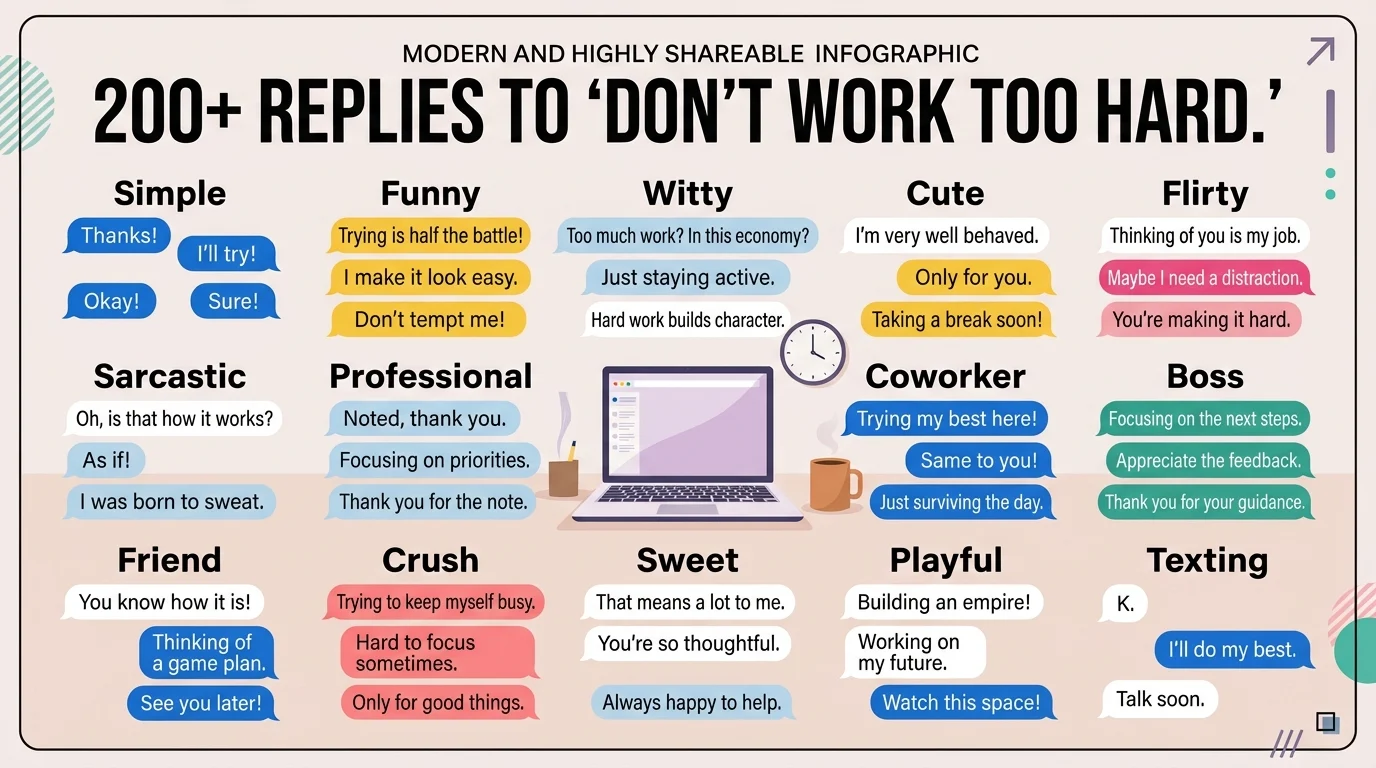
Quick Ans: The best replies to “Don’t work too hard” depend on the mood and the person saying it. You can keep things simple with “I’ll try!”, make it funny with “Too late, I’m already overqualified at overworking,” or make it sweet with “Thanks for looking out for me.” If the person is flirting, you can also say “I’ll behave if you promise to keep checking on me.” Therefore, whether you need a professional response, a witty comeback, a cute text, or a playful reply, the ideas below give you plenty of natural options.
“Don’t work too hard” is one of those phrases that sounds simple but can carry different meanings. Sometimes, someone is genuinely reminding you to take a break. Other times, it is just a friendly way to say goodbye at work. Meanwhile, when it comes from someone you like, it can even feel like a tiny excuse to keep the conversation going.
Fortunately, you do not need a complicated response. A quick “You too!” can work perfectly. However, if you want your reply to have more personality, you can choose something funny, warm, clever, sarcastic, professional, or flirty.
So, whether you are replying to a coworker, friend, boss, crush, partner, or someone texting you after a long day, this list has you covered. Just pick the tone that matches the moment and send it.
Simple Replies to “Don’t Work Too Hard”
Sometimes, the easiest response is also the most natural. After all, when someone says “Don’t work too hard,” they usually are not asking for a dramatic answer. Therefore, a short and friendly response can keep things effortless.
- I’ll try!
Use this when you want a quick, casual response.
Meaning: You appreciate the reminder and will try not to overdo it. - You too!
Use this when the other person is also working.
Meaning: You are returning the same friendly concern. - Thanks, I won’t.
Use this when you want a simple confident reply.
Meaning: You are reassuring them that you will take it easy. - I’ll do my best!
Use this when you want to sound positive.
Meaning: You appreciate their concern while acknowledging your workload. - Thanks for the reminder!
Use this when someone is encouraging you to slow down.
Meaning: You are grateful that they reminded you to take care of yourself. - I’ll keep that in mind.
Use this when you want a calm, polite response.
Meaning: You are acknowledging their advice. - Thanks! I’ll pace myself.
Use this when you have a busy day ahead.
Meaning: You intend to balance productivity with rest. - I’ll try not to!
Use this when you want a slightly playful version.
Meaning: You appreciate the concern while keeping things light. - Noted!
Use this for a very short workplace reply.
Meaning: You received and understood their message. - Thanks, I appreciate that.
Use this when you want to sound genuinely appreciative.
Meaning: Their concern means something to you. - I’ll take a break when I can.
Use this when you really do have a lot to finish.
Meaning: You recognize the importance of resting. - Thanks! I’ll survive somehow.
Use this when your workload is challenging.
Meaning: You are joking lightly about having a busy day.
Funny Replies to “Don’t Work Too Hard”
If you want to make someone laugh, humor can turn an ordinary goodbye into a memorable exchange. Moreover, funny replies work especially well with friends and coworkers who already understand your personality.
- Too late. The work has already won.
Use this when your workload is overwhelming.
Meaning: You are joking that the workload is already in control. - I make no promises.
Use this when you know you will probably keep working.
Meaning: You are playfully admitting that you may ignore the advice. - Work hard? I thought we were supposed to look busy.
Use this with a coworker who enjoys office humor.
Meaning: You are joking about pretending to work. - Don’t worry, I’m professionally lazy.
Use this when you want a self-deprecating joke.
Meaning: You are humorously claiming that you know how to avoid overworking. - I’ll work exactly the appropriate amount of hard.
Use this when you want dry humor.
Meaning: You are pretending to take the phrase extremely literally. - I’ll try, but my deadlines have other plans.
Use this when deadlines are piling up.
Meaning: You are joking that your workload controls your schedule. - My productivity has already left the building.
Use this late in the workday.
Meaning: You are joking that you have run out of energy. - Don’t worry, I’m powered by snacks.
Use this with a playful coworker.
Meaning: You are joking that food keeps you working. - Working hard or hardly working? That is the question.
Use this when you want a classic workplace joke.
Meaning: You are playfully questioning your own productivity. - I’ll stop before my laptop starts judging me.
Use this after a long work session.
Meaning: You are joking about needing a break. - My keyboard and I are in this together.
Use this when you are stuck working late.
Meaning: You are humorously treating your work equipment like a teammate. - I’ll try to keep my ambition under control.
Use this when someone teases you about working too much.
Meaning: You are jokingly presenting yourself as overly dedicated.
Witty Replies to “Don’t Work Too Hard”
A witty response feels clever without becoming rude. Consequently, these replies are great when you want to show personality while keeping the conversation friendly.
- I prefer to call it strategically productive.
Use this when someone comments on your workload.
Meaning: You are giving your hard work a clever name. - I’ll work smarter, then.
Use this when someone tells you not to work too hard.
Meaning: You are playfully suggesting that efficiency is better than exhaustion. - That’s the plan, although the inbox disagrees.
Use this when your email is overflowing.
Meaning: You are joking about the difference between your plans and reality. - I’ll keep the effort at a socially acceptable level.
Use this when you enjoy dry humor.
Meaning: You are playfully promising not to overdo it. - I’ll save some energy for tomorrow.
Use this when you want a practical response.
Meaning: You recognize that rest matters too. - I’m aiming for productive, not exhausted.
Use this when you want a thoughtful reply.
Meaning: You intend to work efficiently without burning yourself out. - I’ll try to make my workload jealous of my free time.
Use this when you want a creative joke.
Meaning: You are saying you want more time away from work. - I’ll keep the hustle reasonably contained.
Use this with someone who knows your work habits.
Meaning: You are promising moderation in a humorous way. - I’ll leave some tasks for future me.
Use this when you want relatable humor.
Meaning: You are admitting that not everything must be completed immediately. - I’m working hard enough to justify the coffee.
Use this during a busy day.
Meaning: You are joking about using coffee as a reward for productivity. - I’ll stop before productivity becomes a personality trait.
Use this with a close coworker or friend.
Meaning: You are joking about becoming too focused on work. - Balance is the goal, even if my inbox disagrees.
Use this when you want a clever workplace response.
Meaning: You want balance despite ongoing work demands.
Cute Replies to “Don’t Work Too Hard”
A cute reply can make the exchange feel warmer. In addition, it can show that you appreciate the other person thinking about you.
- Aww, thanks for looking out for me.
Use this when someone sounds genuinely caring.
Meaning: You appreciate their concern. - I’ll try, promise.
Use this with someone close to you.
Meaning: You are warmly accepting their reminder. - That’s sweet of you to say.
Use this when their message feels thoughtful.
Meaning: You are acknowledging their kindness. - I’ll behave and take a break.
Use this when someone knows you overwork.
Meaning: You are playfully promising to rest. - Thanks! You always know when I need to slow down.
Use this with someone who knows you well.
Meaning: You appreciate their understanding. - I’ll try not to wear myself out.
Use this when you want a gentle response.
Meaning: You are acknowledging the importance of rest. - Okay, okay, I’ll listen to you.
Use this with someone close.
Meaning: You are playfully agreeing to their advice. - You’re sweet for reminding me.
Use this when you want to add affection.
Meaning: You value their thoughtful concern. - I’ll take care of myself, promise.
Use this when someone is genuinely worried.
Meaning: You are reassuring them. - Thanks for caring. It means a lot.
Use this when the message feels sincere.
Meaning: Their concern makes you feel appreciated. - I’ll save some energy for fun later.
Use this when you want a playful tone.
Meaning: You are saying that work will not take all your energy. - Don’t worry, I’m taking your advice seriously. 😊
Use this for a friendly text.
Meaning: You are reassuring them while keeping things light.
Flirty Replies to “Don’t Work Too Hard”
When someone you like says “Don’t work too hard,” you can turn the ordinary comment into a playful opening. However, keep the flirting appropriate to the relationship and the existing tone.
- I’ll behave if you keep checking on me.
Use this when you want light, playful flirting.
Meaning: You are suggesting that you enjoy their attention. - Maybe I need you to distract me.
Use this when the conversation already feels flirtatious.
Meaning: You are inviting them to become part of your day. - I might work less if you keep texting me.
Use this when you want playful romantic energy.
Meaning: You are teasing them about being a pleasant distraction. - I’ll try, but you’re making it hard to focus.
Use this when they have been chatting with you.
Meaning: You are playfully blaming them for distracting you. - Only if you promise to remind me again later.
Use this when you want to encourage another message.
Meaning: You enjoy their attention and want it to continue. - I’ll take a break if you keep me company.
Use this when you want a warm invitation.
Meaning: You would rather spend some time talking with them. - Now that you mention it, I could use a cute distraction.
Use this with someone you are comfortable flirting with.
Meaning: You are subtly suggesting that they are the distraction you want. - I’ll stop working when you tell me to.
Use this when you want a teasing response.
Meaning: You are playfully giving them influence over your evening. - Maybe I’ll work just enough to impress you.
Use this when you want a confident flirt.
Meaning: You are teasing that their opinion matters to you. - I’d rather spend my energy talking to you.
Use this when you want something more direct.
Meaning: You are saying you enjoy their company. - You checking on me is becoming my favorite part of work.
Use this when they regularly message you.
Meaning: You are turning their concern into a romantic compliment. - I’ll try, but your messages are very distracting.
Use this when you want a cute tease.
Meaning: You are playfully saying that you like hearing from them.
Sarcastic Replies to “Don’t Work Too Hard”
Sarcasm can work well when you know the other person understands your humor. Therefore, use these with friends or coworkers who will not mistake the joke for genuine irritation.
- Thanks, I was planning to work until retirement.
Use this when someone comments on your workload.
Meaning: You are exaggerating your dedication for comedic effect. - Too late. I’ve already achieved maximum effort.
Use this after a tiring work session.
Meaning: You are joking that you have reached your limit. - Don’t worry, I barely work at all.
Use this when you want obvious sarcasm.
Meaning: You are jokingly denying that you work hard. - Excellent advice. I’ll ignore it immediately.
Use this only with someone who appreciates dry humor.
Meaning: You are playfully pretending to reject their advice. - I’ll pencil that into my schedule.
Use this when you want a dry workplace joke.
Meaning: You are pretending that resting requires an appointment. - Work smarter? I barely work as it is.
Use this with a close coworker.
Meaning: You are joking about your productivity. - I’ll let my calendar know.
Use this when your schedule is packed.
Meaning: You are humorously treating your schedule like it has a mind of its own. - Sure, right after these 47 tasks.
Use this when your workload feels endless.
Meaning: You are exaggerating the number of tasks for humor. - Absolutely. I’ll tell my boss that you said so.
Use this when joking with a coworker.
Meaning: You are playfully shifting responsibility for taking a break. - I was hoping someone would finally give me permission.
Use this when you want a sarcastic answer.
Meaning: You are joking that you needed external approval to rest. - I’ll try to disappoint my workload today.
Use this when your task list is long.
Meaning: You are joking that you will intentionally leave work unfinished. - Thanks. My overachieving tendencies needed that warning.
Use this when someone knows you work excessively.
Meaning: You are jokingly acknowledging your ambitious habits.
Professional Replies to “Don’t Work Too Hard”
In a professional setting, it is usually better to keep the reply courteous and measured. Still, you can sound natural rather than stiff.
- Thank you. I’ll make sure to take breaks.
Use this when a colleague shows concern.
Meaning: You appreciate the reminder and intend to rest appropriately. - Thanks, I appreciate it.
Use this for a simple workplace response.
Meaning: You are acknowledging their kindness professionally. - Thank you. I’ll pace myself.
Use this when your schedule is demanding.
Meaning: You intend to manage your workload responsibly. - I appreciate the reminder. I’ll keep things balanced.
Use this when someone encourages healthier work habits.
Meaning: You value both productivity and balance. - Thanks! I’ll do my best not to overdo it.
Use this with a friendly coworker.
Meaning: You accept their concern while keeping things conversational. - Thank you. Hopefully, I’ll have some downtime soon.
Use this when work is especially busy.
Meaning: You are acknowledging that you need some rest. - I’ll try to keep the workload under control. Thanks!
Use this in an informal professional exchange.
Meaning: You appreciate their concern about your workload. - Thanks for checking in. I’ll take care of myself.
Use this when their message feels particularly caring.
Meaning: You appreciate their concern and reassurance. - Thank you! I’ll make sure I step away when needed.
Use this when someone reminds you to take breaks.
Meaning: You recognize the value of pausing during work. - I appreciate that. I’ll try to maintain a good balance.
Use this for a polished response.
Meaning: You intend to avoid letting work consume all your time. - Thanks! I’ll keep that in mind today.
Use this for a quick workplace message.
Meaning: You have heard and appreciated their advice. - Thank you. I hope you have a productive but manageable day too.
Use this when you want to return the sentiment.
Meaning: You are wishing them a balanced workday as well.
Replies to “Don’t Work Too Hard” From a Coworker
When a coworker says this, the context is usually casual. As a result, you can respond with anything from a simple “You too” to a workplace joke.
- I’ll try! You too.
Use this when you want a friendly coworker response.
Meaning: You are returning the concern. - Thanks! We’ll survive the day somehow.
Use this during a busy shift.
Meaning: You are joking about getting through the workload together. - I’m already negotiating with my to-do list.
Use this when you have many tasks.
Meaning: You are humorously describing your workload. - No promises, but I’ll try.
Use this when work is unusually busy.
Meaning: You are admitting that slowing down may be difficult. - Thanks! Let’s both remember to take a break.
Use this when you want to encourage mutual balance.
Meaning: You are suggesting that both of you rest. - I’ll save some energy for tomorrow.
Use this at the end of a long workday.
Meaning: You plan to avoid exhausting yourself. - You know me too well.
Use this when the coworker knows you tend to overwork.
Meaning: You acknowledge that they understand your habits. - I’ll try not to make the spreadsheet my entire personality.
Use this for office humor.
Meaning: You are joking about becoming too invested in work. - Thanks! The goal is productivity without exhaustion.
Use this for a more thoughtful coworker response.
Meaning: You want to work effectively while maintaining balance. - I’ll take that as official permission to breathe.
Use this after a stressful work session.
Meaning: You are joking that you finally have an excuse to pause. - Deal. You do the same.
Use this when you want a mutual promise.
Meaning: You are encouraging your coworker to rest too. - Thanks! Now let’s make it through this inbox.
Use this when you share a busy workload.
Meaning: You are turning the comment into team motivation.
Replies to “Don’t Work Too Hard” From Your Boss
When the phrase comes from a manager or boss, your response should generally remain respectful. Nevertheless, a little warmth is fine if your workplace culture is relaxed.
- Thank you. I’ll keep that in mind.
Use this for a professional response.
Meaning: You appreciate the reminder and acknowledge it respectfully. - Thanks, I appreciate it.
Use this when you want something concise.
Meaning: You are politely recognizing their concern. - Thank you. I’ll make sure to pace myself.
Use this when your workload is heavy.
Meaning: You intend to manage your energy responsibly. - Thanks! I’ll try to keep a healthy balance.
Use this in a supportive workplace.
Meaning: You are acknowledging the importance of balance. - Will do. Thank you!
Use this when you want a very short answer.
Meaning: You accept their reminder. - Thank you. I’ll be sure to take a break when needed.
Use this when your manager is encouraging you to rest.
Meaning: You are reassuring them that you will not overextend yourself. - Thanks for checking in. I appreciate it.
Use this when the comment feels personal.
Meaning: You value their concern. - Absolutely. I’ll keep things manageable.
Use this when you want to sound confident.
Meaning: You intend to maintain control of your workload. - Thank you! I’ll make sure I don’t overdo it.
Use this when your manager knows you have a busy schedule.
Meaning: You are reassuring them. - I appreciate that. I’ll keep the pace reasonable.
Use this when you want a polished answer.
Meaning: You are committing to sustainable productivity. - Thanks! I’ll take your advice.
Use this when you want a friendly but respectful response.
Meaning: You are showing that you value their suggestion. - Thank you. I hope you have a good evening as well.
Use this when the conversation is ending.
Meaning: You are returning the courtesy and closing politely.
Replies to “Don’t Work Too Hard” From a Friend
Friends give you much more room to be casual, funny, or teasing. Therefore, this is the perfect setting for personality.
- I’ll try, but you know me.
Use this when your friend knows you work a lot.
Meaning: You are jokingly admitting that changing your habits may be difficult. - Thanks! Come distract me.
Use this when you want playful interaction.
Meaning: You are inviting your friend to help you take a break. - I’m taking your advice very seriously. Pizza break incoming.
Use this when you want a funny response.
Meaning: You are joking that food is your chosen form of rest. - Don’t worry, I have snacks.
Use this when you want a silly reply.
Meaning: You are joking that snacks make hard work manageable. - You know exactly when to tell me that.
Use this when your friend knows you are busy.
Meaning: You appreciate their timing and concern. - I’ll stop before I become one with my laptop.
Use this after a long work session.
Meaning: You are joking about spending too much time working. - Deal. I’ll save some energy for our next adventure.
Use this when you have plans together.
Meaning: You are promising to preserve energy for your friendship. - Thanks! I needed that reminder.
Use this when you genuinely need a break.
Meaning: You appreciate your friend’s concern. - I’ll try. My workload is being dramatic today.
Use this when work is frustrating.
Meaning: You are joking about your difficult schedule. - Fine, I’ll be responsible for once.
Use this when your friend teases you about overworking.
Meaning: You are playfully agreeing to slow down. - Only because you asked nicely.
Use this for a playful exchange.
Meaning: You are teasingly suggesting their request has special influence. - Thanks! Now remind me again when I start working late.
Use this when you want ongoing encouragement.
Meaning: You want your friend to keep helping you maintain balance.
Replies to “Don’t Work Too Hard” From Your Crush
When your crush says this, even a basic message can become an opportunity for playful conversation. In addition, showing that you appreciate their attention can keep the exchange moving naturally.
- I’ll try, especially since you’re checking on me.
Use this when you want a subtle flirt.
Meaning: You are showing that their attention matters to you. - That’s sweet. I like that you care.
Use this when you want to acknowledge their concern.
Meaning: You appreciate their thoughtful attention. - I’ll take a break if you keep me company.
Use this when you want a gentle invitation.
Meaning: You would enjoy spending time talking with them. - Maybe your message is the break I needed.
Use this when you want a soft romantic tease.
Meaning: Hearing from them has already lifted your mood. - I’ll try, but I was hoping you’d distract me.
Use this when your conversation is already playful.
Meaning: You are inviting them to flirt or chat more. - Thanks for looking out for me. That’s cute.
Use this when you want a warm compliment.
Meaning: You find their concern attractive or endearing. - I’ll behave. You have my word.
Use this when you want a teasing response.
Meaning: You are playfully accepting their advice. - I might actually listen to you.
Use this when you want understated flirting.
Meaning: You are teasing that they have unusual influence over you. - You checking on me is making work better.
Use this when they regularly message you.
Meaning: Their attention makes your day more enjoyable. - I’ll save some energy for you.
Use this when you want a more direct flirt.
Meaning: You are implying that you want to spend time with them later. - Okay, but only because you asked.
Use this when you want playful affection.
Meaning: You are teasing that their request matters to you. - Now I have a reason to take a break and talk to you.
Use this when you want to continue the conversation.
Meaning: You are openly saying that you enjoy talking with them.
Playful Replies to “Don’t Work Too Hard”
A playful answer is somewhere between funny and friendly. So, if you want personality without going full sarcasm, these are easy choices.
- I’ll try to keep the work drama under control.
Use this when the day has been hectic.
Meaning: You are joking about having a chaotic workload. - Deal. I’ll work responsibly.
Use this when you want a light response.
Meaning: You are agreeing to pace yourself. - I’ll do just enough to look impressive.
Use this when you want playful confidence.
Meaning: You are joking about balancing effort and appearances. - I’ll keep some energy in reserve.
Use this when you want a clever but relaxed reply.
Meaning: You intend to avoid exhausting yourself. - I’ll try not to let the to-do list bully me.
Use this when your task list is long.
Meaning: You are joking about feeling overwhelmed. - Okay, but the emails started it.
Use this when you are buried in messages.
Meaning: You are humorously blaming your inbox. - I’m negotiating with my workload as we speak.
Use this during a busy day.
Meaning: You are joking that you are trying to regain control. - I’ll keep the productivity levels reasonable.
Use this when you want dry humor.
Meaning: You are promising moderation. - Breaks are officially part of the plan now.
Use this when someone reminds you to rest.
Meaning: You are accepting the importance of downtime. - I’ll stop before the laptop files a complaint.
Use this when you have worked for hours.
Meaning: You are joking about working too long. - I’m pacing myself like a professional.
Use this when someone worries you are doing too much.
Meaning: You are humorously presenting yourself as disciplined. - I’ll try. But first, one more task.
Use this when you know you are tempted to keep working.
Meaning: You are playfully admitting that stopping is difficult.
Sweet Replies to “Don’t Work Too Hard”
A sweet response is ideal when someone genuinely cares about your well-being. Consequently, you can make the reply slightly more personal without making it overly emotional.
- Thank you for caring about me.
Use this when their concern feels sincere.
Meaning: You appreciate their kindness. - That means a lot. I’ll make sure to rest too.
Use this when you want a heartfelt response.
Meaning: Their concern encourages you to take care of yourself. - Thanks. I really needed to hear that today.
Use this after a stressful day.
Meaning: Their reminder arrived at a meaningful time. - I appreciate you looking out for me.
Use this with someone close.
Meaning: You value their support. - I’ll try to slow down a little. Thank you.
Use this when you have been pushing yourself.
Meaning: You accept the reminder and plan to rest. - That’s thoughtful of you. I’ll remember to take breaks.
Use this when someone is encouraging balance.
Meaning: You appreciate their thoughtfulness. - Thanks for reminding me that rest matters too.
Use this when you want something meaningful.
Meaning: You recognize the importance of balancing work and rest. - I’ll take care of myself. You do the same.
Use this when you want to return the concern.
Meaning: You care about their well-being too. - Thank you. It’s nice knowing someone is looking out for me.
Use this with someone you trust.
Meaning: Their concern makes you feel supported. - I’ll try not to forget that there’s life outside work.
Use this when work has taken over your schedule.
Meaning: You are acknowledging the need for personal time. - Thanks. I promise I’ll make time to breathe.
Use this after an intense day.
Meaning: You are reassuring them that you will pause and recharge. - You’re right. I deserve a little downtime too.
Use this when you need encouragement to rest.
Meaning: You accept their reminder and recognize your own need for rest.
Clever One-Liners for “Don’t Work Too Hard”
Sometimes you need a response that is short, clever, and easy to send. For example, these one-liners work well in texts, workplace chats, and social messages.
- I’ll work smarter, not harder.
Use this when you want a classic response.
Meaning: You plan to focus on efficiency. - I’ll try to keep the chaos contained.
Use this during a busy day.
Meaning: You are joking about managing your workload. - Rest is officially on my schedule.
Use this when someone reminds you to take breaks.
Meaning: You are making downtime a priority. - I’ll keep the hustle reasonable.
Use this for a casual response.
Meaning: You promise not to overdo the work. - My inbox may disagree.
Use this when your email is overwhelming.
Meaning: Your workload makes resting difficult. - I’ll save some energy for tomorrow.
Use this at the end of a long day.
Meaning: You intend to avoid exhausting yourself. - Noted. Less work, more life.
Use this when you want something thoughtful.
Meaning: You recognize the importance of balance. - I’ll keep it under control.
Use this for a simple answer.
Meaning: You reassure the person that you will pace yourself. - Productivity with boundaries.
Use this when you want a modern workplace phrase.
Meaning: You value work while maintaining personal limits. - I’ll try not to make work my whole personality.
Use this with friends or coworkers.
Meaning: You are joking about maintaining a life outside work. - Break first, emails second.
Use this when you need to prioritize rest.
Meaning: You are choosing downtime before more tasks. - I’ll keep the work-life balance alive.
Use this when someone encourages you to rest.
Meaning: You are acknowledging the need for balance.
Best Replies to “Don’t Work Too Hard” for Texting
Text messages usually sound best when they are natural and conversational. Therefore, these responses are short enough to send immediately while still having some personality.
- Thanks! I’ll try 😊
Use this when you want a friendly text.
Meaning: You appreciate the concern and will try to slow down. - You too! Take it easy.
Use this when the sender is also working.
Meaning: You are returning their kindness. - Aww, thanks for looking out for me.
Use this when you want a warm text.
Meaning: Their concern makes you feel appreciated. - I’ll try, but no promises 😂
Use this with a friend.
Meaning: You are joking that your workload may win. - I needed that reminder. Thank you!
Use this after a stressful day.
Meaning: Their message was genuinely helpful. - Okay, I’ll behave.
Use this for a playful exchange.
Meaning: You are teasingly agreeing. - I’ll save some energy for later.
Use this when you have plans.
Meaning: You are promising not to exhaust yourself. - Thanks! Now go easy on yourself too.
Use this when you want to return the care.
Meaning: You are encouraging them to rest as well. - You’re sweet. I’ll take a break soon.
Use this with someone close.
Meaning: You appreciate their thoughtful reminder. - Too late, but I appreciate the warning. 😅
Use this when you have already worked too much.
Meaning: You are joking about your current situation. - Deal. Less work, more life.
Use this when you want a balanced message.
Meaning: You agree that personal time matters. - I’ll try not to let the emails win.
Use this when work messages are piling up.
Meaning: You are joking about your busy inbox.
FAQs About Replies to “Don’t Work Too Hard”
What is the best reply to “Don’t work too hard”?
A simple “Thanks, I’ll try!” is one of the easiest responses. However, if you want something warmer, you can say, “Thanks for looking out for me. I’ll make sure to take a break.”
What does “Don’t work too hard” mean?
Usually, it is a friendly expression of concern. Someone may be telling you to avoid exhausting yourself. Alternatively, they may simply be using it as a casual goodbye after a work conversation.
How do I reply to “Don’t work too hard” from a coworker?
You can say, “Thanks! You too!” For a more playful option, try “I’ll try, but the inbox has other plans.” Both choices fit a casual workplace conversation.
What should I say if my boss says “Don’t work too hard”?
A professional response such as “Thank you, I’ll make sure to pace myself” works well. Similarly, “Thanks, I appreciate it” is appropriate when you want to keep the exchange brief.
What is a funny reply to “Don’t work too hard”?
You can say, “Too late, the work already won.” Another option is “I’ll stop before my laptop starts judging me.” Both add humor without being overly rude.
How do I reply to a crush who says “Don’t work too hard”?
If the conversation is already flirtatious, you can say, “I’ll try, especially if you keep checking on me.” Alternatively, “Maybe I need you to distract me” gives the conversation a more playful direction.
Can I say “You too” in response?
Yes. In fact, “You too!” is one of the most natural responses when the other person is also working or has a busy day.
What is a cute response to “Don’t work too hard”?
Try “Aww, thanks for looking out for me.” Similarly, “You’re sweet for reminding me” adds a little more warmth.
Is “I’ll try” a good response?
Yes. It is short, friendly, and flexible. Moreover, it works in both casual and professional conversations.
How can I make my response funny without sounding rude?
Focus your joke on yourself, your workload, your inbox, or your schedule rather than the other person. For example, “I’ll try, but my deadlines have other plans” keeps the humor light.
What should I say if someone says it because they are worried about me?
A sincere response is usually best. You could say, “Thanks for caring. I’ll make sure I take some time to rest.” This acknowledges their concern while reassuring them.
What is a good response to “Don’t work too hard” over text?
For texting, “Thanks! I’ll try 😊”, “You too!”, or “I’ll try, but no promises 😂” are easy choices. Ultimately, match the tone of the person who sent the message.
Conclusion
Finding the right replies to “don’t work too hard” is easier than it seems. Sometimes, a simple “Thanks, you too!” is all you need. However, if the conversation is more personal, you can choose something funny, sweet, clever, playful, or even lightly flirty. For coworkers, professional replies keep things comfortable, while friends give you more freedom to joke around. Meanwhile, someone you like may appreciate a warmer response that keeps the conversation going. Above all, choose a reply that sounds like you. A natural message will almost always feel better than an overly polished one. So, whether you want to make them smile, show appreciation, or keep the chat alive, there is a response here for every mood.

Lily Carter creates practical, easy-to-follow content for everyday readers at ResponseCraft.com. She enjoys turning complex topics into clear, actionable advice that helps people make smarter decisions.
1 thought on “200+ Replies to “Don’t Work Too Hard”: Funny, Sweet, Flirty & Clever Responses”