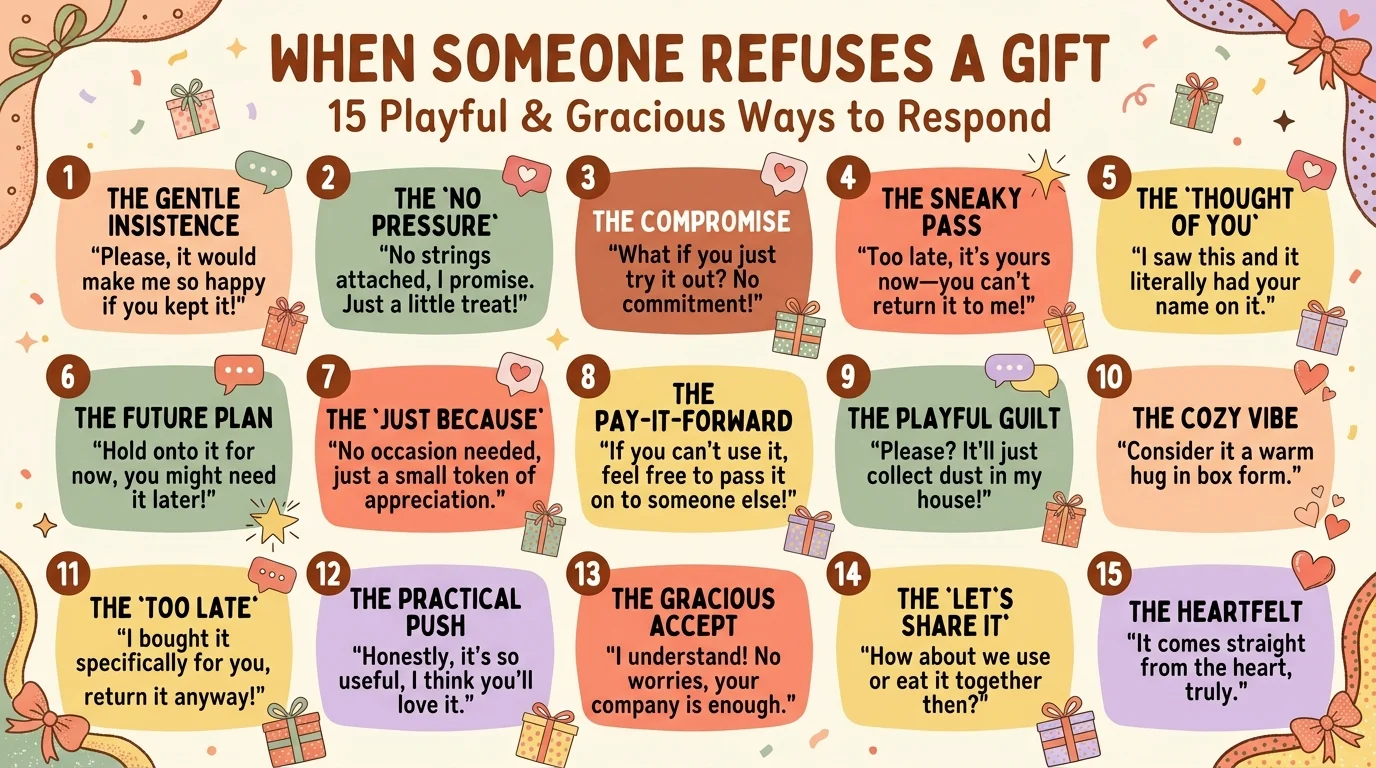
Quick Ans: When someone refuses your gift, the best reply depends on why they said no. Keep it warm, respectful, and pressure-free while letting them know your gesture came from the heart.
Top alternatives: No pressure at all, I just wanted to make you smile, Please accept it, It’s just a little something, Your happiness is enough
Giving someone a gift is supposed to feel good, but what happens when they politely push it back and say, “I can’t accept this”? Suddenly, you are standing there holding a beautifully wrapped present like it just got rejected from a talent show.
Whether it happens over text, at work, with family, between friends, or with someone you have a crush on, when someone refuses your gift replies should match the situation. Maybe they feel uncomfortable receiving things. Maybe they are being modest. Or maybe they simply do not want to accept it.
The key is not to pressure them. A thoughtful response can respect their choice while still explaining that your gift came from a genuine place. From sweet and emotional replies to funny, casual, professional, and confident ones, here are plenty of ways to respond without making things awkward.
Sweet Responses
I just wanted to do something nice for you.
Use this when you want to explain that the gift came from genuine kindness.
Meaning: You are making it clear there was no hidden expectation behind the gesture.
It’s really just a little something from me to you.
Use this when the person thinks the gift is too much.
Meaning: You are reassuring them that the gesture is simple and heartfelt.
You don’t have to feel bad about accepting it.
Use this when someone seems uncomfortable receiving gifts.
Meaning: You want them to know accepting your kindness is completely okay.
I picked it because I thought of you.
Use this when the personal meaning behind the gift matters.
Meaning: You are explaining that the thought behind it is more important than its value.
Please know that I gave it with love.
Use this for someone close to you.
Meaning: You are emphasizing the emotional intention behind your gift.
Your smile was all I wanted.
Use this when they worry they owe you something.
Meaning: You are saying their happiness was the only reward you expected.
There’s no pressure, honestly.
Use this when they seem hesitant about accepting the gift.
Meaning: You are respecting their feelings and removing expectations.
I just wanted you to have something nice.
Use this when the gift was simply an act of kindness.
Meaning: You are showing that your motivation was generosity rather than obligation.
You deserve a little kindness too.
Use this when someone struggles to accept nice things.
Meaning: You are reminding them that they deserve thoughtful gestures.
Let me spoil you just this once.
Use this with someone close when the relationship allows playful affection.
Meaning: You are warmly asking them to accept your generosity.
It would make me happy if you accepted it.
Use this when you want to explain why accepting matters to you.
Meaning: You are sharing your feelings without demanding anything.
I hope you know how sincerely I meant it.
Use this after someone refuses a meaningful gift.
Meaning: You want them to understand that your gesture was genuine.
Polite Responses
I completely understand.
Use this when you want to respect their decision immediately.
Meaning: You are showing that you will not pressure them.
No worries at all.
Use this when you want to keep things comfortable.
Meaning: You are removing any awkwardness from the refusal.
That’s absolutely okay.
Use this when someone politely declines your gift.
Meaning: You are reassuring them that you respect their choice.
I respect your decision.
Use this when the person has clearly explained why they cannot accept it.
Meaning: You are acknowledging their boundaries respectfully.
Please don’t feel obligated.
Use this when someone thinks accepting would create a responsibility.
Meaning: You are making it clear that there are no strings attached.
I only wanted to offer something thoughtful.
Use this when you want to explain your intention politely.
Meaning: You are emphasizing the gesture rather than the object.
There’s nothing you need to give me in return.
Use this when they worry about reciprocating.
Meaning: You are reassuring them that your gift was not transactional.
Your comfort comes first.
Use this when someone feels genuinely uncomfortable accepting the gift.
Meaning: You are prioritizing their feelings over your gesture.
I appreciate you being honest with me.
Use this when they clearly explain why they are declining.
Meaning: You are responding maturely to their honesty.
I understand where you’re coming from.
Use this when their reason for refusing makes sense to you.
Meaning: You are showing empathy instead of taking the refusal personally.
It’s completely your choice.
Use this when you want to make their freedom to decide clear.
Meaning: You are giving them full control over whether they accept it.
Thank you for letting me know.
Use this when you want to end the exchange gracefully.
Meaning: You are acknowledging their response without creating pressure.
Funny Responses
The gift has officially been rejected. My heart needs a minute.
Use this with a close friend who will understand your humor.
Meaning: You are joking about the refusal without creating real guilt.
Okay, my gift just got its first rejection letter.
Use this when the situation is lighthearted.
Meaning: You are turning an awkward moment into a playful joke.
I’ll tell the gift you said no.
Use this when you want a silly response to a friend’s refusal.
Meaning: You are jokingly treating the gift like it has feelings.
Wow, even my present got friend-zoned.
Use this when joking with someone you are close to.
Meaning: You are humorously comparing the refusal to romantic rejection.
Fine, but the gift is judging you.
Use this when the person enjoys playful teasing.
Meaning: You are making the refusal funny rather than uncomfortable.
This is not how my gift-giving career was supposed to go.
Use this when you want to exaggerate the moment.
Meaning: You are playfully pretending the refusal is a major professional setback.
I prepared a whole acceptance speech for this.
Use this when the gift was expected to be received happily.
Meaning: You are joking about how seriously you prepared for the moment.
My present would like to speak with your manager.
Use this when joking with someone who enjoys internet-style humor.
Meaning: You are dramatically pretending the gift is filing a complaint.
Okay, but at least admire the wrapping.
Use this when the gift has fun or impressive packaging.
Meaning: You are keeping the interaction playful after the refusal.
I guess generosity is not trending today.
Use this when teasing a close friend.
Meaning: You are joking about their decision without taking it personally.
Fine, I’ll return to my gift-giving headquarters.
Use this when you want to end the moment with humor.
Meaning: You are playfully accepting the refusal.
The audacity of rejecting my excellent taste.
Use this with a friend who appreciates exaggerated humor.
Meaning: You are jokingly defending your gift choice.
Casual Responses
No worries, I get it.
Use this for an everyday response with a friend or acquaintance.
Meaning: You are keeping things simple and relaxed.
It’s all good.
Use this when you do not want the refusal to become awkward.
Meaning: You are signaling that there are no hard feelings.
Totally fine.
Use this when the person seems worried about disappointing you.
Meaning: You are reassuring them that everything is okay.
I understand.
Use this when you want a calm and mature response.
Meaning: You are acknowledging their decision without debate.
No pressure whatsoever.
Use this when you want to make the situation comfortable.
Meaning: You are clearly removing any expectation to accept.
You do you.
Use this with someone who prefers casual language.
Meaning: You are giving them freedom to make their own choice.
Fair enough.
Use this when you accept their reasoning.
Meaning: You are acknowledging their decision without making a big deal about it.
All good on my end.
Use this when you want to show there are no hard feelings.
Meaning: You are keeping the relationship comfortable.
I just wanted to offer it.
Use this when you want to clarify your intention.
Meaning: You are saying the offer itself was the important part.
No awkwardness, promise.
Use this when both people seem unsure how to move forward.
Meaning: You are intentionally keeping the interaction relaxed.
You don’t owe me anything.
Use this when they worry about returning the favor.
Meaning: You are reassuring them that the gift was freely given.
We’re good. Seriously.
Use this when they apologize for refusing.
Meaning: You are making it clear that you are not upset.
Confident Responses
I offered it because I wanted to, not because I expected anything.
Use this when someone assumes the gift creates an obligation.
Meaning: You are confidently explaining that your generosity was voluntary.
You’re allowed to say no.
Use this when you want to show emotional maturity.
Meaning: You are making their boundaries feel safe.
I can handle a no.
Use this when someone worries you will take the refusal personally.
Meaning: You are showing confidence and emotional stability.
The gesture still stands.
Use this when you want the meaning behind your gift to remain clear.
Meaning: Your kindness does not disappear simply because the gift was declined.
I gave it sincerely, and that’s what matters to me.
Use this when the emotional intention matters more than acceptance.
Meaning: You value the gesture itself rather than the outcome.
No hard feelings whatsoever.
Use this when you want to close the situation confidently.
Meaning: You are making it clear that you are not offended.
I respect your boundaries.
Use this when the person has a strong reason for refusing.
Meaning: You are showing that their comfort matters to you.
You don’t need to justify your choice.
Use this when they keep explaining themselves.
Meaning: You are telling them that their decision is valid without further explanation.
I’d rather you be comfortable.
Use this when you genuinely care about their feelings.
Meaning: You are putting their comfort ahead of your desire for them to accept.
The offer was genuine, and so is my respect for your answer.
Use this when the situation feels serious or meaningful.
Meaning: You are combining sincerity with clear respect for their decision.
I’m not offended, so please don’t worry.
Use this when they seem afraid you will be upset.
Meaning: You are reassuring them that the refusal has not damaged the relationship.
Your answer doesn’t change how I feel about you.
Use this when the gift was given to someone important to you.
Meaning: You are separating their decision from your affection or respect.
Flirty Responses
You’re making it difficult to spoil you.
Use this with a crush who playfully refuses your gift.
Meaning: You are keeping the interaction romantic and teasing.
Fine, I’ll have to find another way to make you smile.
Use this when you want to continue flirting without pressure.
Meaning: You are showing interest while respecting their refusal.
You’re cute when you try to refuse kindness.
Use this when the relationship already has playful chemistry.
Meaning: You are turning their modesty into a light compliment.
I guess I’ll just keep the gift and think of you.
Use this when you want a subtle romantic response.
Meaning: You are expressing affection without demanding acceptance.
You really don’t know how to let someone spoil you, do you?
Use this with someone who regularly refuses thoughtful gestures.
Meaning: You are teasing them affectionately.
I only wanted to see your reaction.
Use this when you want to soften the moment playfully.
Meaning: You are shifting attention from the gift to the connection.
Okay, but you still owe me one smile.
Use this when the mood is playful and romantic.
Meaning: You are asking for a small affectionate reaction instead.
I’ll respect the no, but I’m keeping the compliment.
Use this when you want to remain flirtatious without pushing the gift.
Meaning: You are redirecting the interaction toward harmless affection.
You refusing the gift somehow made you more adorable.
Use this when their modesty genuinely charms you.
Meaning: You are turning their refusal into a sweet compliment.
Maybe the gift was too obvious.
Use this when the present has romantic meaning.
Meaning: You are playfully hinting that your feelings may be showing.
I’ll save it for the day you finally let me spoil you.
Use this when the relationship is already comfortable and flirtatious.
Meaning: You are teasing about a future opportunity without demanding anything now.
Your smile is still the gift I wanted.
Use this when you want a romantic but sincere reply.
Meaning: You are saying their happiness matters more than the present itself.
Respectful Responses
I completely respect your decision.
Use this when the person clearly does not want to accept the gift.
Meaning: You are honoring their choice without resistance.
Thank you for being honest with me.
Use this when they give you a direct reason for refusing.
Meaning: You appreciate their openness.
I would never want you to feel uncomfortable.
Use this when the gift created unexpected pressure.
Meaning: You are prioritizing their emotional comfort.
Please accept my respect even if you decline the gift.
Use this when you want to maintain warmth and dignity.
Meaning: You are separating the gift from your respect for them.
Your decision is completely understandable.
Use this when their reason for declining is reasonable.
Meaning: You are showing empathy and maturity.
I appreciate you telling me how you feel.
Use this when the conversation requires emotional sensitivity.
Meaning: You are encouraging honest communication.
There are no expectations attached to my gesture.
Use this when they worry the gift has conditions.
Meaning: You are clearly stating that your generosity is unconditional.
I hope you never feel pressured by my kindness.
Use this when you want to reassure them sincerely.
Meaning: You want your generosity to feel safe rather than demanding.
I understand, and I wish you nothing but the best.
Use this when the situation needs a respectful closing.
Meaning: You are ending the interaction gracefully.
Your boundaries matter to me.
Use this when the refusal involves a personal boundary.
Meaning: You are showing that you take their comfort seriously.
I appreciate your honesty more than you know.
Use this when their refusal was difficult but sincere.
Meaning: You value honest communication over forced acceptance.
Thank you for handling the situation openly.
Use this in mature or formal interactions.
Meaning: You are recognizing their respectful communication.
Supportive Responses
You never have to accept something just to be polite.
Use this when someone feels guilty about refusing your gift.
Meaning: You are giving them permission to prioritize their comfort.
Your comfort matters more than the gift.
Use this when they seem genuinely uneasy.
Meaning: You are making their well-being more important than your gesture.
I’m glad you told me instead of pretending.
Use this when they honestly explain their feelings.
Meaning: You appreciate their authenticity.
You can always be honest with me.
Use this when you want to strengthen trust.
Meaning: You are reassuring them that honest boundaries are welcome.
I don’t want kindness to ever feel like pressure.
Use this when the gift has caused discomfort.
Meaning: You are clarifying that your intentions are supportive.
Your feelings are completely valid.
Use this when the person has a personal reason for declining.
Meaning: You are acknowledging their perspective without judgment.
I would rather you be honest than uncomfortable.
Use this when they apologize repeatedly for refusing.
Meaning: You value honesty over forced politeness.
You don’t need to explain yourself further.
Use this when they keep defending their decision.
Meaning: You are helping them feel safe about their boundary.
I’m still glad I got the chance to think of you.
Use this when you want to preserve the positive meaning of the gesture.
Meaning: The thought behind the gift still matters to you.
Nothing changes between us because of this.
Use this when they worry the refusal will affect your relationship.
Meaning: You are reassuring them that your connection remains intact.
Thank you for trusting me enough to say no.
Use this when honesty is especially important in the relationship.
Meaning: You are framing their refusal as an act of honest communication.
I’m here either way.
Use this when you want to offer emotional reassurance.
Meaning: Your support does not depend on whether they accept your gift.
Cute Responses
Okay, but the thought still counts.
Use this when you want to keep the moment sweet.
Meaning: You are reminding them that your intention was meaningful.
Then I’ll just keep the good intentions.
Use this when you want a gentle response without pressure.
Meaning: You are saying the kindness remains even without the gift.
Your smile was enough anyway.
Use this when their reaction was warm despite refusing.
Meaning: Their happiness matters more than the present.
I guess the gift and I both tried our best.
Use this with someone who appreciates cute humor.
Meaning: You are making the refusal feel harmless and light.
No gift needed to make you special.
Use this when the person thinks they need to accept something.
Meaning: You value them independently of the present.
I’ll take your smile as a tiny thank-you.
Use this when they smile but still refuse the gift.
Meaning: You are turning their reaction into a sweet alternative.
You’re still worth celebrating.
Use this when they refuse because they feel undeserving.
Meaning: You are reassuring them that their value remains.
The gift may go home, but the good vibes stay.
Use this when you want a cheerful response.
Meaning: You are keeping the positive feeling alive.
I hope the thought made you feel special.
Use this when the emotional meaning matters.
Meaning: You want them to recognize the affection behind the gesture.
You made refusing a gift look adorable.
Use this when the interaction is playful and affectionate.
Meaning: You are complimenting their modest reaction.
I’ll accept one big smile instead.
Use this when you want a cute alternative to the gift.
Meaning: You are asking for a simple happy reaction rather than acceptance.
The intention was the real present anyway.
Use this when you want a thoughtful but concise reply.
Meaning: You are emphasizing the emotional value of your gesture.
Sarcastic Responses
Well, that went exactly as planned.
Use this with a friend when the refusal is clearly not serious.
Meaning: You are joking about the unexpected outcome.
My gift has officially been humbled.
Use this when someone refuses your present playfully.
Meaning: You are humorously reversing the situation.
I’ll pretend this rejection never happened.
Use this when you want to tease someone close.
Meaning: You are making the refusal feel funny rather than uncomfortable.
Fine, I’ll let my gift recover privately.
Use this when both of you enjoy exaggerated humor.
Meaning: You are jokingly treating the gift as emotionally affected.
Clearly my gift needs better marketing.
Use this when the person refuses because they are unsure about the present.
Meaning: You are humorously blaming the presentation rather than the person.
Noted. The gift has been declined with confidence.
Use this when you want a dry, playful reaction.
Meaning: You are acknowledging their decision while keeping the tone witty.
I’ll add “rejected gift” to today’s achievements.
Use this when the situation is light enough for humor.
Meaning: You are turning the refusal into a playful story.
I see how it is.
Use this with a close friend who understands teasing.
Meaning: You are pretending to be dramatically offended for fun.
My generosity has met its match.
Use this when you want an exaggerated humorous response.
Meaning: You are playfully portraying their refusal as a challenge.
Fine, I’ll stop being thoughtful for five minutes.
Use this with someone who enjoys sarcastic jokes.
Meaning: You are teasing them without genuinely expressing anger.
The gift has been denied entry.
Use this when you want a playful internet-style response.
Meaning: You are jokingly treating the gift like it was turned away at a door.
I respect the decision, but the gift is still offended.
Use this when the mood is friendly and humorous.
Meaning: You are combining respect with playful exaggeration.
Professional Responses
I completely understand your decision.
Use this when a colleague declines a professional gift.
Meaning: You are showing respect for their choice.
Please don’t feel any obligation to accept it.
Use this when workplace boundaries may be important.
Meaning: You are removing any sense of professional pressure.
I appreciate your honesty.
Use this when a colleague explains why they cannot accept the gift.
Meaning: You value clear communication.
There is absolutely no issue with declining.
Use this when someone worries their refusal may offend you.
Meaning: You are keeping the professional relationship comfortable.
The gesture was simply meant as a token of appreciation.
Use this when the gift was intended to recognize someone’s work.
Meaning: You are clarifying that there were no expectations attached.
I respect your preference completely.
Use this when the recipient has a clear personal or workplace reason.
Meaning: You are acknowledging their boundary professionally.
Thank you for letting me know.
Use this when you want a concise workplace response.
Meaning: You are accepting their answer without making the situation awkward.
Your comfort is more important than accepting the gift.
Use this when the person appears uncomfortable.
Meaning: You are putting their well-being first.
Please consider the gesture itself as my thanks.
Use this when they cannot accept the physical gift.
Meaning: You are emphasizing appreciation rather than the item.
I completely understand the circumstances.
Use this when policies or professional boundaries prevent acceptance.
Meaning: You are showing maturity and awareness.
There are no hard feelings whatsoever.
Use this when the person fears the refusal may affect your relationship.
Meaning: You are keeping the professional connection positive.
I appreciate your professionalism and honesty.
Use this when the refusal reflects workplace ethics or policy.
Meaning: You respect their decision and professional standards.
Emotional Responses
I only wanted you to know that you matter to me.
Use this when the gift was deeply personal.
Meaning: You are explaining the emotional reason behind your gesture.
The gift was never more important than how you feel.
Use this when someone is worried about refusing.
Meaning: Their emotional comfort matters more than the present.
I hope you still felt the love behind it.
Use this when the gift represented affection or gratitude.
Meaning: You want the emotional message to remain even without acceptance.
I gave it because you were on my mind.
Use this when the person asks why you chose the gift.
Meaning: You are sharing the personal thought behind your gesture.
Your reaction matters more to me than the gift.
Use this when they feel guilty about saying no.
Meaning: You care more about their feelings than the object.
I never wanted my kindness to feel heavy.
Use this when the gift created unexpected emotional pressure.
Meaning: You are acknowledging their feelings with compassion.
I understand, even if part of me wishes you could accept it.
Use this when you want to be honest without applying pressure.
Meaning: You are expressing your feelings while still respecting their choice.
I’m grateful you told me how you feel.
Use this when the refusal leads to a meaningful conversation.
Meaning: You value emotional honesty.
The meaning behind the gift is still there.
Use this when the item itself cannot be accepted.
Meaning: You believe the thought and affection remain meaningful.
You never have to accept something to prove you appreciate me.
Use this when someone feels obligated.
Meaning: You are separating gratitude from accepting a physical gift.
I hope you know the gesture came from a genuine place.
Use this when sincerity is important.
Meaning: You want them to understand that your intentions were pure.
I care about your comfort more than being thanked.
Use this when someone feels guilty about refusing.
Meaning: Their emotional safety matters more to you than recognition.
Clever Responses
The gift may be declined, but the thought remains undefeated.
Use this when you want a witty but meaningful reply.
Meaning: You are saying the intention still has value.
Acceptance was optional; kindness was not.
Use this when you want a memorable response.
Meaning: You are emphasizing that generosity came naturally.
The present is optional, the good intention is permanent.
Use this when someone worries the refusal cancels your gesture.
Meaning: You believe the emotional intention survives the refusal.
Consider the offer my way of saying I appreciate you.
Use this when the gift was meant as recognition.
Meaning: You are reframing the present as an expression of gratitude.
No acceptance required for a sincere gesture.
Use this when you want a polished, thoughtful reply.
Meaning: You are making your generosity feel completely pressure-free.
The gift had a purpose, and that purpose was kindness.
Use this when explaining why you gave it.
Meaning: The act of giving mattered more than the recipient accepting it.
Sometimes the best response to a gift is simply honesty.
Use this when they apologize for refusing.
Meaning: You appreciate their truthful communication.
The object can come back; the thought already arrived.
Use this when you want a poetic and clever response.
Meaning: The emotional message has already been delivered.
A declined gift does not equal a rejected gesture.
Use this when you want to separate the item from your intention.
Meaning: Their refusal does not erase the kindness behind your action.
The present was just packaging for the appreciation.
Use this when the gift represented gratitude.
Meaning: The true message was your appreciation, not the physical item.
No receipt needed for genuine intentions.
Use this when joking about a refused gift.
Meaning: You are saying sincere kindness does not depend on the outcome.
The gift can wait; the respect stays.
Use this when someone needs space or time.
Meaning: You are making it clear that respect comes first.
Responses For A Crush
Okay, I respect the no, but I still like making you smile.
Use this when you want to stay affectionate without pushing.
Meaning: You are expressing interest while respecting their boundary.
No gift then, just good company?
Use this when you want to suggest spending time together instead.
Meaning: You are shifting the focus from material things to connection.
Fair enough, I’ll save my gift-giving energy.
Use this when you want a playful romantic response.
Meaning: You are teasing while accepting their decision.
I’ll take your honesty over a forced yes any day.
Use this when their refusal was sincere.
Meaning: You value honest communication more than acceptance.
You don’t have to accept anything to make me happy.
Use this when they feel guilty.
Meaning: Their comfort matters more than receiving your gift.
I just wanted to make you feel special.
Use this when the gift had romantic meaning.
Meaning: You are revealing the affectionate intention behind it.
Maybe I’ll win you over with my personality instead.
Use this when the relationship is already playful.
Meaning: You are jokingly shifting from gifts to personal charm.
Your smile is still my favorite reward.
Use this when they react warmly but refuse the gift.
Meaning: Their happiness matters more than the present.
I’ll respect your answer, promise.
Use this when you want to reassure them.
Meaning: You are clearly communicating that you will not pressure them.
You’re allowed to be difficult to spoil.
Use this when playful teasing fits your relationship.
Meaning: You are affectionately joking about their refusal.
I guess I’ll have to impress you another way.
Use this when the tone is flirtatious but comfortable.
Meaning: You are keeping romantic interest alive without pushing the gift.
No pressure, just know the thought was all yours.
Use this when you want a subtle romantic ending.
Meaning: You are emphasizing that the gift was chosen specifically for them.
Short And Simple Responses
No worries!
Use this when you want the easiest possible reply.
Meaning: You are showing there are no hard feelings.
I understand.
Use this when you want a mature and direct response.
Meaning: You accept their decision.
That’s okay.
Use this when the person feels guilty about refusing.
Meaning: You are reassuring them that everything is fine.
Of course, no pressure.
Use this when you want to remove any obligation.
Meaning: You are respecting their choice.
All good!
Use this for casual texts and friendly situations.
Meaning: You are keeping the mood relaxed.
I respect that.
Use this when their refusal reflects a personal boundary.
Meaning: You acknowledge their decision respectfully.
Fair enough!
Use this when their reason makes sense to you.
Meaning: You are accepting their point without argument.
No hard feelings.
Use this when they worry they offended you.
Meaning: You are reassuring them that the relationship is fine.
You’re good.
Use this when someone apologizes for refusing.
Meaning: You are telling them there is nothing to feel guilty about.
Totally understood.
Use this when you want a slightly more polished casual reply.
Meaning: You are confirming that you understand their position.
Your choice.
Use this when you want to give them complete freedom.
Meaning: You are making it clear that the decision belongs to them.
No problem at all.
Use this when you want to end the topic smoothly.
Meaning: You are keeping the exchange friendly and pressure-free.
FAQs About When Someone Refuses Your Gift
What should I say when someone refuses my gift?
Say, “No pressure at all, I just wanted to do something nice for you.”
Why would someone refuse a gift?
They may feel uncomfortable, worry about cost, dislike receiving gifts, or have personal boundaries.
Should I insist they accept my gift?
No. Respect their choice and avoid making them feel guilty for saying no.
Is refusing a gift rude?
Not necessarily. A person can appreciate your thought while still choosing not to accept the item.
What is the sweetest reply?
“You don’t have to accept it, I just wanted you to know I was thinking of you.”
Can I make a joke when someone refuses?
Yes, if you know they enjoy humor and the situation is clearly lighthearted.
What should I say if they think the gift is too expensive?
Tell them there is no obligation and that their comfort matters more than the gift.
What if the person keeps apologizing?
Reassure them by saying, “Seriously, you don’t need to apologize. I understand.”
How do I respond professionally?
Try, “I completely understand and respect your decision.”
What if I feel hurt by the refusal?
Take a moment before responding and avoid making them feel responsible for your emotions.
Should I explain why I chose the gift?
Yes, if it helps them understand that the gesture was thoughtful rather than transactional.
What if they refuse because of workplace rules?
Respect the policy and respond professionally without trying to persuade them.
Can I offer the gift again later?
Only if their reason suggests they may be comfortable later. Otherwise, respect the original boundary.
What if I gave the gift to show appreciation?
Explain that the appreciation is still genuine even if they cannot accept the physical gift.
What is the best overall response?
“No worries, I respect your decision. I just wanted you to know the gesture came from the heart.”
Conclusion
When someone refuses your gift, the best response is not about convincing them to take it. It is about showing that your kindness comes without pressure. A simple “No worries,” a heartfelt “I just wanted to make you smile,” or even a playful joke can keep the moment comfortable and positive.
Remember, people have different relationships with gifts. Some love receiving them, while others feel awkward, obligated, or uncomfortable. Respecting that difference says a lot about you. Choose a response that matches your relationship and the reason behind the refusal. Save your favorites for future texts, DMs, family moments, friendships, and workplace situations, and share this list with someone who always needs the perfect words.

Emma Writes is a passionate content writer at ResponsCraft.com, creating practical, well-researched articles that help readers make informed decisions. She enjoys turning complex topics into clear, engaging and easy-to-follow content.