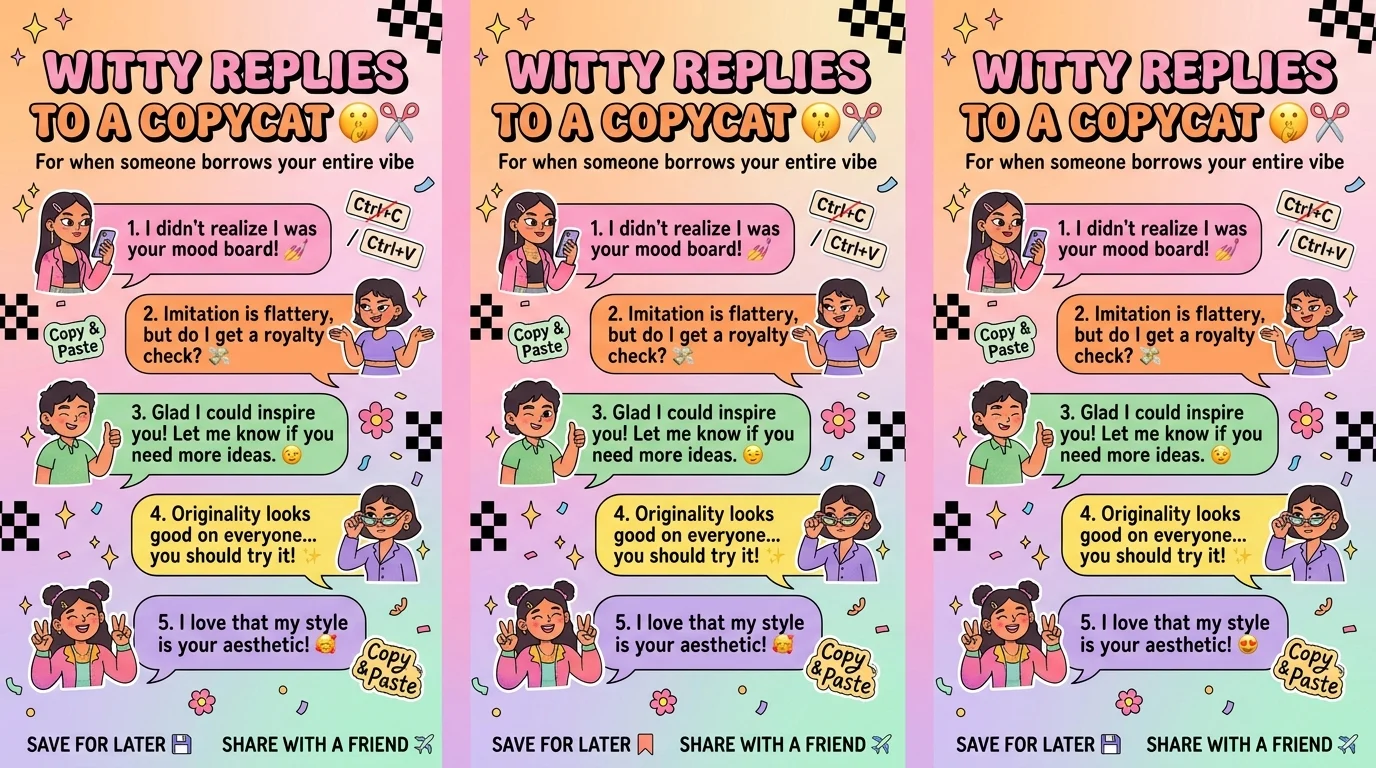
Quick Ans: Being called a “copycat” can be playful teasing or a real accusation, so the best response depends on your relationship and the situation.
Top alternatives: Great minds think alike, I call it inspiration, We just have good taste, Copying is one word for it, Maybe we’re just on the same wavelength
Being called a copycat can happen anywhere. Your friend buys the same shoes, your coworker notices a similar idea, your crush catches you using their favorite phrase, or someone on social media claims you copied their style. Suddenly, you need a reply faster than your brain can load one.
The good news is that “copycat” does not always need a defensive response. Sometimes the funniest move is to own it. Other times, a clever comeback can make it clear that having similar taste does not automatically mean copying. And if the accusation is serious, a calm response is usually much better than starting an unnecessary comment-section war.
These replies to being called a copycat cover funny, confident, sarcastic, playful, polite, clever, flirty, and professional situations. Pick the energy that fits the moment and send it like you meant it.
Funny Replies
Copying you was the easiest decision today.
Use this when a friend jokingly accuses you of copying them.
Meaning: You are turning the accusation into playful praise.
Great minds apparently shop together.
Use this when you and someone have similar tastes.
Meaning: You are joking that your similarities come from having good taste.
I prefer the term inspired.
Use this when you want to make a playful excuse.
Meaning: You are humorously reframing copying as inspiration.
My bad, your taste was too good.
Use this when you copied something because you genuinely liked it.
Meaning: You are admitting it playfully while complimenting their taste.
Copycat? I call it market research.
Use this when someone teases you about following their choice.
Meaning: You are making the copying accusation sound intentionally strategic.
We clearly share one brain cell.
Use this with a close friend who made the same choice as you.
Meaning: You are joking about your unusually similar thinking.
I was going to deny it, but you’re onto me.
Use this when the similarity is obvious.
Meaning: You are humorously pretending to surrender.
Okay, detective, you caught me.
Use this when someone playfully exposes your similarity.
Meaning: You are treating the accusation like a funny investigation.
Maybe your ideas are just contagious.
Use this when a friend’s habits or style influenced you.
Meaning: You are joking that their influence spread to you.
I learned from the best.
Use this when you want a compliment hidden inside the comeback.
Meaning: You are teasing them while admitting you admire their choices.
Don’t call it copying, call it teamwork.
Use this when you and someone independently chose similar things.
Meaning: You are making the coincidence sound collaborative.
At least I have excellent taste.
Use this when someone catches you choosing something similar to them.
Meaning: You are confidently turning the accusation into a compliment for yourself.
Clever Replies
Similarity isn’t the same thing as imitation.
Use this when someone seriously claims you copied them.
Meaning: You are calmly separating shared ideas from deliberate copying.
Maybe we’re simply thinking alike.
Use this when your choices happen to match someone else’s.
Meaning: You are suggesting coincidence rather than imitation.
Good ideas tend to travel.
Use this when you borrowed inspiration from something you admired.
Meaning: You are acknowledging influence without sounding defensive.
Consider it shared inspiration.
Use this when both people have similar creative influences.
Meaning: You are framing the similarity positively.
I call that having good taste.
Use this when someone accuses you over clothing, music, or style.
Meaning: You are confidently defending your choice.
If the idea works, why reinvent it?
Use this when the situation is casual and the similarity is harmless.
Meaning: You are suggesting that practical ideas can naturally overlap.
We’re on the same wavelength.
Use this when you and someone repeatedly make similar choices.
Meaning: You are highlighting compatibility rather than copying.
Apparently, originality has excellent company.
Use this when you want a polished, witty response.
Meaning: You are turning the accusation into playful wordplay.
Maybe the trend just reached me later.
Use this when someone claims you followed their style.
Meaning: You are teasing them about being ahead of the trend.
Influence is not the same as imitation.
Use this when you want a mature but confident response.
Meaning: You are acknowledging inspiration while maintaining your independence.
We both recognized a good idea.
Use this when two people independently choose the same approach.
Meaning: You are suggesting shared judgment instead of copying.
I can appreciate a good idea without pretending it is mine.
Use this when you genuinely took inspiration from someone.
Meaning: You are being honest while showing respect.
Sarcastic Replies
Wow, you invented that? Impressive.
Use this when someone jokingly acts like they own a common idea.
Meaning: You are teasing them for taking ownership too seriously.
Congratulations on discovering matching opinions.
Use this when someone treats a shared preference like evidence of copying.
Meaning: You are sarcastically pointing out how normal similarities are.
Should I ask permission next time?
Use this when a friend exaggerates their accusation.
Meaning: You are mocking the idea that they control your choices.
My apologies for having similar taste.
Use this when the similarity is harmless.
Meaning: You are sarcastically pretending to regret your preference.
I didn’t realize you had a trademark on that.
Use this when someone claims ownership over something ordinary.
Meaning: You are teasing them for acting overly possessive.
Breaking news: Two people like the same thing.
Use this when the accusation feels unnecessarily dramatic.
Meaning: You are joking about how ordinary the situation is.
Call the authorities, we have matching preferences.
Use this when a friend is dramatically accusing you.
Meaning: You are exaggerating the situation for humor.
How dare I enjoy something you enjoy too?
Use this when you want an obviously playful sarcastic response.
Meaning: You are jokingly pretending your choice is a serious offense.
I hope you survive this shocking coincidence.
Use this when someone reacts dramatically to your similarity.
Meaning: You are teasing them for overreacting.
Should I stop having taste now?
Use this when someone calls you a copycat over your style.
Meaning: You are sarcastically defending your preferences.
I’ll alert the originality police immediately.
Use this when the accusation is clearly playful.
Meaning: You are making fun of the idea that your choice is criminal.
Thank you for your official copycat investigation.
Use this when someone has been analyzing your similarities.
Meaning: You are jokingly treating their accusation like detective work.
Confident Replies
I like what I like.
Use this when you want a short response that does not invite an argument.
Meaning: Your choices do not require anyone else’s approval.
I’m comfortable with my own choices.
Use this when someone questions your style or decisions.
Meaning: You are showing confidence without becoming aggressive.
Having similar taste doesn’t make me a copycat.
Use this when the accusation is serious.
Meaning: You are calmly defending your individuality.
I don’t need to copy anyone to know what I like.
Use this when someone repeatedly questions your originality.
Meaning: You are making your independence clear.
We’re allowed to like the same things.
Use this when the accusation is based on a shared preference.
Meaning: You are setting a simple and reasonable boundary.
I’m inspired, not intimidated.
Use this when someone believes admiration means imitation.
Meaning: You can appreciate influence while maintaining confidence.
My style speaks for itself.
Use this when someone questions your originality.
Meaning: You trust your own identity and choices.
I know who I am.
Use this when someone tries to make you insecure.
Meaning: Their accusation does not change your self-confidence.
Similarity doesn’t erase individuality.
Use this when two people have noticeably similar styles.
Meaning: You are emphasizing that people can share traits while remaining unique.
I don’t owe anyone a different personality.
Use this when someone criticizes your mannerisms or interests.
Meaning: You are confidently protecting your authenticity.
If I like it, I wear it. Simple.
Use this when someone comments on your fashion choices.
Meaning: You are refusing to overexplain your personal style.
You can call it copying; I call it knowing what works.
Use this when someone challenges your decision.
Meaning: You are confidently standing behind your choice.
Playful Replies
Maybe we’re accidentally twins.
Use this when you and a friend keep making similar choices.
Meaning: You are turning the similarity into something cute.
Great taste recognizes great taste.
Use this when you copied or matched someone’s choice.
Meaning: You are giving them a compliment while defending yourself.
We clearly have matching algorithms.
Use this when your preferences seem unusually similar.
Meaning: You are joking that your brains work the same way.
I blame our excellent taste.
Use this when the similarity is about clothes, food, or entertainment.
Meaning: You are making the situation flattering rather than defensive.
Maybe we’re just trend twins.
Use this when you and someone choose similar styles.
Meaning: You are making the similarity sound fun.
You started it by having good taste.
Use this when someone accuses you after you follow their choice.
Meaning: You are playfully blaming them for inspiring you.
We’re basically on the same playlist.
Use this when your music preferences match.
Meaning: You are describing shared interests in a playful way.
Copycat sounds too serious. I’m just vibing.
Use this when someone lightly teases your choices.
Meaning: You are refusing to make a harmless similarity dramatic.
I prefer coordinated coincidence.
Use this when your outfits or choices match.
Meaning: You are giving the coincidence a fun new name.
Apparently, we have matching taste settings.
Use this when your preferences overlap frequently.
Meaning: You are playfully describing your compatibility.
Don’t be jealous of our shared taste.
Use this when the accusation is clearly teasing.
Meaning: You are flipping the joke back in a friendly way.
Copycat? More like taste twins.
Use this when you want a cute and confident response.
Meaning: You are turning the accusation into a compliment.
Polite Replies
I understand why it might look that way.
Use this when someone genuinely believes you copied them.
Meaning: You are acknowledging their perspective without immediately agreeing.
That wasn’t my intention.
Use this when you want to clarify that the similarity was accidental.
Meaning: You are calmly denying deliberate imitation.
I actually had a similar idea independently.
Use this when your choice existed before you saw theirs.
Meaning: You are explaining the coincidence respectfully.
I can see the similarity, but it wasn’t intentional.
Use this when the resemblance is obvious.
Meaning: You are recognizing their concern while explaining your side.
I appreciate the inspiration, but I have my own approach.
Use this when their idea influenced you without being copied directly.
Meaning: You are giving credit while maintaining your independence.
We may simply have similar preferences.
Use this when the issue involves everyday choices.
Meaning: You are offering a calm explanation without creating tension.
I didn’t mean to make you feel copied.
Use this when someone feels uncomfortable about the similarity.
Meaning: You are acknowledging their feelings without admitting wrongdoing.
I respect your perspective.
Use this when a disagreement starts becoming tense.
Meaning: You are keeping the conversation respectful.
Let’s not turn a similarity into an argument.
Use this when the accusation is becoming unnecessarily serious.
Meaning: You are encouraging a calmer approach.
I think it’s just a coincidence.
Use this when two choices happen to match.
Meaning: You are offering the simplest explanation.
I hope you know there was no disrespect intended.
Use this when someone feels their originality was challenged.
Meaning: You are reassuring them that you did not mean to diminish them.
We can both enjoy the same thing.
Use this when you want to resolve the issue positively.
Meaning: You are suggesting that shared interests do not need to create conflict.
Flirty Replies
Maybe I just like your taste a little too much.
Use this when a crush playfully calls you a copycat.
Meaning: You are turning the accusation into a subtle confession of interest.
Can you blame me for being inspired by you?
Use this when you want to flirt while admitting influence.
Meaning: You are suggesting that their personality or style attracts you.
Maybe copying your vibe is my love language.
Use this when flirting is already comfortable.
Meaning: You are joking that imitation is a playful form of admiration.
I guess you caught my attention.
Use this when your similarity came from noticing their choices.
Meaning: You are hinting that you pay special attention to them.
If I copy you, at least we’re matching.
Use this when your styles or choices are similar.
Meaning: You are making the similarity sound romantically cute.
Maybe we’re just compatible.
Use this when you want a confident romantic angle.
Meaning: You are suggesting that shared preferences could signal chemistry.
I only copy people I like.
Use this when you want a short, flirty comeback.
Meaning: You are openly hinting that you have feelings for them.
Your influence is dangerously effective.
Use this when their style has clearly inspired you.
Meaning: You are playfully admitting they have an effect on you.
Maybe I wanted us to match.
Use this when your choices accidentally or intentionally coordinate.
Meaning: You are turning the accusation into romantic teasing.
I call it keeping up with someone attractive.
Use this when you want a bolder flirt.
Meaning: You are complimenting their appearance while teasing them.
If matching you is wrong, I don’t want to be right.
Use this when the conversation is playful and flirtatious.
Meaning: You are dramatically embracing the accusation for fun.
Careful, I might start copying your flirting too.
Use this when the other person is already flirting with you.
Meaning: You are inviting them to continue the playful chemistry.
Cute Replies
Maybe we just have the same taste.
Use this when a friend points out a harmless similarity.
Meaning: You are making the coincidence feel friendly and positive.
Taste twins forever.
Use this when you and someone repeatedly choose similar things.
Meaning: You are celebrating your shared preferences.
I guess we’re accidentally matching again.
Use this when your choices line up unexpectedly.
Meaning: You are treating the coincidence as adorable.
Great minds really do think alike.
Use this when you and someone independently choose the same thing.
Meaning: You are turning similarity into a compliment.
I promise we’re just on the same wavelength.
Use this when someone teases you about matching choices.
Meaning: You are emphasizing natural compatibility.
You make good choices, what can I say?
Use this when you genuinely followed someone’s recommendation.
Meaning: You are complimenting their judgment.
Maybe our brains are secretly connected.
Use this when your choices keep matching.
Meaning: You are playfully suggesting an unusually strong connection.
I guess we have matching taste genes.
Use this when joking with a close friend.
Meaning: You are making the similarity sound naturally funny.
No copying, just cute coincidence.
Use this when the similarity is harmless and amusing.
Meaning: You are reframing the situation as something positive.
We accidentally coordinated again.
Use this when outfits, plans, or preferences match.
Meaning: You are highlighting the coincidence in a cute way.
I think our taste gets along really well.
Use this when your preferences frequently overlap.
Meaning: You are describing compatibility warmly.
Honestly, I think it’s kind of adorable.
Use this when the similarity feels charming rather than annoying.
Meaning: You are embracing the shared preference positively.
Amazing-Free Sharp Replies
You don’t own the concept just because you used it first.
Use this when someone claims ownership over a common idea.
Meaning: You are firmly challenging an exaggerated accusation.
Being first doesn’t automatically make you the only one allowed to do it.
Use this when someone treats your similar choice as unacceptable.
Meaning: You are defending your freedom to make similar choices.
Let’s not confuse coincidence with copying.
Use this when you want a sharp but controlled response.
Meaning: You are asking them to distinguish similarity from imitation.
If you have proof, show it; otherwise, it’s just an assumption.
Use this when the accusation is serious and unfair.
Meaning: You are asking for facts rather than speculation.
I respect originality, including my own.
Use this when someone questions your individuality.
Meaning: You are confidently standing behind your creative identity.
Similar does not mean identical.
Use this when someone exaggerates the resemblance between your choices.
Meaning: You are pointing out that differences still exist.
You can dislike my choice without calling it copying.
Use this when someone criticizes your decision unfairly.
Meaning: You are separating personal dislike from factual accusations.
I’m open to feedback, not baseless accusations.
Use this when a serious conversation becomes unfair.
Meaning: You are setting a clear boundary around respectful criticism.
Let’s stick to what actually happened.
Use this when someone is making assumptions about your intentions.
Meaning: You want the discussion to remain factual.
I can explain my choice without being disrespectful.
Use this when you want to defend yourself calmly.
Meaning: You are choosing confidence instead of unnecessary conflict.
You don’t have to like it, but you don’t get to define my intentions.
Use this when someone claims to know why you made a choice.
Meaning: You are protecting your right to explain your own motives.
I know the difference between inspiration and imitation.
Use this when you want a firm but mature comeback.
Meaning: You are asserting awareness of creative boundaries.
Professional Replies
I arrived at the idea independently.
Use this when a coworker questions the originality of your contribution.
Meaning: You are clearly explaining that your idea was independently developed.
There may be some overlap, but the approach is my own.
Use this when your work resembles someone else’s.
Meaning: You are acknowledging similarity while clarifying independence.
I appreciate the concern, and I’m happy to explain my process.
Use this when a workplace discussion needs transparency.
Meaning: You are responding professionally without becoming defensive.
Our ideas may have converged naturally.
Use this when two coworkers develop similar solutions.
Meaning: You are presenting the similarity as a normal outcome.
I was influenced by the general concept, but developed my own version.
Use this when inspiration genuinely played a role.
Meaning: You are being transparent about influence while emphasizing your contribution.
I respect your work and would never intentionally misrepresent it.
Use this when originality is important.
Meaning: You are reassuring the other person that you respect professional boundaries.
Let’s compare the ideas objectively.
Use this when the accusation needs a factual discussion.
Meaning: You are moving the conversation away from personal assumptions.
I’m happy to clarify which parts were independently developed.
Use this when someone raises a legitimate concern.
Meaning: You are offering transparency without admitting something untrue.
I think there are similarities, but there are also clear differences.
Use this when work overlaps in some areas.
Meaning: You are presenting a balanced explanation.
My intention was to build on the concept, not misrepresent it.
Use this when you were genuinely inspired by existing work.
Meaning: You are clarifying your professional intent.
I value originality and proper attribution.
Use this when discussing creative or professional work.
Meaning: You are showing that you take intellectual credit seriously.
Let’s resolve the similarity professionally.
Use this when a disagreement needs a calm solution.
Meaning: You are prioritizing a constructive outcome over an argument.
Responses For Friends
Bestie, we literally have the same taste.
Use this when a friend playfully calls you a copycat.
Meaning: You are turning the accusation into proof of compatibility.
I learned my style from excellent people.
Use this when your friend inspired your choice.
Meaning: You are giving them a playful compliment.
You should be flattered, honestly.
Use this when you intentionally took inspiration from your friend.
Meaning: You are joking that their influence is a compliment.
We’re friends because we have elite taste.
Use this when your preferences overlap frequently.
Meaning: You are making shared taste part of the friendship joke.
Don’t blame me for recognizing a good idea.
Use this when you followed your friend’s suggestion.
Meaning: You are complimenting their judgment while teasing them.
Fine, you can have the original-credit badge.
Use this when your friend insists they did it first.
Meaning: You are playfully giving them credit without arguing.
I copied the vibe, not the personality.
Use this when your style resembles theirs.
Meaning: You are joking that you still have your own identity.
We’re basically two versions of the same playlist.
Use this when you share music preferences.
Meaning: You are describing your friendship through a playful comparison.
Your influence is showing, apparently.
Use this when your friend clearly inspired you.
Meaning: You are admitting their influence in a lighthearted way.
Okay, trendsetter, I hear you.
Use this when your friend claims they started the trend.
Meaning: You are teasing them while giving them playful credit.
I’ll give you partial credit.
Use this when the similarity is obvious but not total.
Meaning: You are keeping the exchange humorous and friendly.
Fine, we’re both iconic. Happy now?
Use this when you want to end the teasing with confidence.
Meaning: You are turning the argument into a mutual compliment.
Responses For Social Media
Copycat or just good taste? You decide.
Use this as a playful comment reply when someone calls you a copycat.
Meaning: You are turning criticism into an engaging joke.
Great minds scroll alike.
Use this when someone notices matching social media choices.
Meaning: You are joking about having similar online tastes.
The internet has room for both of us.
Use this when someone claims you copied their content style.
Meaning: You are confidently saying multiple creators can coexist.
Inspired by the best.
Use this when you genuinely admire the person who influenced you.
Meaning: You are openly framing the similarity as admiration.
Same vibe, different person.
Use this when your content or aesthetic looks similar.
Meaning: You are emphasizing individuality despite shared style.
Maybe the algorithm knows we have taste.
Use this when your posts happen to look similar.
Meaning: You are jokingly blaming the platform for the similarity.
We just caught the same trend.
Use this when both people participate in a popular trend.
Meaning: You are pointing out that trends naturally involve multiple people.
Copying? No. Keeping up? Absolutely.
Use this when someone jokingly challenges your social media style.
Meaning: You are confidently turning the accusation into playful competition.
Same trend, different flavor.
Use this when your content resembles someone else’s but remains distinct.
Meaning: You are highlighting individual interpretation.
The trend is bigger than either of us.
Use this when someone claims ownership of a popular idea.
Meaning: You are reminding them that common trends belong to the wider community.
I saw it, liked it, and made it mine.
Use this when inspiration is obvious but your version is distinct.
Meaning: You are confidently acknowledging influence.
Let’s call it internet inspiration.
Use this when social media trends influence your content.
Meaning: You are giving the similarity a casual and modern explanation.
Short Replies
Great minds think alike.
Use this when you want the classic response to a harmless similarity.
Meaning: You are framing the situation as shared intelligence or taste.
Same taste, apparently.
Use this when your preferences unexpectedly match.
Meaning: You are acknowledging the similarity casually.
Inspired, not copied.
Use this when you want a concise defense.
Meaning: You are distinguishing influence from imitation.
Maybe we’re twins.
Use this when the situation is playful.
Meaning: You are making the similarity sound cute.
Coincidence, promise.
Use this when your choice genuinely happened independently.
Meaning: You are briefly denying intentional copying.
You caught me.
Use this when the accusation is clearly a joke.
Meaning: You are humorously pretending they exposed you.
Good taste recognizes good taste.
Use this when you want a confident compliment.
Meaning: You are suggesting the shared choice reflects quality.
Same wavelength.
Use this when you and someone think similarly.
Meaning: You are describing natural compatibility.
I’ll take that as a compliment.
Use this when being called a copycat actually feels flattering.
Meaning: You are refusing to treat the accusation negatively.
Fair point.
Use this when there is some truth behind the comment.
Meaning: You are acknowledging the observation without overexplaining.
Maybe a little.
Use this when you want a playful admission.
Meaning: You are lightly accepting that their influence played a role.
And I’m okay with that.
Use this when you do not mind being influenced.
Meaning: You are confidently accepting your choice without embarrassment.
FAQs About Replies To Being Called A Copycat
What does “copycat” mean?
A copycat is someone accused of imitating another person’s style, idea, behavior, or choices.
What is the best reply to being called a copycat?
Try “Great minds think alike” when the accusation is playful and harmless.
How do I respond if someone seriously calls me a copycat?
Stay calm and say, “I understand the similarity, but it wasn’t intentional.”
Is “I prefer the term inspired” a good comeback?
Yes, especially when you genuinely took inspiration from someone without copying them directly.
What is a funny reply to copycat?
“Call the authorities, we have matching preferences” keeps the situation playful.
What if I actually copied their idea?
Be honest, give credit, and avoid pretending the influence did not happen.
Can I use a flirty copycat reply?
Yes. “I only copy people I like” works when the conversation already feels romantic.
How do I respond to a copycat accusation at work?
Say, “There may be some overlap, but the approach is my own.”
What if a friend calls me a copycat?
Keep it light with “Maybe we’re just taste twins” or “Great minds think alike.”
Is it okay to joke about being a copycat?
Yes, if the relationship is friendly and the accusation is clearly playful.
How do I defend my originality?
Explain your process calmly and point out the differences between your work and theirs.
Can two people have the same idea without copying?
Absolutely. People can independently reach similar ideas, especially around common trends.
What is a confident copycat response?
“I like what I like” is short, confident, and does not invite unnecessary debate.
Should I get defensive when called a copycat?
Not automatically. First decide whether the person is teasing, concerned, or making a serious accusation.
What is a good social media reply?
“Same vibe, different person” is short, modern, and easy to use in comments.
Conclusion
Being called a copycat does not have to turn into a full-blown argument. Sometimes the perfect answer is funny, like “Great minds think alike.” Sometimes it is confident, like “I like what I like.” And when the situation is serious, a calm explanation can work far better than a heated comeback.
The key is matching your response to the person and the moment. Use humor with friends, confidence with critics, professionalism at work, and a little flirtiness when your crush is involved. Save your favorite replies so you are never stuck staring at your screen wondering what to type. Share this list with someone who always gets accused of copying, and keep these comebacks ready for your next unexpected “copycat” moment.

Chloe Brooks is a passionate writer at ResponsCraft.com, creating clear, practical and well-researched content to help readers make informed decisions. She focuses on delivering engaging articles that are accurate, useful and easy to understand.