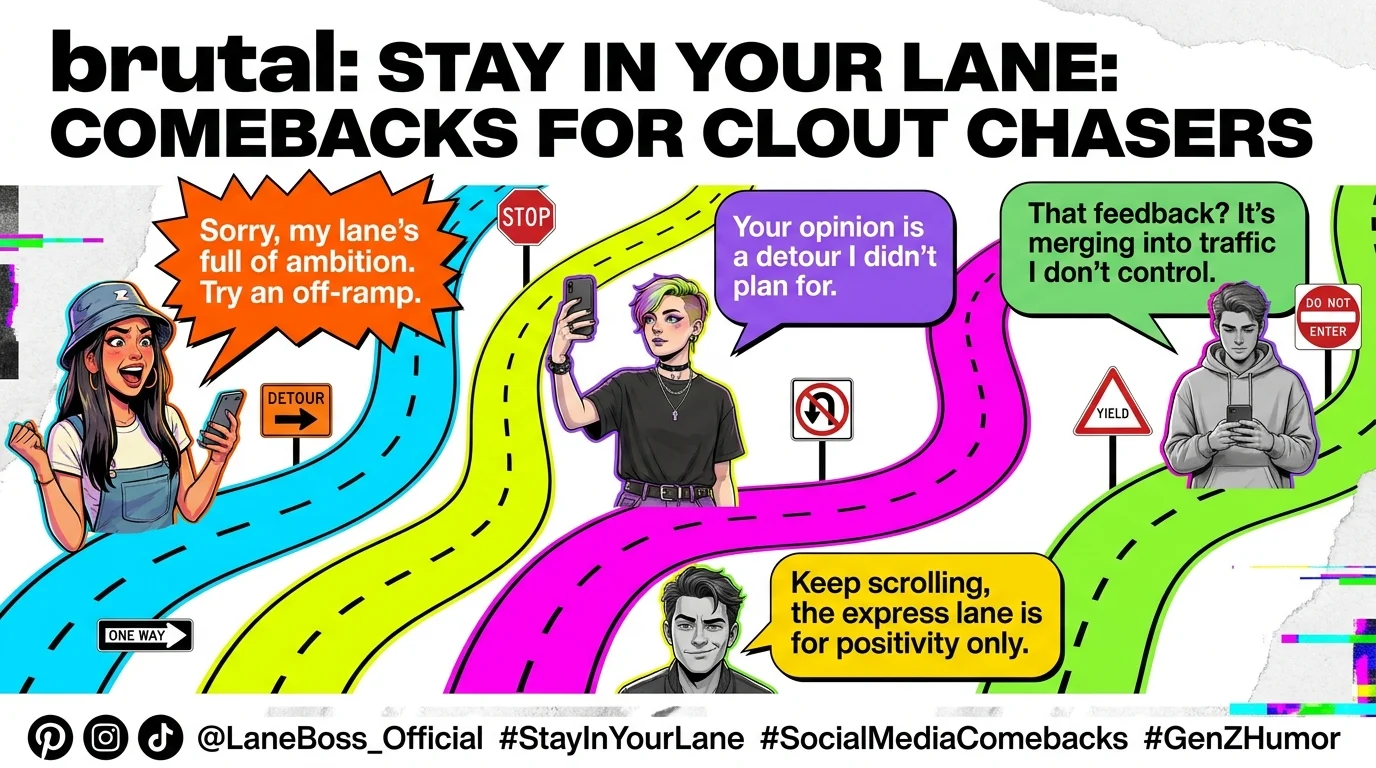
Quick Ans: The best stay in your lane comebacks depend on whether you want to sound funny, calm, confident, sarcastic, or brutally direct. A great comeback sets a boundary without making you look pressed.
Top alternatives: Mind your business, Focus on yourself, Wrong lane, keep driving, That doesn’t concern you, Stay curious somewhere else, I’ve got this handled
Few phrases make a conversation interesting quite like “stay in your lane.” Maybe someone is giving unwanted advice, inserting themselves into your business, judging your choices, or acting like they were personally hired to manage your life. Suddenly, you need a response that says, “Respectfully, this has nothing to do with you.”
That is where the right stay in your lane comebacks come in. Whether you are texting a friend, dealing with a nosy coworker, replying in a group chat, responding to a comment, or handling someone with way too many opinions, your words can set the tone fast.
You can go funny, calm, sarcastic, clever, confident, or completely unbothered. The best comeback is not always the loudest one. Sometimes a short line with perfect timing does all the work. Here are plenty of ready-to-use replies for every mood and situation.
Funny Stay In Your Lane Comebacks
“I would, but your lane keeps merging into mine.”
Example: Use this when someone keeps inserting themselves into your decisions.
Meaning: You are joking that they are the one crossing boundaries.
“GPS says you’re off route.”
Example: Use this when someone gives unsolicited opinions.
Meaning: You are humorously telling them to focus elsewhere.
“Wrong exit, buddy.”
Example: Use this during playful online banter.
Meaning: You are saying they have entered a situation that does not involve them.
“Your lane is calling. It misses you.”
Example: Use this with someone who is being overly nosy.
Meaning: You are jokingly telling them to return to their own business.
“Traffic is bad enough without you switching lanes.”
Example: Use this when someone keeps interfering.
Meaning: You are humorously asking them to stop getting involved.
“Please return to your assigned seat.”
Example: Use this when someone acts like they are in charge.
Meaning: You are jokingly putting them back in their place.
“Mind the business that pays your bills.”
Example: Use this when someone is overly interested in your personal life.
Meaning: You are telling them to focus on their own responsibilities.
“You took a wrong turn at Not Your Problem.”
Example: Use this when someone comments on something irrelevant to them.
Meaning: You are making their interference sound accidental.
“The lane is empty. Go enjoy it.”
Example: Use this when someone cannot stop watching what you are doing.
Meaning: You are humorously encouraging them to focus on themselves.
“I didn’t know this was a group project.”
Example: Use this when someone starts managing your choices.
Meaning: You are saying their involvement was not requested.
“Congratulations, you found a problem that isn’t yours.”
Example: Use this when someone keeps offering unwanted criticism.
Meaning: You are sarcastically pointing out their unnecessary involvement.
“Respectfully, the plot does not involve you.”
Example: Use this when someone inserts themselves into drama.
Meaning: You are saying they are not part of the situation.
Brutal Stay In Your Lane Comebacks
“Worry about yourself first.”
Example: Use this when someone criticizes you while ignoring their own issues.
Meaning: You are firmly redirecting their attention.
“You have enough going on over there.”
Example: Use this when someone is being hypocritical.
Meaning: You are suggesting they should focus on their own problems.
“I don’t remember asking for supervision.”
Example: Use this when someone acts controlling.
Meaning: You are making it clear their input was not requested.
“My life isn’t your side quest.”
Example: Use this when someone keeps involving themselves in your business.
Meaning: You are saying your life is not there for their entertainment.
“You should practice what you monitor.”
Example: Use this when someone watches your every move.
Meaning: You are calling out their excessive attention.
“You’re way too invested for someone uninvolved.”
Example: Use this when a person keeps commenting on your situation.
Meaning: You are pointing out their unnecessary obsession.
“That’s a lot of confidence for someone with no role here.”
Example: Use this when someone acts entitled to an opinion.
Meaning: You are challenging their relevance to the situation.
“You can have an opinion without making it my problem.”
Example: Use this when someone pushes unwanted advice.
Meaning: You are setting a firm boundary.
“Focus on fixing your own mess.”
Example: Use this when someone is being judgmental or hypocritical.
Meaning: You are telling them to address their own issues first.
“Being curious doesn’t make you involved.”
Example: Use this when someone acts entitled to personal information.
Meaning: You are reminding them that interest does not equal permission.
“Your concern has been noted and ignored.”
Example: Use this when you want a cold, direct response.
Meaning: You are making it clear their opinion changes nothing.
“Stay informed about your own life.”
Example: Use this when someone constantly monitors your choices.
Meaning: You are firmly telling them to redirect their attention.
Clever Stay In Your Lane Comebacks
“Interesting opinion from the audience.”
Example: Use this when someone comments from the sidelines.
Meaning: You are implying they are observing rather than participating.
“This meeting doesn’t require your attendance.”
Example: Use this when someone interrupts your business.
Meaning: You are cleverly saying they are unnecessary.
“Your subscription to my life has expired.”
Example: Use this when someone acts overly invested in your choices.
Meaning: You are saying they no longer have access to your business.
“You seem to have mistaken observation for responsibility.”
Example: Use this when someone acts like your life is their job.
Meaning: You are pointing out that watching does not make them responsible.
“That’s outside your jurisdiction.”
Example: Use this when someone tries to control you.
Meaning: You are humorously saying they have no authority.
“Access denied.”
Example: Use this as a short text or comment reply.
Meaning: You are refusing them involvement.
“That information is on a need-to-know basis.”
Example: Use this when someone asks overly personal questions.
Meaning: You are making it clear they do not need the details.
“You’re reading a chapter that isn’t about you.”
Example: Use this when someone inserts themselves into your story.
Meaning: You are telling them they are not the main character here.
“The commentary is unnecessary, but noted.”
Example: Use this when someone offers criticism you did not ask for.
Meaning: You are dismissing their opinion calmly.
“You can exit the conversation whenever you’re ready.”
Example: Use this when someone keeps escalating something irrelevant to them.
Meaning: You are reminding them they can simply leave.
“This lane is members only.”
Example: Use this when someone gets involved in private matters.
Meaning: You are humorously saying they do not have access.
“Your opinion has been placed in the optional folder.”
Example: Use this when you want a witty response.
Meaning: You are saying you are free to ignore their input.
Sarcastic Stay In Your Lane Comebacks
“Wow, thank goodness you were here to manage everything.”
Example: Use this when someone acts unnecessarily controlling.
Meaning: You are sarcastically mocking their need to take charge.
“Please, tell me more about my own life.”
Example: Use this when someone lectures you about your choices.
Meaning: You are sarcastically pointing out how ridiculous they sound.
“I was waiting for your completely unsolicited opinion.”
Example: Use this when someone jumps into a discussion.
Meaning: You are making it clear you never asked.
“Amazing. Another manager I didn’t hire.”
Example: Use this when someone tries to control your decisions.
Meaning: You are mocking their self-appointed authority.
“Thank you for the interruption. Truly inspiring.”
Example: Use this when someone inserts themselves into a conversation.
Meaning: You are sarcastically criticizing their timing.
“Should I send you a report every morning too?”
Example: Use this when someone monitors your behavior.
Meaning: You are mocking their excessive interest.
“Your concern is almost touching.”
Example: Use this when their fake concern feels intrusive.
Meaning: You are sarcastically questioning their motives.
“I didn’t realize I had a board of directors.”
Example: Use this when multiple people give unwanted opinions.
Meaning: You are joking that too many people are trying to manage you.
“Please hold while I pretend this affects me.”
Example: Use this when someone says something irrelevant.
Meaning: You are dismissing their comment with sarcasm.
“The confidence is impressive.”
Example: Use this when someone speaks strongly about something unrelated to them.
Meaning: You are sarcastically acknowledging their nerve.
“You must be exhausted from managing everyone else’s business.”
Example: Use this when someone is constantly nosy.
Meaning: You are calling out their behavior through humor.
“I’ll add that to the list of things I wasn’t asking about.”
Example: Use this when someone offers unwanted commentary.
Meaning: You are making it clear their input was unnecessary.
Calm And Classy Responses
“I appreciate your concern, but I have it handled.”
Example: Use this when you want to set a boundary politely.
Meaning: You are declining their involvement without being rude.
“I’d rather handle this myself.”
Example: Use this when someone keeps trying to take control.
Meaning: You are asserting independence calmly.
“Thanks, but this is personal.”
Example: Use this when someone asks intrusive questions.
Meaning: You are setting a respectful boundary.
“I understand your perspective, but I’ll make my own decision.”
Example: Use this when someone pressures you for a choice.
Meaning: You are remaining polite while standing firm.
“This doesn’t really involve you.”
Example: Use this when someone enters a private matter.
Meaning: You are directly clarifying the boundary.
“I’d prefer to keep this between the people involved.”
Example: Use this during interpersonal conflict.
Meaning: You are limiting outside interference.
“I hear you, but I’m comfortable with my choice.”
Example: Use this when someone keeps challenging your decision.
Meaning: You are showing confidence without escalating.
“Respectfully, I’ll take it from here.”
Example: Use this when someone tries to take over.
Meaning: You are politely reclaiming control.
“I don’t need advice on this right now.”
Example: Use this when someone keeps giving unsolicited suggestions.
Meaning: You are clearly stating your boundary.
“Let’s focus on what concerns each of us.”
Example: Use this when someone crosses into your business.
Meaning: You are calmly redirecting the conversation.
“I’m okay handling this privately.”
Example: Use this when you want discretion.
Meaning: You are asking them to step back.
“Thank you, but I didn’t ask for input.”
Example: Use this when you want honesty without unnecessary hostility.
Meaning: You are directly stating that their opinion was unsolicited.
Funny One-Liner Comebacks
“Lane secured. Please reroute.”
Example: Use this as a quick text reply.
Meaning: You are humorously telling them to go elsewhere.
“Detour detected.”
Example: Use this when someone suddenly enters your business.
Meaning: You are saying they have gone off course.
“Mind the gap between you and my business.”
Example: Use this when someone is being nosy.
Meaning: You are playfully asking them to keep distance.
“This is not your Uber.”
Example: Use this when someone tries to join your journey.
Meaning: You are joking that they got into the wrong situation.
“Please remain seated during the ride.”
Example: Use this when someone interferes unnecessarily.
Meaning: You are humorously telling them to stop moving into your affairs.
“Unauthorized entry detected.”
Example: Use this when someone inserts themselves into drama.
Meaning: You are saying they were not invited.
“This episode doesn’t need extra cast members.”
Example: Use this when someone joins a conflict unnecessarily.
Meaning: You are saying there are already enough people involved.
“Your lane has better scenery. Go look.”
Example: Use this when someone watches what you are doing too closely.
Meaning: You are encouraging them to focus elsewhere.
“Not every notification needs your response.”
Example: Use this online when someone comments on everything.
Meaning: You are joking that they do not need to react to every situation.
“Please stop tailgating my life.”
Example: Use this when someone constantly follows your decisions.
Meaning: You are asking them to give you space.
“This is a private road.”
Example: Use this when someone asks personal questions.
Meaning: You are saying the topic is not open to them.
“Keep your hands and opinions inside your own vehicle.”
Example: Use this when you want a longer funny line.
Meaning: You are telling them to keep their thoughts to themselves.
Confident Stay In Your Lane Comebacks
“I’m exactly where I need to be.”
Example: Use this when someone tells you to stay in your lane.
Meaning: You are confidently rejecting their attempt to limit you.
“I know my lane better than you do.”
Example: Use this when someone questions your choices.
Meaning: You are asserting confidence in your direction.
“Don’t confuse confidence with crossing boundaries.”
Example: Use this when someone misunderstands your intentions.
Meaning: You are defending yourself clearly.
“I’ll decide where I belong.”
Example: Use this when someone tries to restrict you.
Meaning: You are asserting independence.
“I’m focused on my path. You should try it.”
Example: Use this when someone constantly compares themselves to you.
Meaning: You are confidently redirecting them to themselves.
“I don’t need permission to take up space.”
Example: Use this when someone tries to silence you.
Meaning: You are asserting your right to speak and participate.
“My choices don’t require your approval.”
Example: Use this when someone acts controlling.
Meaning: You are making your independence clear.
“I’m not competing for your comfort.”
Example: Use this when someone dislikes your confidence.
Meaning: You are saying you will not shrink yourself for them.
“I said what I said.”
Example: Use this when you stand firmly by your opinion.
Meaning: You are showing confidence without overexplaining.
“I can handle my own direction.”
Example: Use this when someone tells you what to do.
Meaning: You are asserting self-reliance.
“You worry about your journey. I’ve got mine.”
Example: Use this when someone becomes overly critical.
Meaning: You are confidently separating your paths.
“I don’t need a map from someone who isn’t going there.”
Example: Use this when someone gives unwanted guidance.
Meaning: You are questioning their authority to direct you.
Flirty Stay In Your Lane Comebacks
“My lane is more fun when you’re in it.”
Example: Use this when teasing someone you like.
Meaning: You are turning the phrase into a playful invitation.
“You can visit my lane if you bring good vibes.”
Example: Use this in a flirty conversation.
Meaning: You are jokingly allowing them closer.
“Careful, you might like my lane too much.”
Example: Use this when playful chemistry is already present.
Meaning: You are teasing them about becoming interested in you.
“Why stay in separate lanes when we could hang out?”
Example: Use this when you want a direct flirt.
Meaning: You are suggesting spending time together.
“You seem pretty interested in where I’m going.”
Example: Use this when someone keeps watching you.
Meaning: You are teasing them about their attention.
“Aww, are you keeping track of me?”
Example: Use this when someone notices everything you do.
Meaning: You are turning their attention into playful flirting.
“My lane has snacks and good company.”
Example: Use this when flirting casually.
Meaning: You are jokingly making your company sound appealing.
“You can merge, but only if you behave.”
Example: Use this when you want cheeky flirting.
Meaning: You are playfully suggesting they can get closer.
“Funny how you keep ending up in my business.”
Example: Use this when someone you like constantly interacts with you.
Meaning: You are teasing them about their interest.
“Maybe you’re just looking for an excuse to talk to me.”
Example: Use this when their attention seems intentional.
Meaning: You are playfully calling out possible attraction.
“Stay in your lane? I’d rather see where yours leads.”
Example: Use this when you want a charming response.
Meaning: You are showing curiosity about them.
“Careful, this conversation is getting interesting.”
Example: Use this when the banter becomes flirty.
Meaning: You are signaling that you enjoy the interaction.
Short Text Comebacks
“Mind yours.”
Example: Use this when you need a very short response.
Meaning: You are telling them to focus on their own business.
“Wrong lane.”
Example: Use this for quick banter.
Meaning: You are saying they are involved in the wrong situation.
“Keep driving.”
Example: Use this when you want a brief funny reply.
Meaning: You are telling them to move along.
“Not your route.”
Example: Use this when someone interferes.
Meaning: You are saying the matter does not concern them.
“Stay focused.”
Example: Use this when someone watches your choices too closely.
Meaning: You are redirecting their attention.
“Try your own lane.”
Example: Use this when you want a confident reply.
Meaning: You are telling them to focus on themselves.
“Private business.”
Example: Use this when someone asks intrusive questions.
Meaning: You are clearly setting a boundary.
“No entry.”
Example: Use this as a quick online response.
Meaning: You are denying them involvement.
“Keep scrolling.”
Example: Use this for annoying social media comments.
Meaning: You are telling them to move on.
“Move along.”
Example: Use this when you want to dismiss interference.
Meaning: You are asking them to leave the matter alone.
“I’m good.”
Example: Use this when declining unwanted advice.
Meaning: You are saying you do not need their help.
“Handled.”
Example: Use this when someone tries to take over.
Meaning: You are confidently saying the situation is under control.
Unbothered Responses
“Okay.”
Example: Use this when you do not want to give someone emotional energy.
Meaning: You are refusing to engage.
“If you say so.”
Example: Use this when you disagree but do not want an argument.
Meaning: You are dismissing their opinion calmly.
“Anyway…”
Example: Use this when someone says something irrelevant.
Meaning: You are moving past their comment.
“That’s nice.”
Example: Use this when you want a dry response.
Meaning: You are acknowledging them without giving importance to the remark.
“Interesting.”
Example: Use this when you want to stay detached.
Meaning: You are responding without revealing emotion.
“Noted.”
Example: Use this when someone gives unwanted advice.
Meaning: You are acknowledging their words without agreeing.
“Good to know.”
Example: Use this when you want to end the topic quickly.
Meaning: You are politely dismissing the comment.
“You’ll survive not knowing.”
Example: Use this when someone demands personal information.
Meaning: You are calmly refusing to explain yourself.
“I’m not worried about it.”
Example: Use this when someone tries to create concern.
Meaning: You are showing that their opinion does not affect you.
“Sounds like a you problem.”
Example: Use this when their complaint has nothing to do with you.
Meaning: You are making it clear you will not take responsibility for it.
“I sleep fine either way.”
Example: Use this when someone threatens your confidence with criticism.
Meaning: You are saying their opinion does not disturb your peace.
“The world keeps spinning.”
Example: Use this when someone makes a small issue dramatic.
Meaning: You are showing that you are not taking it too seriously.
Workplace-Friendly Responses
“I appreciate the input, but I’ve got this covered.”
Example: Use this with a coworker offering unwanted direction.
Meaning: You are setting a professional boundary.
“Let’s stay focused on our respective responsibilities.”
Example: Use this when someone interferes with your work.
Meaning: You are politely redirecting attention.
“Thanks, but this falls under my responsibilities.”
Example: Use this when someone tries to take over your task.
Meaning: You are clearly defining ownership.
“I’ll handle this portion.”
Example: Use this during a workplace discussion.
Meaning: You are calmly asserting control over your work.
“I don’t think additional input is needed right now.”
Example: Use this when a coworker keeps interrupting.
Meaning: You are politely asking them to step back.
“Let’s keep the scope clear.”
Example: Use this when someone crosses professional boundaries.
Meaning: You are redirecting the conversation to relevant responsibilities.
“I have a process in place.”
Example: Use this when someone questions your approach.
Meaning: You are showing that the situation is organized.
“Thank you, but I’ll proceed with my plan.”
Example: Use this when declining unwanted advice.
Meaning: You are remaining respectful while staying independent.
“Let’s avoid duplicating responsibilities.”
Example: Use this when someone starts doing your job unnecessarily.
Meaning: You are professionally asking them to step back.
“I’ll take responsibility for this decision.”
Example: Use this when someone tries to control your choices.
Meaning: You are showing accountability and confidence.
“This is already being handled.”
Example: Use this when someone unnecessarily jumps in.
Meaning: You are reassuring them that intervention is unnecessary.
“Let’s focus on the priorities assigned to us.”
Example: Use this in a formal work setting.
Meaning: You are redirecting everyone toward their own responsibilities.
Social Media Comment Comebacks
“Imagine being this invested.”
Example: Use this when someone leaves an overly critical comment.
Meaning: You are pointing out their unnecessary level of interest.
“The comment section isn’t a job application.”
Example: Use this when someone acts like an authority.
Meaning: You are humorously challenging their seriousness.
“You typed all that just to be uninvolved.”
Example: Use this when someone writes a long opinion about your life.
Meaning: You are pointing out the irony of their effort.
“Respectfully, keep scrolling.”
Example: Use this when you want a simple boundary.
Meaning: You are telling them to move on.
“Thanks for the engagement.”
Example: Use this when someone leaves a negative comment.
Meaning: You are humorously treating their criticism as support.
“My post, my business.”
Example: Use this when someone acts entitled to control your content.
Meaning: You are reminding them whose space they entered.
“You seem emotionally subscribed.”
Example: Use this when someone comments repeatedly.
Meaning: You are joking about their continued attention.
“The block button is feeling helpful today.”
Example: Use this when someone repeatedly crosses boundaries online.
Meaning: You are warning that you may remove their access.
“Not every thought needs Wi-Fi.”
Example: Use this when someone posts an unnecessary comment.
Meaning: You are humorously suggesting they should have kept it to themselves.
“You’re arguing with content you could have ignored.”
Example: Use this when someone creates unnecessary online drama.
Meaning: You are pointing out that engagement was optional.
“Please enjoy the rest of your scroll.”
Example: Use this when ending an online exchange.
Meaning: You are politely dismissing them.
“The mute button exists for a reason.”
Example: Use this when someone constantly complains about your content.
Meaning: You are reminding them they can simply disengage.
Dramatic Stay In Your Lane Comebacks
“The roads have spoken, and yours is elsewhere.”
Example: Use this when you want exaggerated humor.
Meaning: You are dramatically telling them to leave your business.
“You have crossed into forbidden territory.”
Example: Use this during playful banter.
Meaning: You are jokingly warning them about crossing boundaries.
“Turn back while you still can.”
Example: Use this when someone enters unnecessary drama.
Meaning: You are humorously telling them to retreat.
“This kingdom has its own rules.”
Example: Use this when someone tries to control you.
Meaning: You are dramatically asserting independence.
“You were not chosen for this mission.”
Example: Use this when someone tries to get involved.
Meaning: You are humorously saying they are not needed.
“The council has denied your request for involvement.”
Example: Use this when you want absurd dramatic humor.
Meaning: You are joking that their participation has been rejected.
“Your invitation was lost in the mail.”
Example: Use this when someone joins something uninvited.
Meaning: You are sarcastically saying they were never invited.
“The plot continues without you.”
Example: Use this when someone insists on being involved.
Meaning: You are saying your life will continue without their input.
“This storyline has enough characters.”
Example: Use this when someone joins unnecessary drama.
Meaning: You are saying their presence is not required.
“You have entered a side mission with no reward.”
Example: Use this when someone gets involved in something irrelevant.
Meaning: You are humorously saying their effort is pointless.
“Please return to your regularly scheduled storyline.”
Example: Use this when someone focuses too much on your life.
Meaning: You are telling them to go back to their own concerns.
“The main character role is currently unavailable.”
Example: Use this when someone tries to make your situation about themselves.
Meaning: You are reminding them that they are not the center of this story.
Cute And Playful Comebacks
“Aww, you care that much?”
Example: Use this when someone keeps commenting on your choices.
Meaning: You are playfully highlighting their attention.
“Don’t worry, my lane is doing great.”
Example: Use this when someone gives unwanted advice.
Meaning: You are reassuring them while telling them to step back.
“My lane says hi.”
Example: Use this when you want a silly short reply.
Meaning: You are joking about the phrase itself.
“I promise my lane is entertained.”
Example: Use this when someone tells you to stay focused on yourself.
Meaning: You are playfully saying you are doing just fine.
“I’ll send postcards from my lane.”
Example: Use this when you want light humor.
Meaning: You are jokingly agreeing while keeping things playful.
“Thanks for checking in, traffic control.”
Example: Use this when someone tries to direct you.
Meaning: You are teasing their controlling behavior.
“My lane and I are doing amazing, thanks.”
Example: Use this when you want a cheerful comeback.
Meaning: You are confidently saying everything is fine.
“Don’t worry, I know the route.”
Example: Use this when someone questions your choices.
Meaning: You are calmly showing confidence.
“My lane has excellent customer service.”
Example: Use this when you want random humor.
Meaning: You are making the phrase deliberately ridiculous.
“I’ll stay there if you stay entertained.”
Example: Use this when teasing someone.
Meaning: You are playfully asking them to focus elsewhere.
“Okay, but my lane has better snacks.”
Example: Use this when you want harmless humor.
Meaning: You are turning the situation into a joke.
“Deal, as long as you stay out of my traffic.”
Example: Use this when you want a playful boundary.
Meaning: You are asking them not to interfere.
Polite But Firm Responses
“I’d appreciate it if you respected my boundaries.”
Example: Use this when someone repeatedly gets involved in personal matters.
Meaning: You are clearly asking for respect.
“This is something I’d prefer to manage myself.”
Example: Use this when someone offers unwanted control.
Meaning: You are politely asserting independence.
“Please allow me to make my own decision.”
Example: Use this when someone pressures you.
Meaning: You are asking for autonomy.
“I understand your concern, but this isn’t your responsibility.”
Example: Use this when someone becomes overly involved.
Meaning: You are clarifying their role.
“I’d rather not discuss this further.”
Example: Use this when you want to end an intrusive conversation.
Meaning: You are setting a clear conversational boundary.
“Let’s leave this with the people directly involved.”
Example: Use this during interpersonal disagreements.
Meaning: You are asking outsiders not to interfere.
“I respect your opinion, but I don’t share it.”
Example: Use this when someone pushes their viewpoint.
Meaning: You are disagreeing without hostility.
“I’m comfortable with how I’m handling things.”
Example: Use this when someone questions your choices.
Meaning: You are calmly showing confidence.
“I don’t need additional advice on this.”
Example: Use this when someone will not stop giving suggestions.
Meaning: You are firmly declining further input.
“Please don’t involve yourself in this matter.”
Example: Use this when a stronger boundary is necessary.
Meaning: You are directly asking them to step back.
“I prefer to keep my personal matters private.”
Example: Use this when someone asks invasive questions.
Meaning: You are protecting your privacy.
“Let’s agree to focus on our own responsibilities.”
Example: Use this when you want a diplomatic ending.
Meaning: You are encouraging healthy boundaries for everyone.
FAQs
What does “stay in your lane” mean?
“Stay in your lane” means to focus on your own responsibilities, business, or area of knowledge instead of interfering with someone else’s situation.
What is the best comeback to “stay in your lane”?
A confident reply could be “I know my lane better than you do” or “I’ll decide where I belong.” For humor, try “GPS says you’re off route.”
Are stay in your lane comebacks rude?
They can be, depending on the wording and tone. Funny or calm replies work well when you want to set boundaries without escalating the situation.
What is a funny stay in your lane comeback?
Try “Your lane is calling. It misses you” or “I didn’t know this was a group project.”
What is a brutal response to someone being nosy?
You can say “You’re way too invested for someone uninvolved” or “Your concern has been noted and ignored.”
Can stay in your lane responses be professional?
Yes. Try “I appreciate the input, but I’ve got this covered” or “Let’s stay focused on our respective responsibilities.”
What should I say if I don’t want to be rude?
Use a calm boundary such as “Thanks, but this is personal” or “I’d prefer to handle this myself.”
Is humor appropriate when someone crosses a boundary?
Yes, especially with friends or casual situations. Humor can make your point without turning the conversation into an argument.
What should I say to a nosy coworker?
Keep it professional with “This falls under my responsibilities” or “Let’s keep the scope clear.”
What is a short response to tell someone to mind their own business?
Try “Mind yours,” “Wrong lane,” “Private business,” or “Keep scrolling.”
Conclusion
The best stay in your lane comebacks are not always about being loud or starting an argument. Sometimes a funny one-liner gets the message across, while a calm response shows confidence without wasting your energy. Other times, a clever or direct comeback is exactly what the moment calls for.
Your words shape the way people understand your boundaries, so choose a response that matches your personality and the situation. Keep it funny with friends, professional at work, playful with a crush, or firm when someone genuinely crosses the line. Save your favorite replies, reuse them when needed, and share this list with that friend who always has the perfect comeback five minutes too late.

Chloe Brooks is a passionate writer at ResponsCraft.com, creating clear, practical and well-researched content to help readers make informed decisions. She focuses on delivering engaging articles that are accurate, useful and easy to understand.