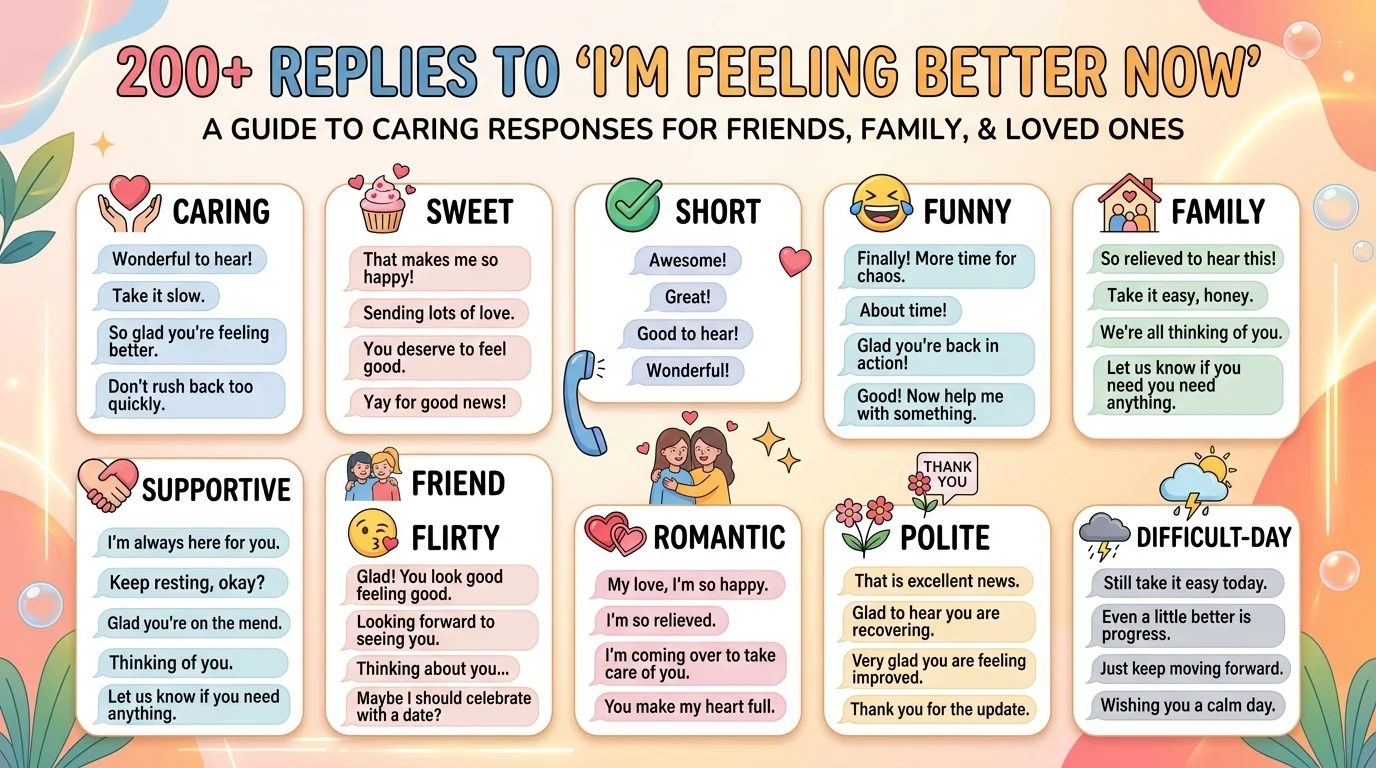
Quick Ans: When someone says, “I’m feeling better now,” you can reply with kindness, relief, encouragement, or humor, depending on your relationship. For example, you could say, “I’m so glad to hear that! Please keep taking care of yourself.” If you are talking to a close friend, try something casual like, “That’s great news! Finally, your body is cooperating.” On the other hand, a romantic partner may appreciate a sweeter response such as, “I’m happy you’re feeling better. I wish I could give you a hug.” Therefore, the best response should show that you care without making the conversation feel forced.
When someone tells you, “I’m feeling better now,” they are usually sharing a positive update after feeling sick, tired, stressed, sad, or emotionally overwhelmed. Naturally, you may want to respond with relief and encouragement. However, finding the right words can sometimes be difficult, especially when you want to sound caring without repeating the same phrase every time.
Fortunately, there are plenty of ways to respond. You can be supportive, sweet, funny, flirty, comforting, or casual. Moreover, your reply can show that you were genuinely concerned and are happy to hear that things are improving.
Whether the message comes from a friend, family member, coworker, crush, or partner, the right response can make the other person feel valued. So, if you are searching for replies to “I’m feeling better now,” this guide includes natural, thoughtful, and text-message-ready responses for almost every situation.
Caring Replies to “I’m Feeling Better Now”
When someone has been unwell or struggling, a caring response helps them feel supported. Therefore, these replies focus on kindness, relief, and genuine concern.
- I’m so glad you’re feeling better now!
Use this when you want to express immediate relief.
Meaning: You are happy that their condition has improved. - That’s such good news! Please keep taking care of yourself.
Use this when you want to celebrate their improvement while showing concern.
Meaning: You are pleased but still want them to rest. - I’m really happy to hear that. Don’t push yourself too hard.
Use this when the person may still need recovery time.
Meaning: You care about their continued well-being. - Thank goodness you’re feeling better!
Use this with someone close to you.
Meaning: You are expressing relief and happiness. - That makes me happy. I hope you continue feeling stronger.
Use this when you want to sound thoughtful.
Meaning: You are wishing them continued improvement. - I’m glad things are getting better for you.
Use this for physical or emotional struggles.
Meaning: You are acknowledging their progress. - That’s wonderful to hear. Make sure you get enough rest, though.
Use this when they may be recovering from illness.
Meaning: You are combining happiness with practical concern. - I was hoping you’d feel better soon. I’m happy you’re improving.
Use this when you have been worried about them.
Meaning: You are showing that their situation mattered to you. - That’s a relief! Take it easy for a while.
Use this for a casual but caring response.
Meaning: You are glad they are better and encourage them to recover fully. - I’m genuinely happy for you. Keep looking after yourself.
Use this when you want to sound sincere.
Meaning: You care about their recovery beyond the immediate update. - I’m glad you’re doing better. Let me know if you need anything.
Use this when you want to offer practical support.
Meaning: You are making yourself available to help. - That’s great news! I hope every day gets easier from here.
Use this when the person has been struggling for some time.
Meaning: You are wishing them continued progress.
Sweet Replies to “I’m Feeling Better Now”
A sweet response can make someone feel appreciated and cared for. In addition, it works well when you want to sound affectionate without becoming overly emotional.
- Aww, I’m so happy you’re feeling better now.
Use this with someone close to you.
Meaning: You are expressing gentle happiness about their improvement. - That makes me smile. Please keep being kind to yourself.
Use this when the person needs encouragement.
Meaning: You are happy for them and want them to prioritize self-care. - I’m so glad to hear that, sweetheart.
Use this with a romantic partner or close person.
Meaning: You are responding with affection and relief. - You deserve to feel good again. I’m happy things are improving.
Use this when someone has been through a difficult time.
Meaning: You are affirming their right to feel better. - That’s lovely news. Sending you a little extra happiness today.
Use this for a warm and cheerful message.
Meaning: You are celebrating their improvement with affection. - I’m happy you’re feeling better. I wish I could give you a big hug.
Use this when you cannot be physically present.
Meaning: You are expressing comfort and closeness. - That’s all I wanted to hear. Keep smiling.
Use this with someone you care about deeply.
Meaning: Their well-being matters to you. - I’m so relieved. Now promise me you’ll take good care of yourself.
Use this when you have been worried.
Meaning: You are showing concern in a sweet way. - Your good news just made my day better too.
Use this for a close friend or partner.
Meaning: Their happiness positively affects you. - I’m glad your smile is coming back.
Use this when someone has been emotionally or physically down.
Meaning: You are happy to see their positivity returning. - That’s wonderful, and I hope you keep feeling better every day.
Use this for a gentle supportive reply.
Meaning: You are wishing them lasting improvement. - I’m sending you all the good energy for a full recovery.
Use this when you want something warm and uplifting.
Meaning: You are offering encouragement and positive wishes.
Short Replies to “I’m Feeling Better Now”
Sometimes, you do not need a long message. In fact, a short response can still sound caring when it is sincere and timely.
- I’m so glad!
Use this for a quick supportive reply.
Meaning: You are expressing happiness about their improvement. - That’s great news!
Use this in almost any casual conversation.
Meaning: You are celebrating their positive update. - So happy to hear that!
Use this when you want to sound warm.
Meaning: You are pleased that they feel better. - Finally! Take care of yourself.
Use this with someone close to you.
Meaning: You are relieved but still concerned. - That’s a relief!
Use this when you were worried about them.
Meaning: You feel comforted by their improvement. - Glad you’re doing better!
Use this for a natural everyday reply.
Meaning: You are acknowledging their progress. - Keep getting stronger!
Use this when they are recovering.
Meaning: You are encouraging continued improvement. - That makes me happy.
Use this for a simple affectionate response.
Meaning: Their well-being matters to you. - Good to hear! Rest well.
Use this when they may still need recovery time.
Meaning: You are pleased and encouraging rest. - Wonderful news!
Use this when you want to sound positive.
Meaning: You are celebrating the improvement. - I’m relieved for you.
Use this when you were genuinely concerned.
Meaning: You are expressing emotional relief. - Keep taking care of yourself!
Use this as a short supportive message.
Meaning: You want them to maintain their recovery.
Funny Replies to “I’m Feeling Better Now”
Humor can make the conversation lighter. However, use funny replies only when the person is comfortable joking and their situation is not serious.
- Finally, your body decided to cooperate!
Use this with a close friend.
Meaning: You are playfully celebrating their recovery. - Look who’s back in action!
Use this when someone is recovering from a minor issue.
Meaning: You are joking that their energy has returned. - Great! The system reboot worked.
Use this for a friend who enjoys technology jokes.
Meaning: You are comparing recovery to restarting a device. - Excellent news. Your dramatic recovery arc continues.
Use this with someone who enjoys playful teasing.
Meaning: You are humorously describing their improvement. - Your body finally read the instructions.
Use this when the person is feeling better after being sick.
Meaning: You are joking about their body functioning properly again. - Good! We were about to file a missing-person report for your energy.
Use this with a close friend.
Meaning: You are playfully saying they seemed unusually tired. - Welcome back to the land of the living!
Use this only when the person had a minor illness and appreciates humor.
Meaning: You are joking about their return to normal activity. - That’s great. Now don’t immediately do something ridiculous.
Use this with a friend who tends to overdo things.
Meaning: You are encouraging them not to ruin their recovery. - Your comeback deserves a tiny celebration.
Use this for a playful and positive response.
Meaning: You are making their improvement sound exciting. - Good news! The recovery department is finally delivering.
Use this with someone who likes silly jokes.
Meaning: You are humorously describing their progress. - Perfect. Your subscription to feeling awful has expired.
Use this when the situation is lighthearted.
Meaning: You are joking that their difficult period is over. - Glad you’re better. Now please avoid unlocking the next problem.
Use this with a playful friend.
Meaning: You are encouraging them to stay careful.
Supportive Replies to “I’m Feeling Better Now”
Supportive responses are useful when someone has experienced stress, sadness, burnout, or a difficult personal situation. Therefore, these messages offer encouragement without minimizing what they experienced.
- I’m really glad things are getting easier for you.
Use this when someone has been emotionally overwhelmed.
Meaning: You recognize their progress and offer encouragement. - You’ve been through a lot, so I’m happy you’re feeling better.
Use this when the person has faced a difficult period.
Meaning: You acknowledge their struggle and celebrate improvement. - That’s wonderful. Remember that recovery takes time, so be patient with yourself.
Use this when the person may still be healing.
Meaning: You encourage self-compassion and patience. - I’m proud of you for getting through the difficult days.
Use this when someone has faced an emotional challenge.
Meaning: You recognize their strength and progress. - I’m glad you’re finding your balance again.
Use this when they have experienced stress or exhaustion.
Meaning: You are acknowledging their return to stability. - That’s good to hear. You don’t have to rush the rest of the process.
Use this when they are still recovering emotionally.
Meaning: You are reminding them that progress does not need to be immediate. - I hope this feeling lasts and continues to grow.
Use this when you want to sound encouraging.
Meaning: You are wishing them lasting emotional improvement. - You deserve peaceful days like this.
Use this when someone has experienced stress.
Meaning: You are affirming their right to rest and feel comfortable. - I’m happy you’re doing better. I’m still here if you want to talk.
Use this when you want to offer emotional support.
Meaning: You are showing that your support remains available. - That’s a positive step. Keep giving yourself time and space.
Use this when the person is gradually improving.
Meaning: You are encouraging patience during recovery. - I’m glad you’re feeling lighter. You don’t have to handle everything alone.
Use this when someone has been emotionally burdened.
Meaning: You are reminding them that support is available. - That’s really encouraging. I hope brighter days keep coming.
Use this when you want to express hope.
Meaning: You are wishing them continued emotional well-being.
Replies to “I’m Feeling Better Now” From a Friend
With friends, your response can be relaxed, warm, and personal. Moreover, you can include a little humor if it matches your usual friendship dynamic.
- I’m so glad, buddy! You had me worried.
Use this when you were concerned about your friend.
Meaning: You are showing affection and relief. - That’s amazing news! Let’s keep the good vibes going.
Use this for an upbeat friendship reply.
Meaning: You are celebrating their improvement. - Good to hear! But seriously, don’t forget to rest.
Use this when your friend tends to overwork themselves.
Meaning: You are being caring while sounding casual. - Finally! I missed your usual energy.
Use this when your friend has been unusually quiet or tired.
Meaning: You are happy their personality is returning. - I’m happy for you. Let me know if you need company.
Use this when you want to offer support.
Meaning: You are making yourself available. - That’s great! Your health comes first, always.
Use this when you want to sound sincere.
Meaning: You are reminding your friend to prioritize well-being. - Good news! Now we can return to our regularly scheduled nonsense.
Use this with a close friend who enjoys humor.
Meaning: You are joking about returning to your usual friendship routine. - I’m relieved. Take it slowly, okay?
Use this when your friend is still recovering.
Meaning: You care about their continued health. - That’s the update I wanted to hear!
Use this when you have been checking on them.
Meaning: You are expressing genuine happiness. - I’m glad you’re better. You owe yourself a relaxing day.
Use this when your friend needs rest.
Meaning: You encourage them to enjoy recovery time. - Sending you a high five from here!
Use this for a cheerful message.
Meaning: You are celebrating their improvement playfully. - Keep feeling better, and remember I’m only a message away.
Use this when you want to offer continued support.
Meaning: You are reminding them that you are available.
Replies to “I’m Feeling Better Now” From Family
Family members may appreciate a response that is reassuring and affectionate. Consequently, these replies work well for parents, siblings, cousins, and other relatives.
- I’m so glad you’re feeling better. Please take good care of yourself.
Use this with a family member recovering from illness.
Meaning: You are expressing relief and concern. - That’s wonderful news! We were hoping you’d feel better soon.
Use this when the family has been worried.
Meaning: You are showing that their recovery mattered to everyone. - I’m happy to hear that. Don’t hesitate to ask if you need help.
Use this when you want to offer practical support.
Meaning: You are making yourself available. - Thank goodness! Sending you lots of love.
Use this for a close relative.
Meaning: You are combining relief with affection. - That makes me feel better too. Keep resting when you can.
Use this when you have been concerned.
Meaning: Their improvement brings you comfort. - I’m glad you’re recovering. Your health is the most important thing.
Use this for a sincere family message.
Meaning: You are encouraging them to prioritize recovery. - That’s great to hear! I hope you continue feeling stronger.
Use this for a supportive response.
Meaning: You are wishing them ongoing improvement. - I’m happy you’re doing better. Sending you a big family hug.
Use this when you are physically apart.
Meaning: You are expressing closeness from a distance. - That’s a relief. Please don’t overdo things just yet.
Use this when they may be recovering from sickness.
Meaning: You want them to remain careful. - I’m so thankful you’re feeling better.
Use this when you want an emotional response.
Meaning: You are expressing gratitude for their improvement. - Keep resting and remember that we love you.
Use this when a relative needs encouragement.
Meaning: You are offering emotional support and affection. - That’s wonderful news. I hope every day brings more comfort and strength.
Use this for a thoughtful family reply.
Meaning: You are wishing them continued healing.
Flirty Replies to “I’m Feeling Better Now”
If someone you like says they are feeling better, you can respond with gentle flirting. However, make sure the tone suits your connection and does not ignore their need for care.
- I’m glad you’re better. Now I can stop worrying about you a little.
Use this when you want subtle affection.
Meaning: You are showing concern while hinting that you care. - Good, because I need you back to your charming self.
Use this with someone you flirt with.
Meaning: You are complimenting their personality playfully. - That’s great news. I was starting to miss your attention.
Use this when you share a flirtatious connection.
Meaning: You are expressing that you missed interacting with them. - I’m happy you’re feeling better. Can I take some credit for the good vibes?
Use this when your conversation is playful.
Meaning: You are flirting by joking about helping their mood. - Glad you’re better. I might have to check on you in person sometime.
Use this when meeting up is appropriate.
Meaning: You are suggesting closeness in a subtle way. - That’s good, because your smile is one of my favorite things.
Use this for a sweet flirtatious message.
Meaning: You are complimenting them affectionately. - I’m relieved. Now I can go back to distracting you.
Use this with someone who enjoys playful teasing.
Meaning: You are expressing interest through humor. - Happy you’re better. I was missing my favorite notification.
Use this for a cute text exchange.
Meaning: You are suggesting that their messages matter to you. - That’s wonderful. I hope I get to see you smiling soon.
Use this when you want gentle romantic interest.
Meaning: You are expressing a desire to see them. - Good to know. I was saving some extra attention for you.
Use this for a playful flirtatious reply.
Meaning: You are hinting that you want to give them attention. - I’m glad you’re better. Now tell me how I can make your day even nicer.
Use this when you want to sound caring and flirty.
Meaning: You are offering affection and attention. - That’s good news. You had me caring a little more than I planned.
Use this when you want subtle romantic honesty.
Meaning: You are playfully admitting that you care.
Romantic Replies to “I’m Feeling Better Now”
A romantic response can combine reassurance, affection, and emotional closeness. Therefore, these messages are ideal for a partner or someone you share a deep connection with.
- I’m so happy you’re feeling better, my love.
Use this for a romantic partner.
Meaning: You are expressing affection and relief. - That’s the best news. I wish I could be there to take care of you.
Use this when you are physically apart.
Meaning: You want to support and comfort them personally. - I’m glad you’re better. Please remember how much you mean to me.
Use this when you want to sound heartfelt.
Meaning: You are reminding them of their importance in your life. - Your well-being means so much to me. I’m happy you’re improving.
Use this for a sincere romantic message.
Meaning: You are expressing genuine concern and love. - I wish I could give you a long hug right now.
Use this when you cannot be together.
Meaning: You are expressing a desire to comfort them physically. - I’m relieved, sweetheart. Keep resting and let yourself recover properly.
Use this when they are still recovering.
Meaning: You are combining tenderness with care. - I’m happy you’re feeling better. Your happiness matters to me.
Use this when you want to express emotional connection.
Meaning: You are telling them their well-being affects you. - That makes my heart feel lighter too.
Use this for an affectionate response.
Meaning: Their improvement gives you emotional relief. - I’m glad you’re getting your energy back. I’ve missed you.
Use this when you have not talked much recently.
Meaning: You are expressing both relief and affection. - Take all the time you need, love. I’m right here.
Use this when they need continued support.
Meaning: You are offering patience and emotional presence. - I’m so thankful you’re doing better. I want to see you happy and healthy.
Use this for a sincere romantic message.
Meaning: You care about their long-term well-being. - That’s wonderful, baby. Sending you all my love and a gentle hug.
Use this when you want a tender response.
Meaning: You are expressing love and comfort.
Replies to “I’m Feeling Better Now” After a Difficult Day
When someone has had a stressful day, their statement may refer to emotional relief rather than physical recovery. As a result, your response should acknowledge their feelings and avoid sounding dismissive.
- I’m glad things feel better now. You deserved a calmer moment.
Use this when someone has experienced stress.
Meaning: You recognize their difficult day and offer comfort. - That’s good to hear. I hope the rest of your day stays peaceful.
Use this for a supportive response.
Meaning: You are wishing them continued calm. - I’m happy you’re feeling better. Do you want to talk about what happened?
Use this when you want to offer a listening ear.
Meaning: You are showing openness without pressuring them. - I’m glad the difficult part has passed. Take a little time for yourself.
Use this when they need emotional space.
Meaning: You are encouraging rest and self-care. - That’s a relief. I hope you can finally relax now.
Use this after a stressful situation.
Meaning: You want them to enjoy some peace. - I’m happy things are looking up. You handled a lot today.
Use this when someone has faced multiple challenges.
Meaning: You are recognizing their effort. - Good to hear. Remember that one difficult day does not define you.
Use this when they feel discouraged.
Meaning: You are offering reassurance and perspective. - I’m glad your mood is improving. Be gentle with yourself tonight.
Use this when someone is emotionally exhausted.
Meaning: You encourage self-compassion. - That’s wonderful. I hope something nice happens next.
Use this for an optimistic response.
Meaning: You are wishing them a positive continuation.
Polite Replies to “I’m Feeling Better Now”
A polite response is useful when the person is a coworker, acquaintance, teacher, neighbor, or someone you do not know very closely. Consequently, these messages remain kind without becoming too personal.
- I’m glad to hear that. I hope you continue feeling better.
Use this in a professional or polite conversation.
Meaning: You are acknowledging their improvement respectfully. - That’s good news. Please take care of yourself.
Use this when you want to sound considerate.
Meaning: You are expressing concern in a simple way. - I’m happy to hear you’re doing better.
Use this as a neutral and friendly response.
Meaning: You are showing positive support. - That’s wonderful. I hope you have a comfortable rest of the day.
Use this for a polite workplace exchange.
Meaning: You are wishing them continued comfort. - I’m pleased to hear that. Take the time you need to recover.
Use this when someone has been ill.
Meaning: You encourage them to prioritize recovery. - That’s reassuring. Wishing you continued good health.
Use this for a more formal response.
Meaning: You are expressing relief and good wishes. - I’m glad things are improving for you.
Use this when you want a professional tone.
Meaning: You are acknowledging their progress. - That’s great to hear. I hope you feel completely better soon.
Use this when they are still recovering.
Meaning: You are wishing them full improvement. - Thank you for the update. I’m glad you’re feeling better.
Use this when they are giving you a health-related update.
Meaning: You appreciate being informed and express relief. - That’s encouraging news. Please continue looking after yourself.
Use this for a respectful response.
Meaning: You are supporting their recovery.
FAQs About Replies to “I’m Feeling Better Now”
What is the best reply to “I’m feeling better now”?
A natural response is, “I’m so glad to hear that! Please keep taking care of yourself.” This shows happiness while reminding the person to continue resting and recovering.
How do I respond sweetly to “I’m feeling better now”?
You can say, “That makes me so happy. I hope you continue feeling better every day.” Alternatively, try “I’m glad your smile is coming back.” The best choice depends on your relationship.
What should I say if my friend feels better?
You could reply, “That’s great news! I’m happy for you, but don’t push yourself too hard.” This sounds friendly, supportive, and natural.
Can I use a funny reply?
Yes, if the person feels comfortable with humor and the situation is not serious. For example, you can say, “Finally, your body decided to cooperate!”
What should I say to someone recovering from illness?
A caring response could be, “I’m glad you’re feeling better. Keep resting and give yourself time to recover fully.” This expresses concern without pressuring them.
How do I respond to a romantic partner?
You can say, “I’m so happy you’re feeling better, my love. I wish I could be there to take care of you.” This adds warmth and affection.
What if the person means they feel emotionally better?
In that situation, acknowledge their progress. For example, say, “I’m glad things feel easier now. I’m here if you want to talk.” This offers support without making assumptions.
Is “Glad to hear that” a good response?
Yes. “Glad to hear that” is polite, natural, and appropriate for many situations. However, adding a sentence such as “Please take care of yourself” can make it feel more thoughtful.
How can I show that I was worried?
You might say, “I’m relieved to hear that. I was hoping you’d start feeling better soon.” This communicates concern without sounding overwhelming.
Should I ask whether they are fully recovered?
You can ask gently, especially if they were seriously unwell. For example, say, “I’m glad you’re better. Are you feeling fully recovered, or do you still need some rest?”
What is a short text reply?
Some short options include “That’s great news!”, “So happy to hear that!”, “Keep taking care of yourself!”, and “I’m relieved for you!”
How do I keep the conversation going?
Ask a gentle follow-up question. For example, “That’s good to hear! What helped you feel better?” or “Are you planning to take it easy today?” This shows interest while keeping the conversation natural.
Conclusion
When someone says, “I’m feeling better now,” your response can be simple, supportive, funny, or affectionate. Ultimately, the best reply depends on what the person has experienced and how close you are to them. If they have been sick, focus on relief and recovery. If they have had a difficult day, offer encouragement and a listening ear. Meanwhile, friends and partners may appreciate humor or extra affection. Most importantly, make your response feel genuine rather than automatic. A few thoughtful words can reassure someone that their well-being matters and that they are not facing difficult moments alone.

Chloe Brooks is a passionate writer at ResponsCraft.com, creating clear, practical and well-researched content to help readers make informed decisions. She focuses on delivering engaging articles that are accurate, useful and easy to understand.
2 thoughts on “200+ Replies to I’m Feeling Better Now: Sweet, Caring, Funny and Supportive Responses”