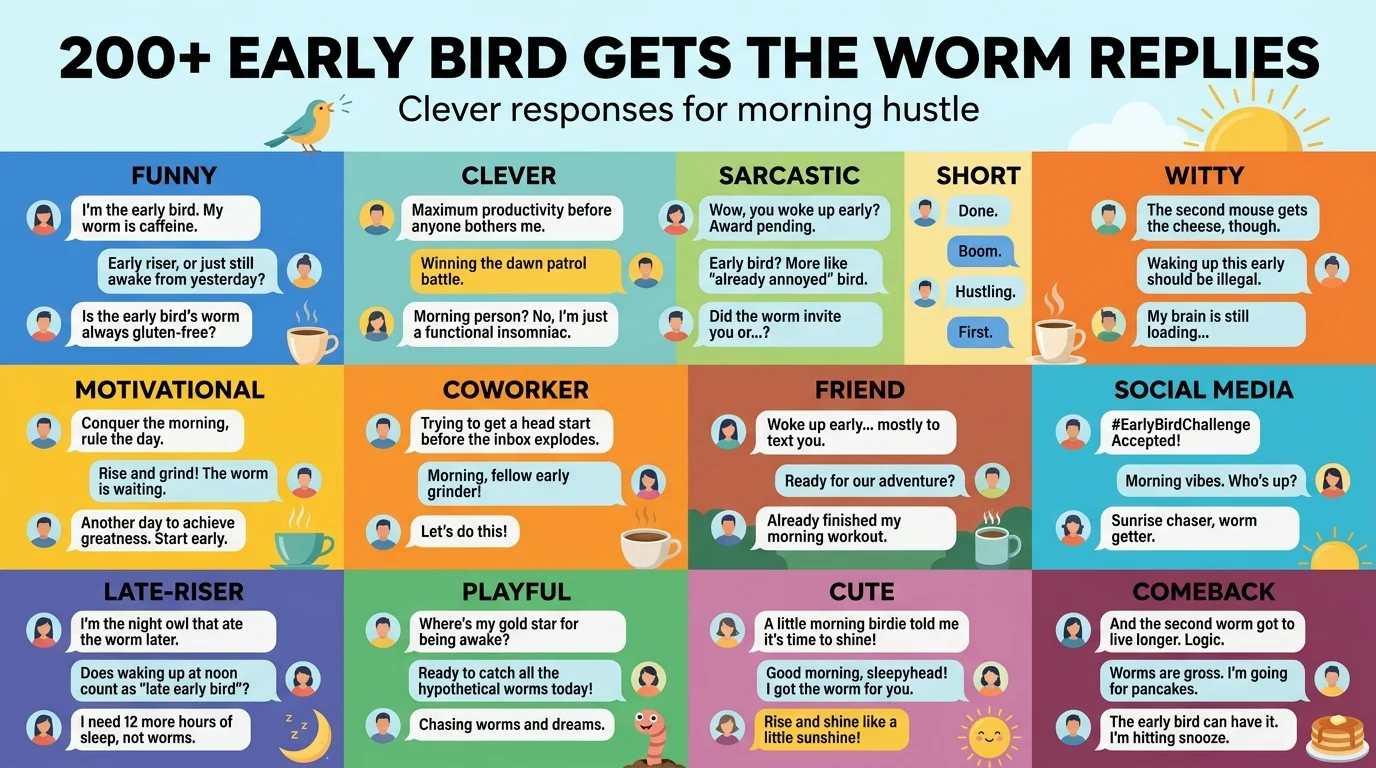
Quick Ans: If someone says “The early bird gets the worm,” you can reply with something funny, clever, sarcastic, motivational, or playful depending on the situation. For example, you could say, “Sure, but the second mouse gets the cheese.” Alternatively, keep it simple with “You have a point!” If you are texting a friend, try “I prefer the bird that sleeps in and orders breakfast.” Meanwhile, a motivational response could be “Exactly. Starting early gives you a head start.” Therefore, the best Early Bird Gets the Worm replies depend on your mood, your relationship with the person, and whether you agree with the saying.
The saying “The early bird gets the worm” is basically the original productivity reminder. It suggests that people who act early often have an advantage because they get opportunities before everyone else. However, not everyone wants to wake up before sunrise, and that is where the fun begins.
Sometimes, someone drops this proverb into a conversation because they are genuinely motivated. Other times, they are teasing you about sleeping late, arriving late, starting a project at the last minute, or missing an opportunity. In either case, a clever response can keep the conversation entertaining.
Fortunately, you do not have to answer with another serious proverb. You can be witty, sarcastic, funny, confident, philosophical, or completely ridiculous. Moreover, your response can match the personality of the person who said it.
So, whether someone is encouraging you to wake up earlier, bragging about being productive, or simply trying to tease you, this list has a response ready. Below, you will find Early Bird Gets the Worm replies for friends, coworkers, social media comments, playful arguments, late risers, and everyday conversations.
Funny Early Bird Gets the Worm Replies
A funny comeback works especially well when someone uses the proverb to tease you about sleeping late. After all, there is no rule saying every proverb needs a serious answer.
- Sure, but the late bird gets the better sleep.
Use this when someone is teasing you about waking up late.
Meaning: You would rather prioritize sleep than an early start. - Maybe, but this bird likes breakfast more than worms.
Use this when you want a silly food-related comeback.
Meaning: You are jokingly rejecting the proverb. - The early bird can have the worm. I want pancakes.
Use this with a friend who loves breakfast.
Meaning: You are choosing comfort and good food instead of rushing. - Good for the bird. I support its career.
Use this when you want a deliberately ridiculous response.
Meaning: You are humorously pretending the proverb is about employment. - I am not a bird, so technically I am exempt.
Use this when someone tells you to get up early.
Meaning: You are playfully finding a loophole. - The early bird gets the worm, but the sleepy bird gets eight hours.
Use this when defending your sleep schedule.
Meaning: You believe rest is more valuable than being first. - That bird sounds productive. I sound tired.
Use this for a self-deprecating joke.
Meaning: You are admitting that you are not interested in early mornings. - Congratulations to the bird. I hope it enjoys the worm.
Use this when you want dry humor.
Meaning: You are pretending to be completely uninterested in the proverb. - I will let the early bird handle that.
Use this when someone expects you to volunteer early.
Meaning: You are jokingly passing the responsibility to someone else. - The early bird gets the worm, while I get the snooze button.
Use this for a classic texting comeback.
Meaning: You are proudly choosing extra sleep. - Plot twist: the worm wanted to sleep in too.
Use this when you want a playful twist.
Meaning: You are turning the proverb into an absurd scenario. - Wake me when the early bird discovers coffee.
Use this when mornings are not your favorite.
Meaning: You need caffeine before becoming productive.
Clever Early Bird Gets the Worm Replies
Clever responses are perfect when you want to challenge the proverb without sounding rude. In fact, a smart comeback can turn a basic saying into a fun conversation.
- The early bird gets the worm, but the prepared bird gets the whole breakfast.
Use this when you want to sound witty and confident.
Meaning: Preparation can matter more than simply arriving early. - Being early helps, but knowing what to do matters too.
Use this during a serious discussion about productivity.
Meaning: Timing is useful, although strategy matters as well. - The early bird gets the worm, but the smart bird knows where the worms are.
Use this when discussing planning or opportunity.
Meaning: Knowledge can be more valuable than simply being early. - Getting there first is helpful, but being ready is even better.
Use this when someone focuses too much on timing.
Meaning: Preparation gives an early start real value. - Sometimes the second bird learns from the first bird’s mistakes.
Use this during a thoughtful conversation.
Meaning: Waiting can provide useful information. - The early bird gets the worm, but patience can get the bigger opportunity.
Use this when challenging the idea that early is always better.
Meaning: Good timing sometimes requires waiting. - Early is useful when the opportunity is worth catching.
Use this when someone encourages you to rush.
Meaning: Not every opportunity deserves immediate action. - The best bird is not always the first bird.
Use this as a short philosophical comeback.
Meaning: Being first does not automatically mean being successful. - Timing matters, but so does knowing when to move.
Use this when discussing decisions.
Meaning: Strategic timing can matter more than speed. - The early bird gets the worm, but the observant bird gets the advantage.
Use this when you want a polished comeback.
Meaning: Awareness can create opportunities. - Getting there early is one strategy, not the only strategy.
Use this in a thoughtful debate.
Meaning: Success can come from different approaches. - Perhaps the real lesson is to know which bird you want to be.
Use this when you want something clever and reflective.
Meaning: Different people can succeed through different habits.
Sarcastic Early Bird Gets the Worm Replies
Sometimes the proverb deserves a little attitude. Therefore, these replies work well when someone is being overly preachy about your schedule.
- Thanks, motivational poster. I will consider it.
Use this when a friend gives you unsolicited advice.
Meaning: You are joking about their serious advice. - Amazing. Did the bird personally tell you that?
Use this for playful sarcasm.
Meaning: You are teasing them for quoting a familiar proverb. - Wonderful news for birds everywhere.
Use this when you want dry humor.
Meaning: You are pretending the saying has nothing to do with you. - I am happy for the bird, honestly.
Use this when someone keeps repeating the proverb.
Meaning: You are sarcastically separating yourself from the lesson. - Tell the bird I said congratulations.
Use this for a short sarcastic response.
Meaning: You are humorously refusing to take the proverb seriously. - And the late bird gets peace and quiet.
Use this when defending a slower morning.
Meaning: You believe sleeping later has its own benefits. - Great. I will add that to my list of problems for tomorrow.
Use this when you are not interested in productivity advice.
Meaning: You are jokingly postponing the issue. - I would respond, but I am busy sleeping.
Use this when someone messages you too early.
Meaning: You are playfully making your sleep schedule clear. - The worm was never on my agenda anyway.
Use this for absurd sarcasm.
Meaning: You are pretending the proverb has no relevance. - Noted. I remain unconvinced.
Use this when you want subtle sarcasm.
Meaning: You heard them but are not changing your mind. - I see the bird has excellent marketing.
Use this when you want a clever sarcastic twist.
Meaning: You are joking about how famous the proverb became. - Thank you for this urgent bird-related information.
Use this when someone is being unnecessarily serious.
Meaning: You are making their advice sound hilariously unimportant.
Short Early Bird Gets the Worm Replies
When someone drops the proverb into a quick text, you may not want to write an entire paragraph. Instead, use one of these short responses.
- Not this bird.
Use this for a quick playful comeback.
Meaning: You are refusing to follow the proverb. - I prefer sleep.
Use this when defending your morning routine.
Meaning: Rest is your priority. - Fair point!
Use this when you agree with the saying.
Meaning: You acknowledge their advice. - Depends on the worm.
Use this when you want a mysterious joke.
Meaning: You are playfully questioning the value of the reward. - I will pass.
Use this when you do not want the opportunity.
Meaning: You are casually declining. - Coffee first.
Use this when discussing early mornings.
Meaning: You need caffeine before productivity. - Maybe tomorrow.
Use this when you are postponing an early start.
Meaning: You are not ready to act yet. - Team late bird.
Use this with a friend.
Meaning: You proudly identify as someone who sleeps later. - Sleep wins.
Use this for a minimalist response.
Meaning: You prioritize rest over being early. - Noted, bird expert.
Use this for playful sarcasm.
Meaning: You are teasing the person quoting the proverb. - Point taken.
Use this when you accept their advice.
Meaning: You understand their message. - Where is my coffee?
Use this when the conversation happens early.
Meaning: You are joking about needing caffeine first.
Witty Early Bird Gets the Worm Replies For Friends
With friends, you can be more playful because the relationship usually allows teasing. Consequently, these replies are perfect for group chats and casual conversations.
- The early bird gets the worm, but my friend gets my sarcasm.
Use this when a friend lectures you about mornings.
Meaning: You are turning their advice into friendly banter. - You wake up early. I wake up emotionally when I am ready.
Use this when defending your schedule.
Meaning: You prefer waking naturally instead of forcing productivity. - Good morning to you and your unnecessary productivity.
Use this when your friend is bragging about waking early.
Meaning: You are teasing their enthusiasm. - You can have the worm. I will take the coffee.
Use this when comparing priorities.
Meaning: Coffee sounds more appealing than the proverb’s reward. - Congratulations on defeating the snooze button.
Use this when a friend boasts about waking early.
Meaning: You are playfully treating their morning routine as an achievement. - The early bird gets the worm, and I get to hear about it all day.
Use this when your friend constantly mentions waking early.
Meaning: You are teasing them about their habit. - I respect your dedication to mornings from a safe distance.
Use this for affectionate teasing.
Meaning: You admire them while making clear that you prefer sleeping. - You be the early bird. I will be the brunch bird.
Use this when discussing weekend plans.
Meaning: You prefer a later and more enjoyable start. - Your alarm clock and I have very different opinions.
Use this when talking about waking up.
Meaning: You do not share your friend’s enthusiasm for early mornings. - Wake up early if you want. I have chosen peace.
Use this when someone pressures you to rise early.
Meaning: You value relaxation over their schedule. - I support your early-bird journey from my bed.
Use this as a playful text.
Meaning: You encourage them while remaining comfortably in bed. - One day I will become a morning person. Today is not that day.
Use this when admitting your dislike of mornings.
Meaning: You might change eventually, but not right now.
Early Bird Gets the Worm Replies For Late Risers
If you are famously slow to get out of bed, these responses let you own it instead of defending it. Besides, confidence makes almost any comeback better.
- I am not late. I am operating on premium time.
Use this when someone complains about your timing.
Meaning: You are humorously reframing lateness as a lifestyle choice. - My mornings have a delayed opening.
Use this when joking about your schedule.
Meaning: You need extra time before becoming active. - I believe in sleeping until the opportunity becomes convenient.
Use this when someone quotes the proverb.
Meaning: You prefer comfortable timing over rushing. - The early bird gets the worm. The late bird gets breakfast delivered.
Use this when you want a modern twist.
Meaning: Technology makes late starts feel easier. - I am simply letting the early birds test everything first.
Use this when explaining why you wait.
Meaning: You humorously treat early risers as your testers. - Why rush when the day is still young?
Use this for a relaxed comeback.
Meaning: You believe there is still plenty of time. - My alarm and I are currently negotiating.
Use this when someone asks why you are still asleep.
Meaning: You are joking about repeatedly delaying your alarm. - I wake up when the vibes are right.
Use this with friends who know your personality.
Meaning: You prefer a relaxed, mood-based routine. - The late bird has boundaries.
Use this when someone pushes you to wake earlier.
Meaning: You are jokingly treating sleep as self-care. - I do not chase worms before breakfast.
Use this for a playful response.
Meaning: You need food and comfort before taking on tasks. - My productivity starts at a reasonable hour.
Use this when defending a later schedule.
Meaning: You believe productivity does not require dawn. - Early is a lifestyle, not a requirement.
Use this when someone insists on waking early.
Meaning: You believe there are multiple ways to organize your day.
Smart Early Bird Gets the Worm Replies
A smart answer can acknowledge the wisdom behind the proverb while adding a little nuance. Similarly, these responses work well when the conversation is more thoughtful.
- Being early creates an opportunity, but preparation turns it into progress.
Use this during a conversation about success.
Meaning: Timing helps, but preparation matters too. - The advantage belongs to the person who is ready, whether they arrive first or not.
Use this when discussing competition.
Meaning: Readiness can matter more than simply being early. - Starting early helps, but consistency keeps the advantage alive.
Use this for a motivational discussion.
Meaning: Long-term effort matters beyond the first step. - The first move matters, but the right move matters more.
Use this when someone emphasizes speed.
Meaning: Quality decisions can outweigh quick action. - Early action is useful when it is guided by a good plan.
Use this for a professional discussion.
Meaning: Acting early without direction may not help. - Opportunity favors preparation as much as timing.
Use this when you want a concise smart reply.
Meaning: Being ready is essential when opportunities appear. - Sometimes the best advantage is knowing when not to rush.
Use this when challenging the proverb.
Meaning: Patience can produce better decisions. - The early bird gets the worm, but the strategic bird gets the advantage.
Use this for a polished comeback.
Meaning: Strategy can improve the value of early action. - Success is rarely just about being first.
Use this during a serious discussion.
Meaning: Many factors influence successful outcomes. - Timing opens doors, but preparation helps you walk through them.
Use this as a motivational response.
Meaning: Opportunity and readiness work together. - Getting there first is useful, but knowing what to do once you arrive is crucial.
Use this when discussing goals.
Meaning: Action after opportunity matters greatly. - The proverb is right, although every situation has its own timing.
Use this when you partly agree.
Meaning: Early action can help without being universally best.
Playful Early Bird Gets the Worm Replies
Playful replies are ideal when you want to keep things light without becoming too sarcastic. Therefore, they work well in friendly conversations and social media comments.
- Okay, but does the worm come with coffee?
Use this when someone talks about getting up early.
Meaning: You are making the proverb more appealing through caffeine. - Only if the worm is worth waking up for.
Use this as a playful challenge.
Meaning: You want a worthwhile reward before getting up early. - I vote for the bird that gets brunch.
Use this with friends.
Meaning: You prefer a relaxed late-morning reward. - The early bird has ambition. I have blankets.
Use this for a cozy joke.
Meaning: Comfort currently beats productivity. - Maybe the worm should wake up earlier.
Use this when you want absurd humor.
Meaning: You are jokingly shifting responsibility to the worm. - I would chase the worm, but I have plans with my pillow.
Use this when defending sleep.
Meaning: You would rather rest. - What if the worm is already booked?
Use this for playful nonsense.
Meaning: You are inventing a funny reason not to follow the proverb. - The early bird gets the worm. I get the blanket. Everyone wins.
Use this for a cute response.
Meaning: You believe both sides can have their preferred reward. - I am waiting for the brunch bird proverb.
Use this when you dislike early mornings.
Meaning: You want a proverb that supports your lifestyle. - Let the birds handle breakfast.
Use this when you want a quick joke.
Meaning: You are not interested in chasing the reward. - I prefer opportunities with opening hours.
Use this for clever humor.
Meaning: You dislike opportunities that require extremely early mornings. - If the worm wants me, it knows where to find me.
Use this as a playful twist.
Meaning: You are jokingly refusing to chase anything.
Motivational Early Bird Gets the Worm Replies
Sometimes, the person saying the proverb is genuinely trying to motivate you. In that case, responding positively keeps the conversation encouraging and productive.
- Absolutely. Starting early can give you a strong head start.
Use this when you agree with their advice.
Meaning: You recognize the benefits of acting early. - Exactly. A good start can shape the entire day.
Use this during a motivational conversation.
Meaning: You believe early momentum can improve the day. - You are right. I have been meaning to get a better start on things.
Use this when their advice resonates with you.
Meaning: You acknowledge that your routine could improve. - True. Sometimes the hardest part is simply getting started.
Use this when discussing motivation.
Meaning: Beginning an action can create momentum. - I agree. Early action can make big goals feel more manageable.
Use this when discussing work or personal goals.
Meaning: Starting sooner can reduce pressure later. - Exactly. Small early wins can build momentum.
Use this as a concise motivational response.
Meaning: Early progress can encourage continued effort. - Fair point. I should probably stop waiting for the perfect moment.
Use this when you realize procrastination is holding you back.
Meaning: You are ready to take action. - You have a point. Getting ahead feels better than catching up.
Use this when discussing deadlines.
Meaning: Early progress can reduce future stress. - Agreed. I am choosing progress over procrastination today.
Use this when making a personal commitment.
Meaning: You intend to start instead of delaying. - Exactly. The sooner you begin, the sooner you can improve.
Use this for learning or projects.
Meaning: Starting early creates more time for growth. - I needed that reminder. Time to get moving.
Use this when someone motivates you.
Meaning: Their words encouraged you to act. - Point taken. Today, I am going after the worm.
Use this for a playful motivational reply.
Meaning: You are committing to taking action.
Early Bird Gets the Worm Replies For Coworkers
At work, a response should usually stay friendly and professional. Nevertheless, you can still add personality, especially in team chats where humor is welcome.
- Absolutely. I am ready to get a head start on the day.
Use this when agreeing with a coworker’s motivation.
Meaning: You are prepared to begin work early. - True. Getting ahead early makes the rest of the day easier.
Use this during a productivity conversation.
Meaning: Early progress can reduce later pressure. - Agreed. Let us get ahead before the inbox wakes up.
Use this in a team chat.
Meaning: You are joking about the volume of work emails. - The early bird gets the worm, and the early employee gets the quiet inbox.
Use this with coworkers who enjoy workplace humor.
Meaning: You are joking about the benefits of working before messages arrive. - I support the strategy, especially before the meetings begin.
Use this when discussing an early work start.
Meaning: You value quiet time before meetings. - A head start sounds good to me.
Use this for a simple professional reply.
Meaning: You agree that starting early can help. - Early planning, fewer last-minute surprises.
Use this when discussing a project.
Meaning: Preparation can reduce unexpected problems. - I am aiming to catch the worm before the deadline catches me.
Use this when deadlines are approaching.
Meaning: You are joking while acknowledging the need for progress. - Good reminder. I will get started on it first thing.
Use this when a coworker encourages action.
Meaning: You intend to prioritize the task. - The early bird has my respect today.
Use this when someone arrives early and productive.
Meaning: You admire their initiative. - Let us make the head start count.
Use this when working as a team.
Meaning: You want early effort to lead to meaningful progress. - Agreed. A productive morning makes everything feel easier afterward.
Use this when discussing your work routine.
Meaning: You believe early productivity improves the rest of the day.
Early Bird Gets the Worm Replies For Social Media
Social media replies need to be short, catchy, and easy to understand. As a result, these options work well for comments, captions, Threads, TikTok, Instagram, and casual posts.
- The early bird gets the worm. The late bird gets the screenshots.
Use this under a funny morning post.
Meaning: You are giving the proverb a modern social-media twist. - I am the bird that hits snooze.
Use this as a relatable comment.
Meaning: You proudly admit that you sleep late. - Worm secured. Sleep sacrificed.
Use this for a productivity post.
Meaning: You are joking about the cost of waking early. - Meanwhile, the night owl is thriving.
Use this when comparing schedules.
Meaning: You prefer being productive later. - Early bird? I am more of a brunch bird.
Use this under a food or lifestyle post.
Meaning: You prefer a relaxed late morning. - Respectfully, I choose the pillow.
Use this as a funny comment.
Meaning: You value sleep more than early productivity. - The worm can wait until after coffee.
Use this for a morning-related post.
Meaning: Caffeine comes before productivity. - Some birds fly early. Some birds need five alarms.
Use this when discussing morning habits.
Meaning: People have different approaches to waking up. - Not every bird is built for sunrise.
Use this as a relatable comment.
Meaning: Early mornings do not suit everyone. - The real flex is getting enough sleep and still getting things done.
Use this under a productivity discussion.
Meaning: Balance can be better than extreme early rising. - Early bird energy, weekend bird schedule.
Use this for a funny weekend post.
Meaning: You like productivity but also enjoy sleeping late. - Catch the worm, catch the coffee, catch the vibes.
Use this for a playful caption or comment.
Meaning: You are combining productivity with a fun morning mood.
Amazing-Style Early Bird Gets the Worm Replies
When someone keeps using the proverb to sound superior, you may want a sharper comeback. However, the goal is to keep the humor clever rather than genuinely insulting.
- The early bird gets the worm, but nobody asked the worm how it feels.
Use this when you want to flip the proverb completely.
Meaning: You are humorously challenging the logic behind the saying. - Being awake first is not the same as being productive first.
Use this when someone brags about waking early.
Meaning: Early rising does not automatically equal achievement. - Congratulations on waking up before everyone else.
Use this for playful teasing.
Meaning: You are minimizing their bragging without being genuinely hostile. - The alarm ringing earlier does not make the day more successful.
Use this during a debate about routines.
Meaning: Success depends on more than wake-up time. - You caught the worm. I caught some sleep.
Use this when comparing your choices.
Meaning: You value rest instead of competing for an early reward. - First awake is not automatically first in line for success.
Use this when someone acts superior.
Meaning: Success requires more than an early start. - I would compete, but I am comfortable letting you win the morning.
Use this when you want a confident comeback.
Meaning: You refuse to compete over something you do not value. - Enjoy your worm. I have bigger priorities.
Use this when someone keeps quoting the saying.
Meaning: You believe your priorities matter more than being early. - The sun came up without either of us needing to supervise it.
Use this for dry humor.
Meaning: You are joking about the importance of waking extremely early. - If waking early were everything, alarm clocks would be CEOs.
Use this when someone takes the proverb too seriously.
Meaning: You are pointing out that wake-up time alone does not create success. - You won the morning. I will see you at the finish line.
Use this during friendly competition.
Meaning: You believe the final outcome matters more than the early start. - Keep the worm. I am after something more interesting.
Use this when you want a confident twist.
Meaning: You are suggesting that your goals are different.
Cute Early Bird Gets the Worm Replies
Cute replies are great for partners, close friends, or anyone who enjoys light teasing. Moreover, these responses can turn the proverb into a sweet little exchange.
- You get the worm, I will bring the coffee.
Use this with someone close to you.
Meaning: You are playfully offering to support their early start. - Okay, early bird. Go be adorable and productive.
Use this when teasing someone who wakes early.
Meaning: You are complimenting them while joking about their routine. - I may sleep late, but I still cheer for you.
Use this for a sweet friend or partner.
Meaning: You support them even though your schedules differ. - You chase the worm. I will save you a cozy seat.
Use this when someone heads out early.
Meaning: You are offering comfort while they handle the morning. - The early bird gets the worm, but my favorite bird gets breakfast.
Use this with someone special.
Meaning: You are turning the proverb into an affectionate joke. - Good morning, little productivity machine.
Use this for someone who loves early starts.
Meaning: You are playfully complimenting their energy. - You can have the worm. I am keeping the cuddles.
Use this with a partner.
Meaning: You are choosing affection over productivity. - I hope your early-bird adventure is going well.
Use this when someone wakes earlier than you.
Meaning: You are affectionately acknowledging their routine. - Rise and shine, champion.
Use this as a cheerful morning message.
Meaning: You are encouraging them to have a great start. - You make mornings look almost tempting.
Use this for someone you like.
Meaning: Their enthusiasm makes early mornings seem more appealing. - The worm has competition because you are already winning at being cute.
Use this as a playful compliment.
Meaning: You are mixing the proverb with affection. - Good morning, early bird. Save some sunshine for me.
Use this with someone special.
Meaning: You are sending a sweet and playful morning message.
Comebacks When Someone Says “The Early Bird Gets the Worm”
Sometimes the exact phrase arrives with no context. Therefore, having versatile responses makes it easy to keep the conversation moving.
- And sometimes the late bird gets the leftovers.
Use this when you want a simple humorous comeback.
Meaning: You are joking that arriving later still has benefits. - Depends. Is the worm even worth catching?
Use this when you want to question the reward.
Meaning: You care about whether the opportunity is valuable. - Then I guess today is a worm-catching day.
Use this when you want to agree playfully.
Meaning: You are accepting the motivational message. - True, but the wise bird knows when to sleep.
Use this when you want a balanced response.
Meaning: Rest and timing both have value. - Fair enough. I will try getting an earlier start.
Use this when the advice is useful.
Meaning: You are open to changing your routine. - Only if I actually want the worm.
Use this when you want a confident response.
Meaning: You decide which opportunities are worth pursuing. - The early bird gets the worm, but the focused bird gets results.
Use this during a productivity discussion.
Meaning: Focus matters beyond starting early. - I hear you. I just need coffee before I become that bird.
Use this when you agree but dislike mornings.
Meaning: You need caffeine before productivity. - Guess I better set the alarm.
Use this when someone successfully motivates you.
Meaning: You are considering starting earlier. - What if I am the worm?
Use this when you want absurd humor.
Meaning: You are intentionally flipping the roles in the proverb. - Okay, but I am negotiating for breakfast instead.
Use this when you want a food joke.
Meaning: You prefer a more enjoyable reward. - Point taken. Now tell me where the good worms are.
Use this when you want playful motivation.
Meaning: You are jokingly asking where the best opportunities are.
FAQs About Early Bird Gets the Worm Replies
What does “the early bird gets the worm” mean?
The phrase means that people who act early often have an advantage because they can reach opportunities before others do. Therefore, it is commonly used to encourage preparation, initiative, and timely action.
What is a funny reply to “the early bird gets the worm”?
A funny answer could be, “Sure, but the late bird gets the better sleep.” Alternatively, you could say, “The early bird gets the worm, but I get pancakes.” Both responses turn the proverb into light humor.
What is a good sarcastic response?
Try “Congratulations to the bird. I hope it enjoys the worm.” This works because it acknowledges the saying while humorously pretending that the bird’s achievement has nothing to do with you.
How do I respond if someone says it because I woke up late?
You can own it with humor. For example, say, “The early bird gets the worm, but the late bird gets eight hours.” As a result, you turn criticism into a confident joke.
What is a clever response to the proverb?
A clever option is “The early bird gets the worm, but the smart bird knows where the worms are.” This suggests that strategy and knowledge can be just as important as being early.
Can I use these replies with friends?
Absolutely. Friends are usually the best audience for funny and playful responses. However, choose a softer option if your friend is genuinely trying to encourage you rather than tease you.
What should I say at work?
A professional response such as “Absolutely. Getting a head start can make the rest of the day easier” works well. Meanwhile, in a casual team chat, a joke about the inbox can add personality.
Is “the late bird gets the better sleep” a good comeback?
Yes. It is short, relatable, and humorous. Moreover, it challenges the original saying without being unnecessarily harsh.
What is a good response for social media?
Try something catchy like “The early bird gets the worm. The late bird gets brunch.” This works especially well as a comment because it is short, easy to understand, and shareable.
What if I actually agree with the saying?
You can respond positively with “Absolutely. Starting early gives you a head start.” Likewise, you could say, “True. Sometimes the hardest part is simply getting started.”
Can I make the response motivational?
Yes. For example, say, “Exactly. Small early wins can build momentum.” This keeps the original meaning while making the response feel encouraging.
What is the best overall Early Bird Gets the Worm reply?
There is no single best response because context matters. However, “The early bird gets the worm, but the smart bird knows where the worms are” is a strong all-purpose choice because it is clever, positive, and easy to adapt.
Conclusion
The saying “The early bird gets the worm” may be old-fashioned, but your response does not have to be. Whether you agree with the proverb or would rather stay under the blankets, there are plenty of ways to answer it. For example, you can be funny with “The late bird gets the better sleep,” clever with “The smart bird knows where the worms are,” or motivational with “Starting early can build momentum.” Moreover, your best comeback depends on the person, situation, and tone. Therefore, choose something playful for friends, polished for coworkers, sweet for someone special, or sharper when you are being teased. Above all, make the response sound like you.

Lily Carter creates practical, easy-to-follow content for everyday readers at ResponseCraft.com. She enjoys turning complex topics into clear, actionable advice that helps people make smarter decisions.
1 thought on “200+ Early Bird Gets the Worm Replies: Funny, Clever, Witty And Smart Responses”