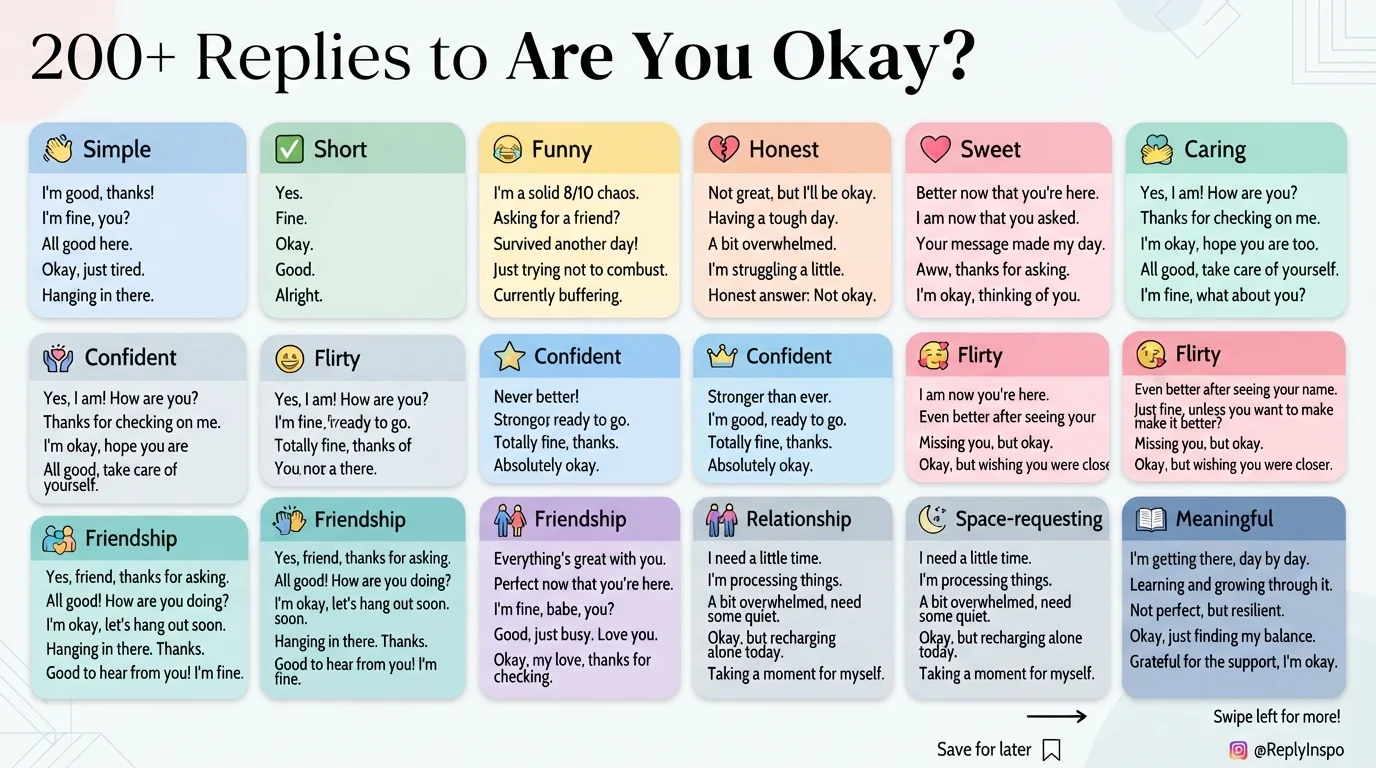
Quick Ans: The best reply to “Are you okay?” depends on how you feel and who is asking. If you are fine, say, “Yeah, I’m okay. Thanks for checking on me.” If something is wrong, try, “Not really, but I appreciate you asking.” For a funny response, you could say, “Define okay.” Meanwhile, if you do not want to talk, say, “I’m handling things, but I’m not ready to talk about it yet.” Whether you need a sweet, honest, funny, short, or confident response, these replies to are you okay will help you answer naturally.
“Are you okay?” is a simple question, but it can carry many different meanings. Someone might ask because you seem quiet, look upset, have been distant, or simply matter to them. Sometimes, you are perfectly fine. Other times, you are struggling but do not know how to explain it.
Therefore, your response should match your emotions, your relationship with the person, and how much you want to share. You do not have to pretend everything is perfect. Similarly, you do not have to explain every personal detail if you are not comfortable doing so.
In this guide, you will find thoughtful, funny, caring, confident, flirty, and honest replies to “Are you okay?” Whether you are responding to a friend, partner, family member, coworker, or someone online, these ready-to-use messages can help you find the right words.
Simple Replies to “Are You Okay?”
Sometimes, a straightforward response is all you need. These replies are perfect for everyday conversations when you want to sound natural without overexplaining.
- Yeah, I’m okay. Thanks for asking.
Use this when you are fine and appreciate their concern.
Meaning: You are reassuring them while showing gratitude. - I’m doing okay. How about you?
Use this when you want to answer and continue the conversation.
Meaning: You are acknowledging the question and showing interest in them. - Yes, I’m good. Don’t worry.
Use this when someone seems concerned about you.
Meaning: You are trying to reassure them. - I’m alright, just a little tired.
Use this when you are physically or emotionally drained.
Meaning: You are being honest without making the conversation too serious. - Thanks for checking. I’m fine.
Use this when you want a polite and appreciative response.
Meaning: You value their concern. - I’m okay, just having a quiet day.
Use this when you are feeling withdrawn but not upset.
Meaning: You are explaining your mood briefly. - For the most part, yes.
Use this when things are mostly fine but not perfect.
Meaning: You are giving a truthful but open-ended answer. - I’m hanging in there.
Use this when you are dealing with some difficulties.
Meaning: You are managing even though things may be challenging. - I’m good, I promise.
Use this when you want to reassure someone close to you.
Meaning: You are asking them not to worry. - I appreciate you asking. I’m okay for now.
Use this when you want to sound thoughtful and honest.
Meaning: You are acknowledging that your feelings may change. - Yeah, everything is fine.
Use this when nothing serious is happening.
Meaning: You are giving a direct reassurance. - I’m managing. Thanks for caring.
Use this when you are dealing with something privately.
Meaning: You are admitting that things may not be effortless.
Short Replies to “Are You Okay?”
If you prefer short texts, these answers are easy to send. In addition, they work well for quick messages, social media chats, and casual conversations.
- I’m okay.
Use this when you want a direct answer.
Meaning: You are saying that you are fine. - Yeah, I’m good.
Use this for a casual conversation.
Meaning: You are reassuring the person briefly. - I’m alright.
Use this when you want a simple response.
Meaning: You are saying you are managing. - Doing fine.
Use this when you want to keep things brief.
Meaning: You are indicating that nothing major is wrong. - I’ll be okay.
Use this when you are facing a difficult moment.
Meaning: You are expressing hope and resilience. - Mostly.
Use this when you are not completely fine.
Meaning: You are leaving room for a deeper conversation. - Getting there.
Use this when you are slowly improving.
Meaning: You are making progress toward feeling better. - I’m hanging in.
Use this when life feels challenging.
Meaning: You are coping with the situation. - Better now.
Use this when their message has helped you.
Meaning: You are saying that you feel improved. - Not exactly.
Use this when you want to be honest.
Meaning: You are suggesting that something is wrong. - I’m managing.
Use this when you want to stay private.
Meaning: You are handling things in your own way. - Thanks for asking.
Use this when you do not want to give details.
Meaning: You appreciate their concern without answering fully.
Honest Replies to “Are You Okay?”
You do not have to say “yes” when you are struggling. Instead, these honest replies help you communicate your feelings clearly while choosing how much to reveal.
- Honestly, not really, but I’m trying.
Use this when you are having a difficult time.
Meaning: You are being truthful while showing effort. - I’ve been better, to be honest.
Use this when things are not going well.
Meaning: You are gently admitting that you are struggling. - Not completely, but I’ll get through it.
Use this when you want to be honest and hopeful.
Meaning: You acknowledge the problem without giving up. - I’m having a rough day.
Use this when your mood is affected by recent events.
Meaning: You are explaining your emotional state simply. - I’m not sure how I feel right now.
Use this when your emotions are confusing.
Meaning: You are admitting that you need time to process things. - No, not really. Can we talk?
Use this when you need support from someone you trust.
Meaning: You are honestly asking for connection. - I’m struggling a little, but thank you for asking.
Use this when you want to share without going into detail.
Meaning: You are acknowledging your difficulty and their kindness. - I’m trying to keep it together today.
Use this when you feel emotionally overwhelmed.
Meaning: You are communicating that you are finding things difficult. - I’m not at my best right now.
Use this when you want a calm, honest response.
Meaning: You are admitting that you are not feeling well emotionally. - Things have been difficult lately.
Use this when your struggles have lasted for a while.
Meaning: You are opening the door to a deeper discussion. - I’m okay physically, but emotionally I’m tired.
Use this when your emotional energy is low.
Meaning: You are distinguishing physical wellness from emotional wellbeing. - I’m not okay, but I’m glad you noticed.
Use this when someone’s concern makes you feel supported.
Meaning: You are honestly acknowledging your struggle and their care.
Funny Replies to “Are You Okay?”
Humor can make a serious question feel lighter. However, use these responses only when the situation is suitable and the person asking understands your sense of humor.
- Define “okay.”
Use this when you want a witty and slightly dramatic reply.
Meaning: You are joking that your situation is complicated. - Emotionally? That’s classified information.
Use this with a friend who enjoys playful humor.
Meaning: You are jokingly avoiding a serious answer. - My last brain cell is doing its best.
Use this when you feel tired or overwhelmed.
Meaning: You are making light of your mental exhaustion. - I’m functioning, so that counts.
Use this when your day has been difficult.
Meaning: You are humorously saying you are getting through it. - Ask me after I’ve had food.
Use this when hunger is affecting your mood.
Meaning: You are joking that food may improve your situation. - Physically present, mentally on vacation.
Use this when you feel distracted.
Meaning: You are humorously describing mental exhaustion. - I’m okay-ish. Very questionable, but okay-ish.
Use this for a playful conversation.
Meaning: You are admitting that things are not perfect. - Running on caffeine and questionable decisions.
Use this when you are tired and joking around.
Meaning: You are playfully describing your energy level. - My emotional Wi-Fi is currently disconnected.
Use this when you do not feel like talking.
Meaning: You are using humor to describe emotional distance. - Still alive, still dramatic.
Use this with a close friend.
Meaning: You are joking about your current struggles. - I’m as okay as my bank account.
Use this when financial stress is part of the joke.
Meaning: You are humorously suggesting that things are not perfect. - Ask again after my imaginary vacation.
Use this when you want a light and creative response.
Meaning: You are joking about needing a break.
Sweet Replies to “Are You Okay?”
When someone genuinely cares about you, a sweet response can help them feel appreciated. Similarly, you can use these messages to return their kindness.
- I’m doing better now that you’ve checked on me.
Use this when their concern makes you feel supported.
Meaning: You are saying that their attention helped you. - That’s really sweet of you to ask. I’m okay.
Use this when you want to appreciate their kindness.
Meaning: You are acknowledging their thoughtful behavior. - I’m a little off today, but your message made me smile.
Use this when their message brightened your mood.
Meaning: You are honestly sharing your feelings while appreciating them. - I’m okay, sweetheart. Thank you for caring.
Use this with someone close to you.
Meaning: You are responding with affection and gratitude. - I’m managing, but it means a lot that you noticed.
Use this when you feel emotionally supported.
Meaning: You appreciate their awareness and concern. - Not completely, but talking to you helps.
Use this when you feel comfortable with the person.
Meaning: You are expressing vulnerability and trust. - I’m getting through it. Thank you for being thoughtful.
Use this when you want a warm but honest reply.
Meaning: You are acknowledging both your struggle and their care. - I’m okay, and I hope you’re taking care of yourself too.
Use this when you want to return their concern.
Meaning: You care about their wellbeing as well. - You’re kind for asking. I really appreciate it.
Use this when you want to keep your feelings private.
Meaning: You are expressing gratitude without sharing details. - I’m not having the best day, but your message means a lot.
Use this when you want to be honest and affectionate.
Meaning: You are explaining your mood while appreciating their support. - I’ll be okay. Thanks for reminding me that someone cares.
Use this when you need encouragement.
Meaning: You are expressing gratitude for their emotional support. - I’m doing my best, and it’s nice to know you care.
Use this when you want a gentle and sincere response.
Meaning: You are acknowledging your effort and their kindness.
Caring Replies to “Are You Okay?”
If you want to respond in a way that encourages emotional support, these replies are useful. Moreover, they can help someone understand what you need from them.
- I’m not okay right now, but I could use some company.
Use this when you do not want to be alone.
Meaning: You are asking for companionship. - I’m struggling a bit. Can you listen without judging me?
Use this when you need a safe conversation.
Meaning: You are requesting understanding and emotional safety. - I’m having a difficult time, but I don’t need advice right now.
Use this when you only want someone to listen.
Meaning: You are clearly communicating your needs. - I’m feeling overwhelmed. Could we talk for a few minutes?
Use this when you need support.
Meaning: You are asking for a short, supportive conversation. - I’m not sure, but I appreciate you being here.
Use this when your emotions are unclear.
Meaning: You are acknowledging their presence and kindness. - I could use a little encouragement today.
Use this when you need emotional support.
Meaning: You are directly expressing what would help. - I’m okay for now, but I may need someone to talk to later.
Use this when you are managing but still need support.
Meaning: You are communicating a possible future need. - I’m feeling low, so thank you for checking in.
Use this when your mood is down.
Meaning: You are being honest and appreciative. - I’m having trouble explaining it, but I’m not feeling great.
Use this when words are difficult to find.
Meaning: You are sharing honestly despite uncertainty. - I need a little time, but I’m grateful you asked.
Use this when you are not ready to talk.
Meaning: You are setting a boundary while appreciating their concern. - I’m struggling, and I would really appreciate your support.
Use this when you want direct help.
Meaning: You are clearly asking for emotional support. - I’m not okay yet, but I’m taking things one step at a time.
Use this when you want to remain hopeful.
Meaning: You are acknowledging difficulty while focusing on progress.
Confident Replies to “Are You Okay?”
A confident response does not require you to hide your emotions. Instead, it shows that you can acknowledge your situation while maintaining your boundaries.
- I’m handling it, thank you.
Use this when you want to remain private.
Meaning: You are communicating that you can manage the situation. - I’m not at my best, but I know I’ll get through it.
Use this when you want to sound honest and strong.
Meaning: You recognize the challenge while maintaining hope. - I appreciate your concern, but I need some space.
Use this when you do not want to talk.
Meaning: You are setting a clear personal boundary. - I’m taking care of myself, one day at a time.
Use this when you are working through difficulties.
Meaning: You are focusing on steady personal progress. - I’m okay enough to handle today.
Use this when you want a realistic response.
Meaning: You are acknowledging your current capacity. - I’ll let you know if I need help.
Use this when someone is concerned but you need independence.
Meaning: You are accepting their care while maintaining control. - I’m working through it privately.
Use this when you do not want to share details.
Meaning: You are requesting privacy without sounding harsh. - I’m not fine, but I’m not giving up either.
Use this when you want to express resilience.
Meaning: You acknowledge your struggle and determination. - I’m doing what I can, and that’s enough for today.
Use this when you need to recognize your own effort.
Meaning: You are practicing self-acceptance. - I appreciate you asking, but I’m not ready to discuss it.
Use this when you want a firm yet polite boundary.
Meaning: You are choosing not to share personal details. - I’m figuring things out at my own pace.
Use this when you need time and independence.
Meaning: You are reminding others that healing takes time. - I’m dealing with it, even if it doesn’t look that way.
Use this when people misunderstand your behavior.
Meaning: You are asserting that you are making an effort.
Flirty Replies to “Are You Okay?”
When someone you like asks if you are okay, you can respond with light flirting. Nevertheless, choose a message that matches your relationship and comfort level.
- I’ll be better if you stay and talk to me.
Use this when you want to flirt gently.
Meaning: You are suggesting that their company makes you feel good. - I was fine until you made me smile.
Use this for a playful romantic exchange.
Meaning: You are teasing them affectionately. - I’m okay, but I wouldn’t say no to your attention.
Use this when you want a confident flirt.
Meaning: You are inviting them to give you attention. - A little better now that you’re here.
Use this when their message makes you happy.
Meaning: You are expressing attraction and appreciation. - I might be okay, but your concern is cute.
Use this when you want to compliment them.
Meaning: You are playfully appreciating their care. - I’m fine. Are you always this caring?
Use this when you want to start a flirtatious conversation.
Meaning: You are teasing them while showing interest. - I’m okay, but I could use a hug from you.
Use this when you share a close connection.
Meaning: You are expressing affection and wanting physical comfort. - I’m good now. You checking on me was adorable.
Use this when you want a sweet flirt.
Meaning: You are complimenting their thoughtful behavior. - I’m okay, especially since you’re talking to me.
Use this when you want to sound affectionate.
Meaning: You are saying their attention improves your mood. - Maybe I just needed an excuse to talk to you.
Use this when you want playful romantic energy.
Meaning: You are hinting that you enjoy communicating with them. - I’m fine, but you can keep checking on me.
Use this when you want to encourage their attention.
Meaning: You are playfully inviting more interaction. - I’m okay. Should I ask how you’re looking this good?
Use this when the conversation is openly playful.
Meaning: You are shifting the conversation toward a flirtatious compliment.
Replies to “Are You Okay?” From a Friend
Friends may notice changes in your behavior quickly. Therefore, you can answer honestly while keeping the friendship comfortable.
- I’m okay, buddy. Just a little overwhelmed.
Use this when you trust your friend but want to keep things brief.
Meaning: You are sharing your mood without going into detail. - Not really, but I’m glad you asked.
Use this when you need a supportive friend.
Meaning: You are acknowledging your struggle and their care. - I’m fine, just tired of everything today.
Use this when you are emotionally drained.
Meaning: You are describing temporary frustration. - I’ll be okay. Can we distract ourselves with something fun?
Use this when you want a break from serious thoughts.
Meaning: You are asking for positive company. - Honestly, I could use a friend right now.
Use this when you want companionship.
Meaning: You are directly expressing your need for support. - I’m managing, but thanks for noticing.
Use this when you appreciate their attention.
Meaning: You are recognizing their concern. - I’m not ready to talk about it yet.
Use this when you need privacy.
Meaning: You are setting a respectful boundary. - I’m having a rough day. Want to call?
Use this when you prefer talking rather than texting.
Meaning: You are inviting a supportive conversation. - A little stressed, but I’ll survive.
Use this when you want an honest but casual response.
Meaning: You are acknowledging stress without making it dramatic. - I’m okay now. Thanks for being the kind of friend who asks.
Use this when you feel grateful.
Meaning: You are appreciating their friendship. - Not my best day, but your message helped.
Use this when their check-in made a difference.
Meaning: You are showing gratitude for their support. - I’m good. Now tell me how you’re doing.
Use this when you want to return the concern.
Meaning: You are showing that their wellbeing matters too.
Replies to “Are You Okay?” From Someone You Love
When a partner or loved one asks this question, honesty and warmth can strengthen the connection. Additionally, these responses help you communicate what you need.
- I’m not completely okay, but I feel safe telling you that.
Use this when you trust the person deeply.
Meaning: You are expressing vulnerability and trust. - I’m having a hard day. Can I get a little extra love?
Use this when you want affection.
Meaning: You are directly asking for emotional comfort. - I’m okay, love. Thank you for checking on me.
Use this when you are fine and want to sound affectionate.
Meaning: You are returning their concern warmly. - I’m struggling a little, and I could really use a hug.
Use this when physical comfort would help.
Meaning: You are asking for affection and support. - Not yet, but having you beside me makes things easier.
Use this when you want to express appreciation.
Meaning: You are saying their presence provides comfort. - I don’t have all the words, but I know I need you right now.
Use this when your feelings are difficult to explain.
Meaning: You are asking for closeness despite uncertainty. - I’m okay, just emotionally exhausted. Can we have a quiet evening?
Use this when you need rest rather than conversation.
Meaning: You are communicating your emotional needs. - Thank you for noticing. I really needed someone to ask.
Use this when you feel seen.
Meaning: You are expressing gratitude for their awareness. - I’m not okay, but I don’t want to face it alone.
Use this when you need their support.
Meaning: You are openly asking for companionship. - I’m doing better now that I can talk to you.
Use this when conversation helps you.
Meaning: You are showing that their presence comforts you. - I’m okay for now, but please stay close.
Use this when you need reassurance.
Meaning: You are asking for emotional closeness. - I love that you always notice when something feels different.
Use this when you want to appreciate their attentiveness.
Meaning: You are expressing gratitude for their care.
Replies to “Are You Okay?” When You Need Space
Not every question needs a detailed answer. If you need privacy, these responses help you communicate your boundaries politely and clearly.
- I appreciate you asking, but I need some time alone.
Use this when you need personal space.
Meaning: You are expressing gratitude while requesting privacy. - I’m processing a few things right now.
Use this when you are not ready to explain.
Meaning: You are acknowledging internal struggles without details. - I’ll talk about it when I’m ready.
Use this when you want to delay the conversation.
Meaning: You are setting a clear boundary. - Thanks for caring. I just need a quiet moment.
Use this when you want temporary peace.
Meaning: You appreciate their concern but need silence. - I’m handling something personal at the moment.
Use this when you want to keep your situation private.
Meaning: You are communicating that the matter is personal. - I’m not ready to talk, but I appreciate your patience.
Use this when you may discuss it later.
Meaning: You are requesting time without rejecting their support. - I’m okay enough, but I need to recharge.
Use this when you are emotionally tired.
Meaning: You are communicating a need for rest. - Can we talk about something else for now?
Use this when you want to change the subject.
Meaning: You are politely redirecting the conversation. - I understand you’re concerned, but I need privacy right now.
Use this when someone keeps asking questions.
Meaning: You are firmly expressing a boundary. - I’ll reach out if I need someone to talk to.
Use this when you want to manage things independently.
Meaning: You are reassuring them while asking for space. - I’m taking a little break from conversations today.
Use this when you feel socially exhausted.
Meaning: You are explaining why you may be quiet. - Nothing personal. I just need some time to myself.
Use this when you worry someone may feel rejected.
Meaning: You are clarifying that your need for space is not about them.
Deep and Meaningful Replies to “Are You Okay?”
A deeper response can help you express emotions that are difficult to describe. These messages are suitable for serious conversations with someone you trust.
- I’m learning that being okay doesn’t always mean feeling happy.
Use this when you want to share a thoughtful perspective.
Meaning: You are explaining that emotional wellbeing can be complicated. - I’m trying to accept that some days are harder than others.
Use this when you are reflecting on your emotions.
Meaning: You are acknowledging the natural ups and downs of life. - I’m not where I want to be, but I’m making progress.
Use this when you are working through challenges.
Meaning: You are recognizing growth despite difficulties. - I’m learning to be honest about when I need help.
Use this when you want to communicate personal growth.
Meaning: You are becoming more comfortable asking for support. - I’m okay in some ways, but there are things I’m still working through.
Use this when your situation is complicated.
Meaning: You are offering a balanced and honest answer. - I don’t have everything figured out, but I’m taking things slowly.
Use this when you feel uncertain.
Meaning: You are accepting that progress does not happen instantly. - I’m trying to give myself the same kindness I give everyone else.
Use this when you are reflecting on self-care.
Meaning: You are focusing on treating yourself with compassion. - I’m tired, but I’m still hopeful.
Use this when you want a short but meaningful answer.
Meaning: You acknowledge exhaustion without losing optimism. - I’m working through feelings I haven’t fully understood yet.
Use this when you need time to process emotions.
Meaning: You are honestly describing emotional uncertainty. - I’m not perfect, but I’m doing what I can.
Use this when you need self-acceptance.
Meaning: You are recognizing your effort without demanding perfection. - I’m slowly finding my way back to myself.
Use this when you are recovering from a difficult period.
Meaning: You are expressing personal growth and emotional recovery. - I’m still figuring out what being okay means for me.
Use this when you want a reflective response.
Meaning: You are acknowledging that wellbeing looks different for everyone.
FAQs About Replies to “Are You Okay?”
What is the best reply to “Are you okay?”
The best reply depends on how you feel. If you are fine, say, “Yes, I’m okay. Thanks for asking.” If you are struggling, try, “Not really, but I appreciate you checking on me.”
How do I reply when I am not okay?
Be honest without sharing more than you want. For example, you can say, “I’m having a difficult day, but thank you for asking.” Alternatively, ask for support by saying, “I’m not okay. Can we talk?”
What is a funny reply to “Are you okay?”
You can say, “Define okay,” or “My last brain cell is doing its best.” However, avoid humor when the person is genuinely worried or the situation is serious.
How do I reply when I need space?
Try saying, “I appreciate your concern, but I need some time alone.” This response is polite, clear, and respectful of your boundaries.
What should I say to someone I love?
You can be affectionate and honest. For example, say, “I’m not completely okay, but having you here makes things easier.” This communicates vulnerability and appreciation.
Can I say “I’m fine” even when I do not want to talk?
Yes, you can choose not to share personal details. However, if you are struggling and need help, consider telling someone you trust that you are not okay.
How do I respond to “Are you okay?” over text?
Keep the reply natural and match your feelings. You could say, “I’m okay, just tired,” or “Not really. Can we talk later?”
What is a polite reply to a coworker?
A professional response could be, “Thank you for asking. I’m doing okay.” If you need privacy, you can add, “I appreciate your concern.”
How do I respond if I am unsure about my feelings?
Try, “I’m not completely sure how I feel right now.” This is honest and gives you time to understand your emotions.
What if someone keeps asking whether I am okay?
You can set a respectful boundary. Say, “I appreciate your concern, but I’m not ready to talk about it.” If you need help, however, consider speaking with someone you trust.
Is it okay to ask for help?
Absolutely. If you are struggling, asking for support is a reasonable and healthy step. You can say, “I’m having a hard time and could use someone to listen.”
How can I make my reply sound more personal?
Mention what you need or how you feel. For example, instead of saying only “I’m okay,” you might say, “I’m tired today, but I appreciate you checking on me.” As a result, your message will sound more genuine.
Conclusion
Finding the right response to “Are you okay?” depends on your feelings, your relationship with the person, and how much you want to share. Sometimes, a simple “I’m okay, thanks for asking” is enough. Other times, honesty such as “I’m struggling, but I’m trying” can help you receive the support you need. Similarly, a funny reply may work well with a close friend, while a clear boundary is better when you need space. Above all, remember that you do not have to pretend everything is perfect. Choose words that feel comfortable, communicate your needs clearly, and allow yourself to be honest when it matters.

Lily Carter creates practical, easy-to-follow content for everyday readers at ResponseCraft.com. She enjoys turning complex topics into clear, actionable advice that helps people make smarter decisions.
3 thoughts on “200+ Replies to “Are You Okay?”: Caring, Funny, Honest and Confident Responses”