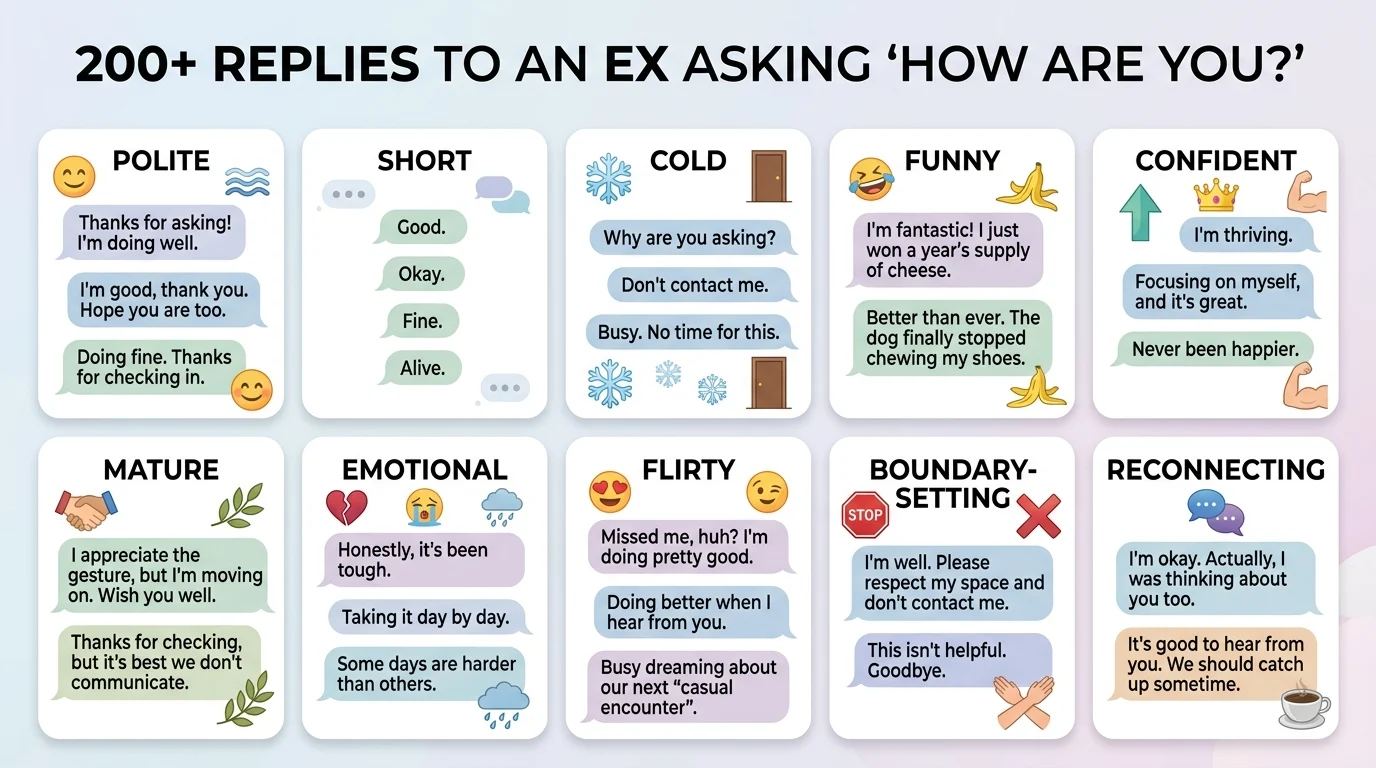
Quick Ans: When your ex asks, “How are you?”, your reply depends on your feelings and the kind of relationship you want now. If you want to stay polite, say, “I’m doing well, thanks. Hope you are too.” However, if you want to sound confident, try, “I’m doing pretty good and focusing on myself.” If you still miss them, you can be honest without revealing too much. On the other hand, if you have moved on and want distance, a short response such as “I’m fine, thanks” may be enough. Whether you want a funny, cold, mature, flirty, or emotionally honest response, this guide includes ready-to-send replies for different situations.
Getting a message from an ex can bring up many different feelings. One moment, you may feel completely fine, and the next, their simple “How are you?” suddenly makes you remember everything. Sometimes, you are genuinely happy to hear from them. Other times, you wonder why they are reaching out after so much time.
Of course, your response depends on what you want. Maybe you want to remain polite without reopening the past. Perhaps you want to show that you have moved forward. Alternatively, you might still have feelings and want to understand their intentions.
Fortunately, you do not need to write a long paragraph or explain your entire life. A short, thoughtful reply can communicate exactly what you mean. Moreover, you can choose a response that protects your peace while matching the tone of the conversation.
Below are the best replies to an ex asking how you are, including polite, funny, cold, confident, emotional, mature, and slightly flirty options.
Polite Replies to an Ex Asking How You Are
A polite response is useful when you do not want tension but also do not want to become overly personal. Therefore, these replies keep the conversation respectful and simple.
- I’m doing well, thanks. Hope you are too.
Use this when you want a friendly and neutral reply.
Meaning: You are being polite without inviting a deep conversation. - I’m good, thank you for asking.
Use this when you want to acknowledge their concern briefly.
Meaning: You appreciate the question but are keeping things limited. - Doing fine. Hope everything is going well for you.
Use this when you want to return the courtesy.
Meaning: You are being respectful without showing strong emotion. - I’m doing pretty well. How about you?
Use this when you are comfortable continuing the conversation.
Meaning: You are open to a casual exchange. - Thanks for checking in. I’m doing okay.
Use this when their message seems considerate.
Meaning: You acknowledge their effort while remaining measured. - I’m alright, thanks. Hope life is treating you well.
Use this when you want a mature response.
Meaning: You are offering goodwill without becoming too personal. - Everything is fine on my end. Hope you’re well too.
Use this when you want a calm and balanced reply.
Meaning: You are communicating that things are going normally. - I’m doing well. Appreciate you asking.
Use this when you want to sound composed.
Meaning: You are responding kindly but briefly. - I’m good. Wishing you well too.
Use this when you prefer a short message.
Meaning: You are returning positive wishes without encouraging more contact. - I’m okay, thank you. It’s nice of you to ask.
Use this when you want to sound courteous.
Meaning: You recognize their concern without revealing much. - Doing well, just taking things day by day.
Use this when you want a calm but slightly personal answer.
Meaning: You are showing that you are managing life at your own pace. - I’m fine, thanks. I hope things are good with you.
Use this when you want a neutral response.
Meaning: You are keeping the interaction respectful and uncomplicated.
Short Replies to an Ex Asking How You Are
Sometimes, less is more. In fact, a short reply can help you avoid unnecessary conversations, especially when you are unsure about your ex’s intentions.
- I’m good, thanks.
Use this when you want to keep the exchange brief.
Meaning: You are answering politely without adding details. - Doing fine.
Use this when you want a minimal response.
Meaning: You are acknowledging the question without inviting discussion. - All good here.
Use this for a casual and short reply.
Meaning: You are communicating that you are okay. - I’m alright.
Use this when you want to sound calm and neutral.
Meaning: You are answering without emotional openness. - Good, hope you are too.
Use this when you want to return the question quickly.
Meaning: You are being polite and balanced. - Can’t complain.
Use this when you want a relaxed response.
Meaning: You are suggesting that life is going reasonably well. - Doing okay, thanks.
Use this when you want a simple answer.
Meaning: You are acknowledging their message without extra details. - Pretty good.
Use this when you want a casual reply.
Meaning: You are saying you are doing well without elaborating. - I’m fine.
Use this when you want to remain emotionally reserved.
Meaning: You are giving a direct and limited answer. - All well on my side.
Use this when you want a slightly polished response.
Meaning: You are communicating that your life is going smoothly. - I’m doing okay.
Use this when you want to remain neutral.
Meaning: You are answering honestly but keeping the conversation short. - Good, thanks for asking.
Use this when you want to be polite and concise.
Meaning: You appreciate the question without encouraging intimacy.
Cold Replies to an Ex Asking How You Are
If you want to maintain distance, a calm and brief response can communicate your boundaries. However, you do not need to be rude to make it clear that you are not interested in a long conversation.
- I’m fine.
Use this when you want a direct and emotionally distant reply.
Meaning: You are answering without inviting further discussion. - Doing well. Take care.
Use this when you want to end the conversation politely.
Meaning: You are being courteous while creating distance. - I’m okay. Hope everything works out for you.
Use this when you want a calm closing statement.
Meaning: You are offering goodwill without reopening the relationship. - I’m doing fine, thanks.
Use this when you want to remain reserved.
Meaning: You are responding without sharing personal details. - All good. I’ve been keeping busy.
Use this when you want to suggest that your attention is elsewhere.
Meaning: You are showing that life is continuing without them. - I’m alright. Nothing much to discuss.
Use this when you want to limit the conversation.
Meaning: You are signaling that you do not want to elaborate. - Doing okay. I hope you respect my space.
Use this when you need a clear boundary.
Meaning: You are requesting distance directly. - I’m fine, and I’d prefer to keep things simple.
Use this when you want to avoid emotional complications.
Meaning: You are expressing a preference for limited communication. - Everything is fine. I’m focusing on my own life.
Use this when you want to emphasize independence.
Meaning: You are communicating that your attention is on yourself. - I’m doing well. I don’t think we need to revisit everything.
Use this when you want to prevent an emotional discussion.
Meaning: You are setting a boundary around the past. - I’m okay. I hope you understand that I want distance.
Use this when contact is unwanted.
Meaning: You are clearly expressing your need for space. - Fine, thanks. Wishing you the best.
Use this when you want a respectful closing reply.
Meaning: You are ending the exchange without hostility.
Funny Replies to an Ex Asking How You Are
Humor can make the conversation lighter, especially when you have already moved on emotionally. Nevertheless, choose a joke carefully if the breakup was painful or the other person seems vulnerable.
- Surviving and thriving, with occasional snack breaks.
Use this when you want a playful but positive reply.
Meaning: You are joking while suggesting that life is going well. - Better than my old decision-making skills.
Use this when you feel comfortable making a breakup-related joke.
Meaning: You are playfully referring to lessons from the past. - Currently accepting compliments and good coffee.
Use this when you want a lighthearted response.
Meaning: You are jokingly showing that you are enjoying life. - Doing great. My Wi-Fi and I are both stable now.
Use this when you want silly humor.
Meaning: You are keeping the conversation playful and casual. - Alive, hydrated, and minding my business.
Use this when you want a confident joke.
Meaning: You are humorously emphasizing independence. - Pretty good. My character development is progressing nicely.
Use this when you enjoy playful self-growth humor.
Meaning: You are joking about personal progress after the breakup. - Better than expected, considering the plot twists.
Use this when you want a humorous but subtle reply.
Meaning: You are referring playfully to past experiences. - Doing well. The subscription to drama has expired.
Use this when you want a cheeky response.
Meaning: You are joking that you no longer want unnecessary conflict. - Great enough to answer this message, apparently.
Use this when you want dry humor.
Meaning: You are playfully acknowledging their unexpected text. - Living, laughing, and occasionally ignoring notifications.
Use this when you want a relaxed social-media-style reply.
Meaning: You are showing that you are enjoying your independence. - I’m good. My peace has excellent customer service.
Use this when you want an unusual playful response.
Meaning: You are joking about protecting your calm. - Doing fine. The plot is finally getting interesting.
Use this when you want a confident and humorous tone.
Meaning: You are suggesting that life has become more enjoyable.
Confident Replies to an Ex Asking How You Are
Confidence is about communicating that you are comfortable with your life, regardless of what your ex thinks. Therefore, these replies sound positive without needing to prove anything.
- I’m doing really well and focusing on what matters to me.
Use this when you want a mature, confident response.
Meaning: You are showing that your priorities are clear. - Life has been treating me well lately.
Use this when things are genuinely going positively.
Meaning: You are communicating contentment without overexplaining. - I’m in a good place these days.
Use this when you want to sound emotionally settled.
Meaning: You are suggesting that you have found stability. - Doing well and enjoying the direction my life is taking.
Use this when you want to emphasize growth.
Meaning: You are expressing satisfaction with your progress. - I’m good. I’ve learned a lot and kept moving forward.
Use this when you want a reflective response.
Meaning: You are showing that you have learned from the past. - I’m doing better than I expected.
Use this when you want to sound quietly confident.
Meaning: You are suggesting that your life has improved. - I’m focused on myself, and things feel positive.
Use this when you want to communicate independence.
Meaning: You are showing that your attention is on personal growth. - I’m happy with where I am right now.
Use this when you feel content with your current situation.
Meaning: You are expressing emotional satisfaction. - I’ve been doing well and building a life I enjoy.
Use this when you want a confident but grounded reply.
Meaning: You are emphasizing your own choices and progress. - I’m good. I’ve found a nice rhythm lately.
Use this when you want to sound relaxed.
Meaning: You are communicating stability and comfort. - I’m doing well, and I’m taking things as they come.
Use this when you want a balanced response.
Meaning: You are showing confidence without exaggeration. - Life is moving forward, and I’m enjoying the journey.
Use this when you want a positive response.
Meaning: You are expressing optimism and independence.
Mature Replies to an Ex Asking How You Are
A mature response does not need to include blame, old arguments, or emotional explanations. Instead, it focuses on respectful communication and clear intentions.
- I’m doing well. I hope you’ve been taking care of yourself too.
Use this when you want to be considerate.
Meaning: You are offering goodwill without reopening the past. - I’m okay, and I appreciate you checking in.
Use this when you want a composed response.
Meaning: You acknowledge their message respectfully. - I’ve been focusing on personal growth, and I’m doing alright.
Use this when you want to mention your progress.
Meaning: You are communicating that you have been working on yourself. - I’m doing well. I hope life has been kind to you.
Use this when you want a thoughtful but neutral reply.
Meaning: You are expressing goodwill without emotional pressure. - I’m in a better place and trying to stay present.
Use this when you want to sound reflective.
Meaning: You are focusing on your current emotional state. - Things have changed, but I’m doing okay.
Use this when the breakup brought significant changes.
Meaning: You recognize the past without describing it in detail. - I’m doing fine and learning to appreciate where I am.
Use this when you want a calm and mature tone.
Meaning: You are expressing acceptance and growth. - Thank you for asking. I hope you’re finding peace as well.
Use this when you want a compassionate response.
Meaning: You are offering kindness while maintaining boundaries. - I’m doing well. I think we’ve both had time to grow.
Use this when you want to acknowledge change.
Meaning: You are referring to personal development without assigning blame. - I’m okay, and I’m trying to keep life simple and healthy.
Use this when you want to avoid unnecessary drama.
Meaning: You are prioritizing stability and peace. - I’m doing alright. I hope things are moving positively for you too.
Use this when you want a balanced message.
Meaning: You are being respectful and emotionally measured. - I appreciate you asking. I’m taking life one day at a time.
Use this when you want to sound grounded.
Meaning: You are communicating patience and emotional awareness.
Replies When You Still Miss Your Ex
If you still have feelings, you can be honest without immediately exposing everything. However, consider what you want from the conversation before sending an emotional message.
- I’ve been okay, although I still think about the past sometimes.
Use this when you want to be honest but careful.
Meaning: You acknowledge that some feelings remain. - I’m doing alright. Some days are easier than others.
Use this when healing has been inconsistent.
Meaning: You are honestly describing your emotional experience. - I’ve been managing, but I won’t pretend everything feels simple.
Use this when you want a sincere response.
Meaning: You are admitting that the breakup still affects you. - I’m okay. I still have moments when I miss what we had.
Use this when you want to acknowledge lingering feelings.
Meaning: You are expressing nostalgia without demanding anything. - I’m doing fine, but hearing from you brings back memories.
Use this when their message affects you emotionally.
Meaning: You are explaining the impact of their contact. - I’ve been focusing on myself, even though moving forward takes time.
Use this when you are still healing.
Meaning: You are recognizing progress and emotional difficulty. - I’m okay. I still care, but I’m trying to understand what is best for me.
Use this when your feelings are complicated.
Meaning: You acknowledge affection while prioritizing your needs. - Some things have gotten easier, but I still remember the good moments.
Use this when you want a gentle and reflective response.
Meaning: You are acknowledging positive memories without ignoring the breakup. - I’m taking things slowly. I suppose some feelings do not disappear overnight.
Use this when you want to be emotionally honest.
Meaning: You are explaining that healing takes time. - I’m doing alright, but I would be lying if I said I never miss you.
Use this when you want direct honesty.
Meaning: You are admitting that you still feel some attachment. - I’m getting there. It has not always been easy, but I’m trying.
Use this when you want a vulnerable response.
Meaning: You are communicating that healing is ongoing. - I’m okay, although part of me still wonders about us sometimes.
Use this when you are open to a deeper conversation.
Meaning: You are acknowledging unresolved curiosity or feelings.
Replies When You Have Moved On
When you have moved forward, your reply can reflect peace and emotional independence. Moreover, you do not need to exaggerate your happiness to prove anything.
- I’m doing well and enjoying my life.
Use this when you want a positive but simple reply.
Meaning: You are communicating that life is moving forward. - I’m in a good place now, thanks.
Use this when you feel emotionally settled.
Meaning: You are expressing stability without unnecessary detail. - I’ve been doing great and focusing on my future.
Use this when you want to emphasize forward movement.
Meaning: You are showing that your attention is on what comes next. - Life has been good to me lately.
Use this when you want a relaxed, confident response.
Meaning: You are communicating satisfaction with your present life. - I’m happy, healthy, and keeping busy with things I love.
Use this when you want a positive update.
Meaning: You are showing that your life includes meaningful activities. - I’ve been doing well. I’ve learned to enjoy my own company.
Use this when you want to highlight independence.
Meaning: You are expressing comfort with yourself. - I’m good. I’ve found a lot of peace lately.
Use this when emotional calm is important to you.
Meaning: You are communicating that you feel more settled. - I’m doing well and appreciating the present.
Use this when you want a thoughtful response.
Meaning: You are focusing on your current life rather than the past. - I’ve been growing, learning, and enjoying new experiences.
Use this when you want to share a positive update.
Meaning: You are emphasizing personal development. - I’m doing fine. Life feels different, but in a good way.
Use this when you want to acknowledge change.
Meaning: You are saying that your life has improved in new ways. - I’m good, and I’m grateful for where I am today.
Use this when you want to sound grounded.
Meaning: You are expressing appreciation for your current situation. - I’m doing well. I hope you are finding happiness too.
Use this when you want to be kind without reopening the relationship.
Meaning: You are offering goodwill while maintaining emotional distance.
Flirty Replies to an Ex Asking How You Are
A flirty reply can reopen playful energy, but only use these messages if you genuinely want to encourage that direction. Otherwise, they may create confusion or mixed signals.
- I was doing fine until you showed up in my notifications.
Use this when you want playful teasing.
Meaning: You are joking about their unexpected message. - Better now that you’re asking.
Use this when you want a warm, flirty tone.
Meaning: You are suggesting that their attention makes you happy. - I’m good. Are you missing me or just checking the weather?
Use this when you want to tease them.
Meaning: You are playfully questioning their reason for texting. - Doing well. You sound curious.
Use this when you want a subtle flirt.
Meaning: You are hinting that their interest may have a deeper reason. - I’m fine. Should I ask how your heart is doing too?
Use this when you want an emotionally suggestive reply.
Meaning: You are hinting at unresolved romantic feelings. - I’m doing great. Is this a casual check-in or something more?
Use this when you want clarity with a playful edge.
Meaning: You are asking about their intentions. - Pretty good. Your timing is interesting, though.
Use this when their message feels unexpected.
Meaning: You are inviting them to explain why they reached out. - I’m well. Are you trying to make me think about you again?
Use this when you want playful teasing.
Meaning: You are acknowledging the possible emotional effect of their message. - Doing fine. You still know how to make an entrance.
Use this when you want a light flirt.
Meaning: You are playfully complimenting their ability to get your attention. - I’m good. What made you think of me today?
Use this when you want to explore their intentions.
Meaning: You are encouraging them to explain the reason for contacting you. - I’m doing well. Should I assume you were missing my updates?
Use this when you want a cheeky response.
Meaning: You are playfully suggesting that they remain interested. - I’m okay. Your message definitely added some mystery to my day.
Use this when you want a subtle, intriguing tone.
Meaning: You are showing curiosity about their sudden contact.
Replies When You Want to Know Why They Asked
Sometimes, the question is not really about your well-being. You may wonder whether your ex is being friendly, feeling nostalgic, or considering reconnecting. Therefore, these replies encourage clarity.
- I’m doing well. What made you ask?
Use this when you want a direct explanation.
Meaning: You are asking about their reason for reaching out. - I’m okay. Is there something you wanted to talk about?
Use this when you suspect they have another purpose.
Meaning: You are giving them an opportunity to explain. - I’m fine, thanks. What brought me to your mind?
Use this when you want a thoughtful but direct reply.
Meaning: You are asking why they contacted you now. - I’m doing alright. Was there something specific you wanted to ask?
Use this when you want to avoid guessing their intentions.
Meaning: You are encouraging straightforward communication. - I’m good. Is this just a check-in, or did you want to discuss something?
Use this when you want clarity.
Meaning: You are distinguishing casual contact from a serious conversation. - I’m okay. I’m curious about what prompted your message.
Use this when you want to sound composed.
Meaning: You are asking for context without sounding aggressive. - I’m doing fine. Did something remind you of me?
Use this when you want to explore possible nostalgia.
Meaning: You are asking what caused them to reach out. - I’m well. Is everything okay on your side?
Use this when their message seems unusual.
Meaning: You are checking whether they need something. - I’m good. I hope there’s a reason behind the surprise message.
Use this when you want a slightly playful tone.
Meaning: You are acknowledging that their contact was unexpected. - I’m fine. What made you decide to check in today?
Use this when you want a clear answer.
Meaning: You are asking about the timing of their message. - I’m alright. Did you want to catch up, or were you just wondering?
Use this when you want to clarify their goal.
Meaning: You are asking whether they want a conversation. - I’m doing well. I’d rather understand your intentions than guess.
Use this when you want direct communication.
Meaning: You prefer honesty over uncertainty.
Replies When You Want to Reconnect
If you are open to talking again, you can respond warmly without immediately making promises. Similarly, these messages allow the conversation to develop naturally.
- I’m doing well. It’s nice to hear from you.
Use this when you are happy about their message.
Meaning: You are welcoming contact without making a commitment. - I’m good. I’d be happy to catch up sometime.
Use this when you want to reconnect casually.
Meaning: You are open to a conversation or meeting. - I’ve been alright. It would be nice to hear how life has been for you.
Use this when you want mutual conversation.
Meaning: You are showing interest in their current life. - I’m doing well. I didn’t expect to hear from you, but I’m glad you reached out.
Use this when their message is a pleasant surprise.
Meaning: You are expressing openness and appreciation. - I’m good. Maybe we should talk sometime when we both have time.
Use this when you want to reconnect gradually.
Meaning: You are suggesting a conversation without rushing. - I’m okay. I’d be interested in hearing what you’ve been up to.
Use this when you want to learn about their life.
Meaning: You are inviting a friendly exchange. - I’ve been doing well. It might be nice to catch up after all this time.
Use this when enough time has passed.
Meaning: You are expressing openness to reconnecting. - I’m good. I hope things have been positive for you too.
Use this when you want to start gently.
Meaning: You are returning their question with warmth. - I’m doing alright. Thanks for reaching out.
Use this when you want to acknowledge their effort.
Meaning: You appreciate the contact and leave room for conversation. - I’m well. We could have a proper conversation sometime.
Use this when you want to move beyond short messages.
Meaning: You are open to discussing things more fully. - I’m doing good. It’s been a while, so I’d like to hear your updates.
Use this when you want a friendly reconnection.
Meaning: You are showing curiosity about their life. - I’m okay. Let’s see how the conversation goes.
Use this when you want to remain open but careful.
Meaning: You are allowing contact without making assumptions.
Replies When You Want to Set Boundaries
If contact with your ex makes you uncomfortable, you can express your boundaries clearly. Above all, you do not owe anyone an extended conversation simply because they sent a message.
- I’m doing okay, but I’d prefer not to continue communicating.
Use this when you want to end contact respectfully.
Meaning: You are clearly requesting distance. - I’m fine, thanks. I think it’s best if we keep our distance.
Use this when you want to maintain separation.
Meaning: You are communicating that limited contact is healthier for you. - I’m doing well. I’m not comfortable reopening communication right now.
Use this when their message creates emotional discomfort.
Meaning: You are setting a clear personal boundary. - I appreciate you asking, but I need space.
Use this when you want a short and direct reply.
Meaning: You are asking them to respect your emotional needs. - I’m okay. I would prefer to focus on my own life without staying in contact.
Use this when you want to explain your position calmly.
Meaning: You are prioritizing your independence. - I’m doing fine, but I don’t think regular conversations are helpful for me.
Use this when contact affects your peace.
Meaning: You are explaining why you want less communication. - Thank you for asking. I hope you understand that I need some distance.
Use this when you want to sound compassionate.
Meaning: You are expressing your boundary without hostility. - I’m okay, but I’m not interested in revisiting our relationship.
Use this when you want to prevent confusion.
Meaning: You are making your intentions clear. - I’m doing well. Please respect my decision to move forward separately.
Use this when you need a firm boundary.
Meaning: You are asking them to accept the separation. - I’m fine, but I don’t think continuing contact is right for me.
Use this when you want to close communication.
Meaning: You are prioritizing your emotional well-being. - I appreciate the message, but I’m choosing not to reconnect.
Use this when you want a clear response.
Meaning: You are directly declining renewed contact. - I’m okay. I wish you well, but I need to maintain my distance.
Use this when you want a respectful closing statement.
Meaning: You are offering goodwill while protecting your boundaries.
FAQs About Replies to an Ex Asking How You Are
What should I reply when my ex asks how I am?
You can say, “I’m doing well, thanks. Hope you are too.” However, if you do not want to continue the conversation, a shorter reply such as “I’m fine, thanks” is enough.
Should I reply to my ex?
That depends on your comfort level and the history of the relationship. You are not required to respond if contact feels unwanted or emotionally unhealthy. If you do reply, choose words that reflect your boundaries.
How can I sound confident when replying to my ex?
Keep your response calm and honest. For example, say, “I’m in a good place and focusing on myself.” You do not need to exaggerate your happiness or prove that you have moved on.
What if I still miss my ex?
You can acknowledge your feelings without rushing into a reunion. Try saying, “I’m okay, although I still think about the past sometimes.” Before continuing, consider what you genuinely want from the conversation.
What is a cold reply to an ex?
A simple response such as “I’m fine, thanks” can sound reserved. If you need stronger boundaries, say, “I’m doing okay, but I’d prefer some distance.”
Can I use humor when my ex asks how I am?
Yes, if the situation is comfortable and humor will not cause unnecessary hurt. A playful response such as “Alive, hydrated, and minding my business” can work in a casual exchange.
How do I know why my ex is asking?
You cannot know their intentions based on one message alone. Instead of guessing, ask, “I’m doing well. What made you ask?” This encourages clearer communication.
Should I tell my ex everything about my life?
Not at all. You can share only what feels comfortable. In fact, a brief answer may be better if you are unsure about their intentions.
What should I say if I have moved on?
Try, “I’m doing well and enjoying my life.” This response communicates positivity without needing to discuss your romantic status or personal details.
How do I respond if I want to reconnect?
You can say, “I’m doing well. It’s nice to hear from you.” If the conversation feels comfortable, you may later suggest catching up.
How can I set boundaries with my ex?
Be direct, calm, and respectful. For example, say, “I appreciate you asking, but I need some space.” Clear wording helps reduce confusion.
What if my ex keeps messaging me?
You can repeat your boundary and stop responding if necessary. If the messages become unwanted or distressing, consider blocking the person or seeking support from someone you trust.
Conclusion
Finding the right replies to an ex asking how you are depends on your feelings, boundaries, and intentions. A polite response can keep things respectful, while a short reply can prevent an unnecessary conversation. Meanwhile, a confident message can show that you are focusing on your own life. If you still miss your ex, honesty may help you express your emotions, but you should also consider what you want next. On the other hand, if you prefer distance, a clear boundary is completely reasonable. Ultimately, you do not need to impress your ex or explain everything. Choose a reply that feels authentic, protects your peace, and matches the relationship you want now.

Lily Carter creates practical, easy-to-follow content for everyday readers at ResponseCraft.com. She enjoys turning complex topics into clear, actionable advice that helps people make smarter decisions.