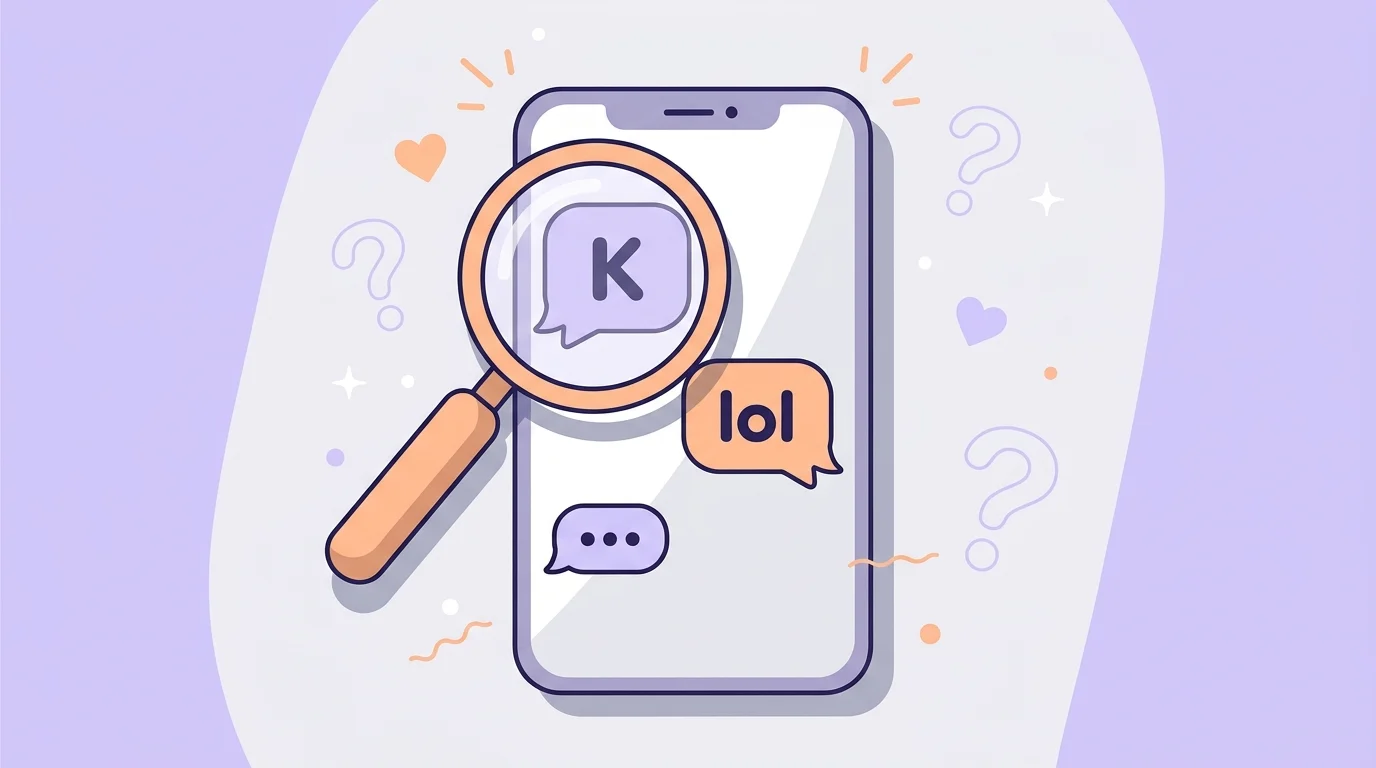
Quick Answer: “Meaning in text from a girl” is not a single slang term but a search query people use when they want to decode a girl’s message. It usually refers to interpreting short replies like “K,” “lol,” or “…” or figuring out whether she is being friendly or flirty. The honest answer is that no acronym or emoji has one fixed meaning. Context, her normal texting style, and the overall pattern of her messages matter far more than any single word .
Texting removes tone, facial expression, and body language. That is why a three-letter reply can feel like a puzzle. When a girl sends “K” instead of “Okay,” or a lone “lol” instead of a real laugh, people start searching for hidden meanings. The phrase “meaning in text from a girl” exists because millions of people have stared at a message and wondered what it actually meant.
Communication researchers have studied this. A 2015 study from Binghamton University found that replies ending in a period were rated as less sincere, while replies with an exclamation mark were rated as more sincere . That does not mean every period is passive-aggressive. It means punctuation carries weight in text, whether the sender intends it or not.
This guide breaks down the most common confusing messages, explains what they usually mean, and shows you how to respond without overthinking. The goal is not to turn you into a mind reader. The goal is to help you read the conversation clearly.
Why “Meaning in Text from a Girl” Is a Tricky Search
The query itself reveals a common mistake. People search for a universal decoder, hoping one list will explain every girl’s messages. That list does not exist. Texting habits vary wildly from person to person. One girl uses “lol” as punctuation. Another only types it when something is genuinely funny. One girl sends short replies because she is busy. Another sends short replies because she is annoyed .
The better approach is to look at patterns, not isolated messages. Does she usually start conversations? Does she ask questions back? Does she follow through on plans? These signals matter more than a single “K” or a single emoji .
Common Text Replies and What They Usually Mean
“K” vs. “Okay” vs. “Okayyy”
This is one of the most searched comparisons. Here is how the variations usually read:
| Reply | How It Often Reads |
|---|---|
| K | Clipped, widely read as annoyance or coldness |
| Ok / Okay | Neutral acknowledgment, no strong emotion |
| Okay. | The period adds distance, can feel formal or chilly |
| Okayyy | Playful, teasing, drawn out |
| Okay! | Warm and sincere |
A single “K” after a normal message might mean nothing. A pattern of “K” replies after you have said something serious is worth paying attention to.
“lol,” “haha,” and “lmao”
These are not reliable laughter indicators. “lol” often works as punctuation. It softens a sentence or fills a gap. “haha” usually reads as more genuine amusement than “lol.” “hahaha” with more letters suggests she actually laughed. “lmao” carries the most force of the three .
If you say something sincere and get a lone “lol” back, that is closer to a polite cough than an endorsement.
The Dreaded “…”
Three dots can mean almost anything. She might be thinking. She might be waiting for you to say more. She might be annoyed. She might have accidentally hit send. The only way to know is to look at what came before. If you said something questionable, the ellipsis might be silent judgment. If she just shared a long thought, it might be a pause .
“I’m fine” and “It’s fine”
These phrases rarely mean what they say in tense conversations. “I’m fine” after a disagreement usually signals that she is not fine but does not want to argue about it directly. “It’s fine” after you cancel plans often means the opposite. The best response is not to accept the surface meaning. Ask a gentle follow-up: “Are you sure? You can tell me if something is up” .
Friendly vs. Flirty: How to Tell the Difference
The clearest distinction between friendly and flirty texting comes down to one question: is the message about the situation, or is it about you?
| Friendly | Flirty |
|---|---|
| “That’s funny” | “You’re funny” |
| “Have a good night” | “Text me when you get home” |
| “We should all go” | “We should go” |
| Talks about the group | Talks about you |
| Replies when convenient | Replies late at night |
A heart emoji from a girlfriend and a heart emoji from a coworker are unrelated messages. The relationship decides the meaning. A girl who texts you first, asks questions back, remembers small details, and suggests specific plans is showing effort. Effort is a stronger signal than any emoji .
When She Is Losing Interest
Fading interest rarely shows up as one cold message. It shows up as a pattern. Watch for these trends:
- You start every conversation, week after week.
- Questions stop coming back to you.
- Plans get cancelled and never rescheduled.
- Her replies get shorter over time.
- She answers the question and adds nothing .
Any one of these on a bad day is normal. All of them across several weeks is a message worth reading.
How to Respond When You Are Unsure
If you cannot tell what she means, the safest move is direct but low-pressure communication. Do not accuse. Do not overanalyze out loud. Ask a simple question.
Instead of: “Why are you being so dry?”
Try: “Hey, you seem a little off today. Everything okay?”
Instead of: “What does ‘K’ mean?”
Try: “Just checking, are we good?”
Direct communication solves more confusion than any slang glossary. If she is interested, she will appreciate the clarity. If she is not, you will find out faster and save yourself the guessing game .
Frequently Asked Questions
What does “K” mean from a girl?
“K” is a clipped version of “okay” and is widely read as annoyance or coldness. However, some people simply type “K” out of habit. Look at the rest of the conversation before assuming she is upset .
What does a lone “lol” mean?
A lone “lol” usually does not mean she actually laughed. It often works as a conversation filler or a polite acknowledgment. If you said something sincere and got “lol” back, she may not have known how to respond .
What does “…” from a girl mean?
It depends entirely on context. It can mean she is thinking, waiting for you to continue, annoyed, or simply out of words. Check what you said right before the ellipsis appeared .
Is she flirting or just being friendly?
Look at whether her messages are about you or about the situation. Flirty messages focus on you (“You’re funny,” “Text me when you’re home”). Friendly messages focus on the activity or group (“That’s funny,” “We should all go”). Pattern matters more than one message .
What does “I’m fine” mean when she is clearly not fine?
It usually means she is upset but does not want to start an argument directly. Do not accept it at face value. Ask a gentle follow-up and give her space to explain if she wants to .
Conclusion
The search for “meaning in text from a girl” comes from a real place. Texting is ambiguous, and ambiguity is uncomfortable. But the truth is simpler than most people hope. No single word or emoji carries a secret code. A girl’s texting style, her patterns over time, and the context of the conversation tell you far more than any decoder list ever could.
Pay attention to effort. Notice who starts conversations, who asks questions, and who follows through. When you are unsure, ask directly instead of guessing. Share this guide with someone who has spent too long staring at a three-letter reply, or leave a comment with the most confusing text you have ever received.

Emma Writes is a passionate content writer at ResponsCraft.com, creating practical, well-researched articles that help readers make informed decisions. She enjoys turning complex topics into clear, engaging and easy-to-follow content.