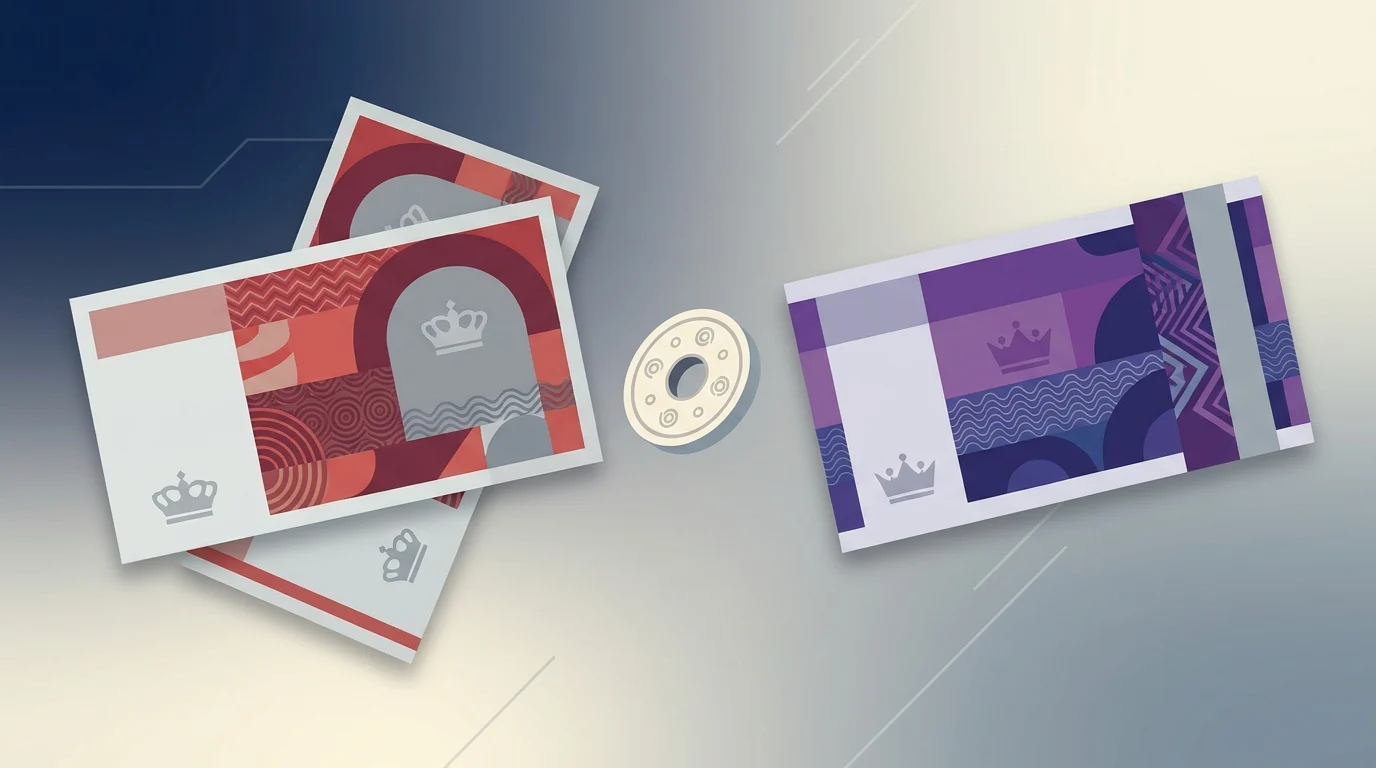
Quick Answer: Kroner is the plural form of “krone,” the official currency of Norway and Denmark. The word literally translates to “crown” in English. One krone is divided into 100 øre, and the currency codes are NOK for Norway and DKK for Denmark. The term is also used for the historical currency of Austria from 1892 to 1925.
Currency names often carry history inside them, and kroner is a perfect example. The word appears on banknotes, in exchange rate listings, and in travel guides across Northern Europe. Understanding what kroner means helps you read prices correctly, avoid confusion between countries, and appreciate a small piece of Scandinavian history.
The term is closely tied to the Scandinavian Monetary Union, a currency agreement formed in the 1870s between Sweden, Denmark, and Norway. All three countries adopted the crown-inspired name for their money, and even after the union dissolved, the names stuck. Today, kroner remains the plural form used for both Norwegian and Danish currency, though the two are separate currencies with different values.
This guide explains the kroner meaning in full. You will learn which countries use it, how it relates to the singular “krone,” what the currency symbols and codes look like, and how to avoid common mistakes when dealing with Scandinavian money.
What Does Kroner Stand For?
Kroner is simply the plural of krone. The word comes from the Latin word “corona,” which means crown, and it entered the Scandinavian languages through Middle Low German . The name was chosen to reflect the monarchy and sovereignty of the issuing nations.
In everyday use, kroner refers to the money of Norway and Denmark. Norway’s currency uses the ISO code NOK, while Denmark’s uses DKK . Both are subdivided into 100 øre, though øre coins have been phased out in Norway and reduced in Denmark due to inflation.
The singular and plural forms work differently depending on the language. In English, people say “one krone” and “two kroner.” In Norwegian and Danish, the grammar follows local rules, but English speakers generally stick to krone for singular and kroner for plural.
| Term | Meaning | Currency Code | Country |
|---|---|---|---|
| Krone (singular) | One unit of currency | NOK / DKK | Norway / Denmark |
| Kroner (plural) | Multiple units of currency | NOK / DKK | Norway / Denmark |
| Øre | Subunit, 1/100 of a krone | N/A | Both countries |
Which Countries Use Kroner?
Two modern countries use kroner as their official currency, and a few territories share the Danish version.
Norway uses the Norwegian krone, coded NOK. It was introduced in 1875 when Norway joined the Scandinavian Monetary Union, replacing the speciedaler at a rate of 4 kroner to 1 speciedaler . The Norwegian krone is managed by Norges Bank and has been a free-floating currency since 1992 .
Denmark uses the Danish krone, coded DKK. It is the official currency of Denmark, Greenland, and the Faroe Islands . Denmark has chosen not to adopt the euro, and a referendum in 2000 rejected joining the eurozone. The Danish krone is pegged to the euro through the European Exchange Rate Mechanism, which keeps its value relatively stable against the euro .
Sweden uses a similar currency called the krona, which is the Swedish spelling of the same word. The Swedish krona is a separate currency with its own code, SEK, and should not be confused with kroner.
Austria historically used a currency called the krone from 1892 to 1925, but that currency no longer exists .
Kroner vs Krone: What’s the Difference?
The difference is grammatical, not financial. Krone is singular, and kroner is plural. If you see a price tag that says “50 kroner,” it means fifty units of the currency. If you see “1 krone,” it means one unit.
The confusion often comes from the fact that both Norwegian and Danish use the same spelling for their currencies, but they are not the same money. One Norwegian krone is not equal in value to one Danish krone. Exchange rates fluctuate, and travelers need to check the current rate before converting.
The symbols are also similar but not identical in practice. Both use “kr” as a common abbreviation. In international contexts, the ISO codes NOK and DKK make the distinction clear. When you see a price written as “100 kr,” the country context tells you whether it is Norwegian or Danish kroner.
A Brief History of Kroner
The kroner story begins with the Scandinavian Monetary Union, established in 1873 between Sweden and Denmark, with Norway joining in 1875 . The union created a shared gold standard, and the three countries agreed to use the crown-inspired name for their currencies. This made trade and travel easier because the currencies were interchangeable at fixed rates.
The union dissolved in 1914 at the start of World War I, but the countries kept the names. Norway and Denmark continued to call their currencies krone and kroner, while Sweden kept krona and kronor.
Norway experienced significant currency changes during the 20th century. During the German occupation in World War II, the krone was pegged to the German Reichsmark. After the war, it was pegged to the British pound, and later to the US dollar through the Bretton Woods system . Since 1992, the Norwegian krone has floated freely, and its value is influenced by oil prices because Norway is a major oil exporter .
Denmark took a different path. It pegged its krone to the German mark before the euro existed, and now pegs it to the euro through ERM II . This gives the Danish krone more stability than the Norwegian krone, which can fluctuate more widely.
How to Use Kroner Correctly
If you are traveling to Norway or Denmark, a few practical tips will help you use kroner correctly.
First, always check which country you are in. A “kr” price in Oslo means Norwegian kroner, while a “kr” price in Copenhagen means Danish kroner. The values are different, so do not assume they are interchangeable.
Second, know that cash is becoming less common. Norway and Denmark are highly digital societies, and many places accept cards or mobile payments. You may not need much physical currency, but it is still useful to have some for small purchases or emergencies.
Third, watch out for the øre. In Norway, øre coins were withdrawn from circulation in 2012, so prices are rounded to the nearest krone when paying in cash . In Denmark, the 50 øre coin is the smallest denomination still in use.
Finally, remember that the plural is kroner, not krones. Using the correct form shows attention to detail and helps you communicate clearly with locals and currency exchange staff.
Frequently Asked Questions About Kroner
What does kroner mean?
Kroner is the plural form of krone, the currency of Norway and Denmark. The word means “crowns” in English. It is used to describe multiple units of Norwegian or Danish money.
Is kroner the same as krone?
Kroner is simply the plural of krone. One krone becomes two kroner. The singular and plural forms refer to the same currency, just different quantities.
Which countries use kroner?
Norway uses the Norwegian krone, coded NOK. Denmark uses the Danish krone, coded DKK, which is also used in Greenland and the Faroe Islands. Sweden uses a similar currency called the krona, but it is a separate currency.
How much is 1 kroner worth?
The value of one krone changes daily based on exchange rates. One Norwegian krone or Danish krone is worth only a fraction of a US dollar or euro. You should check a live currency converter for the current rate before making exchanges or purchases.
What is the difference between Norwegian and Danish kroner?
They are separate currencies with different values and different central banks. The Norwegian krone floats freely and is influenced by oil prices. The Danish krone is pegged to the euro, which makes it more stable against the euro but still separate from it.
Conclusion
The kroner meaning is straightforward once you separate the grammar from the geography. Kroner is the plural of krone, and it refers to the money of Norway and Denmark. The word means “crown,” a name that dates back to the Scandinavian Monetary Union in the 1870s. Today, the two countries use separate currencies with different codes and different values, even though they share the same name.
If you are traveling to Northern Europe, knowing the difference between Norwegian and Danish kroner will save you from confusion at the register. If you are simply curious about currency names, the kroner story is a reminder that money carries history in its name. Share this guide with someone planning a trip to Scandinavia, or leave a comment with your own currency questions.

Lily Carter creates practical, easy-to-follow content for everyday readers at ResponseCraft.com. She enjoys turning complex topics into clear, actionable advice that helps people make smarter decisions.