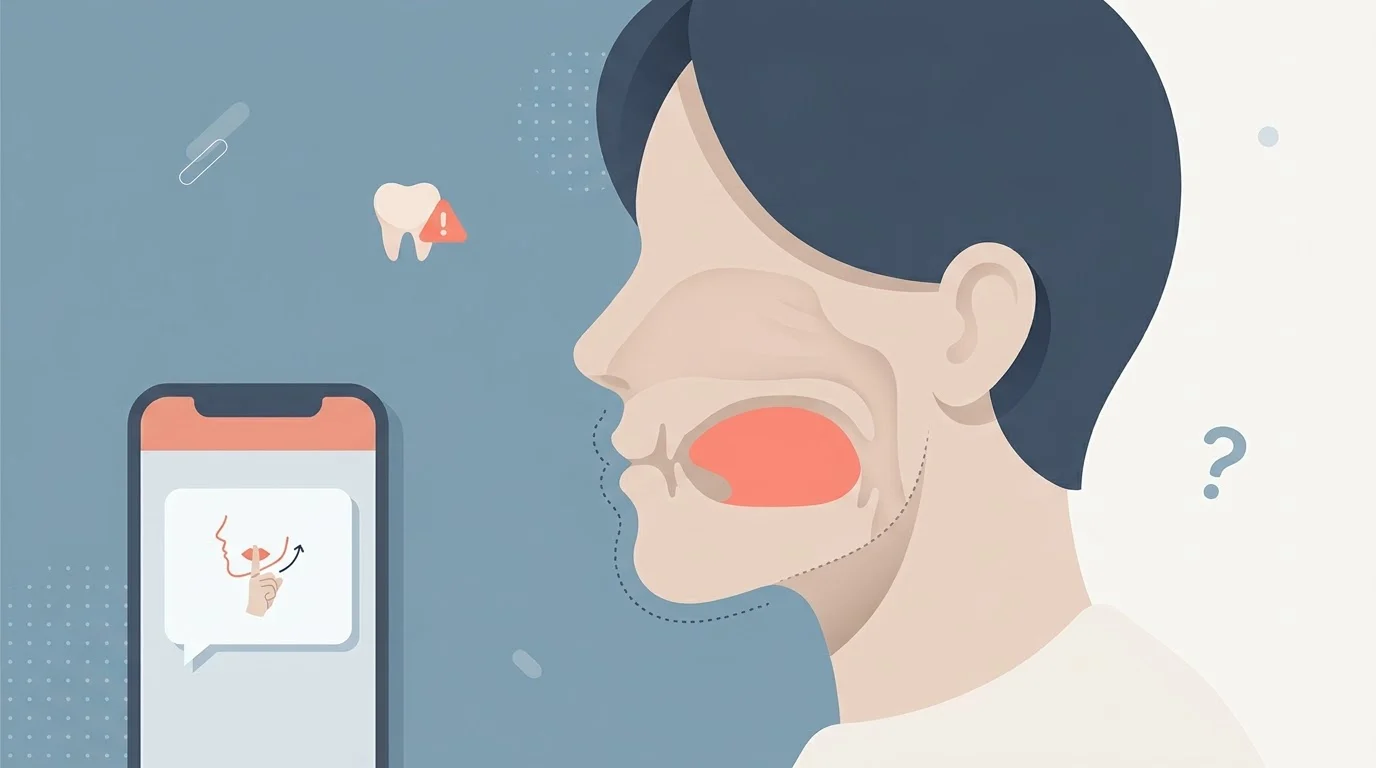
Quick Answer: On TikTok, mewing refers to a technique of pressing your tongue against the roof of your mouth to supposedly sharpen your jawline and reshape your face. It is also used as a meme gesture where someone traces a finger along their jaw to avoid answering a question. Despite its popularity, dental and medical experts agree there is no scientific evidence that mewing permanently changes facial structure .
If you have spent any time on TikTok recently, you have probably seen someone press their tongue to the roof of their mouth, make a “shhh” gesture, and trace a line down their jaw. That is mewing, and it has become one of the platform’s most persistent trends. The term is named after British orthodontist John Mew, who developed the technique decades ago and later lost his dental license for promoting unproven practices .
The trend has spread far beyond its original cosmetic claims. Teens now use mewing as a joke to dodge questions from parents and teachers. Models reportedly use it for photos. And an entire “looksmaxxing” subculture has built itself around the idea that small oral habits can transform your appearance . This guide explains what mewing actually is, how it became a TikTok phenomenon, what the science says, and the risks you should know about.
What Does Mewing Mean?
Mewing is a tongue exercise where you flatten your entire tongue against the roof of your mouth, keep your lips closed, and lightly rest your teeth together . The goal, according to its proponents, is to apply upward pressure that supposedly sculpts a stronger jawline and improves facial structure over time.
The technique is named after Dr. John Mew, a British orthodontist who created it in the 1970s and 1980s as part of a practice he called “orthotropics” . He believed that modern diets and mouth breathing were causing facial structures to narrow, and that correct tongue posture could guide proper growth. His theories were never accepted by mainstream dentistry, and his license was eventually revoked by the General Dental Council in Britain .
On TikTok, the meaning has split into two distinct uses. The first is the literal exercise: a person positions their tongue on the palate and holds it there, often while filming a before-and-after style video. The second is a meme gesture. Someone places a finger over their lips in a silencing motion, then slides that finger down their jawline. This gesture means “I am mewing right now, so I cannot answer your question” .
| Mewing Meaning | How It Is Used | Tone |
|---|---|---|
| Tongue posture exercise | Cosmetic self-improvement, looksmaxxing | Serious or aspirational |
| Jaw-trace gesture | Dodging questions, classroom jokes, memes | Playful, dismissive |
How Did Mewing Become a TikTok Trend?
Mewing did not start on TikTok, but TikTok made it unavoidable. The technique gained traction as part of a broader trend called “looksmaxxing,” a male-centric form of self-improvement focused on enhancing physical attractiveness without surgery . Since a strong jawline is a common beauty standard, mewing became a central practice in that community.
Teen creators built entire accounts around the practice, posting videos that claimed dramatic jawline transformations. Before-and-after photos were often photoshopped or taken from flattering angles, which made the results look more convincing than they were . The trend crossed into modeling content, where some creators described mewing as a “modeling industry secret” for sharpening the face in photos .
Then the meme version took over. Teachers began reporting that students were mewing to avoid answering questions in class. A special education teacher named Philip Lindsay told TODAY.com that students use the gesture specifically to get a laugh, not because they believe it works . Once the gesture became a joke, mewing crossed from self-improvement content into everyday slang.
Does Mewing Actually Work?
No. This is the clearest answer available. The scientific evidence does not support mewing’s claims about reshaping the jawline or straightening teeth.
The Cleveland Clinic states plainly that research does not support using mewing for any of its claimed benefits . Family medicine practitioner Dr. Colleen Clayton explained that a simple tongue exercise is not a robust enough treatment to change dental or facial features. The American Association of Orthodontists has also issued a statement debunking the practice, noting that facial structure comes from a complex mix of genetics, bone growth, and muscle development that tongue placement alone cannot override .
Why do some people swear they see results? The most common explanation is puberty. Young men who mew during their teen years are also naturally growing and developing, so any changes in their face are likely from normal growth, not from tongue pressure . Another factor is temporary effect. Pressing your tongue upward can lift the area under your chin for a few seconds, which might look good in a photo but does not last . Before-and-after images on social media are frequently staged, edited, or taken with different lighting and angles .
What Are the Risks of Mewing?
Mewing might seem harmless, but dental professionals warn that it can cause real problems. The risks come from the pressure and repetition involved, especially when people force the position for long periods.
Potential risks include jaw tension and temporomandibular joint (TMJ) discomfort from repeatedly engaging the jaw muscles in an unnatural way . Pressing the tongue against the back of the teeth can also shift their position over time, potentially making misalignment worse rather than better, particularly in children and teenagers . Some experts note that aggressive mewing can contribute to teeth grinding, uneven wear, or bite problems .
There is also a broader concern that goes beyond physical health. Mewing is tied to looksmaxxing culture, which can feed insecurity in young people by promoting narrow, unattainable beauty standards . The promise of a “quick fix” for facial appearance is appealing, but it is not grounded in reality.
Mewing as a Meme: The Jaw-Trace Gesture Explained
The meme version of mewing deserves its own explanation because it is what most people encounter on TikTok now. The gesture looks like this: place your index finger over your lips as if shushing someone, then slide the finger down one side of your jaw from ear to chin. That is the “mewing” gesture.
It started as a way to signal that you are focusing on your jawline and therefore cannot speak. Teens turned it into a joke. When a teacher or parent asks a question, the student does the gesture and says nothing. The implied message is “I am busy improving my appearance, so I am unavailable” . The teacher quoted by TODAY.com said he has never met a student who used mewing seriously. It is a bit, a way to get a laugh and avoid responsibility for a moment .
If someone does the gesture to you, they are almost certainly joking. You do not need to treat it as a genuine health practice or a genuine refusal to communicate. It is a meme.
Frequently Asked Questions About Mewing
What does mewing mean on TikTok?
Mewing is a tongue exercise where you press your tongue against the roof of your mouth to supposedly sharpen your jawline. On TikTok, it is also a meme gesture where someone traces a finger down their jaw to avoid answering a question .
Does mewing actually work?
No. Medical experts and dental organizations agree that there is no scientific evidence that mewing permanently changes facial structure or straightens teeth. Any changes people notice are likely from natural growth during puberty or temporary effects .
Why do people do the mewing gesture?
The jaw-trace gesture is a joke. Teens use it to signal that they are “too busy mewing” to answer a question. It is a playful way to dodge responsibility, not a serious practice .
Is mewing safe?
Mewing is not considered dangerous in short bursts, but prolonged or forceful practice can cause jaw pain, TMJ discomfort, and potential tooth misalignment. Dental professionals advise against relying on it for cosmetic changes .
What is looksmaxxing and how does mewing fit in?
Looksmaxxing is an online trend where people try to maximize their physical attractiveness without surgery. Mewing is one of the most popular “softmaxxing” techniques within that community, alongside grooming and skincare .
Conclusion
The mewing meaning on TikTok comes down to two things. It is a tongue exercise that claims to sharpen the jawline but has no scientific support. And it is a meme gesture that teens use to avoid answering questions. Both versions are everywhere, and both are easy to understand once you know the context.
If someone tells you to start mewing for a better jawline, treat that advice with skepticism. The experts have been clear: your tongue cannot reshape your bones. If someone does the gesture to you, laugh and move on. It is a joke, not a medical recommendation. Share this guide with someone who has been confused by the jaw-tracing trend, or leave a comment with the funniest mewing moment you have seen.

Emma Writes is a passionate content writer at ResponsCraft.com, creating practical, well-researched articles that help readers make informed decisions. She enjoys turning complex topics into clear, engaging and easy-to-follow content.