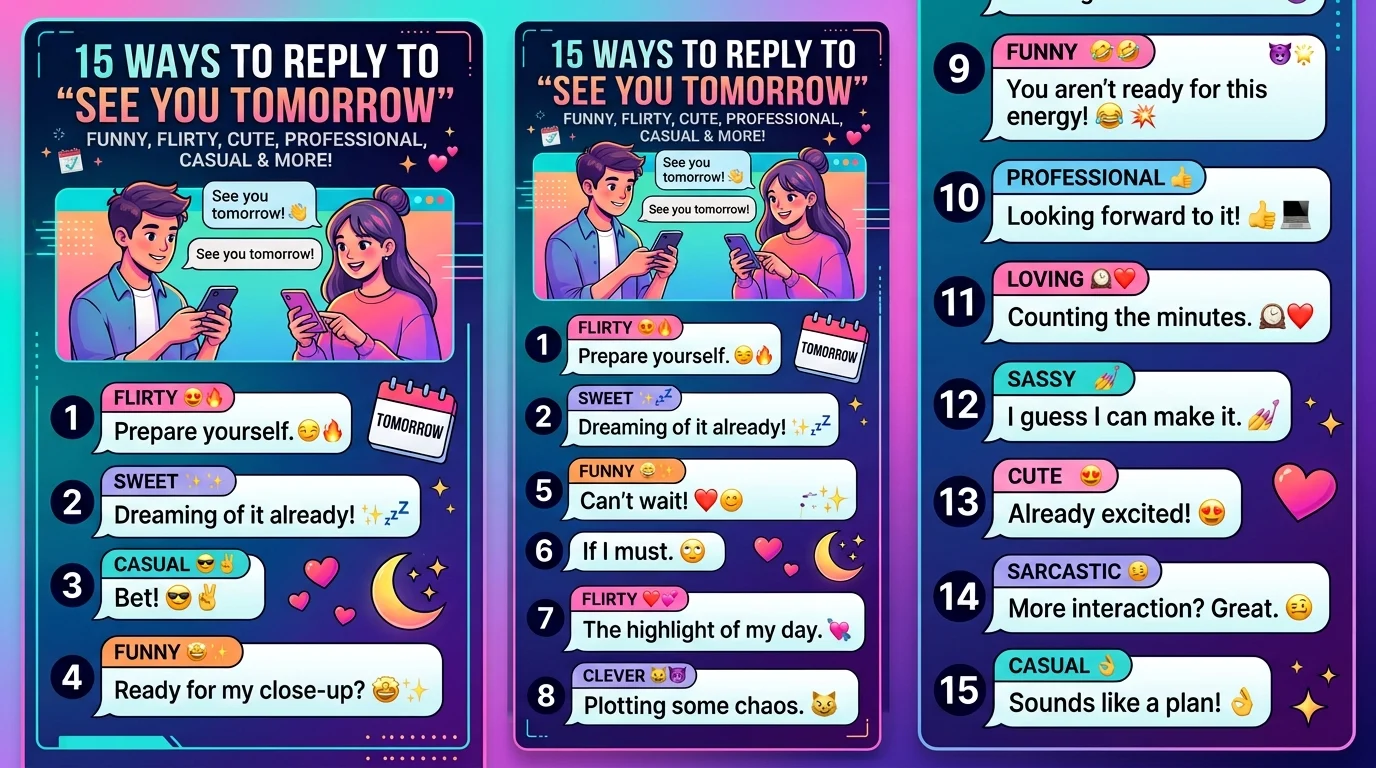
Quick Ans: The best responses to “See you tomorrow” depend on your relationship and the mood. Keep it simple with “See you then,” make it warm with “Looking forward to it,” or add some humor with “Unless tomorrow decides otherwise.”
Top alternatives: See you then, Looking forward to it, You too, Can’t wait, See you tomorrow
“See you tomorrow” sounds simple, but sometimes the obvious reply feels a little too obvious. Maybe it is your coworker ending the workday, your friend making plans, your crush saying goodbye, or someone you genuinely cannot wait to see again. A quick response can keep the conversation warm, playful, professional, or just perfectly casual.
The right responses to see you tomorrow help you match the energy instead of sending the same “you too” every single time. You can make someone laugh, show excitement, flirt a little, or simply confirm the plan. It all depends on who is talking and what you want them to feel after the conversation ends.
From funny one-liners to sweet messages and workplace-friendly replies, these ready-to-send options cover almost every situation. Pick your mood, send your favorite, and make tomorrow’s reunion feel a little more interesting.
Simple Responses
“See you then!”
Use this when you want the most natural reply.
Meaning: You are confirming that you expect to see them tomorrow.
“Absolutely, see you tomorrow!”
Use this when you want to sound positive.
Meaning: You are enthusiastically confirming the plan.
“You too!”
Use this when you want a quick casual response.
Meaning: You are returning their farewell.
“See you!”
Use this when the exact day is already understood.
Meaning: You are keeping the goodbye short and relaxed.
“Looking forward to it!”
Use this when you are genuinely excited.
Meaning: You are showing enthusiasm about seeing them.
“Sounds good. See you tomorrow.”
Use this when confirming plans casually.
Meaning: You are acknowledging and accepting the arrangement.
“Definitely!”
Use this when you want a short upbeat reply.
Meaning: You are confidently confirming that you will meet.
“See you bright and early!”
Use this when you are meeting in the morning.
Meaning: You are making the goodbye slightly more cheerful.
“Until tomorrow!”
Use this when you want something a little more polished.
Meaning: You are warmly acknowledging the next meeting.
“Can’t wait!”
Use this when you are especially excited.
Meaning: You are expressing strong anticipation.
“Tomorrow it is!”
Use this when confirming a plan.
Meaning: You are confidently agreeing to the arrangement.
“See you around!”
Use this when the meeting is casual.
Meaning: You are ending the conversation in a relaxed way.
Funny Responses
“Unless I mysteriously disappear overnight.”
Use this when you want to make the goodbye playful.
Meaning: You are joking about the certainty of tomorrow.
“Tomorrow has been officially booked.”
Use this when plans are confirmed.
Meaning: You are humorously treating the meeting like an appointment.
“I’ll try to make it through the night.”
Use this when you want exaggerated humor.
Meaning: You are joking about the wait until tomorrow.
“See you tomorrow, assuming my alarm cooperates.”
Use this when you are meeting early.
Meaning: You are joking about the possibility of oversleeping.
“Tomorrow? That feels so far away.”
Use this when you are genuinely excited to see them.
Meaning: You are exaggerating how long the wait feels.
“I’ll be there, probably powered by caffeine.”
Use this when you have an early meeting.
Meaning: You are joking about surviving the morning.
“See you tomorrow, same chaos, different day.”
Use this with a friend or familiar coworker.
Meaning: You expect the usual fun or craziness to continue.
“I’ll mark it on my extremely important calendar.”
Use this when teasing someone.
Meaning: You are joking that the meeting deserves special treatment.
“Tomorrow better hurry up.”
Use this when you are excited.
Meaning: You are playfully impatient to see them.
“See you tomorrow unless the universe has other plans.”
Use this when you enjoy dramatic humor.
Meaning: You are joking about unexpected changes.
“Another day, another reunion.”
Use this when you want a dramatic joke.
Meaning: You are making an ordinary meeting sound epic.
“I’ll be there in spirit if my body refuses to cooperate.”
Use this when meeting early or after a long night.
Meaning: You are joking about your energy levels.
Flirty Responses
“I’ll be looking forward to seeing you.”
Use this when you want subtle romantic energy.
Meaning: You are letting them know their presence matters.
“Tomorrow suddenly feels very far away.”
Use this when you are excited to see someone you like.
Meaning: You are playfully expressing impatience.
“Can’t wait to see that face.”
Use this when flirting with someone you know well.
Meaning: You are openly showing affection.
“I’ll be counting down.”
Use this when you want to sound excited.
Meaning: You are saying you are eager for the next meeting.
“See you tomorrow, cutie.”
Use this when your relationship is already affectionate.
Meaning: You are adding a romantic compliment.
“Tomorrow can’t come soon enough.”
Use this when you want to make your excitement obvious.
Meaning: You genuinely want to see them again soon.
“I have something to look forward to now.”
Use this when you want subtle flirting.
Meaning: Seeing them is the highlight of your plans.
“Try not to miss me too much tonight.”
Use this when playful flirting feels natural.
Meaning: You are teasing them about thinking of you.
“See you tomorrow. Don’t look too good without me.”
Use this when you want a cheeky flirt.
Meaning: You are playfully claiming their attention.
“I’ll see you tomorrow, but I already miss you.”
Use this when you have a close romantic connection.
Meaning: You are openly expressing affection.
“Tomorrow just got better.”
Use this after making plans with someone you like.
Meaning: Their presence has improved your anticipation for the day.
“I’ll be ready for our little reunion.”
Use this when you want a romantic but playful response.
Meaning: You are framing the meeting as something special.
Cute Responses
“Yay, see you tomorrow!”
Use this when you want an enthusiastic reply.
Meaning: You are genuinely happy about seeing them.
“I’ll see you then, sleepyhead.”
Use this when you are saying goodbye at night.
Meaning: You are adding an affectionate nickname.
“Sweet dreams until then.”
Use this when ending a nighttime conversation.
Meaning: You are combining the goodbye with a caring wish.
“See you tomorrow! Have a cozy night.”
Use this when you want a warm farewell.
Meaning: You are wishing them a comfortable evening.
“I’m already excited.”
Use this when you are genuinely looking forward to seeing them.
Meaning: You are openly showing enthusiasm.
“Tomorrow is officially something to look forward to.”
Use this when you want a thoughtful response.
Meaning: Their presence makes tomorrow more appealing.
“See you tomorrow, sunshine.”
Use this when you have a warm relationship.
Meaning: You are adding affection to the goodbye.
“Can’t wait for our next little adventure.”
Use this when you have plans together.
Meaning: You are making the upcoming meeting feel special.
“Have a good night. See you tomorrow!”
Use this when you want a complete and caring farewell.
Meaning: You are ending the conversation warmly.
“See you tomorrow, and don’t forget to smile.”
Use this when you want a cheerful send-off.
Meaning: You are encouraging a positive mood.
“I’ll be happy to see you tomorrow.”
Use this when you want something sincere.
Meaning: You are expressing genuine affection.
“Until tomorrow, lovely human.”
Use this when you want something cute and playful.
Meaning: You are giving the goodbye a quirky affectionate touch.
Sweet Responses
“I’m really looking forward to seeing you tomorrow.”
Use this when you want to sound sincere.
Meaning: You are genuinely excited about meeting them.
“Have a peaceful night. I’ll see you tomorrow.”
Use this when ending a thoughtful conversation.
Meaning: You are combining warmth with anticipation.
“I’m glad we get to see each other tomorrow.”
Use this when you want to express appreciation.
Meaning: You value the upcoming time together.
“Sleep well, and I’ll see you tomorrow.”
Use this when saying goodbye at night.
Meaning: You are wishing them rest while confirming your plans.
“Tomorrow sounds wonderful already.”
Use this when someone makes your day better.
Meaning: You are expressing positive anticipation.
“Take care tonight. See you tomorrow.”
Use this when you want a caring farewell.
Meaning: You are showing concern while ending the conversation.
“I hope you have a lovely evening. See you tomorrow.”
Use this when you want a gentle response.
Meaning: You are wishing them well before the next meeting.
“I’ll be happy to see you again.”
Use this when you want a warm but simple message.
Meaning: You are expressing genuine happiness about reconnecting.
“Have a good night. Tomorrow will be here before we know it.”
Use this when someone is excited about the next day.
Meaning: You are reassuring them that the wait will be short.
“Thank you. I’m looking forward to tomorrow too.”
Use this when the other person sounds excited.
Meaning: You are matching their enthusiasm.
“See you tomorrow. I hope tonight is restful for you.”
Use this when you want a caring response.
Meaning: You are prioritizing their comfort.
“I’m glad we have tomorrow to look forward to.”
Use this when you share a meaningful connection.
Meaning: You appreciate having another opportunity to spend time together.
Professional Responses
“Absolutely. See you tomorrow.”
Use this when confirming a workplace meeting.
Meaning: You are professionally acknowledging the plan.
“Sounds good. See you tomorrow.”
Use this when ending a work conversation.
Meaning: You are confirming the arrangement clearly.
“Thank you. See you tomorrow.”
Use this when closing a professional interaction.
Meaning: You are being courteous and concise.
“Likewise. Have a good evening.”
Use this when ending the workday.
Meaning: You are returning their farewell professionally.
“See you tomorrow. Have a great evening.”
Use this when leaving the office or ending a call.
Meaning: You are keeping the goodbye warm but professional.
“Looking forward to it. See you tomorrow.”
Use this when you are attending a planned meeting.
Meaning: You are expressing professional enthusiasm.
“Confirmed. See you tomorrow.”
Use this when you want a direct response.
Meaning: You are clearly confirming the schedule.
“Perfect. See you tomorrow morning.”
Use this when a morning appointment is already arranged.
Meaning: You are confirming the time naturally.
“Thank you, and I’ll see you tomorrow.”
Use this after a professional conversation.
Meaning: You are ending the interaction respectfully.
“Sounds great. I’ll see you tomorrow.”
Use this when you want a friendly workplace response.
Meaning: You are positively confirming the plan.
“Have a good evening. See you tomorrow.”
Use this when ending a late work conversation.
Meaning: You are combining professionalism with courtesy.
“See you tomorrow. I’ll be prepared.”
Use this when the next meeting requires preparation.
Meaning: You are reassuring them that you are ready.
Sarcastic Responses
“Tomorrow? What a concept.”
Use this when you want dry humor.
Meaning: You are joking about the obviousness of tomorrow.
“I suppose I can make room for you.”
Use this when teasing someone you know well.
Meaning: You are pretending your schedule is extremely important.
“Fine, I’ll see you tomorrow.”
Use this when playful sarcasm fits the relationship.
Meaning: You are pretending to reluctantly agree.
“Assuming you show up.”
Use this when teasing someone who is often late.
Meaning: You are jokingly questioning their reliability.
“Tomorrow has been accepted into the schedule.”
Use this when you want a deadpan response.
Meaning: You are pretending to formally approve the meeting.
“I’ll pencil you in.”
Use this when joking with a friend.
Meaning: You are pretending your calendar is packed.
“See you tomorrow, unless you forget again.”
Use this when teasing someone who has a history of forgetting plans.
Meaning: You are joking about their memory.
“Another day of pretending we have our lives together.”
Use this with a close friend or coworker.
Meaning: You are joking about everyday chaos.
“Tomorrow better be worth the wait.”
Use this when you want playful sarcasm.
Meaning: You are exaggerating your expectations.
“I’ll try to remember who you are.”
Use this with a close friend who understands your humor.
Meaning: You are pretending tomorrow is far enough away to forget them.
“See you tomorrow, unfortunately for both of us.”
Use this only with someone who enjoys dark-ish playful humor.
Meaning: You are pretending the meeting is an inconvenience.
“Fine. Tomorrow it is. Try to contain your excitement.”
Use this when teasing someone.
Meaning: You are playfully pretending they are overly excited.
Chill And Casual Responses
“Yep, see you tomorrow.”
Use this when you want a relaxed confirmation.
Meaning: You are agreeing without making it a big deal.
“For sure!”
Use this when you want a quick casual response.
Meaning: You are confidently agreeing.
“Sounds good!”
Use this when the plan is already clear.
Meaning: You are casually confirming.
“See ya tomorrow!”
Use this with friends or familiar coworkers.
Meaning: You are keeping the goodbye informal.
“Catch you tomorrow.”
Use this when you want a relaxed phrase.
Meaning: You expect to see them the next day.
“Yep, until then!”
Use this when you want a friendly ending.
Meaning: You are acknowledging the next meeting.
“Tomorrow it is.”
Use this when confirming plans.
Meaning: You are agreeing directly.
“Definitely, see you then.”
Use this when you want to sound upbeat.
Meaning: You are confirming the arrangement positively.
“Cool, see you!”
Use this when ending a casual conversation.
Meaning: You are keeping the tone relaxed.
“Sounds like a plan.”
Use this when you have just made plans.
Meaning: You are confirming the agreement.
“See you around tomorrow.”
Use this when the exact meeting time is flexible.
Meaning: You expect to run into them.
“Alright, see you tomorrow!”
Use this when ending a casual chat.
Meaning: You are confirming the next meeting warmly.
Confident Responses
“Absolutely. I’ll see you tomorrow.”
Use this when you want a clear and confident confirmation.
Meaning: You are showing certainty about the plan.
“You can count on it.”
Use this when you want to sound reliable.
Meaning: You are assuring them that you will be there.
“I’ll be there.”
Use this when you want a direct response.
Meaning: You are confidently confirming your attendance.
“Definitely. See you tomorrow.”
Use this when you want to sound certain.
Meaning: You are removing any doubt about the plan.
“Consider it confirmed.”
Use this when you want a confident but playful reply.
Meaning: You are treating the plan as final.
“Tomorrow works perfectly.”
Use this when you want to confirm the timing.
Meaning: You are clearly saying the schedule works.
“Looking forward to it.”
Use this when you want to show positive anticipation.
Meaning: You are confidently expressing excitement.
“I’ll see you there.”
Use this when the location is already known.
Meaning: You are confirming your arrival.
“Absolutely. Until tomorrow.”
Use this when you want a polished response.
Meaning: You are confidently acknowledging the next meeting.
“No doubt. See you tomorrow.”
Use this when you want to sound assured.
Meaning: You are making your agreement clear.
“Tomorrow is locked in.”
Use this when plans are firmly confirmed.
Meaning: You are saying the arrangement is set.
“I’ll be ready.”
Use this when the next meeting requires preparation.
Meaning: You are confidently confirming your readiness.
Clever Responses
“Tomorrow has officially entered the calendar.”
Use this when you want a clever confirmation.
Meaning: You are humorously making the plan sound official.
“Until our next scheduled appearance.”
Use this when you want a playful formal tone.
Meaning: You are jokingly describing the next meeting.
“The countdown begins now.”
Use this when you are excited to meet.
Meaning: You are expressing anticipation.
“Tomorrow’s reunion is officially pending.”
Use this when you want a witty response.
Meaning: You are playfully framing the meeting like an event.
“I’ll see you on the other side of tonight.”
Use this when saying goodbye before bed.
Meaning: You are making tomorrow sound like the next chapter.
“Tomorrow is now part of the master plan.”
Use this when you want something playful and clever.
Meaning: You are humorously treating the meeting as strategically important.
“See you in the next episode.”
Use this when you want a pop-culture-style joke.
Meaning: You are making the next meeting sound like a continuation of a series.
“Our next encounter has been confirmed.”
Use this when you want an intentionally dramatic reply.
Meaning: You are humorously formalizing the meeting.
“Until tomorrow’s plot development.”
Use this when you enjoy playful storytelling.
Meaning: You are suggesting something interesting may happen next.
“Tomorrow’s agenda looks promising.”
Use this when you are excited about the meeting.
Meaning: You are saying the next day already sounds good.
“See you after one full sleep cycle.”
Use this when saying goodbye at night.
Meaning: You are cleverly describing the wait until tomorrow.
“Next stop: tomorrow.”
Use this when you want a short, catchy farewell.
Meaning: You are playfully framing the next meeting as a destination.
Responses To A Crush
“See you tomorrow. I’m already excited.”
Use this when you want to be openly interested.
Meaning: You are showing genuine anticipation.
“Tomorrow can’t come fast enough.”
Use this when you want a stronger flirty signal.
Meaning: You are eager to see them again.
“I’ll be looking for you.”
Use this when you want a subtle romantic response.
Meaning: You are saying you will notice them when they arrive.
“See you tomorrow, favorite person.”
Use this when you have an affectionate connection.
Meaning: You are giving them a clear compliment.
“Try not to look too cute tomorrow.”
Use this when playful flirting is already comfortable.
Meaning: You are teasing them with a romantic compliment.
“I guess I have something to look forward to tomorrow.”
Use this when you want subtle interest.
Meaning: Seeing them is something you genuinely anticipate.
“I’ll see you tomorrow, but I’m already smiling.”
Use this when you want a sweet romantic reply.
Meaning: The thought of seeing them makes you happy.
“Tomorrow just became my favorite day.”
Use this when you want obvious flirting.
Meaning: Their presence has made tomorrow special.
“See you tomorrow. Don’t make me wait too long.”
Use this when you want playful confidence.
Meaning: You are excited and teasing them.
“I’ll be counting down until then.”
Use this when you want to express strong anticipation.
Meaning: You are genuinely eager to see them.
“See you tomorrow, trouble.”
Use this when you have playful chemistry.
Meaning: You are combining affection with teasing.
“Can’t wait to see you again.”
Use this when you want a direct romantic message.
Meaning: You are openly expressing that you missed them.
Responses To A Friend
“See you tomorrow, bestie!”
Use this when saying goodbye to a close friend.
Meaning: You are warmly confirming the next meeting.
“Yep, same chaos tomorrow.”
Use this when you and your friend always have fun together.
Meaning: You expect your usual energy to continue.
“Can’t wait, dude!”
Use this when you are genuinely excited about hanging out.
Meaning: You are showing friendly enthusiasm.
“See you tomorrow, menace.”
Use this when teasing a close friend.
Meaning: You are showing affection through playful roasting.
“Tomorrow’s looking good already.”
Use this when you are excited about your plans.
Meaning: Their company makes tomorrow more appealing.
“Rest up. We have plans to make.”
Use this when you have a busy day together ahead.
Meaning: You are playfully preparing for the next day.
“See you then, legend.”
Use this when you want a friendly compliment.
Meaning: You are ending the conversation with positive energy.
“Tomorrow, we continue the nonsense.”
Use this when your friendship revolves around jokes and chaos.
Meaning: You are promising more fun later.
“I’ll bring the good vibes.”
Use this when you have casual plans.
Meaning: You are promising a fun atmosphere.
“See you tomorrow. Be ready.”
Use this when you have something exciting planned.
Meaning: You are building anticipation.
“Tomorrow better be fun.”
Use this when you are joking with a friend.
Meaning: You are playfully setting expectations.
“Alright, go recharge. See you tomorrow.”
Use this when saying goodbye at night.
Meaning: You are encouraging your friend to rest before meeting.
Warm And Thoughtful Responses
“I’m really glad we get to see each other tomorrow.”
Use this when you genuinely value the person.
Meaning: You are expressing appreciation for the upcoming time together.
“Have a restful night. I’ll see you tomorrow.”
Use this when ending a meaningful conversation.
Meaning: You are wishing them rest and confirming your meeting.
“I’m looking forward to spending some time together.”
Use this when you want to sound sincere.
Meaning: You are showing that the upcoming meeting matters to you.
“Take care tonight. I’ll see you tomorrow.”
Use this when you want a caring goodbye.
Meaning: You are showing concern and anticipation.
“I hope you have a peaceful evening.”
Use this when you want to end the conversation gently.
Meaning: You are wishing them comfort before tomorrow.
“Tomorrow will be a good day because I get to see you.”
Use this when you want an affectionate response.
Meaning: Their presence is making the next day special.
“I’m grateful we have tomorrow to look forward to.”
Use this when the person is important to you.
Meaning: You appreciate having another chance to connect.
“See you tomorrow. I hope tonight treats you kindly.”
Use this when you want a thoughtful farewell.
Meaning: You are wishing them a peaceful night.
“I’m happy we have plans tomorrow.”
Use this when you want a straightforward but warm response.
Meaning: You are genuinely pleased about seeing them.
“Until tomorrow. Take good care of yourself tonight.”
Use this when you want a caring goodbye.
Meaning: You are encouraging them to rest and look after themselves.
“See you tomorrow. I’ll be happy to see you.”
Use this when you want a sincere response.
Meaning: You are expressing genuine warmth.
“Tomorrow gives us another chance to make a good memory.”
Use this when you want something sentimental.
Meaning: You are looking forward to sharing another meaningful moment.
FAQs
What does “See you tomorrow” mean?
“See you tomorrow” is a casual farewell that indicates someone expects or plans to meet you the following day.
What is the best response to “See you tomorrow”?
The simplest response is “See you then!” Other natural choices include “Looking forward to it,” “Sounds good,” and “Can’t wait.”
How do I respond to “See you tomorrow” from a crush?
Try something warm or flirty, such as “Tomorrow can’t come fast enough,” “Looking forward to seeing you,” or “I’ll be counting down.”
What is a funny response to “See you tomorrow”?
Try “Tomorrow has been officially booked,” “Unless I mysteriously disappear,” or “Tomorrow better hurry up.”
Is “You too” a good response to “See you tomorrow”?
It can work casually, but “See you then” sounds more natural because “see you tomorrow” is a statement rather than a traditional well-wish.
How do I respond professionally?
Use “Absolutely, see you tomorrow,” “Sounds good. See you tomorrow,” or “Thank you. See you tomorrow.”
What should I say if I am excited to see them?
Try “I’m really looking forward to it,” “Can’t wait,” or “Tomorrow can’t come soon enough.”
What if I am not sure the plans are confirmed?
Use “Sounds good, I’ll see you tomorrow” if you want to confirm, or “Hopefully, see you tomorrow” if the plan is still tentative.
What should I say to a friend?
Keep it casual with “See you tomorrow, bestie,” “Catch you tomorrow,” or “Tomorrow, we continue the nonsense.”
Can “See you tomorrow” be flirty?
Yes. Depending on the context, it can show anticipation. Adding something like “Can’t wait to see you” makes the romantic interest clearer.
What if I do not want to sound too excited?
Use something neutral such as “Sounds good,” “See you then,” or “Alright, see you tomorrow.”
What is a sweet response to “See you tomorrow”?
Try “I’m really glad we get to see each other tomorrow” or “Have a restful night. I’ll see you tomorrow.”
Conclusion
The best responses to “See you tomorrow” depend on the relationship, the situation, and the energy you want to leave behind. A simple “See you then” works almost everywhere, while a funny reply can make a friend laugh and a flirty one can keep the chemistry going. For coworkers, a polished confirmation keeps things clear and professional.
You do not need a complicated response to make the moment memorable. Just choose something that sounds natural coming from you. Save this list for your next goodbye, send your favorite line to someone you are excited to see, and give tomorrow a little extra anticipation. After all, sometimes the best part of today is knowing who you get to see tomorrow.

Lily Carter creates practical, easy-to-follow content for everyday readers at ResponseCraft.com. She enjoys turning complex topics into clear, actionable advice that helps people make smarter decisions.