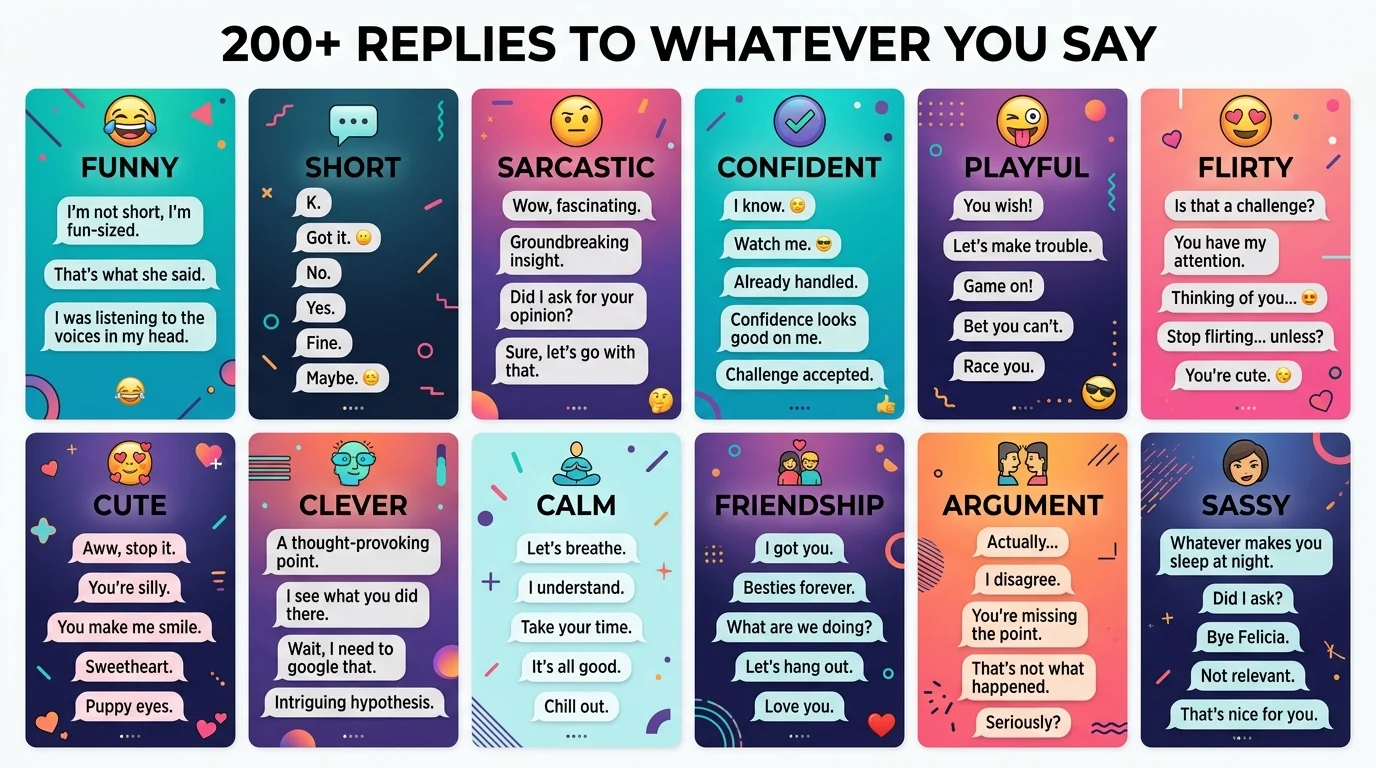
Quick Ans: If someone says “Whatever you say,” your response depends on whether they are joking, being sarcastic, dismissive, or simply agreeing with you. For a funny comeback, try “Wow, look at me with all this power.” If you want something confident, say “I appreciate your cooperation.” For a playful response, try “Good, we understand each other.” Meanwhile, if their tone feels dismissive, you can calmly say “You don’t have to agree, but you can be respectful.” The right reply can keep the conversation funny, shut down unnecessary attitude, or turn the phrase into playful banter.
“Whatever you say” is one of those phrases that can mean almost anything depending on the tone. Sometimes someone says it because they genuinely agree with you. Other times, it can sound sarcastic, dismissive, playful, annoyed, or even flirty. Therefore, figuring out the right response starts with understanding the mood behind the words.
If your friend says “Whatever you say” while laughing, you probably do not need a serious answer. Instead, a funny comeback can keep the conversation moving. On the other hand, if someone says it with obvious attitude, you may want a confident or clever response that makes your point without creating unnecessary drama.
Fortunately, there are plenty of ways to answer. You can be funny, sarcastic, confident, flirty, cute, calm, clever, or completely unbothered. Moreover, a good response does not have to be complicated. Sometimes, one short sentence is enough to change the entire energy of the conversation.
So, if you are looking for replies to whatever you say, this list has plenty of ready-to-send options for texts, friends, crushes, arguments, social media, and everyday conversations.
Funny Replies to Whatever You Say
When someone says “Whatever you say” in a playful or sarcastic way, humor is usually a great way to respond. These comebacks keep the conversation light while giving you a little personality.
- Wow, look at me with all this power.
Use this when you want to joke about supposedly being in charge.
Meaning: You are pretending their agreement gives you unlimited authority. - I appreciate your cooperation.
Use this when they sound like they are reluctantly agreeing.
Meaning: You are humorously treating their response like official cooperation. - Glad we settled that.
Use this when you want a quick funny comeback.
Meaning: You are pretending the discussion has officially ended. - Excellent. My work here is done.
Use this after making a point to a friend.
Meaning: You are joking that your mission has been successfully completed. - That sounded suspiciously agreeable.
Use this when their tone makes you unsure whether they agree.
Meaning: You are teasing them about their reluctant response. - I knew you’d see the light eventually.
Use this when you are joking about winning an argument.
Meaning: You are playfully acting as though you convinced them. - Finally, someone understands me.
Use this when you want to exaggerate their agreement.
Meaning: You are joking that they finally accepted your point. - Write that down. It may never happen again.
Use this when they rarely agree with you.
Meaning: You are teasing them about their unusual cooperation. - Thank you for supporting my extremely important opinion.
Use this when the conversation is clearly unserious.
Meaning: You are exaggerating the importance of your opinion for humor. - Your obedience has been noted.
Use this with a close friend who enjoys sarcastic banter.
Meaning: You are jokingly pretending to be their boss. - And suddenly, I feel powerful.
Use this when they reluctantly agree.
Meaning: You are making their response into a playful power joke. - Perfect. We can all go home now.
Use this when you want to dramatically end the discussion.
Meaning: You are joking that the matter is officially settled.
Funny Comebacks to Whatever You Say
Sometimes you want a response that is a little more creative. In that case, these playful comebacks can turn a basic “whatever you say” into a fun exchange.
- Careful, you’re making me think I’m right.
Use this when they seem to agree with you.
Meaning: You are joking that their response is boosting your confidence. - That’s exactly what I wanted to hear.
Use this when they reluctantly agree.
Meaning: You are pretending their words confirm your victory. - I accept your surrender.
Use this when you are teasing a friend after an argument.
Meaning: You are joking that they have given up debating you. - A wise decision, honestly.
Use this when they agree with you.
Meaning: You are humorously praising their supposed wisdom. - Look at us communicating like adults.
Use this when you want to make a joke about the conversation.
Meaning: You are pretending the exchange is unusually mature. - I’ll take that as a standing ovation.
Use this when their response sounds supportive.
Meaning: You are dramatically exaggerating their agreement. - You say whatever, I hear victory.
Use this after a playful disagreement.
Meaning: You are interpreting their words as proof that you won. - That’s one way to admit I’m right.
Use this when they refuse to directly agree.
Meaning: You are teasing them for indirectly accepting your point. - You’re welcome for the excellent advice.
Use this after giving your opinion.
Meaning: You are playfully treating your advice as obviously valuable. - I knew my wisdom would eventually reach you.
Use this with someone who enjoys exaggerated humor.
Meaning: You are pretending your advice has finally convinced them. - That response has been filed under “you agree with me.”
Use this when they deny agreeing.
Meaning: You are jokingly interpreting their words in your favor. - Perfect. I’ll consider that a yes.
Use this when they say “whatever you say” instead of directly agreeing.
Meaning: You are playfully turning their vague response into agreement.
Short Replies to Whatever You Say
A short answer can be surprisingly effective. Therefore, if you do not want to write a paragraph, choose one of these quick responses.
- Exactly.
Use this when you want to sound confident.
Meaning: You are acting as though they completely agree. - Glad you agree.
Use this when you want playful confidence.
Meaning: You are treating their words as agreement. - Good choice.
Use this when you want a humorous response.
Meaning: You are joking that agreeing with you was wise. - As you should.
Use this when you want a bold comeback.
Meaning: You are playfully acting like your opinion deserves agreement. - Works for me.
Use this when you want to keep things casual.
Meaning: You are accepting their response without overthinking it. - Noted.
Use this when you want a dry response.
Meaning: You are acknowledging what they said without adding emotion. - Fair enough.
Use this when you want to stay neutral.
Meaning: You accept their response without escalating anything. - I’ll allow it.
Use this when you want playful authority.
Meaning: You are joking that their response requires your approval. - Perfect.
Use this when you want to end the exchange quickly.
Meaning: You are satisfied with the response. - We agree, then.
Use this when you want to make the moment playful.
Meaning: You are humorously declaring mutual agreement. - Glad we cleared that up.
Use this when you want to close the discussion.
Meaning: You are treating the conversation as settled. - Your call.
Use this when you genuinely want to leave the decision with them.
Meaning: You are giving them freedom to choose.
Sarcastic Replies to Whatever You Say
If “whatever you say” comes with obvious attitude, sarcasm can match the energy. However, use these when you know the conversation can handle a little banter.
- Oh, the enthusiasm is overwhelming.
Use this when they sound completely uninterested.
Meaning: You are sarcastically pointing out their lack of enthusiasm. - I can feel the sincerity from here.
Use this when their agreement sounds fake.
Meaning: You are teasing them about their obvious sarcasm. - Thank you for that deeply heartfelt response.
Use this when they are clearly being dismissive.
Meaning: You are sarcastically exaggerating how sincere they sound. - Your excitement is truly inspiring.
Use this when they respond with obvious annoyance.
Meaning: You are playfully mocking their lack of enthusiasm. - I’ll treasure this moment of cooperation forever.
Use this when they reluctantly agree.
Meaning: You are exaggerating the significance of their response. - You really know how to make someone feel heard.
Use this when they are dismissing you.
Meaning: You are sarcastically pointing out poor communication. - What a passionate endorsement.
Use this when they say “whatever you say” without enthusiasm.
Meaning: You are making fun of their lack of commitment. - I’ll try not to get emotional over your enthusiasm.
Use this when their response is dry.
Meaning: You are sarcastically pretending to be touched. - Such warmth. I’m overwhelmed.
Use this when they sound cold or dismissive.
Meaning: You are exaggerating their lack of warmth. - I see we’re bringing our communication skills today.
Use this when they are being difficult.
Meaning: You are joking that their response is not especially helpful. - Thank you for that five-star contribution.
Use this when their response adds nothing to the discussion.
Meaning: You are sarcastically pretending their comment was impressive. - Your attitude has been received loud and clear.
Use this when you want to acknowledge their tone.
Meaning: You recognize the attitude without escalating it.
Confident Replies to Whatever You Say
A confident response is useful when someone tries to dismiss you. Instead of getting defensive, you can answer firmly and move forward.
- You don’t have to agree with me.
Use this when someone responds dismissively.
Meaning: You are making it clear that disagreement is acceptable. - I’m comfortable with what I said.
Use this when someone tries to make you second-guess yourself.
Meaning: You stand behind your statement. - You’re free to have your own opinion.
Use this when you want to remain composed.
Meaning: You respect their independence while maintaining yours. - That’s fine. We don’t have to see it the same way.
Use this when the conversation has reached a disagreement.
Meaning: You are accepting different perspectives. - I said what I meant.
Use this when someone questions your words.
Meaning: You are standing confidently behind your message. - You heard me, and that’s enough.
Use this when you do not want to keep explaining yourself.
Meaning: You are ending unnecessary discussion. - We can disagree without making it personal.
Use this when the conversation becomes tense.
Meaning: You are setting a respectful boundary. - You can disagree, but I’m not going to argue about it.
Use this when you want to end a pointless debate.
Meaning: You are refusing to participate in unnecessary conflict. - I’m not looking for permission to have an opinion.
Use this when someone dismisses your perspective.
Meaning: You are asserting your independence. - That response tells me enough.
Use this when someone is clearly unwilling to engage respectfully.
Meaning: You are choosing not to chase their approval. - We can leave it there.
Use this when you want to close the conversation calmly.
Meaning: You are ending the disagreement without hostility. - You do you. I’ll do me.
Use this when you want a simple confident boundary.
Meaning: You are accepting that both people can make their own choices.
Playful Replies to Whatever You Say
If the phrase comes from a friend or someone who enjoys teasing, you can make your response equally playful. In addition, these replies can keep the conversation going instead of ending it.
- You say whatever, but I know you’re listening.
Use this when someone pretends not to care.
Meaning: You are teasing them about their attention. - Don’t pretend you don’t love my opinions.
Use this with someone who regularly asks what you think.
Meaning: You are joking that they secretly value your advice. - You asked, and now you have to live with the answer.
Use this after giving an opinion.
Meaning: You are playfully reminding them that they requested your thoughts. - You’re welcome for the wisdom.
Use this when you have just given advice.
Meaning: You are joking that your advice was especially valuable. - That’s the spirit.
Use this when they reluctantly agree.
Meaning: You are encouraging their playful cooperation. - Look at you accepting my brilliant idea.
Use this when they agree with you.
Meaning: You are humorously exaggerating your own brilliance. - See? We make a great team.
Use this when you both reach an agreement.
Meaning: You are turning the exchange into a positive moment. - I knew you had good judgment.
Use this when they accept your suggestion.
Meaning: You are playfully complimenting them. - Your support means everything.
Use this when they say “whatever you say.”
Meaning: You are humorously treating their response as enthusiastic support. - Don’t sound too excited.
Use this when they respond with obvious sarcasm.
Meaning: You are teasing them about their tone. - I’ll pretend that was enthusiastic agreement.
Use this when they reluctantly accept your point.
Meaning: You are acknowledging their reluctance while keeping things light. - Now say it like you mean it.
Use this when you want to keep teasing.
Meaning: You are playfully challenging their lack of enthusiasm.
Flirty Replies to Whatever You Say
When someone you like says “whatever you say,” you can turn it into a playful opportunity. Therefore, these replies work best when the conversation already has some chemistry.
- Careful, I might start giving you orders.
Use this when the conversation is openly flirtatious.
Meaning: You are joking about their willingness to follow your lead. - I like how agreeable you are with me.
Use this when they playfully accept your suggestion.
Meaning: You are turning their response into flirtation. - Whatever I say? That sounds dangerous.
Use this when you want a teasing flirt.
Meaning: You are joking that their agreement gives you too much power. - Good, because I was hoping you’d listen to me.
Use this when you want a confident flirt.
Meaning: You are playfully enjoying their attention. - Then I say you owe me a date.
Use this when the relationship already supports direct flirting.
Meaning: You are turning the phrase into a playful invitation. - I could get used to you saying that.
Use this when their agreement feels attractive.
Meaning: You enjoy their playful willingness to go along with you. - Whatever I say? You really trust me that much?
Use this when you want a teasing question.
Meaning: You are playfully testing their interest. - Then I say keep talking to me.
Use this when you want something sweet and flirty.
Meaning: You are signaling that you enjoy their attention. - I like having this much influence over you.
Use this when the banter is playful.
Meaning: You are teasing them about being affected by you. - Careful, I might take that as permission to flirt.
Use this when the conversation is clearly romantic.
Meaning: You are playfully asking for permission to increase the flirtation. - Whatever I say? You’re making this too easy.
Use this when you want a confident flirt.
Meaning: Their response gives you an opening for more teasing. - Then I say you’re pretty cute when you agree with me.
Use this when you want a sweet compliment.
Meaning: You are turning their response into affectionate flirting.
Cute Replies to Whatever You Say
Sometimes “whatever you say” is not argumentative at all. It may simply be playful. In that case, a cute response can keep things friendly and warm.
- Aww, look at you agreeing with me.
Use this when someone playfully accepts your suggestion.
Meaning: You are teasing them affectionately. - Okay, that was actually cute.
Use this when their response makes you smile.
Meaning: You are openly appreciating their playful tone. - I’ll take that as a tiny victory.
Use this after a small disagreement.
Meaning: You are joking about winning a minor point. - Deal, then.
Use this when their response means agreement.
Meaning: You are accepting the outcome warmly. - You’re adorable when you pretend not to care.
Use this when they are obviously interested.
Meaning: You are teasing them affectionately. - Okay, we’re good then.
Use this when you want to keep things simple.
Meaning: You are confirming that there is no issue. - I knew we’d figure it out.
Use this when the conversation has reached agreement.
Meaning: You are ending the exchange positively. - That’s all I needed to hear.
Use this when you are happy with their response.
Meaning: Their words have given you enough reassurance. - You make agreeing look adorable.
Use this when you want a cute compliment.
Meaning: You are turning their agreement into affection. - Fine, I’ll stop bothering you now. Maybe.
Use this when you want playful teasing.
Meaning: You are joking that you might continue anyway. - Okay, I’ll count that as a win.
Use this after playful disagreement.
Meaning: You are humorously claiming a small victory. - Good, now we can be friends again.
Use this when you were jokingly arguing.
Meaning: You are playfully declaring the disagreement over.
Clever Replies to Whatever You Say
A clever comeback can be more memorable than a basic response. These lines use wordplay, confidence, and a little wit without becoming unnecessarily harsh.
- “Whatever” is doing a lot of emotional work in that sentence.
Use this when their tone is obviously complicated.
Meaning: You are pointing out that their response reveals more than the words suggest. - Interesting choice of words.
Use this when you suspect they are being sarcastic.
Meaning: You are subtly acknowledging their attitude. - That sounds like agreement wearing a disguise.
Use this when they refuse to admit you are right.
Meaning: You are joking that their response secretly means yes. - I’ll interpret that according to my own interests.
Use this when they give you an intentionally vague answer.
Meaning: You are joking about taking their words your way. - A fascinating combination of agreement and attitude.
Use this when their response contains both.
Meaning: You recognize the mixed tone while keeping it humorous. - That sentence could mean anything, and somehow I heard “yes.”
Use this when you want a playful interpretation.
Meaning: You are humorously choosing the most favorable meaning. - Your words say whatever, but your attention says otherwise.
Use this when they keep engaging.
Meaning: You are pointing out that their actions contradict their dismissal. - Noted. The ambiguity is impressive.
Use this when their answer is intentionally vague.
Meaning: You are joking about how little information they provided. - I respect the commitment to being mysterious.
Use this when they refuse to explain themselves.
Meaning: You are turning their vague response into a joke. - That was a very diplomatic way of saying nothing.
Use this when their answer avoids the question.
Meaning: You are pointing out that they did not really answer. - I’ll put that under “technically an answer.”
Use this when their response is vague.
Meaning: You are humorously acknowledging the weak answer. - You have successfully avoided answering the question. Congratulations.
Use this when they dodge your question.
Meaning: You are teasing them for avoiding a direct response.
Replies to Whatever You Say From a Crush
When a crush says “whatever you say,” the meaning can be completely different from an argument. Depending on the tone, it may be playful, teasing, or even affectionate.
- You sound cute when you pretend not to care.
Use this when your crush is clearly teasing you.
Meaning: You are calling out their playful attitude while flirting. - I think you secretly like listening to me.
Use this when they keep engaging with your messages.
Meaning: You are teasing them about enjoying your attention. - You can admit you like my opinions.
Use this when they ask for your advice often.
Meaning: You are playfully suggesting they value what you think. - Whatever I say? That’s a lot of trust.
Use this when you want to create flirtatious tension.
Meaning: You are joking about the closeness implied by their response. - I’ll remember that the next time I make a suggestion.
Use this when you want to tease them.
Meaning: You are playfully saving their words for future use. - Then I say you should keep talking to me.
Use this when you want a softer flirt.
Meaning: You are showing that you enjoy the conversation. - I could get dangerously comfortable with that answer.
Use this when the chemistry is obvious.
Meaning: You enjoy their willingness to go along with you. - Good, because I like having your attention.
Use this when you want to be slightly more direct.
Meaning: You are openly admitting that their attention matters. - You say whatever, but I know you’re smiling.
Use this when you suspect they are secretly amused.
Meaning: You are teasing them about their hidden reaction. - That sounded almost sweet.
Use this when their response is unexpectedly affectionate.
Meaning: You are inviting them to continue the playful mood. - You’re making it very easy for me to flirt with you.
Use this when the conversation is openly romantic.
Meaning: Their response gives you an opportunity to flirt. - I’m starting to think you enjoy my attention.
Use this when they keep responding.
Meaning: You are playfully suggesting mutual interest.
Calm Replies When “Whatever You Say” Sounds Dismissive
Not every situation needs a witty comeback. If someone is clearly dismissing you, a calm response can protect the conversation without adding unnecessary tension.
- If you disagree, you can just say so.
Use this when you want direct communication.
Meaning: You are inviting honesty instead of sarcasm. - I’d rather you tell me what you actually think.
Use this when their response feels evasive.
Meaning: You want genuine communication. - You don’t have to agree with me, but I’d appreciate honesty.
Use this when the conversation feels tense.
Meaning: You are asking for respectful disagreement. - If something is bothering you, you can tell me.
Use this when “whatever” seems emotionally loaded.
Meaning: You are opening the door to a real conversation. - I’m not trying to argue with you.
Use this when the exchange starts becoming tense.
Meaning: You want to reduce conflict. - Let’s just be clear about what we both mean.
Use this when communication is becoming confusing.
Meaning: You want clarity instead of assumptions. - I hear you. We can leave it there.
Use this when you want to end the conversation respectfully.
Meaning: You acknowledge their response without escalating. - That’s okay. We can disagree.
Use this when agreement is not necessary.
Meaning: You accept different opinions. - I’d rather have a real conversation than a sarcastic one.
Use this when their tone is dismissive.
Meaning: You are requesting more direct communication. - No pressure to agree with me.
Use this when you want to lower tension.
Meaning: You are giving them room to express a different view. - You can tell me if you see it differently.
Use this when you want honest feedback.
Meaning: You are encouraging openness. - Let’s not turn a small disagreement into a bigger issue.
Use this when the situation is becoming unnecessarily tense.
Meaning: You want to prevent escalation.
Replies to Whatever You Say in an Argument
During an argument, the strongest response is not always the sharpest one. Instead, choosing a calm statement can help you maintain control of the conversation.
- If that’s your response, then I think we should pause here.
Use this when the conversation is becoming unproductive.
Meaning: You are choosing to stop rather than continue arguing. - I’m willing to talk when we can both be respectful.
Use this when their tone is becoming hostile.
Meaning: You are setting a clear communication boundary. - I’m not going to argue just to prove a point.
Use this when the discussion is going nowhere.
Meaning: You value resolution more than winning. - We clearly see this differently.
Use this when neither person is changing their mind.
Meaning: You are recognizing the disagreement without escalating it. - You can have the last word if that makes you happy.
Use this when you want to end a pointless argument.
Meaning: You are no longer interested in continuing. - I’ve explained my side. The rest is up to you.
Use this when you have already made yourself clear.
Meaning: You are putting the decision back in their hands. - I’m not going to chase a conversation that isn’t mutual.
Use this when they refuse to communicate.
Meaning: You are refusing to force engagement. - If you want to discuss it seriously, I’m here.
Use this when they are ready to communicate respectfully.
Meaning: You remain open to a productive conversation. - Let’s take a break and come back to this later.
Use this when emotions are getting high.
Meaning: You want time to cool down before continuing. - I understand that you’re upset, but we can still talk respectfully.
Use this when emotions are strong.
Meaning: You acknowledge feelings while maintaining a boundary. - I’m not interested in turning this into a competition.
Use this when someone treats the argument like a contest.
Meaning: You want resolution rather than victory. - We can disagree without dismissing each other.
Use this when you want to reset the tone.
Meaning: You are asking for mutual respect.
Replies to Whatever You Say From a Friend
Friends often use “whatever you say” as playful teasing. Therefore, your answer can be casual, dramatic, or silly without making things awkward.
- You’re lucky I’m usually right.
Use this when your friend jokingly accepts your opinion.
Meaning: You are playfully claiming that your advice is reliable. - That’s what I like to hear.
Use this when they agree with you.
Meaning: You are jokingly celebrating their response. - See? We’re compatible after all.
Use this when you reach agreement.
Meaning: You are playfully suggesting your friendship works because you agree. - I’ll accept your reluctant support.
Use this when they clearly do not want to agree.
Meaning: You are teasing them about their hesitation. - You’re learning. I’m proud.
Use this when you want exaggerated humor.
Meaning: You are jokingly acting like their teacher. - That’s the correct answer.
Use this when they agree with you.
Meaning: You are humorously presenting your opinion as objectively correct. - I knew you’d come around.
Use this when they change their mind.
Meaning: You are playfully celebrating their agreement. - Don’t worry, I’ll accept your apology later.
Use this when you are pretending they were wrong.
Meaning: You are jokingly turning agreement into surrender. - Look at us solving problems.
Use this after reaching a decision together.
Meaning: You are celebrating the agreement humorously. - Friendship restored.
Use this after a playful disagreement.
Meaning: You are joking that the disagreement has officially ended. - Good, now buy me food.
Use this with a close friend after they agree.
Meaning: You are extending the joke into another playful demand. - I’ll pretend that was sincere.
Use this when they respond sarcastically.
Meaning: You are teasing them about their tone.
Sassy Replies to Whatever You Say
Sometimes you want confidence with a little attitude. These responses are useful when you want to make your point without writing a long explanation.
- You’re free to feel however you want about it.
Use this when someone disapproves of your choice.
Meaning: Their opinion does not control your decision. - I said what I said.
Use this when you want a firm response.
Meaning: You stand behind your statement. - And I meant every word.
Use this when someone questions your position.
Meaning: You are confident in what you said. - Your approval was not required.
Use this when someone acts like they need to approve your choice.
Meaning: You are asserting your independence. - I’m glad we established that.
Use this when you want a polished but firm ending.
Meaning: You are closing the discussion. - You can disagree from over there.
Use this when you want playful distance.
Meaning: You are refusing to engage with unnecessary negativity. - Noted, but I’m still doing what works for me.
Use this when someone offers unwanted criticism.
Meaning: You acknowledge their opinion without following it. - That’s an opinion, not an instruction.
Use this when someone tries to tell you what to do.
Meaning: You are making the difference between advice and control clear. - You said whatever, so I’m taking the freedom seriously.
Use this when you want a witty response.
Meaning: You are joking that their vague answer gives you freedom. - I’ll keep that opinion safely filed away.
Use this when you want polite sarcasm.
Meaning: You are acknowledging their opinion without giving it much importance. - Thanks, but I’ll trust my own judgment.
Use this when you want mature confidence.
Meaning: You respect yourself enough to make your own decision. - We can agree that I’m going to do what I think is right.
Use this when you want a firm ending.
Meaning: You are making your independence clear.
FAQs About Replies to Whatever You Say
What does “whatever you say” usually mean?
“Whatever you say” can mean genuine agreement, sarcasm, annoyance, acceptance, or playful teasing. Therefore, the tone and context are important. If someone says it warmly, it may simply mean they accept your suggestion. If they say it coldly, they may be dismissing your opinion.
What is the best reply to “whatever you say”?
A playful option is “Glad you agree.” If you want humor, try “Wow, look at me with all this power.” However, if the phrase sounds dismissive, a calm response such as “If you disagree, you can just say so” may work better.
How do I respond to “whatever you say” from a friend?
Friends usually allow more playful responses. You can say, “You’re lucky I’m usually right,” or “I’ll accept your reluctant support.” These responses keep the exchange light.
What should I say when my crush says “whatever you say”?
If the conversation is flirty, try “I like how agreeable you are with me.” Alternatively, say “I could get used to you saying that.” Both responses turn a potentially ordinary phrase into playful flirting.
Is “whatever you say” rude?
It can be, depending on the tone. The phrase itself is not automatically rude. However, when delivered sarcastically or dismissively, it can communicate annoyance or disagreement without directly saying so.
How can I respond without sounding angry?
Stay brief and neutral. For example, say “That’s okay, we can disagree,” or “I’d rather know what you actually think.” These responses encourage honest communication without escalating the situation.
What is a funny comeback to “whatever you say”?
Try “Excellent. My work here is done.” Another funny option is “I accept your surrender.” These work particularly well when you and the other person are joking around.
What if someone says “whatever you say” during an argument?
First, avoid assuming their exact intention. If they sound dismissive, you can say, “If you disagree, I’d rather you tell me directly.” Alternatively, if the conversation is becoming unproductive, say “We can leave it there.”
How do I reply when someone says “whatever you say” sarcastically?
You can match their humor with something like “I can feel the sincerity from here.” If you want to avoid escalation, however, a calm response is better.
What is a short response to “whatever you say”?
Try “Exactly,” “Noted,” “Fair enough,” “Glad you agree,” or “Works for me.” Short replies are especially useful in text conversations.
Can “whatever you say” be flirty?
Yes. In a playful conversation, it can create an opening for teasing. For example, you can respond with “Careful, I might start giving you orders.” However, whether it is actually flirty depends on the relationship and tone.
Should I ignore “whatever you say”?
Sometimes, yes. If the comment is clearly intended to provoke you and there is nothing productive left to discuss, not responding can prevent unnecessary tension. Otherwise, a short and calm response may be enough.
Conclusion
The phrase “whatever you say” can carry completely different meanings depending on tone, timing, and relationship. Therefore, your response should match the situation rather than automatically assuming the worst. If a friend is teasing you, a funny comeback can keep the conversation entertaining. If a crush says it playfully, you can turn it into flirtation. On the other hand, if someone is being dismissive, a calm and confident response can establish better communication. Ultimately, you do not need a complicated comeback. Sometimes, a short line such as “Glad you agree” is enough, while other situations call for a clear boundary. Choose the response that feels natural and fits the energy of the conversation.

Lily Carter creates practical, easy-to-follow content for everyday readers at ResponseCraft.com. She enjoys turning complex topics into clear, actionable advice that helps people make smarter decisions.