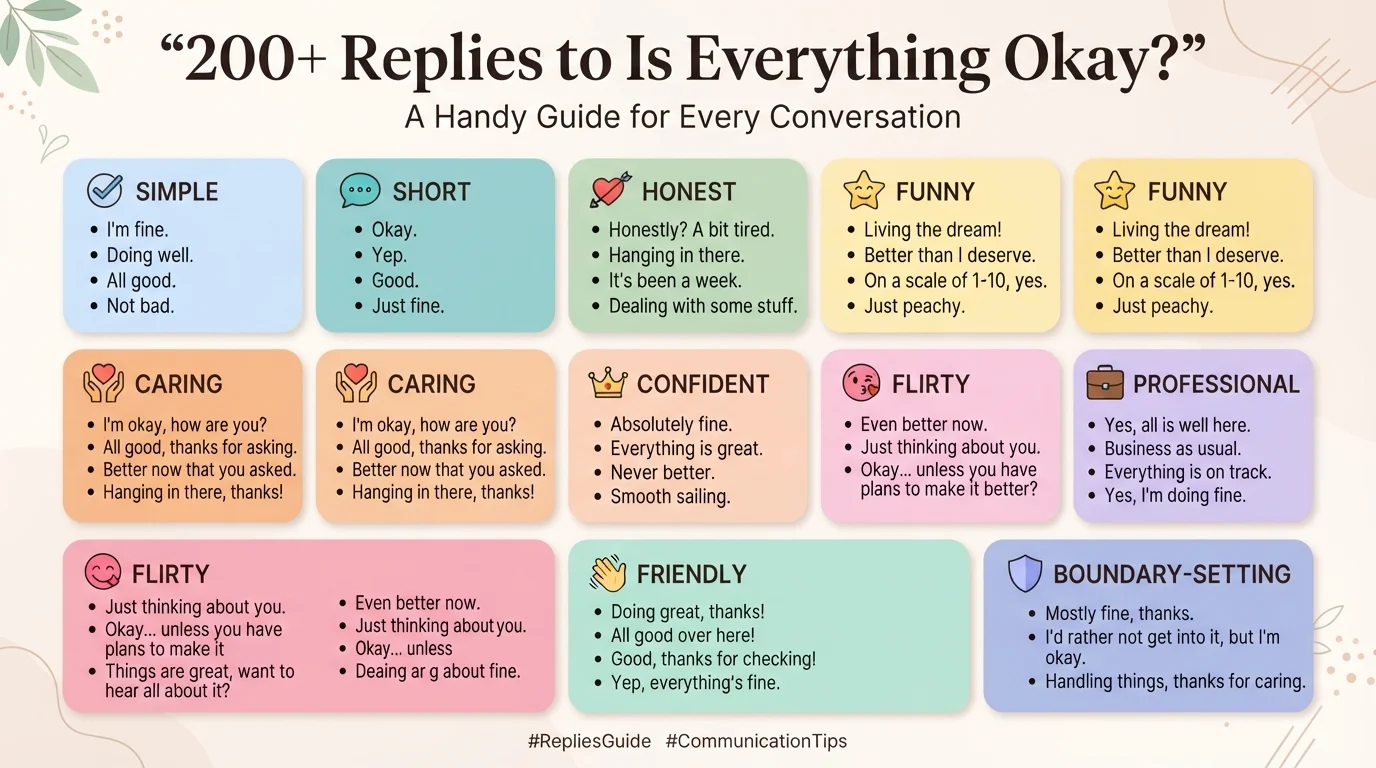
Quick Ans: The best reply to “Is everything okay?” depends on how you feel and how much you want to share. If everything is fine, you can say, “Yes, everything is okay. Thanks for checking!” However, if something is bothering you, try “I’m dealing with a few things, but I appreciate you asking.” For a funny response, say, “Define okay!” Meanwhile, a sweet reply could be, “I’m better now that you asked.” Whether you want to sound honest, casual, emotional, confident, flirty, or humorous, the right response should match your mood and relationship with the person asking.
When someone asks, “Is everything okay?”, they may be showing concern, noticing a change in your behavior, or simply trying to start a conversation. Sometimes, you genuinely feel fine. Other times, you may be struggling but not feel ready to explain everything. Therefore, your response can be as simple or detailed as you want.
You do not owe everyone a complete explanation of your emotions. At the same time, you can use the question as an opportunity to open up to someone you trust. For example, you might say that you are tired, overwhelmed, confused, or simply having a difficult day. Alternatively, you can keep things light with a funny comeback when you do not want a serious conversation.
In this guide, you will find the best replies to “Is everything okay?” for different moods and situations. Whether you need a short text, a caring response, a confident answer, or a playful comeback, these messages are ready to use.
Simple Replies to “Is Everything Okay?”
Sometimes, you want to answer the question directly without adding too many details. These simple responses are suitable for friends, family members, coworkers, classmates, and casual conversations. In addition, they sound natural enough for texts and face-to-face conversations.
- Yes, everything is okay. Thanks for asking.
Use this when you are genuinely fine and appreciate their concern.
Meaning: You are reassuring them while showing gratitude. - Yes, I’m good. How about you?
Use this when you want to answer and continue the conversation.
Meaning: You are saying you are fine and showing interest in them. - Everything is fine, don’t worry.
Use this when someone seems concerned about you.
Meaning: You are reassuring the person that nothing serious is happening. - I’m okay, just a little tired.
Use this when exhaustion is affecting your mood.
Meaning: You are being honest while keeping the explanation brief. - Yes, all good on my end.
Use this for a casual conversation or workplace message.
Meaning: You are confirming that everything is generally fine. - I’m doing alright, thanks for checking in.
Use this when you want to sound polite and appreciative.
Meaning: You are acknowledging their concern without oversharing. - Everything is okay for now.
Use this when things are manageable but not perfect.
Meaning: You are giving a cautiously positive response. - I’m fine, just having one of those days.
Use this when your mood is slightly off.
Meaning: You are admitting that the day has been difficult. - Yes, thankfully, everything is okay.
Use this when you have recently dealt with stress.
Meaning: You are expressing relief that things are fine. - I’m okay. I appreciate you asking.
Use this when you want a calm and respectful response.
Meaning: You are reassuring them and recognizing their kindness. - Nothing serious, I’m just thinking a lot.
Use this when you are mentally occupied.
Meaning: You are explaining your mood without sharing every detail. - I’m good, promise.
Use this when someone close to you needs reassurance.
Meaning: You are offering a warm and confident confirmation.
Short Replies to “Is Everything Okay?”
A short response is perfect when you are busy, texting quickly, or not interested in explaining your mood. However, remember that a short answer does not have to sound rude. A little warmth can make all the difference.
- Yes, I’m okay.
Use this when you want a direct answer.
Meaning: You are confirming that you are fine. - All good!
Use this in a casual conversation.
Meaning: You are giving a quick positive response. - I’m fine, thanks.
Use this when you want to remain polite.
Meaning: You are reassuring the person and appreciating their question. - Mostly, yes.
Use this when things are not completely perfect.
Meaning: You are giving an honest but brief answer. - I’m alright.
Use this when you feel okay but not especially cheerful.
Meaning: You are describing your condition in a neutral way. - Doing my best.
Use this when you are facing some challenges.
Meaning: You are suggesting that things are difficult but manageable. - I’ll be okay.
Use this when you need time to process something.
Meaning: You are expressing confidence that you will manage. - Thanks for asking.
Use this when you do not want to share details.
Meaning: You are acknowledging their concern without giving an update. - Not really, but I’m managing.
Use this when you want to be honest but brief.
Meaning: You are admitting difficulty while showing resilience. - I’m getting there.
Use this when you are gradually feeling better.
Meaning: You are saying that improvement is happening slowly. - Nothing to worry about.
Use this when you want to reassure someone.
Meaning: You are indicating that the situation is not serious. - I’m okay-ish.
Use this when you want a casual and slightly humorous answer.
Meaning: You are saying that things are acceptable but not perfect.
Honest Replies to “Is Everything Okay?”
You do not have to pretend that everything is perfect. If someone asks with genuine concern, an honest response can help you express what is happening. Moreover, you can choose how much information you feel comfortable sharing.
- Honestly, I’ve been having a difficult time lately.
Use this when you are ready to acknowledge your struggles.
Meaning: You are opening the door to a more serious conversation. - Not completely, but I’m trying to work through it.
Use this when you are dealing with a personal challenge.
Meaning: You are being honest while showing that you are taking things step by step. - I’ve got a lot on my mind right now.
Use this when stress or overthinking is affecting you.
Meaning: You are explaining your mood without discussing every issue. - I’m not feeling my best today.
Use this when you are emotionally or physically drained.
Meaning: You are honestly describing your current state. - Something is bothering me, but I’m not ready to talk about it yet.
Use this when you need privacy.
Meaning: You are setting a clear and respectful boundary. - I’m struggling a little, but your concern means a lot.
Use this when you appreciate the person asking.
Meaning: You are being vulnerable while recognizing their support. - Things have been complicated recently.
Use this when the situation is difficult to summarize.
Meaning: You are indicating that several challenges may be involved. - I’m not sure how I feel yet.
Use this when your emotions are confusing.
Meaning: You are honestly admitting that you need time to understand yourself. - I’ve been overwhelmed, to be honest.
Use this when responsibilities or emotions feel excessive.
Meaning: You are naming the pressure you are experiencing. - Not really, but I’m taking things one day at a time.
Use this when you are going through a difficult period.
Meaning: You are acknowledging the problem while focusing on gradual progress. - I could be better, but I’m hanging in there.
Use this when you want to be truthful without sounding hopeless.
Meaning: You are saying that things are hard but you are continuing. - Thank you for asking. I might need someone to talk to.
Use this when you want to invite support.
Meaning: You are gently expressing a need for connection.
Funny Replies to “Is Everything Okay?”
A little humor can make the conversation lighter, especially when the person asking knows your personality. Nevertheless, use these replies with people who understand your jokes and will not mistake your humor for a serious warning.
- Define “okay.”
Use this when you want a witty and unexpected response.
Meaning: You are joking that your situation is complicated. - Ask me again after coffee.
Use this when tiredness is affecting your mood.
Meaning: You are humorously suggesting that coffee may improve everything. - Emotionally? No. Financially? Also no.
Use this with a close friend who enjoys dramatic humor.
Meaning: You are joking about having several struggles at once. - I’m operating on snacks and questionable decisions.
Use this when you want a playful response.
Meaning: You are joking about surviving through food and chaos. - Everything is okay according to the latest unofficial report.
Use this when you want a clever, dramatic answer.
Meaning: You are playfully avoiding a straightforward response. - My brain has left the group chat.
Use this when you feel mentally exhausted.
Meaning: You are humorously describing mental overload. - Ask my playlist. It knows everything.
Use this when music reflects your mood.
Meaning: You are joking that your music choices reveal your feelings. - I’m fine, just starring in my own unnecessary drama.
Use this with a friend who knows your humor.
Meaning: You are making light of your overthinking or situation. - Currently accepting compliments and emergency snacks.
Use this when you want a playful response.
Meaning: You are jokingly asking for comfort and food. - Everything is under control, allegedly.
Use this when life feels slightly chaotic.
Meaning: You are humorously admitting that things may not be perfectly organized. - My emotional Wi-Fi is disconnected.
Use this when you feel distant or mentally tired.
Meaning: You are using humor to describe emotional disconnection. - I’ll let you know when the system restarts.
Use this when you need time to recover.
Meaning: You are joking that you need a break before functioning normally.
Caring Replies to “Is Everything Okay?”
When someone asks with genuine concern, you may want to respond warmly. These messages are especially useful when you appreciate their kindness and want to acknowledge their effort.
- Thank you for checking on me. That really means a lot.
Use this when someone makes an effort to support you.
Meaning: You are expressing gratitude for their concern. - I’m okay, but I appreciate you noticing.
Use this when someone recognizes a change in your behavior.
Meaning: You are reassuring them while appreciating their attentiveness. - I’m dealing with a few things, but I’m grateful you asked.
Use this when you want to be honest and kind.
Meaning: You are acknowledging difficulties and their support. - You’re thoughtful for asking. I’m doing my best.
Use this when you want to sound sincere.
Meaning: You appreciate their kindness while admitting that things may be challenging. - I’m not completely okay, but it helps knowing someone cares.
Use this when you need emotional support.
Meaning: You are expressing vulnerability and appreciation. - Thank you. I may not have answers yet, but I’m taking things slowly.
Use this when you are still processing a situation.
Meaning: You are explaining that you need patience and time. - I’m okay for now, and I’m glad you reached out.
Use this when you want to maintain a connection.
Meaning: You are reassuring them while recognizing their effort. - That’s kind of you. I’ve been feeling a little overwhelmed.
Use this when you want to share a small amount of information.
Meaning: You are accepting their concern and naming your stress. - I’m trying to stay positive, but thank you for checking in.
Use this when you are facing a challenging day.
Meaning: You are showing appreciation while being realistic. - You asking actually made me feel a little better.
Use this when their message comforts you.
Meaning: You are telling them their concern had a positive effect. - I’m getting through it, and your support is appreciated.
Use this when you want to sound calm and grateful.
Meaning: You are acknowledging difficulty and valuing their support. - I’m not ready to explain everything, but thank you for being here.
Use this when you need emotional space.
Meaning: You are setting a boundary while recognizing their presence.
Replies to “Is Everything Okay?” When You Are Fine
Sometimes, the other person notices that you are quiet, distracted, or behaving differently even though nothing is wrong. In that situation, a reassuring answer can prevent unnecessary worry.
- Yes, I’m completely fine. I was just thinking.
Use this when you have been quiet but are not upset.
Meaning: You are explaining your silence without creating concern. - Everything is okay. I’m just naturally quiet today.
Use this when your mood is calm rather than negative.
Meaning: You are clarifying that quietness does not mean something is wrong. - Yes, no worries. I’m just focused on something.
Use this when you are concentrating.
Meaning: You are reassuring them that your attention is elsewhere. - I’m good. My face just forgot to look cheerful.
Use this when you want to add light humor.
Meaning: You are joking that your expression may be misleading. - Everything’s fine. I’m just having a quiet moment.
Use this when you need peaceful time.
Meaning: You are explaining your silence in a relaxed way. - Yes, I promise. Nothing bad happened.
Use this when someone seems genuinely worried.
Meaning: You are directly reassuring them. - I’m okay. I’ve just been lost in my thoughts.
Use this when you have been daydreaming or reflecting.
Meaning: You are explaining your distraction. - All good! I didn’t realize I looked worried.
Use this when someone misreads your expression.
Meaning: You are clarifying that your appearance did not reflect your actual feelings. - Yes, everything is fine. I’m just a little tired.
Use this when low energy affects your behavior.
Meaning: You are giving a simple explanation for your mood. - I’m okay, just taking a break from everything.
Use this when you want some quiet time.
Meaning: You are explaining your need to disconnect temporarily. - Nothing is wrong. I’m simply enjoying my silence.
Use this when you are comfortable being quiet.
Meaning: You are saying that silence is intentional rather than concerning. - Yes, I’m fine. Thank you for being observant.
Use this when you want to appreciate their attention.
Meaning: You are reassuring them while recognizing their concern.
Replies to “Is Everything Okay?” When You Are Not Fine
If you are not okay, you can answer honestly without explaining every detail. Furthermore, these responses allow you to communicate your feelings while maintaining control over the conversation.
- No, not really, but I’m trying to handle it.
Use this when you want to admit that you are struggling.
Meaning: You are being honest while showing determination. - I’ve had a rough day, honestly.
Use this when the day has been emotionally difficult.
Meaning: You are opening up about your experience. - There are a few things I’m dealing with right now.
Use this when you prefer not to provide specific details.
Meaning: You are acknowledging challenges while protecting your privacy. - I’m having a hard time, but I’ll get through it.
Use this when you want to sound honest and hopeful.
Meaning: You are admitting difficulty while expressing confidence. - Not at the moment, but I’m taking it step by step.
Use this when things are currently difficult.
Meaning: You are recognizing the situation without giving up. - I’m feeling overwhelmed and could use some patience.
Use this when you need understanding.
Meaning: You are communicating your emotional needs. - I don’t really want to talk about it yet.
Use this when you need privacy.
Meaning: You are respectfully declining to discuss the issue. - I’m not okay, but I’m glad you asked instead of assuming.
Use this when you value direct communication.
Meaning: You appreciate being given the opportunity to explain. - I’m trying to figure things out.
Use this when you do not yet know what to do.
Meaning: You are acknowledging uncertainty and ongoing reflection. - Today has been difficult, but I’m managing.
Use this when you want to be honest without sounding overly dramatic.
Meaning: You are describing a challenging day while indicating that you are coping. - I could really use someone to listen right now.
Use this when you want emotional support rather than advice.
Meaning: You are clearly communicating your need for understanding. - Not everything is okay, but I’m taking care of myself.
Use this when you want to reassure someone without pretending.
Meaning: You are being honest while emphasizing self-care.
Polite Replies to “Is Everything Okay?”
You may receive this question from a coworker, teacher, neighbor, manager, or someone you do not know well. In these situations, a polite response can maintain boundaries while still sounding respectful.
- Yes, thank you for asking. Everything is fine.
Use this in a professional or formal conversation.
Meaning: You are giving reassurance with courtesy. - I appreciate your concern. I’m doing alright.
Use this when someone politely checks on you.
Meaning: You are acknowledging their thoughtfulness. - Thank you for checking in. I’m okay at the moment.
Use this when you want a professional response.
Meaning: You are returning their kindness while staying measured. - Everything is under control, thank you.
Use this when someone is concerned about your work or responsibilities.
Meaning: You are assuring them that you are managing the situation. - I’m fine, but I appreciate your attention.
Use this when someone notices a change.
Meaning: You are reassuring them and recognizing their care. - Thank you. I’m working through a few things, but I’m managing.
Use this when you want to be honest but professional.
Meaning: You are acknowledging challenges without oversharing. - I’m doing well, thank you. I hope you are too.
Use this when you want to return the question.
Meaning: You are being polite and showing reciprocal interest. - Everything is okay. Thank you for your understanding.
Use this when someone has given you space or support.
Meaning: You are expressing gratitude and reassurance. - I’m alright, just handling a few personal matters.
Use this when you need privacy.
Meaning: You are explaining your situation without revealing details. - Thank you for asking. I’ll let you know if I need assistance.
Use this when someone offers support.
Meaning: You are acknowledging their concern while maintaining independence. - I’m doing my best, and I appreciate your patience.
Use this when you are under pressure.
Meaning: You are recognizing the difficulty and asking for understanding. - Yes, everything is fine. Thank you for checking in with me.
Use this for a polished and respectful answer.
Meaning: You are reassuring them in a courteous manner.
Confident Replies to “Is Everything Okay?”
A confident response can show that you understand your feelings and can manage your boundaries. However, confidence does not mean you must hide your emotions or pretend that nothing is wrong.
- I’m handling things in my own way, but thank you for asking.
Use this when you want to maintain independence.
Meaning: You are acknowledging concern while emphasizing personal control. - I’m okay, and I trust myself to figure things out.
Use this when you are facing uncertainty.
Meaning: You are expressing confidence in your ability to cope. - Everything may not be perfect, but I’m managing.
Use this when you want to sound realistic and strong.
Meaning: You are admitting imperfections without losing confidence. - I know what I need to do, but I appreciate your concern.
Use this when someone is offering unsolicited advice.
Meaning: You are setting a boundary while remaining polite. - I’m working through it, and I don’t need to panic.
Use this when you want to reassure yourself and others.
Meaning: You are showing a calm and practical attitude. - I’m allowed to have a difficult day, and I’ll be okay.
Use this when you want to express self-acceptance.
Meaning: You are recognizing your emotions without judging yourself. - I’m taking responsibility for what I can control.
Use this when facing a complicated situation.
Meaning: You are focusing on practical action rather than worry. - I’m not ready to discuss it, and I hope you can respect that.
Use this when someone keeps asking questions.
Meaning: You are clearly communicating a personal boundary. - I’m figuring it out, but I’m not falling apart.
Use this when you want to sound firm and reassuring.
Meaning: You are saying that challenges do not define your ability to cope. - I appreciate your concern, but I have things handled.
Use this when you want to reassure someone confidently.
Meaning: You are stating that you can manage the situation. - I’m taking things one step at a time, and that’s enough for now.
Use this when you need to focus on gradual progress.
Meaning: You are accepting your current pace. - I’m okay with not having everything figured out yet.
Use this when you are facing uncertainty.
Meaning: You are showing emotional confidence and patience.
Flirty Replies to “Is Everything Okay?”
When someone you like asks whether everything is okay, you can add a little charm. Naturally, the best response depends on your comfort level and the relationship you share.
- Everything was fine until you distracted me.
Use this when you want a playful flirtatious response.
Meaning: You are teasing them while suggesting they have an effect on you. - I’m better now that you’re checking on me.
Use this when you want to sound sweet and flirty.
Meaning: You are saying that their attention improves your mood. - I might be okay if you stay and talk to me.
Use this when you want to invite more conversation.
Meaning: You are expressing interest in spending time with them. - I was fine, but now I’m wondering why you’re so cute.
Use this when you want a playful compliment.
Meaning: You are turning the question into a flirtatious exchange. - Everything is okay, especially now that I have your attention.
Use this when you want a confident response.
Meaning: You are playfully showing that you enjoy their attention. - I’m fine, but I wouldn’t say no to a little attention from you.
Use this when you want to be subtly flirty.
Meaning: You are hinting that you would enjoy their affection. - Maybe you can make my day better.
Use this when you want to encourage them to continue chatting.
Meaning: You are inviting them to bring happiness into your day. - I’m okay. Should I be worried about how much I like you?
Use this when the conversation is already romantic.
Meaning: You are playfully admitting attraction. - I’m good, but your message definitely made me smile.
Use this when you want to sound sweet rather than bold.
Meaning: You are telling them their attention made you happy. - Everything is fine, but I could use a hug from you.
Use this when physical affection is appropriate.
Meaning: You are expressing closeness and affection. - I’m okay. Are you checking because you miss me?
Use this when you want to tease them gently.
Meaning: You are playfully suggesting that they are thinking about you. - I’m fine, but I might need another message from you just to be sure.
Use this when you want a light and charming reply.
Meaning: You are encouraging them to continue the conversation.
Replies to “Is Everything Okay?” From a Friend
A friend may ask because they notice your silence, mood, or absence. Therefore, your response can be casual, sincere, or humorous depending on how close you are.
- I’m okay, bestie. Just dealing with a few things.
Use this when you want to be honest with a close friend.
Meaning: You are sharing a small update without explaining everything. - I’m fine, but I could use a distraction.
Use this when you want your friend to help lighten your mood.
Meaning: You are indirectly asking for company or conversation. - Honestly, not really. Can we talk?
Use this when you need support from a trusted friend.
Meaning: You are directly asking for emotional connection. - I’m okay! My face is just being dramatic today.
Use this when you want to keep the mood light.
Meaning: You are joking about looking upset. - I’ve been stressed, but I’ll survive.
Use this when you want to give a casual update.
Meaning: You are acknowledging pressure while remaining hopeful. - Thanks for checking on me. You’re a good friend.
Use this when you appreciate their concern.
Meaning: You are recognizing their loyalty and kindness. - I’m not at my best, but talking to you might help.
Use this when you want to spend time with your friend.
Meaning: You are expressing vulnerability and inviting support. - Everything is okay now. Earlier was a different story.
Use this when a difficult situation has improved.
Meaning: You are saying that the problem has passed or become manageable. - I’m good. I just need a little time to recharge.
Use this when you feel socially or mentally tired.
Meaning: You are asking for rest rather than conversation. - I’m managing, but I appreciate you noticing.
Use this when you want a sincere response.
Meaning: You are acknowledging difficulty and valuing your friend’s attention. - I’m okay, but please send memes immediately.
Use this when humor helps you feel better.
Meaning: You are playfully asking your friend for a distraction. - Not completely, but I’m glad I have you.
Use this when you want to express emotional appreciation.
Meaning: You are saying that their friendship provides comfort.
Replies to “Is Everything Okay?” From Someone Special
When someone special asks this question, you may want to sound more affectionate and emotionally open. In addition, their concern may be an opportunity to strengthen your connection.
- I’m okay, but it means a lot that you asked.
Use this when you want to express appreciation.
Meaning: You are saying that their concern feels meaningful. - I’m doing better now that I’m talking to you.
Use this when their presence comforts you.
Meaning: You are expressing that their attention improves your mood. - Not everything is perfect, but having you around helps.
Use this when you want to be honest and affectionate.
Meaning: You are acknowledging challenges while appreciating their presence. - I’m alright, sweetheart. Thank you for caring.
Use this when you share an affectionate relationship.
Meaning: You are returning their concern with warmth. - I’ve had a difficult day, but I would love to talk to you.
Use this when you need connection.
Meaning: You are inviting a supportive conversation. - I’m okay. You always know when something feels different.
Use this when they are particularly observant.
Meaning: You are appreciating their emotional awareness. - I’m not completely okay, but I feel safe telling you that.
Use this when you trust the person deeply.
Meaning: You are expressing vulnerability and emotional safety. - I’m fine, love. I hope you’re doing okay too.
Use this when you want to return the concern.
Meaning: You are showing affection and reciprocal care. - I’m working through some things, but your message made me smile.
Use this when their message lifts your mood.
Meaning: You are sharing honestly while expressing appreciation. - I could use a little comfort, if you have time.
Use this when you want support without demanding it.
Meaning: You are gently expressing your emotional needs. - I’m okay, but I would rather be spending time with you.
Use this when you want a romantic tone.
Meaning: You are expressing a desire for closeness. - Thank you for caring about me. That means more than you know.
Use this when you want a heartfelt reply.
Meaning: You are expressing deep gratitude for their concern.
Boundaries and Thoughtful Replies to “Is Everything Okay?”
Not every question needs a detailed answer. Sometimes, you are not ready to talk, or perhaps the person asking is not someone you trust. In those situations, a respectful boundary can help you protect your privacy.
- I appreciate you asking, but I’d rather keep it private.
Use this when you do not want to share personal details.
Meaning: You are politely protecting your privacy. - I’m handling it, but I’m not ready to discuss it.
Use this when you need time before talking.
Meaning: You are acknowledging the issue while requesting space. - Thank you for your concern. I’ll share more when I’m comfortable.
Use this when you may open up later.
Meaning: You are setting a temporary boundary without rejecting their care. - I’m okay enough to manage, but I need some quiet time.
Use this when you need space to yourself.
Meaning: You are communicating that rest is currently important. - I understand why you’re asking, but I don’t want to get into it.
Use this when someone continues asking questions.
Meaning: You are acknowledging their curiosity while ending the discussion. - I’m still processing everything, so I don’t have much to say yet.
Use this when your feelings are unsettled.
Meaning: You are explaining why you cannot provide an answer. - I’m not ready to talk, but I appreciate your patience.
Use this when you need emotional space.
Meaning: You are asking them to respect your timing. - It’s personal, but thank you for caring.
Use this when you want to stay brief and polite.
Meaning: You are keeping the details private while recognizing their kindness. - I’d prefer to focus on something else right now.
Use this when you want to change the topic.
Meaning: You are clearly redirecting the conversation. - I’ll be okay, but I need to work through this independently for now.
Use this when you prefer handling the issue alone.
Meaning: You are expressing self-reliance and requesting space. - I appreciate the question, but I’m not comfortable explaining.
Use this when the person is not close to you.
Meaning: You are stating a clear personal boundary. - Thank you for checking in. I’ll reach out if I need support.
Use this when you want to end the conversation respectfully.
Meaning: You are acknowledging their care while deciding when to ask for help.
FAQs About Replies to “Is Everything Okay?”
What is the best reply to “Is everything okay?”
The best response depends on your actual feelings. If you are fine, say, “Yes, everything is okay. Thanks for asking.” However, if you are struggling, you can say, “Not completely, but I’m working through it.”
How do I reply when everything is not okay?
You can be honest without sharing every detail. For example, say, “I’m having a difficult time, but I’m taking things one step at a time.” This communicates your feelings while maintaining a hopeful tone.
What should I say if I do not want to talk?
A respectful boundary is useful. Try, “I appreciate you asking, but I’m not ready to talk about it yet.” This response recognizes their concern while protecting your privacy.
What is a funny response to “Is everything okay?”
You can say, “Define okay!” Alternatively, try “My brain has left the group chat.” These replies work best with people who understand your sense of humor.
How can I respond to someone I like?
A flirty reply could be, “I’m better now that you’re checking on me.” If you want something more subtle, say, “Your message definitely made me smile.”
How do I respond to a friend?
With a close friend, you can be honest and relaxed. For example, say, “I’m dealing with a few things, but I’m glad you asked.” If you need support, you can also ask to talk.
What if I am fine but look upset?
You can explain your expression calmly. Try, “Everything is fine. I’m just tired and thinking about a few things.” This helps prevent unnecessary concern.
How do I respond professionally?
A polite response might be, “Thank you for checking in. I’m managing everything and appreciate your concern.” This sounds professional while avoiding unnecessary personal details.
Should I always say that I am okay?
No. You do not need to pretend that everything is fine. If you feel comfortable, an honest response can help you receive support. Nevertheless, you can also choose not to share details.
What does it mean when someone asks, “Is everything okay?”
The question may show concern, curiosity, or an observation that your behavior has changed. The exact meaning depends on the context, the person’s tone, and your relationship.
How do I thank someone for checking on me?
You can say, “Thank you for asking. It means a lot that you noticed.” This response is warm, appreciative, and suitable for many situations.
Can I answer with only “yes”?
Yes, especially when you want to keep the conversation short. However, adding “Thanks for asking” can make the response sound friendlier and less dismissive.
Conclusion
Finding the right replies to “Is everything okay?” depends on your mood, relationship, and comfort level. If everything is fine, a simple answer such as “Yes, I’m good, thanks!” is enough. On the other hand, when life feels difficult, you can be honest without explaining every personal detail. You may also choose a funny response when you want to lighten the mood or a caring message when someone’s concern means a lot to you. Ultimately, you should choose words that feel natural and truthful. Whether you need space, support, humor, or connection, your response can communicate exactly what you want to share.

Chloe Brooks is a passionate writer at ResponsCraft.com, creating clear, practical and well-researched content to help readers make informed decisions. She focuses on delivering engaging articles that are accurate, useful and easy to understand.
1 thought on “200+ Replies to “Is Everything Okay?”: Best, Funny, Caring and Honest Responses”