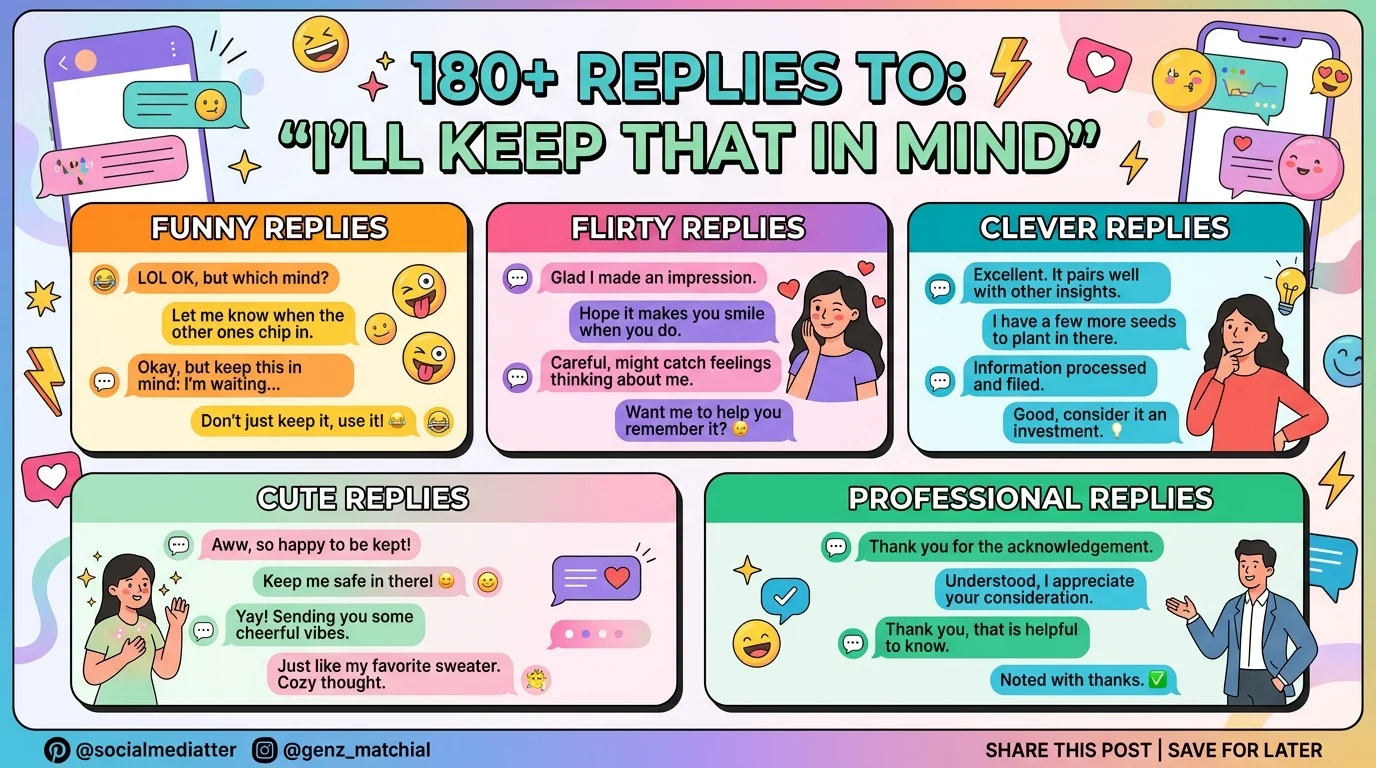
Quick Ans: I’ll keep that in mind” usually means someone has heard your advice, suggestion, or opinion and plans to remember it. Your reply can keep things friendly, funny, flirty, or professional depending on the vibe.
Top alternatives: “Good, you better,” “Glad to hear it,” “That’s all I ask,” “I’ll hold you to that,” “Deal.”
When someone says “I’ll keep that in mind,” the conversation can go in approximately 47 different directions depending on your mood. 😂 You might hear it in a text from a friend, a DM from your crush, a work message from a coworker, or a conversation where someone is politely acknowledging your advice. That is exactly why knowing the best Replies to I’ll keep that in mind can make a surprisingly big difference. A simple “Okay” works, but where is the fun in that? The right response can sound witty, confident, flirty, sweet, professional, or completely unserious. Whether you want to keep the conversation moving or leave them smiling at their phone, these ready-to-send responses give you plenty of options. Pick your mood, copy your favorite, and let the conversation do its thing.
Funny Responses
“Good, because I don’t give free advice twice.”
Use this when you want to joke about your advice while keeping things light.
Meaning: You are playfully saying your advice is valuable.
“Please store it somewhere safe.”
Use this when you want a silly response to someone acknowledging your suggestion.
Meaning: You are jokingly treating your advice like precious information.
“Excellent. My work here is done.”
Use this after giving someone advice and wanting a dramatic little exit.
Meaning: You are humorously declaring the conversation mission complete.
“I expect a full report later.”
Use this when you want to make a casual suggestion sound hilariously official.
Meaning: You are joking that they owe you an update.
“Good. I accept payment in snacks.”
Use this when you want to turn a normal exchange into a playful joke.
Meaning: You are pretending your advice comes with a snack-based fee.
“Your brain has officially been updated.”
Use this when your advice was particularly obvious or funny.
Meaning: You are joking that you just installed new information.
“Put it in the notes app.”
Use this when you want an internet-friendly, casual comeback.
Meaning: You are teasing them to make sure they remember.
“I’ll be checking your progress.”
Use this when you want to jokingly sound like their supervisor.
Meaning: You are playfully holding them accountable.
“Screenshotted for future reference.”
Use this when you want to make the exchange feel dramatically important.
Meaning: You are pretending the conversation deserves archival status.
“That sounds suspiciously responsible.”
Use this when someone normally ignores advice.
Meaning: You are teasing them for suddenly being mature.
“Look at you, taking notes.”
Use this when you want a playful response with a little attitude.
Meaning: You are jokingly praising their willingness to listen.
Brutal Responses
“Make sure you actually remember it.”
Use this when someone has a habit of ignoring your advice.
Meaning: You are giving them a firm but playful reminder.
“Good, because I meant every word.”
Use this when you want your message to sound serious and confident.
Meaning: You are making it clear that your advice was intentional.
“Keeping it in mind is a start.”
Use this when you want to suggest that remembering is not enough.
Meaning: You expect them to actually act on what you said.
“Now comes the part where you listen.”
Use this when someone needs a little reality check.
Meaning: You are confidently encouraging action instead of acknowledgment.
“Don’t just keep it there, use it.”
Use this when you want a sharper response.
Meaning: You are telling them that remembering your advice has little value without action.
“I’ll believe it when I see it.”
Use this when someone has promised to consider your advice before.
Meaning: You are skeptical about whether they will follow through.
“We’ll see how long that lasts.”
Use this when you know their attention span is questionable.
Meaning: You are teasing them about forgetting.
“That’s what you said last time.”
Use this when the same situation has happened before.
Meaning: You are pointing out their history of not following advice.
“Mind kept, lesson learned.”
Use this when you want a short, confident comeback.
Meaning: You are emphasizing that the information should matter.
“Good. I’d hate to repeat myself.”
Use this when you want to sound firm with a playful edge.
Meaning: You are warning them that you do not want to give the same advice again.
“Remembering is cute. Acting is better.”
Use this when you want a confident, slightly ruthless line.
Meaning: You are encouraging them to prove their intentions through actions.
Flirty Responses
“Good. Maybe keep me in mind too.”
Use this when you want to turn a normal exchange into a subtle flirt.
Meaning: You are hinting that you want their attention.
“I’d rather be on your mind.”
Use this when the conversation already has romantic energy.
Meaning: You are openly flirting without being too intense.
“Just don’t forget who gave you the advice.”
Use this when you want to add a playful flirt to the conversation.
Meaning: You are reminding them to remember you as well as your words.
“Keep me in mind while you’re at it.”
Use this when you want a confident but easygoing flirt.
Meaning: You are suggesting that they think about you.
“Good, I like staying on your radar.”
Use this when you want to flirt without sounding overly serious.
Meaning: You enjoy having their attention.
“Careful, I might start enjoying being on your mind.”
Use this when you want playful romantic tension.
Meaning: You are teasing them about thinking of you.
“Make room for me in there.”
Use this when you want a cheeky, confident flirt.
Meaning: You are joking that you deserve a spot in their thoughts.
“That’s cute. I’ll keep you in mind too.”
Use this when you want to match their energy.
Meaning: You are returning their attention in a warm way.
“Now I’m curious what else you’ll keep in mind.”
Use this when you want to make the conversation more suggestive.
Meaning: You are inviting them to keep flirting.
“Good. I was hoping you’d remember me.”
Use this when you want a sweet romantic response.
Meaning: You are revealing that their attention matters to you.
“I’ll take that as a tiny win.”
Use this when you want a low-pressure flirt.
Meaning: You are playfully treating their response as encouragement.
Polite Responses
“Glad to hear that.”
Use this when you want a simple and friendly acknowledgment.
Meaning: You appreciate that they considered what you said.
“I appreciate that.”
Use this when someone has respectfully received your suggestion.
Meaning: You are thanking them for listening.
“That’s all I hoped for.”
Use this when you want to sound warm without overdoing it.
Meaning: You are satisfied that they heard you.
“Thanks for considering it.”
Use this when someone has thoughtfully responded to your suggestion.
Meaning: You appreciate their openness.
“I’m glad it was helpful.”
Use this when your advice was intended to be useful.
Meaning: You are pleased that your input may help them.
“Hopefully it comes in handy.”
Use this when you want to keep the tone friendly and relaxed.
Meaning: You hope your advice proves useful later.
“Of course, anytime.”
Use this when you want to sound supportive.
Meaning: You are letting them know you are happy to help again.
“That sounds good to me.”
Use this when you want a neutral and agreeable response.
Meaning: You are comfortable with their acknowledgment.
“I’m happy you’ll consider it.”
Use this when you want to sound thoughtful and sincere.
Meaning: You value their willingness to think about your suggestion.
“Thank you for keeping it in mind.”
Use this when you want a more formal or respectful tone.
Meaning: You are politely acknowledging their consideration.
“I hope it helps.”
Use this when you want to keep things humble and kind.
Meaning: You are offering your advice without pressuring them.
“That’s appreciated.”
Use this when you want a concise professional-friendly response.
Meaning: You are acknowledging their willingness to listen.
Professional Responses
“I appreciate you considering it.”
Use this in workplace conversations where someone has acknowledged your recommendation.
Meaning: You are respectfully recognizing their consideration.
“Hopefully it proves useful.”
Use this after offering a professional suggestion or resource.
Meaning: You hope your input creates value.
“Please keep me posted.”
Use this when the issue may require an update later.
Meaning: You want to hear about any developments.
“Thanks for taking it into account.”
Use this when your input may influence a decision.
Meaning: You appreciate that your perspective was considered.
“That sounds good. Let’s revisit it if needed.”
Use this when you want to leave the discussion open.
Meaning: You are comfortable moving forward while allowing future review.
“I’m glad we could discuss it.”
Use this after a productive workplace conversation.
Meaning: You value the discussion and keep the tone professional.
“Absolutely. Let me know if you have questions.”
Use this when your advice involves additional details.
Meaning: You remain available to clarify anything.
“Sounds good. I appreciate your consideration.”
Use this when you want a polished workplace response.
Meaning: You acknowledge their response respectfully.
“I’ll leave it with you for now.”
Use this when the other person needs time to decide.
Meaning: You are giving them space without closing the door.
“Thanks. I’m happy to provide more context if helpful.”
Use this when your suggestion may need explanation.
Meaning: You are offering additional support without pressure.
“Understood. We can discuss it further if necessary.”
Use this when you want to remain neutral and professional.
Meaning: You are keeping communication open.
“Perfect. Thanks for considering my suggestion.”
Use this when someone has politely acknowledged your idea.
Meaning: You appreciate their attention and keep things positive.
Creative Responses
“Filed under: things worth remembering.”
Use this when you want a clever, slightly theatrical reply.
Meaning: You are playfully labeling your advice as important.
“Consider that thought officially bookmarked.”
Use this when you want a modern metaphor.
Meaning: You are joking that the idea has been saved for later.
“May your memory serve you well.”
Use this when you want something playful and dramatic.
Meaning: You are humorously wishing them good luck remembering.
“Consider the memo delivered.”
Use this when you want to sound mock-professional.
Meaning: You are joking that your message has been successfully received.
“One thought successfully planted.”
Use this when your advice has clearly landed.
Meaning: You are playfully describing your idea as something that will grow.
“And thus, wisdom has entered the chat.”
Use this when you want an internet-style joke.
Meaning: You are humorously exaggerating the importance of your advice.
“Adding that to your mental playlist.”
Use this when you want a quirky response.
Meaning: You are joking that your advice is now part of their mental collection.
“Let that little thought marinate.”
Use this when someone needs time to consider your point.
Meaning: You want them to think about it before responding.
“A thought worth putting in the vault.”
Use this when you want to make your advice sound dramatically important.
Meaning: You are joking that the information deserves protection.
“The universe has received your acknowledgment.”
Use this when you want an absurdly dramatic response.
Meaning: You are joking about how seriously they responded.
“Excellent. The brain folder is updated.”
Use this when you want a nerdy, playful line.
Meaning: You are pretending their memory just received an update.
Sarcastic Responses
“Wow, what a commitment.”
Use this when someone gives a very vague acknowledgment.
Meaning: You are teasing them for not promising much.
“Bold of you to remember.”
Use this when someone has a history of forgetting things.
Meaning: You are sarcastically questioning their memory.
“Amazing. We love personal growth.”
Use this when someone finally accepts your advice.
Meaning: You are humorously exaggerating their maturity.
“Groundbreaking response.”
Use this when their reply feels extremely predictable.
Meaning: You are playfully mocking how ordinary their response is.
“I’ll try not to faint from excitement.”
Use this when you want exaggerated sarcasm.
Meaning: You are pretending their acknowledgment is overwhelmingly exciting.
“Well, that was reassuringly vague.”
Use this when “I’ll keep that in mind” feels noncommittal.
Meaning: You are pointing out that they have not actually promised anything.
“Put it right next to the other things you forgot.”
Use this with someone who can handle sharper humor.
Meaning: You are teasing them about their memory.
“I’ll pretend that means yes.”
Use this when you want to jokingly interpret their response positively.
Meaning: You are playfully turning their vague answer into agreement.
“Noted, Your Honor.”
Use this when you want mock-formal sarcasm.
Meaning: You are humorously treating the exchange like a courtroom statement.
“Very convincing. Ten out of ten.”
Use this when you want exaggerated approval.
Meaning: You are sarcastically praising their vague response.
“Sure, and I’m the CEO of remembering things.”
Use this when you want absurd sarcasm.
Meaning: You are jokingly questioning whether they will actually remember.
“I’ll alert the history books.”
Use this when you want dramatic sarcasm.
Meaning: You are pretending their response is historically significant.
Cute Responses
“Aww, good.”
Use this when you want a tiny, affectionate reply.
Meaning: You are warmly appreciating that they listened.
“That makes me happy.”
Use this when their response genuinely means something to you.
Meaning: You are showing sincere appreciation.
“Good little listener.”
Use this when your relationship has a playful dynamic.
Meaning: You are teasing them affectionately for listening.
“That’s all I wanted to hear.”
Use this when you want to sound pleased and sweet.
Meaning: You are happy that they took your words seriously.
“I’ll be impressed if you remember.”
Use this when you want playful affection.
Meaning: You are teasing them while keeping the tone warm.
“Pinky promise?”
Use this when you want a cute, playful response.
Meaning: You are jokingly asking for a stronger promise.
“Okay, I’ll trust you.”
Use this when you want to sound soft and sincere.
Meaning: You are choosing to believe they will remember.
“You’re adorable when you listen.”
Use this when you want to add a little affection.
Meaning: You find their willingness to listen charming.
“That deserves a tiny gold star.”
Use this when you want a playful compliment.
Meaning: You are jokingly rewarding them for listening.
“Good, I knew you’d get it.”
Use this when you want to sound encouraging.
Meaning: You believe they understand your point.
“Now I’m smiling.”
Use this when their response genuinely made you happy.
Meaning: You are letting them know their acknowledgment affected you positively.
“Okay, that was sweet.”
Use this when you appreciate their response.
Meaning: You are warmly recognizing their thoughtfulness.
Dramatic Responses
“Remember this moment forever.”
Use this when you want to turn a tiny exchange into a movie scene.
Meaning: You are jokingly exaggerating the importance of the moment.
“The prophecy has been fulfilled.”
Use this when someone finally agrees to consider your advice.
Meaning: You are making their response hilariously epic.
“At last, you have seen the light.”
Use this when someone finally understands your point.
Meaning: You are dramatically celebrating their realization.
“Tell the historians.”
Use this when something surprisingly rare just happened.
Meaning: You are pretending the moment deserves historical documentation.
“This changes everything.”
Use this when you want maximum dramatic energy.
Meaning: You are jokingly treating their acknowledgment as a major event.
“I shall sleep peacefully tonight.”
Use this when you want to exaggerate your relief.
Meaning: You are joking that their response has solved a huge problem.
“My legacy is secure.”
Use this when you want to sound hilariously self-important.
Meaning: You are joking that your advice will live on.
“The chapter has been written.”
Use this when you want a dramatic closing line.
Meaning: You are playfully declaring the matter settled.
“And so begins your character development.”
Use this when someone finally takes your advice.
Meaning: You are joking that they have entered a new phase of personal growth.
“I knew this day would come.”
Use this when their acknowledgment feels surprisingly satisfying.
Meaning: You are dramatically celebrating the moment.
“Cue the inspirational music.”
Use this when you want to make the exchange extra theatrical.
Meaning: You are pretending something profound just happened.
“The emotional damage has been postponed.”
Use this when you want dark-ish but playful internet humor.
Meaning: You are joking that listening to you may prevent future chaos.
Chill And Casual Responses
“Sounds good.”
Use this when you want a relaxed, no-pressure response.
Meaning: You are casually accepting their acknowledgment.
“Cool, cool.”
Use this when you want a laid-back text-message vibe.
Meaning: You are keeping the conversation easygoing.
“Fair enough.”
Use this when you want to acknowledge their response without adding much.
Meaning: You accept that they have heard you.
“No worries.”
Use this when you want to keep things friendly and relaxed.
Meaning: You are showing there is no pressure.
“All good.”
Use this when you want something quick and casual.
Meaning: You are comfortable with the exchange.
“That works.”
Use this when you want a simple acknowledgment.
Meaning: You are satisfied with their response.
“Nice.”
Use this when you want an extremely short reply.
Meaning: You are casually approving their response.
“Perfect.”
Use this when you want to sound positive without overthinking it.
Meaning: You are happy with their acknowledgment.
“Yep, that’s all.”
Use this when you want to close the topic naturally.
Meaning: You are saying there is nothing more to add.
“We’re good.”
Use this when you want to keep things calm and reassuring.
Meaning: You are confirming that everything is fine.
“Cool, keep me posted.”
Use this when you expect an update later.
Meaning: You want to know what happens next.
“Okay, deal.”
Use this when you want a casual response with a little commitment.
Meaning: You are treating their acknowledgment as an informal agreement.
Confident Responses
“Good. I meant what I said.”
Use this when you want to sound assured about your advice.
Meaning: You stand firmly behind your words.
“You’ll thank me later.”
Use this when you are confident your suggestion will help.
Meaning: You believe your advice will prove valuable.
“Trust me on this one.”
Use this when you genuinely believe your recommendation is right.
Meaning: You are asking them to have confidence in your judgment.
“I think you’ll see my point.”
Use this when you want confident but respectful energy.
Meaning: You expect your perspective to make sense eventually.
“You’ll know when the time comes.”
Use this when your advice may become useful later.
Meaning: You believe future circumstances will prove your point.
“I have a feeling you’ll remember.”
Use this when you want confidence without sounding arrogant.
Meaning: You trust that your message made an impression.
“That’s a smart place to start.”
Use this when you want to encourage them.
Meaning: You believe considering your advice is a positive first step.
“I’ll hold you to that.”
Use this when you want playful accountability.
Meaning: You expect them to remember and act accordingly.
“Good choice.”
Use this when you want a short, confident response.
Meaning: You approve of their decision to consider your words.
“Exactly what I wanted to hear.”
Use this when their response satisfies you.
Meaning: You are confident that they understood your point.
“I knew you’d see it.”
Use this when someone finally understands your perspective.
Meaning: You expected them to recognize your point.
“Now we’re talking.”
Use this when their response signals agreement or openness.
Meaning: You are pleased that the conversation is moving forward.
Emotional Responses
“That actually means a lot.”
Use this when their willingness to remember your words feels meaningful.
Meaning: You genuinely appreciate their consideration.
“I’m glad you heard me.”
Use this when you wanted to feel understood.
Meaning: You value being listened to.
“Thank you for taking me seriously.”
Use this when the conversation is personal or important.
Meaning: You appreciate their respect for your feelings.
“I really hope it helps.”
Use this when your advice came from genuine concern.
Meaning: You sincerely want things to get better for them.
“That’s all I wanted.”
Use this when being heard matters more than getting agreement.
Meaning: You mainly wanted them to understand your perspective.
“I appreciate you listening.”
Use this when you want to express sincere gratitude.
Meaning: You are thankful for their attention.
“I just want what’s best for you.”
Use this when your advice came from care.
Meaning: Your intentions are supportive rather than controlling.
“I hope you remember why I said it.”
Use this when your words came from a meaningful experience.
Meaning: You want them to understand the emotion behind your advice.
“That’s enough for me right now.”
Use this when you do not need immediate action.
Meaning: You are comfortable knowing they heard you.
“I’m glad we talked about it.”
Use this when the conversation was emotionally significant.
Meaning: You value having the issue discussed openly.
“Thank you for understanding.”
Use this when their acknowledgment helped you feel heard.
Meaning: You appreciate their emotional awareness.
“I hope things work out for you.”
Use this when you want to end the exchange warmly.
Meaning: You genuinely wish them well.
Sweet Responses
“I’m glad you’ll remember.”
Use this when you want a warm and sincere response.
Meaning: You appreciate that your words matter to them.
“That’s really nice of you.”
Use this when their response feels thoughtful.
Meaning: You are recognizing their kindness.
“I appreciate you keeping it in mind.”
Use this when you want to sound grateful and gentle.
Meaning: You value their willingness to consider your words.
“I knew I could count on you.”
Use this when you trust the person.
Meaning: You are expressing confidence in their character.
“That makes me feel heard.”
Use this when the conversation is personal.
Meaning: Their acknowledgment makes you feel understood.
“You’re sweet for saying that.”
Use this when you want to respond affectionately.
Meaning: You appreciate their considerate attitude.
“That means more than you know.”
Use this when their acknowledgment genuinely touches you.
Meaning: Their willingness to listen has emotional value.
“I’m happy you’ll consider it.”
Use this when you want a gentle response.
Meaning: You appreciate their openness.
“I’ll remember that too.”
Use this when you want to return the same energy.
Meaning: You are showing mutual consideration.
“That’s a promise I’ll happily accept.”
Use this when their response feels reassuring.
Meaning: You are warmly accepting their intention.
“Thank you. Seriously.”
Use this when you want sincerity without a long explanation.
Meaning: You genuinely appreciate their response.
“You just made my day a little better.”
Use this when their acknowledgment made you feel good.
Meaning: You are openly sharing the positive effect of their words.
Clever Responses
“Good. Memory is underrated.”
Use this when you want a witty but simple response.
Meaning: You are jokingly praising the value of remembering.
“Consider that a future-you problem solved.”
Use this when your advice may help them later.
Meaning: You are framing your suggestion as preparation for the future.
“A mental bookmark has been placed.”
Use this when you want a clever digital metaphor.
Meaning: You are joking that the information has been saved.
“I’ll consider that a successful information transfer.”
Use this when you want mock-technical humor.
Meaning: You are playfully saying your message got through.
“Excellent. We have achieved understanding.”
Use this when you want dry, clever humor.
Meaning: You are jokingly celebrating mutual understanding.
“That’s one thought closer to wisdom.”
Use this when you want a playful intellectual vibe.
Meaning: You are joking that their memory brings them closer to wisdom.
“Good. Let’s call that progress.”
Use this when you want a clever but casual line.
Meaning: You are treating their acknowledgment as a positive step.
“The data has been successfully saved.”
Use this when you want a tech-inspired joke.
Meaning: You are humorously pretending their brain is a storage system.
“Noted by both parties.”
Use this when you want mock-formal humor.
Meaning: You are joking that the matter has officially been acknowledged.
“Future-you just received a helpful notification.”
Use this when you want a modern, clever response.
Meaning: You are joking that your advice will help them later.
“And that concludes today’s wisdom session.”
Use this when you want a playful closing line.
Meaning: You are humorously presenting your advice as a lesson.
“Let’s see what your memory does with that.”
Use this when you want clever teasing.
Meaning: You are playfully challenging them to remember your words.
Playful Responses
“I’m writing that down too.”
Use this when you want to mirror their energy with humor.
Meaning: You are jokingly treating their response as important information.
“Good, because there may be a quiz later.”
Use this when you want a fun teasing response.
Meaning: You are joking that they will need to prove they remembered.
“No pressure, but I’m watching.”
Use this when you want playful accountability.
Meaning: You are teasing them about following through.
“Okay, brainiac.”
Use this when you want a light nickname-style comeback.
Meaning: You are playfully acknowledging their response.
“I’ll send you a reminder in 3 to 5 business days.”
Use this when you want workplace-style internet humor.
Meaning: You are joking about needing to remind them later.
“Excellent. Gold star pending.”
Use this when you want to jokingly reward them.
Meaning: You are playfully encouraging them to remember.
“We love a memory that works.”
Use this when you want a casual social-media-style response.
Meaning: You are jokingly celebrating their ability to remember.
“Don’t let the thought escape.”
Use this when you want a cute, playful line.
Meaning: You are teasing them to hold onto the information.
“Keep it somewhere between ‘maybe’ and ‘definitely.’”
Use this when you want playful ambiguity.
Meaning: You are joking that they should take the advice seriously.
“I’ll trust your little brain with it.”
Use this when you have a close, teasing relationship.
Meaning: You are affectionately joking about their memory.
“Okay, professor.”
Use this when you want a playful nickname.
Meaning: You are teasing them for sounding thoughtful or serious.
“Look at us communicating like adults.”
Use this when the conversation has been unusually mature.
Meaning: You are humorously celebrating healthy communication.
Short And Text-Ready Responses
“Deal.”
Use this when you want the shortest possible acknowledgment.
Meaning: You accept their response as an informal agreement.
“Perfect.”
Use this when you want a positive and simple reply.
Meaning: You are satisfied with what they said.
“Good.”
Use this when you want to sound direct and confident.
Meaning: You approve of their willingness to remember.
“Fair.”
Use this when you want a relaxed, neutral response.
Meaning: You accept their position without overexplaining.
“Exactly.”
Use this when you want to reinforce your original point.
Meaning: You are confirming that they understood you.
“I’ll hold you to it.”
Use this when you want a little accountability.
Meaning: You expect them to remember and act on it.
“Glad to hear it.”
Use this when you want to sound warm and polite.
Meaning: You appreciate their acknowledgment.
“That works.”
Use this when you want a casual response.
Meaning: You are satisfied with the exchange.
“Noted.”
Use this when you want a slightly dry or professional tone.
Meaning: You acknowledge what they said.
“You better.”
Use this when you want playful confidence.
Meaning: You are teasingly insisting that they remember.
“I hope so.”
Use this when you want a softer response.
Meaning: You genuinely hope they take your words seriously.
“We’ll see.”
Use this when you want to keep things teasing and open-ended.
Meaning: You are playfully leaving their follow-through uncertain.
FAQs
What Does “I’ll Keep That in Mind” Mean?
It usually means, “I’ll remember what you said and consider it later.” Depending on the situation, it can be sincere, polite, neutral, or slightly noncommittal.
Is “I’ll Keep That in Mind” Flirty?
Sometimes. In a romantic conversation, it can simply mean they are considering what you said, but the surrounding messages and their tone matter more than the phrase itself.
What Are Good Flirty Replies to “I’ll Keep That in Mind”?
Try “Keep me in mind too,” “I’d rather be on your mind,” or “Good, I was hoping you’d remember me.”
Is “I’ll Keep That in Mind” Professional?
Yes. It is common in workplace conversations because it politely acknowledges advice, feedback, suggestions, or information.
What Should I Say If I Don’t Actually Mean It?
Keep your reply honest and respectful. Try “I appreciate the suggestion,” “I’ll think about it,” or “Thanks, I’ll consider it.”
Is Humor Appropriate When Replying?
Yes, if you know the person and the situation is casual. For work, serious topics, or sensitive conversations, a polite response is usually safer.
Is “I’ll Hold You to That” a Good Reply?
Absolutely. It works especially well when you want to add playful accountability without sounding too serious.
What Is the Best Short Reply?
“Deal,” “Sounds good,” “Fair,” and “I’ll hold you to it” are easy options that fit many situations.
How Do I Reply Without Ending the Conversation?
Ask something related to the topic or add a playful line such as “Good, now what are you going to do about it?” This gives the other person something to respond to.
Can I Use These Replies in DMs?
Definitely. Short, playful, and flirty options work particularly well in casual DMs and texts.
Conclusion
Finding the right response to “I’ll keep that in mind” is less about having the perfect comeback and more about matching the moment. A funny reply can keep things playful, a flirty one can create chemistry, and a polite response can keep professional conversations smooth. The best Replies to I’ll keep that in mind feel natural because they sound like something you would actually text. So do not overthink every message like it is a United Nations summit. Pick the vibe, send the line, and keep the conversation moving. Save this list for your next text, DM, work chat, or crush situation, and share it with the friend who always says, “What do I even say?” Happy replying!

Lily Carter creates practical, easy-to-follow content for everyday readers at ResponseCraft.com. She enjoys turning complex topics into clear, actionable advice that helps people make smarter decisions.