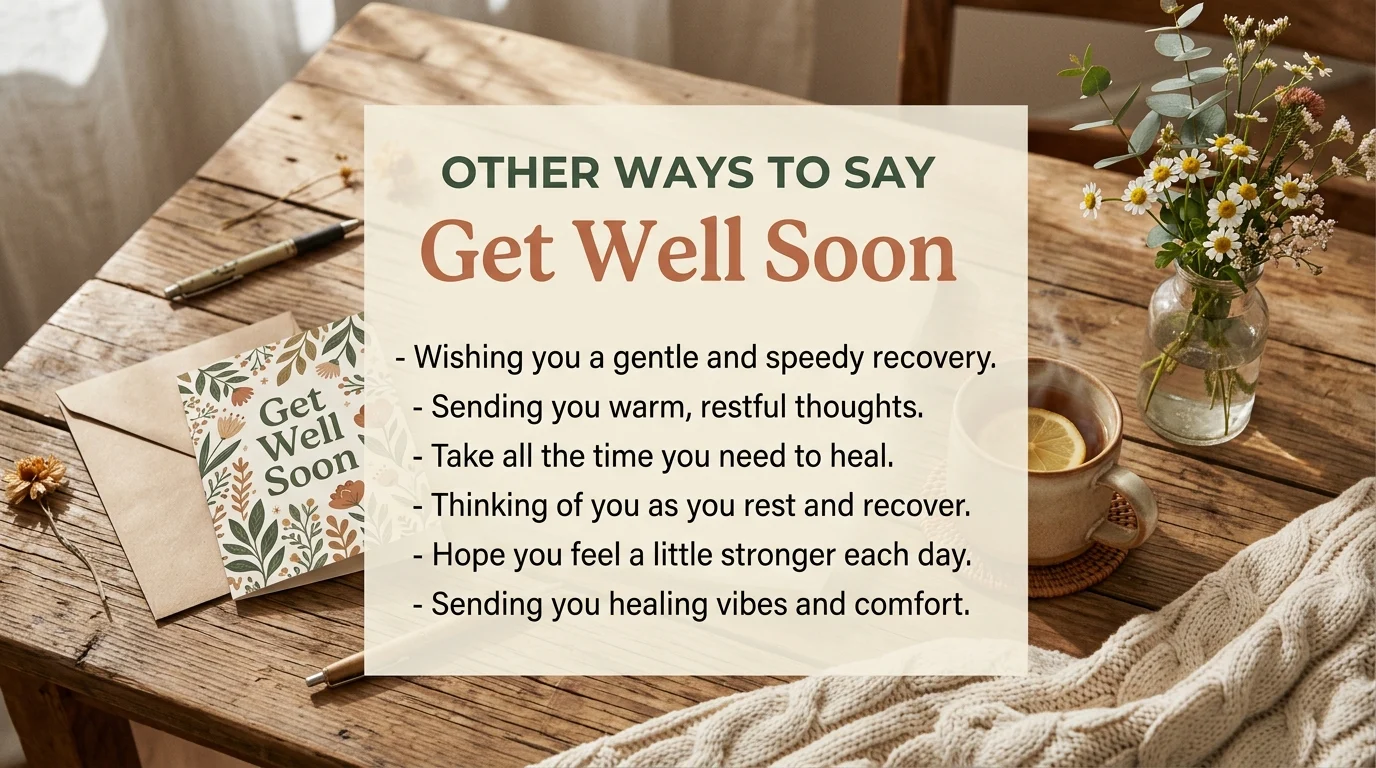
Quick Ans: “Get well soon” is a warm expression used to wish someone a quick recovery from illness or injury. Top alternatives include: wishing you a speedy recovery, hope you feel better soon, sending you healing thoughts, take care of yourself, and praying for your quick recovery.
When someone you care about is sick or recovering from an injury, finding the right words can feel surprisingly difficult. You want to show you care without sounding repetitive or insincere. That is exactly where alternatives to “get well soon” become essential for anyone who wants to communicate with warmth and authenticity.
English learners and professionals often search for ways to express sympathy in English that feel genuine and appropriate. Whether you are writing a card to a colleague, sending a text to a friend, or composing a professional email to a client, the phrase you choose matters more than you might think.
Learning other ways to say “get well soon” helps you match your message to your relationship and context. You can sound caring with close friends, respectful with acquaintances, and professional with business contacts. This guide provides 30 practical alternatives with clear examples so you can express concern naturally and confidently.
“The right words at the right moment can comfort more than medicine.”
Quick Categories
Formal alternatives to “Get Well Soon”
- Wishing you a speedy recovery
- Hope you have a swift return to health
- Sending you my best wishes for your recovery
- May you recover quickly and fully
Pro Tips Box: Use formal alternatives in professional emails, cards for colleagues, or messages to clients where polish and respect matter most.
Casual alternatives
- Feel better soon
- Hope you are back on your feet soon
- Take it easy and get better
- Rest up and feel better
Pro Tips Box: Casual alternatives work best with friends, family, and close colleagues who appreciate a relaxed tone.
Professional alternatives
- Wishing you a smooth and speedy recovery
- Hope you are feeling better each day
- Take all the time you need to recover
- Looking forward to your return
Pro Tips Box: Professional alternatives balance warmth with respect, making them ideal for workplace communication.
Informal expressions
- Get better soon
- Hang in there
- Take care of yourself
- Sending good vibes your way
Pro Tips Box: Informal expressions in English add personality and warmth, but save them for people you know well.
Common Mistakes
- Using “get well soon” for minor issues
Example: “Get well soon” after someone mentions a minor headache. It can sound exaggerated. - Sounding too casual in professional settings
Example: “Get better soon, buddy” in an email to a client. This sounds unprofessional. - Being overly formal with close friends
Example: “Wishing you a swift return to health” to your best friend. This can feel distant. - Focusing only on speed of recovery
Example: “Hope you are better by Monday.” This can pressure the person to recover quickly. - Ignoring the severity of the situation
Example: “Get well soon” for a serious illness. This can sound dismissive.
“Compassion is not about speed, it is about sincerity.”
What Does “Get Well Soon” Mean?
“Get well soon” is a common English expression used to wish someone a fast recovery from illness, injury, or emotional hardship. It combines the imperative verb “get” with “well” and “soon” to create a warm, encouraging message.
Example Sentence: “I heard you are not feeling well, get well soon and take care of yourself.”
When to Use “Get Well Soon”
- When someone is sick with a cold or flu
- When a friend or colleague is recovering from surgery
- When someone is dealing with a minor injury
- When you want to show care and support
- When writing a greeting card or short message
Spoken vs Written: Common in both spoken and written English.
Formal vs Informal: Leans informal, but acceptable in semi-professional contexts.
Is It Professional or Polite to Say “Get Well Soon”?
Polite? Yes, in most contexts.
Professional? Somewhat, but it depends on the relationship and setting. It can sound too casual for formal business correspondence.
Business-style example: “Wishing you a smooth recovery. Please take all the time you need.”
“Professional warmth means caring without crossing boundaries.”
Pros and Cons of Using “Get Well Soon”
Pros:
- Simple and natural
- Warm and friendly tone
- Widely understood
- Easy to use in any medium
Cons:
- Overused
- Can sound generic
- Not suitable for serious illnesses
- Limited emotional depth
Other Ways to Say “Get Well Soon” (With Examples)
These alternatives will help you sound more caring, natural, and thoughtful in different situations. Use them according to your relationship, tone, and context to express sympathy and encouragement in English.
1. Phrase: Wishing you a speedy recovery
Meaning: Expressing hope for a fast return to health.
Explanation: A polished and respectful alternative suitable for most situations.
Example Sentence: “Wishing you a speedy recovery, and please do not rush back to work.”
Best Use: Professional emails
Worst Use: Close friends
Tone: Formal, warm, respectful
Context Variability: Works in professional and semi-formal contexts.
2. Phrase: Hope you feel better soon
Meaning: Expressing a wish for improved health.
Explanation: Simple, warm, and universally appropriate.
Example Sentence: “Hope you feel better soon, we are all thinking of you.”
Best Use: Everyday messages
Worst Use: Formal reports
Tone: Friendly, warm, sincere
Context Variability: Works in casual and professional contexts.
3. Phrase: Sending you healing thoughts
Meaning: Offering emotional support and positive energy.
Explanation: Gentle and comforting, often used for serious situations.
Example Sentence: “Sending you healing thoughts during this difficult time.”
Best Use: Serious illnesses
Worst Use: Minor colds
Tone: Compassionate, gentle, sincere
Context Variability: Best in personal and emotional contexts.
4. Phrase: Take care of yourself
Meaning: Encouraging someone to prioritize their health.
Explanation: Warm and supportive without focusing on speed.
Example Sentence: “Take care of yourself, and let us know if you need anything.”
Best Use: Friends and family
Worst Use: Formal business emails
Tone: Caring, supportive, warm
Context Variability: Works in casual and semi-professional contexts.
5. Phrase: Praying for your quick recovery
Meaning: Offering spiritual support for healing.
Explanation: Appropriate for religious or spiritual contexts.
Example Sentence: “Praying for your quick recovery and strength during this time.”
Best Use: Faith-based communities
Worst Use: Secular workplaces
Tone: Spiritual, sincere, comforting
Context Variability: Best in personal and faith-based contexts.
6. Phrase: Hope you are back on your feet soon
Meaning: Wishing someone a quick return to normal activity.
Explanation: Common and friendly, especially for physical recovery.
Example Sentence: “Hope you are back on your feet soon and feeling like yourself again.”
Best Use: Casual conversations
Worst Use: Formal writing
Tone: Friendly, encouraging, casual
Context Variability: Best in casual and spoken contexts.
7. Phrase: Wishing you rest and recovery
Meaning: Encouraging rest as part of healing.
Explanation: Calm and supportive.
Example Sentence: “Wishing you rest and recovery, take all the time you need.”
Best Use: Professional emails
Worst Use: Quick texts
Tone: Calm, respectful, supportive
Context Variability: Works in professional and personal contexts.
8. Phrase: Feel better soon
Meaning: A simple wish for improved health.
Explanation: Short, warm, and easy to use.
Example Sentence: “Feel better soon, we miss you at the office.”
Best Use: Quick messages
Worst Use: Formal letters
Tone: Friendly, casual, warm
Context Variability: Works in casual and semi-professional contexts.
9. Phrase: Hope you recover quickly
Meaning: Expressing a wish for fast healing.
Explanation: Direct and sincere.
Example Sentence: “Hope you recover quickly and are back to your best self.”
Best Use: General messages
Worst Use: Serious illnesses
Tone: Warm, direct, sincere
Context Variability: Works in casual and professional contexts.
10. Phrase: Sending you strength and comfort
Meaning: Offering emotional support during recovery.
Explanation: Deeply caring and appropriate for difficult times.
Example Sentence: “Sending you strength and comfort as you recover.”
Best Use: Serious situations
Worst Use: Minor issues
Tone: Compassionate, supportive, gentle
Context Variability: Best in personal and emotional contexts.
11. Phrase: Take it easy and get better
Meaning: Encouraging rest and recovery.
Explanation: Relaxed and caring.
Example Sentence: “Take it easy and get better, work can wait.”
Best Use: Close colleagues
Worst Use: Formal emails
Tone: Casual, caring, relaxed
Context Variability: Best in casual contexts.
12. Phrase: Wishing you a full and fast recovery
Meaning: Hoping for complete healing in a short time.
Explanation: Formal and thorough.
Example Sentence: “Wishing you a full and fast recovery, we are all rooting for you.”
Best Use: Professional cards
Worst Use: Text messages
Tone: Formal, warm, supportive
Context Variability: Works in professional contexts.
13. Phrase: Hope each day brings you more strength
Meaning: Wishing gradual improvement.
Explanation: Poetic and encouraging.
Example Sentence: “Hope each day brings you more strength and comfort.”
Best Use: Personal messages
Worst Use: Business emails
Tone: Gentle, poetic, warm
Context Variability: Best in personal contexts.
14. Phrase: Rest up and recover well
Meaning: Encouraging rest for full healing.
Explanation: Practical and caring.
Example Sentence: “Rest up and recover well, we will handle things here.”
Best Use: Workplace messages
Worst Use: Casual texts
Tone: Supportive, practical, warm
Context Variability: Works in professional and personal contexts.
15. Phrase: Looking forward to your return
Meaning: Expressing anticipation of someone’s recovery.
Explanation: Professional and encouraging.
Example Sentence: “Looking forward to your return when you are fully recovered.”
Best Use: Workplace emails
Worst Use: Personal texts
Tone: Professional, supportive, positive
Context Variability: Best in professional contexts.
16. Phrase: Get better soon
Meaning: A simple wish for quick recovery.
Explanation: Casual and direct.
Example Sentence: “Get better soon, we are saving your seat.”
Best Use: Friends and family
Worst Use: Formal correspondence
Tone: Casual, friendly, warm
Context Variability: Best in casual contexts.
17. Phrase: Hang in there
Meaning: Encouraging someone to stay strong.
Explanation: Supportive and informal.
Example Sentence: “Hang in there, you will be back to normal before you know it.”
Best Use: Close friends
Worst Use: Professional emails
Tone: Casual, encouraging, supportive
Context Variability: Best in casual contexts.
18. Phrase: Sending good vibes your way
Meaning: Offering positive energy and support.
Explanation: Light and modern.
Example Sentence: “Sending good vibes your way for a quick recovery.”
Best Use: Social media messages
Worst Use: Formal letters
Tone: Casual, positive, friendly
Context Variability: Best in casual and social contexts.
19. Phrase: Hope you are feeling better today
Meaning: Checking in on someone’s health.
Explanation: Personal and caring.
Example Sentence: “Hope you are feeling better today, thinking of you.”
Best Use: Follow-up messages
Worst Use: Initial condolences
Tone: Warm, personal, caring
Context Variability: Works in casual and professional contexts.
20. Phrase: Wishing you comfort and healing
Meaning: Offering emotional and physical support.
Explanation: Gentle and appropriate for serious situations.
Example Sentence: “Wishing you comfort and healing during this time.”
Best Use: Serious illnesses
Worst Use: Minor colds
Tone: Compassionate, gentle, sincere
Context Variability: Best in personal and emotional contexts.
21. Phrase: May you recover swiftly
Meaning: A formal wish for quick healing.
Explanation: Elegant and respectful.
Example Sentence: “May you recover swiftly and return to good health.”
Best Use: Formal cards
Worst Use: Casual texts
Tone: Formal, respectful, warm
Context Variability: Best in formal contexts.
22. Phrase: Take all the time you need
Meaning: Giving someone space to recover fully.
Explanation: Respectful and pressure-free.
Example Sentence: “Take all the time you need to recover, we support you.”
Best Use: Workplace messages
Worst Use: Quick texts
Tone: Supportive, respectful, calm
Context Variability: Works in professional and personal contexts.
23. Phrase: Hope you are up and about soon
Meaning: Wishing a return to normal activity.
Explanation: Cheerful and encouraging.
Example Sentence: “Hope you are up and about soon, the team misses you.”
Best Use: Colleagues
Worst Use: Formal letters
Tone: Cheerful, friendly, encouraging
Context Variability: Best in casual and semi-professional contexts.
24. Phrase: Wishing you a quick return to health
Meaning: Formal wish for fast recovery.
Explanation: Polished and respectful.
Example Sentence: “Wishing you a quick return to health and happiness.”
Best Use: Professional cards
Worst Use: Casual chats
Tone: Formal, warm, respectful
Context Variability: Best in professional contexts.
25. Phrase: Sending love and healing
Meaning: Offering emotional support and care.
Explanation: Deeply personal and warm.
Example Sentence: “Sending love and healing to you and your family.”
Best Use: Close relationships
Worst Use: Professional emails
Tone: Loving, warm, compassionate
Context Variability: Best in personal contexts.
26. Phrase: Hope you bounce back quickly
Meaning: Wishing a fast return to normal.
Explanation: Energetic and encouraging.
Example Sentence: “Hope you bounce back quickly and feel like yourself again.”
Best Use: Friends
Worst Use: Formal writing
Tone: Casual, energetic, positive
Context Variability: Best in casual contexts.
27. Phrase: Wishing you wellness and rest
Meaning: Encouraging health and relaxation.
Explanation: Calm and supportive.
Example Sentence: “Wishing you wellness and rest as you recover.”
Best Use: Personal messages
Worst Use: Business reports
Tone: Calm, warm, supportive
Context Variability: Works in personal and semi-professional contexts.
28. Phrase: Hope you are taking care of yourself
Meaning: Encouraging self-care during illness.
Explanation: Caring and thoughtful.
Example Sentence: “Hope you are taking care of yourself and resting well.”
Best Use: Friends and family
Worst Use: Formal emails
Tone: Caring, warm, personal
Context Variability: Best in casual and personal contexts.
29. Phrase: Wishing you a restful recovery
Meaning: Hoping for a calm and healing recovery period.
Explanation: Gentle and respectful.
Example Sentence: “Wishing you a restful recovery and peaceful days ahead.”
Best Use: Professional and personal messages
Worst Use: Quick texts
Tone: Calm, respectful, warm
Context Variability: Works in professional and personal contexts.
30. Phrase: Hope you are feeling stronger every day
Meaning: Wishing gradual improvement.
Explanation: Encouraging and positive.
Example Sentence: “Hope you are feeling stronger every day, we are all cheering for you.”
Best Use: Follow-up messages
Worst Use: Initial greetings
Tone: Encouraging, warm, positive
Context Variability: Works in casual and professional contexts.
“A thoughtful message can lift someone’s spirits more than you know.”
Mini Quiz / Self-Check
- Which phrase is most appropriate for a professional email?
a) Hang in there
b) Wishing you a smooth and speedy recovery
c) Sending good vibes - Which phrase sounds informal?
a) Take all the time you need
b) Get better soon
c) Wishing you wellness and rest - You want to comfort a friend with a serious illness. Which is best?
a) Feel better soon
b) Sending you strength and comfort
c) Hope you bounce back quickly - Which phrase is best for a colleague recovering from surgery?
a) Hang in there
b) Wishing you a restful recovery
c) Get better soon
Answers: 1-b, 2-b, 3-b, 4-b
Comparison Table: Top Alternatives
| Phrase | Tone | Best Use |
|---|---|---|
| Wishing you a speedy recovery | Formal, warm | Professional emails |
| Hope you feel better soon | Friendly, sincere | Everyday messages |
| Sending you healing thoughts | Compassionate, gentle | Serious illnesses |
| Take care of yourself | Caring, supportive | Friends and family |
| Praying for your quick recovery | Spiritual, sincere | Faith-based contexts |
| Back on your feet soon | Friendly, encouraging | Casual conversations |
| Wishing you rest and recovery | Calm, respectful | Professional emails |
| Feel better soon | Casual, warm | Quick messages |
| Sending you strength and comfort | Compassionate, supportive | Difficult times |
| Looking forward to your return | Professional, positive | Workplace emails |
FAQs
1. What is another way to say “get well soon” professionally?
Use “wishing you a speedy recovery” or “wishing you rest and recovery” for a polished, professional tone.
2. Is “get well soon” formal or informal?
It is informal but widely accepted in semi-professional contexts like workplace cards.
3. What can I say instead of “get well soon” for a serious illness?
Use “sending you strength and comfort” or “wishing you comfort and healing” for serious situations.
4. How do I wish a colleague a quick recovery?
Try “wishing you a smooth and speedy recovery” or “looking forward to your return.”
5. What is a short alternative to “get well soon”?
“Feel better soon” or “take care” are short, warm alternatives.
Conclusion
Learning other ways to say “get well soon” helps you express care with the right tone for every situation. Whether you need formal alternatives for a colleague or warm phrases for a close friend, the right words show thoughtfulness and sincerity.
Practice these alternatives regularly and pay attention to context. The more you refine your tone awareness, the more naturally you will comfort others in English.
CTA: Which phrase will you use next time someone needs encouragement? Share your favorite in the comments below.
See also:
- Other Ways to Say “I’m Sorry” (50+ Examples)
- Professional English Guide: Writing Emails That Sound Confident and Caring

Lily Carter creates practical, easy-to-follow content for everyday readers at ResponseCraft.com. She enjoys turning complex topics into clear, actionable advice that helps people make smarter decisions.
2 thoughts on “Other Ways to Say Get Well Soon (30+ Examples)”