Quick Answer: Ohana is a Hawaiian word that means family in the broadest sense. It includes blood relatives, extended family, close friends, and anyone you choose to treat as family. The word became famous worldwide through the Disney movie Lilo & Stitch, which taught that “Ohana means family, and family means nobody gets left behind or forgotten.” Today, people use ohana to describe any tight-knit group bound by loyalty and care, including workplaces and friend groups.
Some words carry more weight than their dictionary definition suggests. Ohana is one of them. On the surface, it simply means family. In practice, it represents a entire philosophy of belonging, responsibility, and unconditional support that stretches far beyond bloodlines. The ohana meaning has traveled from Native Hawaiian tradition to Disney screens to corporate boardrooms, picking up layers of significance along the way.
The word entered English dictionaries as early as 1926, when anthropologists recorded its use in Hawaiian communities . But it was the 2002 animated film Lilo & Stitch that turned ohana into a global household term. The movie’s famous line, “Ohana means family. Family means nobody gets left behind or forgotten,” gave millions of people outside Hawaii a simple, emotional entry point into the concept .
This guide explores the full ohana meaning. You will learn its Hawaiian roots, how the Disney film shaped its modern usage, what it means when someone calls you their ohana, and how the word has been adopted in workplaces and online communities. By the end, you will understand why four simple syllables carry so much warmth.
What Does Ohana Mean in Hawaiian?
In Hawaiian culture, ohana refers to a person’s extended family and social support system.
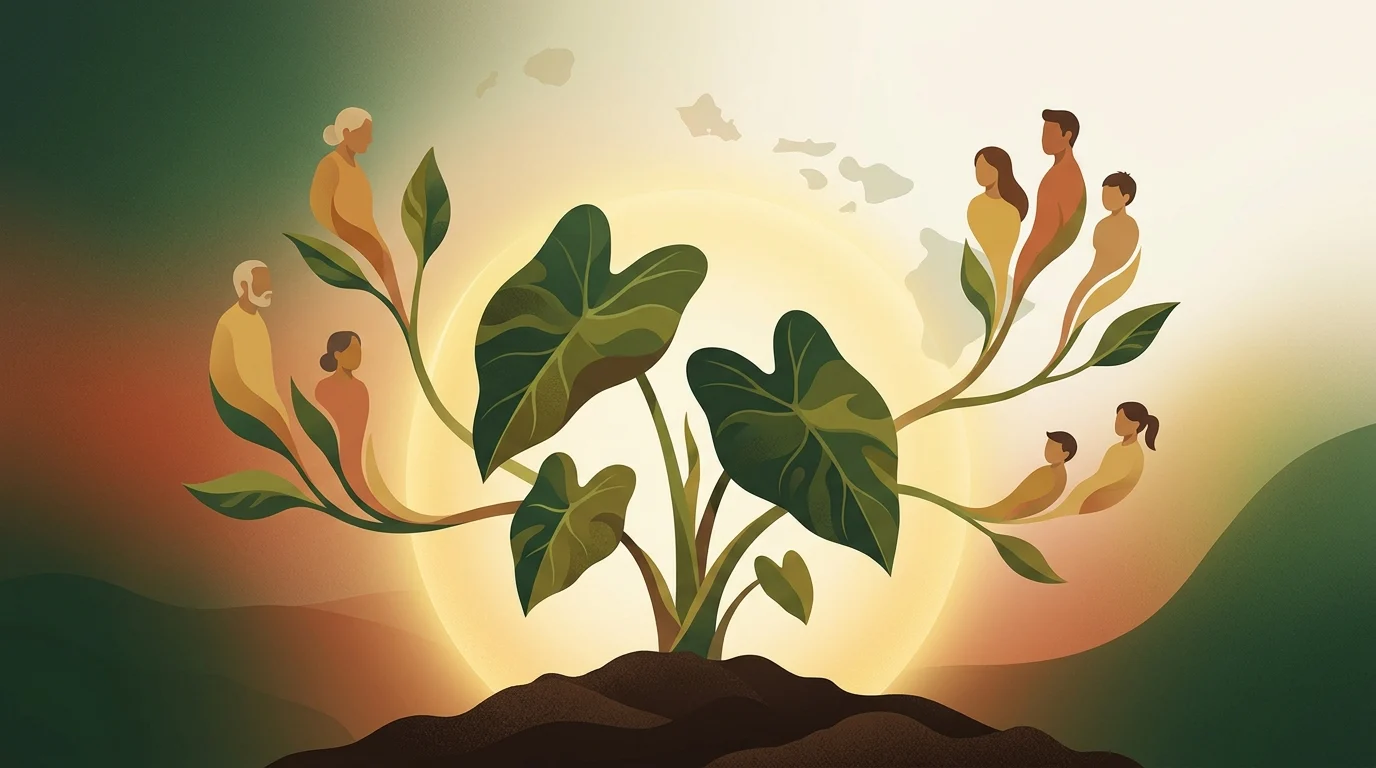
The literal roots of the word are beautiful and worth knowing. Ohana comes from the taro plant, a staple food in Hawaiian culture. The ‘ohā is the shoot of the taro plant, which can be cut and replanted to grow a new plant. The word ana conveys regeneration. Put together, ohana evokes the image of a family that grows in different directions, just as taro shoots produce new plants . The metaphor is clear: family is multigenerational, interconnected, and constantly renewing itself.
In traditional Hawaiian life, ohana also carries obligations. Being part of an ohana means you have a responsibility to care for those in your circle, and they have a responsibility to care for you. This can mean respecting elders, caring for children, or supporting relatives in times of need. Members of an ohana are expected to behave honorably and avoid bringing shame to the group .
How Lilo & Stitch Made Ohana Famous
Before 2002, ohana was primarily known in Hawaii and among people familiar with Hawaiian culture. The Disney film Lilo & Stitch changed that completely. The movie tells the story of a young Hawaiian girl named Lilo who adopts a destructive alien creature she names Stitch. The central theme of the film is ohana, which Lilo explains to Stitch in one of the most memorable lines in Disney history: “Ohana means family. Family means nobody gets left behind or forgotten” .
The film’s message resonated because it framed family not as a biological fact but as a choice. Lilo chooses to keep Stitch despite his chaos. Her older sister Nani chooses to raise Lilo despite the personal cost. Stitch eventually chooses to protect his new family instead of following his destructive programming. The ohana meaning in the movie is about commitment: staying together even when it is hard, even when the other person makes mistakes.
The 2025 live-action remake updated the ohana meaning slightly. While the original film emphasized physical togetherness, the remake allows for a more modern interpretation. Nani can pursue her dreams of studying marine biology while still keeping Lilo and the spirit of ohana close to her heart. The message shifts from “you must always be physically present” to “family can support each other even across distance” . Both interpretations honor the core idea: nobody gets left behind or forgotten.
What Does Ohana Mean Today?
Today, ohana has expanded well beyond its Hawaiian roots. Thanks to the film and the internet, people around the world use the word to describe any group they consider family.
Ohana as Chosen Family
Many people use ohana to describe friends who have become family. A group of college roommates might call themselves ohana. A close-knit friend group might use the word in a group chat name. The meaning is simple: these are the people who show up for you, who remember you, and who you would not leave behind .
Ohana in the Workplace
Companies have adopted ohana as a cultural value. Salesforce, the cloud computing company, famously calls its employee community “Ohana,” describing it as the Hawaiian word for extended family . The idea is to create a workplace where colleagues support each other and feel a sense of belonging. Critics have pointed out the irony when companies that use family language later conduct mass layoffs, but the term itself remains popular in corporate culture .
Ohana in Housing
In Hawaii, an “ohana unit” refers to a secondary dwelling on a property, often an in-law suite or a separate living space for extended family. This usage reflects the practical side of the ohana concept: family members live near each other and support each other in daily life .
| Ohana Meaning | Context | Example |
|---|---|---|
| Extended family, blood and chosen | Traditional Hawaiian culture | “Our ohana gathers every Sunday.” |
| Nobody left behind | Lilo & Stitch pop culture | “Ohana means family.” |
| Chosen community | Friend groups, online communities | “My roommates are my ohana.” |
| Company culture | Corporate values | “Welcome to the Salesforce Ohana.” |
| Secondary housing unit | Hawaiian real estate | “They built an ohana for their grandparents.” |
Is Ohana Only for Hawaiians?
This is a common question, and the answer is nuanced. Ohana is a Hawaiian word with deep cultural roots, and using it respectfully means understanding where it comes from. If you are not Hawaiian, you can still use the word to express the values it represents: family, loyalty, and inclusion. What you should avoid is treating it as a meaningless trend or stripping it of its cultural context.
Using it with respect and awareness of its origins is the key.
A good rule of thumb: if you are using ohana to express genuine care and belonging, you are honoring the word. If you are using it as a marketing gimmick without understanding its meaning, you are not.
Ohana vs Family: What’s the Difference?
In everyday English, family usually means people related by blood or marriage. Ohana is broader. It includes blood relatives, but it also includes close friends, colleagues, neighbors, and anyone who has been welcomed into the circle. The difference is intention. Family is often something you are born into. Ohana is something you actively maintain and choose.
The obligation aspect also sets ohana apart. In Hawaiian tradition, being part of an ohana means you have a duty to care for the group. It is not just a label. It is a commitment . This is why the Lilo & Stitch quote resonates so deeply: “Nobody gets left behind” is not a description. It is a promise.
Frequently Asked Questions About Ohana
What does ohana mean in Hawaiian?
Ohana is a Hawaiian word that means family in an extended sense. It includes blood relatives, extended family, close friends, and anyone considered part of one’s social support system. The word comes from the taro plant and carries the idea of growth, regeneration, and mutual responsibility.
Is ohana only for blood relatives?
No. Ohana explicitly includes close friends and chosen family. In Hawaiian tradition, ohana can describe any group bound by care and obligation, including coworkers, church communities, and friend groups. The key is the commitment to support one another.
Can I use ohana if I am not Hawaiian?
Yes, but use it respectfully. Ohana has been adopted into English and is widely used to express warmth and belonging. Understanding its Hawaiian roots and the values it represents shows respect for the culture it comes from.
How do you pronounce ohana?
Ohana is pronounced oh-HAH-nah. The stress is on the second syllable. In Hawaiian, the word is often written with an okina as ‘ohana, though the simpler spelling is common in English.
Conclusion
The ohana meaning is simple to state but rich to live out. It comes from a Hawaiian plant that grows new shoots, and it became a global symbol of loyalty through a story about a little girl and a lost alien.
Whether you use ohana to describe your blood relatives, your closest friends, your work team, or your community, the word carries a promise. Nobody gets left behind. Nobody gets forgotten. Share this guide with someone who is part of your ohana, or leave a comment about what ohana means to you.

Lily Carter creates practical, easy-to-follow content for everyday readers at ResponseCraft.com. She enjoys turning complex topics into clear, actionable advice that helps people make smarter decisions.