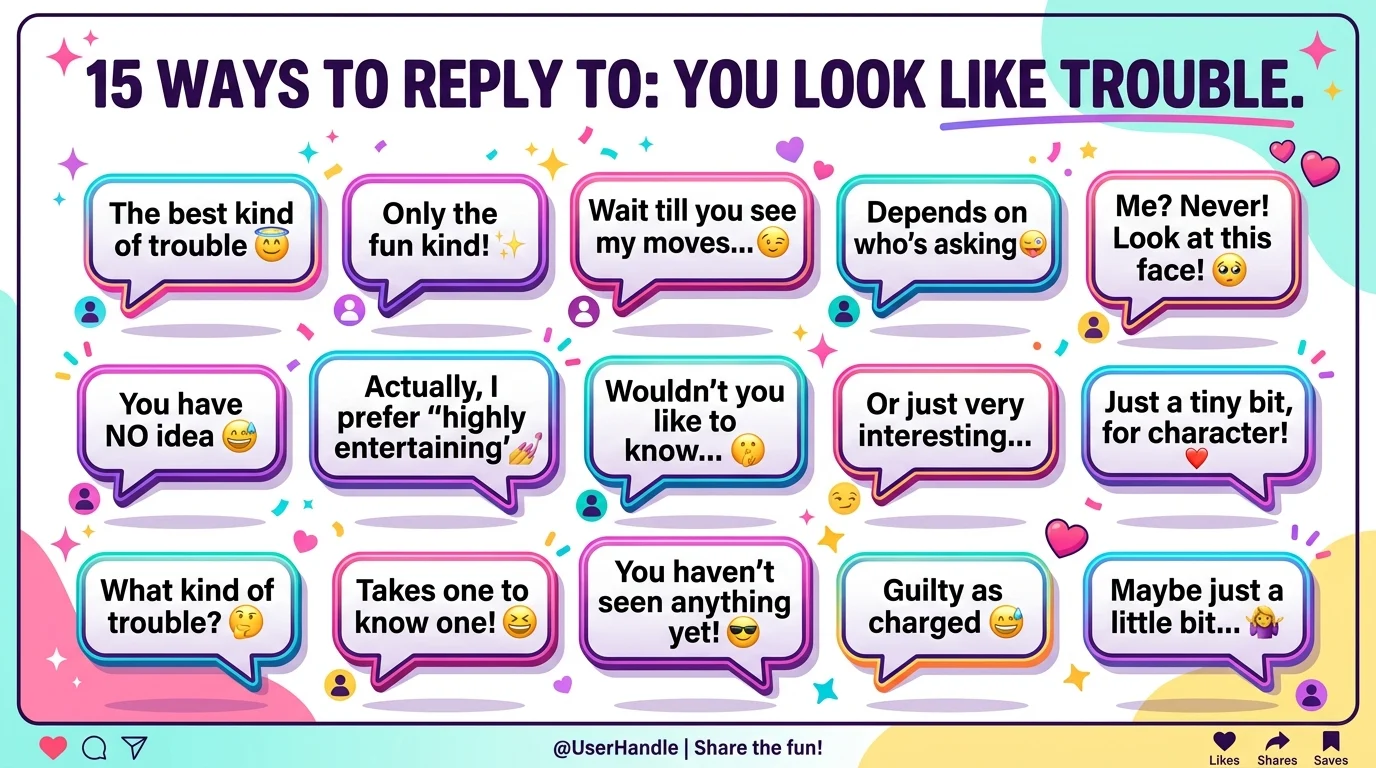
Quick Ans: When someone says “you look like trouble,” they are usually teasing, flirting, or playfully calling out your mischievous vibe. Your best response depends on whether you want to flirt back, joke around, stay polite, or turn up the confidence.
Top alternatives: “Only the fun kind,” “You have no idea,” “Maybe you should find out,” “Trouble looks good on me,” “Depends what you call trouble”
Someone saying “you look like trouble” can land in a hundred different ways. Maybe it pops up in a flirty DM from your crush, a playful text from a friend, a dating app message, or even a cheeky comment at a party. The phrase sounds simple, but your reply can completely change the mood.
You can flirt back, make them laugh, act innocent, or confidently lean into the accusation. That is exactly why knowing how to respond to you look like trouble is useful. A good comeback keeps the energy flowing without making things awkward.
Whether you want to sound funny, clever, mysterious, cute, or confidently flirty, the right words can turn a basic comment into a memorable exchange. And honestly, if someone already thinks you look like trouble, you might as well make the reply interesting.
Funny Responses
“Only on weekends.”
Use this when you want to make the accusation playful and ridiculous.
Meaning: You are jokingly admitting to being mischievous.
“I prefer ‘professionally entertaining.’”
Use this when you want a funny upgrade to the word trouble.
Meaning: You are turning their tease into a compliment.
“That depends on the lighting.”
Use this when you want a random, unexpected comeback.
Meaning: You are deliberately making the moment absurd.
“Me? I’m basically an angel.”
Use this when you want to play innocent.
Meaning: You are jokingly denying the accusation.
“My résumé does not mention that.”
Use this when you want workplace-style humor.
Meaning: You are treating the comment like a job interview.
“Trouble has entered the chat.”
Use this when you want an internet-friendly comeback.
Meaning: You are embracing the playful reputation.
“I blame the outfit.”
Use this when your look is clearly getting attention.
Meaning: You are humorously blaming your appearance.
“That sounds like a you problem.”
Use this when you want a cheeky response.
Meaning: You are playfully making them responsible for their reaction.
“I have references, but they’re confidential.”
Use this when you want mysterious humor.
Meaning: You are pretending your troublemaking history is classified.
“Wow, my reputation arrived before I did.”
Use this when you want a clever joke.
Meaning: You are pretending people already know about your personality.
“I promise nothing.”
Use this when you want a short, mischievous answer.
Meaning: You are playfully refusing to behave.
“You noticed. Interesting.”
Use this when you want to make them wonder what you are thinking.
Meaning: You are teasing them for paying attention.
Flirty Responses
“Maybe you should find out.”
Use this when you want to flirt confidently.
Meaning: You are inviting them to discover your personality.
“Only if you can handle me.”
Use this when you want playful confidence.
Meaning: You are suggesting that you are exciting but not for everyone.
“You look curious.”
Use this when you want to tease their interest.
Meaning: You are implying they want to know more.
“And yet you’re still talking to me.”
Use this when you want to turn the tease back on them.
Meaning: You are pointing out their obvious interest.
“Trouble never looked this good.”
Use this when you want a confident flirt.
Meaning: You are embracing the attraction behind the comment.
“Careful, curiosity has consequences.”
Use this when you want to sound mysterious.
Meaning: You are teasing them about getting closer.
“Maybe you’re exactly my type of trouble.”
Use this when you want to flirt without being too direct.
Meaning: You are suggesting mutual attraction.
“You say that like it’s a bad thing.”
Use this when you want to challenge the accusation.
Meaning: You are turning trouble into something desirable.
“I could say the same about you.”
Use this when you want to bounce the flirt back.
Meaning: You are playfully accusing them too.
“Guess you’ll have to take the risk.”
Use this when you want confident chemistry.
Meaning: You are inviting them to keep exploring the connection.
“You have excellent instincts.”
Use this when you want a smooth, self-assured flirt.
Meaning: You are agreeing while making yourself sound intriguing.
“That sounds suspiciously like flirting.”
Use this when you want to call out their interest.
Meaning: You are playfully suggesting they are attracted to you.
Sarcastic Responses
“Thank you for your professional assessment.”
Use this when you want dry humor.
Meaning: You are pretending their comment is an official evaluation.
“Your detective work is impressive.”
Use this when you want sarcastic confidence.
Meaning: You are joking about how quickly they judged you.
“Bold of you to assume I’m only trouble.”
Use this when you want a playful twist.
Meaning: You are exaggerating their accusation for humor.
“I’ll alert the authorities.”
Use this when you want deliberately dramatic sarcasm.
Meaning: You are pretending their comment is a serious accusation.
“What gave it away?”
Use this when you want to sound amused.
Meaning: You are pretending the accusation is completely accurate.
“Congratulations, you cracked the case.”
Use this when you want witty sarcasm.
Meaning: You are treating their observation like detective work.
“Please submit your complaint in writing.”
Use this when you want a mock-formal comeback.
Meaning: You are jokingly treating their comment as a complaint.
“I’ll try to survive this reputation.”
Use this when you want light sarcasm.
Meaning: You are pretending the accusation is a major burden.
“That was quick. You barely know me.”
Use this when you want teasing sarcasm.
Meaning: You are calling out their fast judgment.
“I’m shocked by this character assassination.”
Use this when you want exaggerated humor.
Meaning: You are pretending their playful comment is deeply offensive.
“And here I was trying to seem innocent.”
Use this when you want playful sarcasm.
Meaning: You are joking that your plan to appear innocent failed.
“I’ll take that as a compliment.”
Use this when you want confident sarcasm.
Meaning: You are refusing to treat the accusation negatively.
Cute Responses
“Only a little bit.”
Use this when you want to sound adorable and playful.
Meaning: You are lightly admitting to being mischievous.
“But I’m cute trouble.”
Use this when you want to make the tease sweet.
Meaning: You are framing your personality as harmless fun.
“You caught me.”
Use this when you want a simple playful reply.
Meaning: You are pretending their observation exposed you.
“Maybe I just look mischievous.”
Use this when you want a soft response.
Meaning: You are acknowledging the vibe without fully admitting anything.
“I promise I’m mostly harmless.”
Use this when you want gentle humor.
Meaning: You are reassuring them while keeping the joke alive.
“That’s actually kind of adorable.”
Use this when you want to make their comment sweeter.
Meaning: You are showing that you enjoyed the teasing.
“You noticed my secret.”
Use this when you want playful mystery.
Meaning: You are pretending your mischievous side is a secret.
“Maybe my face is just dramatic.”
Use this when you want a cute joke.
Meaning: You are blaming your expression for the impression.
“I promise I come with good intentions.”
Use this when you want to sound warm.
Meaning: You are reassuring them while staying playful.
“Trouble, but make it wholesome.”
Use this when you want internet-style humor.
Meaning: You are making the idea of trouble sound harmless.
“You’re making me sound way more interesting.”
Use this when you want a cute compliment back.
Meaning: You are enjoying the attention.
“Okay, maybe you’re onto something.”
Use this when you want a soft tease.
Meaning: You are playfully admitting they may be right.
Confident Responses
“I don’t look like trouble. I look unforgettable.”
Use this when you want maximum confidence.
Meaning: You are replacing their label with a stronger compliment.
“Trouble looks good on me.”
Use this when you want a short, bold comeback.
Meaning: You are confidently owning the description.
“I make an entrance, not an apology.”
Use this when you want dramatic confidence.
Meaning: You are comfortable standing out.
“I’m exactly as interesting as I look.”
Use this when you want calm self-assurance.
Meaning: You are confidently suggesting there is more beneath the surface.
“You’re not wrong.”
Use this when you want understated confidence.
Meaning: You are casually accepting the accusation.
“I know.”
Use this when you want an ultra-short confident response.
Meaning: You are completely unfazed by their comment.
“I’ve heard that before.”
Use this when you want to sound effortlessly confident.
Meaning: You are suggesting your personality has a reputation.
“I wear the warning label well.”
Use this when you want clever confidence.
Meaning: You are embracing the idea that people should expect personality.
“I’m not for the easily intimidated.”
Use this when you want bold energy.
Meaning: You are presenting yourself as confident and independent.
“You figured that out fast.”
Use this when you want to tease them confidently.
Meaning: You are suggesting they read your personality correctly.
“That’s one way to describe me.”
Use this when you want mysterious confidence.
Meaning: You are implying there is much more to you.
“I call it personality.”
Use this when you want to turn the tease into a compliment.
Meaning: You are confidently reframing your energy.
Chill And Casual Responses
“Haha, maybe.”
Use this when you want to keep things relaxed.
Meaning: You are acknowledging the tease without overthinking it.
“Could be.”
Use this when you want effortless mystery.
Meaning: You are leaving the accusation open-ended.
“You might be onto something.”
Use this when you want friendly teasing.
Meaning: You are lightly agreeing.
“That’s fair.”
Use this when you want a calm response.
Meaning: You are accepting their impression without making it serious.
“I get that a lot.”
Use this when you want casual confidence.
Meaning: You are suggesting the comment is familiar.
“Depends who’s asking.”
Use this when you want playful mystery.
Meaning: You are implying that your answer depends on the person.
“Maybe my face gives it away.”
Use this when you want casual humor.
Meaning: You are joking about your appearance.
“Not necessarily.”
Use this when you want subtle intrigue.
Meaning: You are refusing to confirm or deny the claim.
“Fair observation.”
Use this when you want understated wit.
Meaning: You are treating their comment casually.
“I’ll let you decide.”
Use this when you want to keep the conversation open.
Meaning: You are giving them room to continue teasing.
“Guess you’ll find out.”
Use this when you want relaxed mystery.
Meaning: You are suggesting future interactions will reveal the answer.
“That’s between me and my conscience.”
Use this when you want dry humor.
Meaning: You are jokingly implying there is a story behind the accusation.
Clever Responses
“Trouble is just fun with better branding.”
Use this when you want a memorable one-liner.
Meaning: You are cleverly reframing trouble as excitement.
“Maybe you’re confusing confidence with trouble.”
Use this when you want an intelligent comeback.
Meaning: You are suggesting their impression comes from your self-assurance.
“Looks can be surprisingly persuasive.”
Use this when you want subtle mystery.
Meaning: You are acknowledging that appearances create impressions.
“Interesting conclusion from limited evidence.”
Use this when you want clever sarcasm.
Meaning: You are teasing them for judging you quickly.
“You’ve made quite the hypothesis.”
Use this when you want playful intellectual humor.
Meaning: You are pretending their comment is a scientific theory.
“That depends on your definition of trouble.”
Use this when you want to keep things intriguing.
Meaning: You are questioning what they actually mean.
“Perhaps you’re simply observant.”
Use this when you want polished wit.
Meaning: You are complimenting their ability to notice your vibe.
“Perception is a fascinating thing.”
Use this when you want mysterious humor.
Meaning: You are playfully refusing to confirm their assumption.
“You’re judging the cover before reading the book.”
Use this when you want a thoughtful comeback.
Meaning: You are reminding them that appearances do not tell the whole story.
“A confident appearance can be misleading.”
Use this when you want clever restraint.
Meaning: You are suggesting there may be a softer side underneath.
“That conclusion needs more research.”
Use this when you want playful mystery.
Meaning: You are teasing them about needing more time to know you.
“Your theory is intriguing.”
Use this when you want a polished, flirt-friendly response.
Meaning: You are encouraging them to keep the conversation going.
Polite Responses
“Haha, I’ll take that as a compliment.”
Use this when you want to stay friendly.
Meaning: You are keeping the exchange positive.
“I promise I’m friendly.”
Use this when you want a reassuring answer.
Meaning: You are gently rejecting the negative interpretation.
“Hopefully, the good kind of trouble.”
Use this when you want warmth with humor.
Meaning: You are steering the phrase toward harmless fun.
“That’s an interesting first impression.”
Use this when you want to remain composed.
Meaning: You are acknowledging their observation politely.
“I suppose appearances can be deceiving.”
Use this when you want a thoughtful response.
Meaning: You are suggesting your personality may differ from your look.
“I hope that’s meant positively.”
Use this when you want gentle clarification.
Meaning: You are checking the tone without making things awkward.
“I’ll choose to take that positively.”
Use this when you want graceful confidence.
Meaning: You are deciding to interpret their comment as praise.
“That made me laugh.”
Use this when you want to acknowledge the joke.
Meaning: You are showing that you enjoyed the comment.
“Well, I’m harmless enough.”
Use this when you want friendly humor.
Meaning: You are reassuring them while keeping things light.
“That’s certainly one way to describe me.”
Use this when you want polite mystery.
Meaning: You are accepting the comment without confirming it.
“I appreciate the observation.”
Use this when you want playful formality.
Meaning: You are humorously acknowledging their judgment.
“I’ll consider that a compliment.”
Use this when you want to keep the interaction positive.
Meaning: You are turning their tease into something flattering.
Dramatic Responses
“At last, someone sees the truth.”
Use this when you want theatrical humor.
Meaning: You are dramatically admitting to the accusation.
“The prophecy has been fulfilled.”
Use this when you want absurd internet humor.
Meaning: You are exaggerating the moment for comedic effect.
“My secret identity is exposed.”
Use this when you want playful drama.
Meaning: You are pretending their comment uncovered a hidden persona.
“I knew this day would come.”
Use this when you want an exaggerated reaction.
Meaning: You are acting as though their comment was inevitable.
“The warning signs were apparently visible.”
Use this when you want dramatic wit.
Meaning: You are joking that your personality gave itself away.
“You have awakened the plot.”
Use this when you want meme-friendly drama.
Meaning: You are pretending the conversation has suddenly become a story.
“This is how every questionable adventure begins.”
Use this when you want playful suspense.
Meaning: You are making the interaction sound like the beginning of an adventure.
“And so it begins.”
Use this when you want a short dramatic reply.
Meaning: You are playfully suggesting something interesting is coming.
“My reputation has officially arrived.”
Use this when you want theatrical humor.
Meaning: You are exaggerating the significance of their comment.
“You were not supposed to notice that.”
Use this when you want mystery and drama.
Meaning: You are pretending your mischievous side was hidden.
“The evidence is overwhelming.”
Use this when you want exaggerated humor.
Meaning: You are jokingly accepting their accusation.
“I fear you may be onto something.”
Use this when you want dramatic understatement.
Meaning: You are playfully admitting they may be right.
Sweet Responses
“Maybe I just have a playful side.”
Use this when you want to soften the accusation.
Meaning: You are presenting your personality as fun rather than troublesome.
“I promise there’s a sweet side too.”
Use this when you want to sound warm.
Meaning: You are reminding them that you are more than your mischievous vibe.
“Only the fun kind of trouble.”
Use this when you want a wholesome flirt.
Meaning: You are making the phrase feel positive.
“That’s a cute way of saying I’m interesting.”
Use this when you want to turn teasing into affection.
Meaning: You are treating their comment as a compliment.
“Maybe I just have an adventurous spirit.”
Use this when you want positive energy.
Meaning: You are reframing trouble as curiosity and fun.
“I hope you mean that in the nicest way.”
Use this when you want a warm response.
Meaning: You are inviting a positive interpretation.
“You make that sound like a compliment.”
Use this when you want sweet teasing.
Meaning: You are showing that you enjoyed their attention.
“I’ll try to keep the trouble wholesome.”
Use this when you want playful sweetness.
Meaning: You are promising harmless fun.
“Maybe I’m just misunderstood.”
Use this when you want gentle humor.
Meaning: You are playfully denying the label.
“I think you just caught my playful side.”
Use this when you want a warm explanation.
Meaning: You are saying your energy comes from being fun.
“You’re making me smile with that.”
Use this when you want to acknowledge the compliment.
Meaning: You are showing that their comment made you happy.
“I’ll happily accept that description.”
Use this when you want sweet confidence.
Meaning: You are embracing their playful observation.
Professional Responses
“I’ll take that as a comment on my personality.”
Use this when someone makes the remark in a casual workplace setting.
Meaning: You are keeping the response neutral.
“Hopefully, only the productive kind of trouble.”
Use this when you want workplace-friendly humor.
Meaning: You are turning trouble into harmless professional energy.
“I prefer to call it being resourceful.”
Use this when you want clever professional humor.
Meaning: You are reframing mischief as competence.
“That is an interesting first impression.”
Use this when you want to stay composed.
Meaning: You are acknowledging the remark without escalating it.
“I assure you, I’m here to get things done.”
Use this when you want a calm professional response.
Meaning: You are emphasizing reliability.
“I’ll consider that a memorable introduction.”
Use this when you want polished humor.
Meaning: You are keeping the moment light but appropriate.
“I promise my intentions are constructive.”
Use this when you want subtle humor.
Meaning: You are reassuring the other person.
“I suppose I have a distinctive presence.”
Use this when you want confident professionalism.
Meaning: You are acknowledging that you stand out.
“Hopefully, I give off the good kind of energy.”
Use this when you want warmth.
Meaning: You are steering the comment toward positivity.
“That certainly makes for an interesting first impression.”
Use this when you want to sound composed.
Meaning: You are acknowledging the remark without taking it personally.
“I’ll aim to keep the workplace trouble-free.”
Use this when you want a harmless joke.
Meaning: You are promising to keep things professional.
“Let’s call it enthusiasm with personality.”
Use this when you want a polished reframe.
Meaning: You are replacing trouble with a positive trait.
Sarcastic And Witty Responses
“You figured that out from one look?”
Use this when you want to challenge their assumption playfully.
Meaning: You are teasing them for judging quickly.
“That’s quite a confident accusation.”
Use this when you want dry humor.
Meaning: You are making their statement sound more serious than it is.
“I’ll pretend that was flattering.”
Use this when you want light sarcasm.
Meaning: You are playfully questioning their wording.
“Your instincts are doing overtime.”
Use this when you want a clever internet-style reply.
Meaning: You are joking about their quick judgment.
“You seem oddly confident about that.”
Use this when you want subtle teasing.
Meaning: You are challenging their certainty.
“That sounds like experience talking.”
Use this when you want to turn the tease around.
Meaning: You are joking that they recognize trouble because they are trouble too.
“Should I be impressed or concerned?”
Use this when you want playful uncertainty.
Meaning: You are teasing them about their observation.
“You sound suspiciously interested.”
Use this when you want witty flirtation.
Meaning: You are implying their comment reveals attraction.
“That says more about your imagination.”
Use this when you want a clever comeback.
Meaning: You are suggesting they are projecting their own ideas.
“I see your concern and raise you curiosity.”
Use this when you want playful wordplay.
Meaning: You are making the exchange more intriguing.
“That judgment arrived remarkably fast.”
Use this when you want dry humor.
Meaning: You are teasing them for making assumptions.
“Noted. I’ll add it to my list of talents.”
Use this when you want playful confidence.
Meaning: You are humorously treating trouble as a skill.
Mysterious Responses
“Maybe you should get to know me.”
Use this when you want to encourage curiosity.
Meaning: You are suggesting appearances do not reveal everything.
“You have no idea.”
Use this when you want maximum mystery.
Meaning: You are implying there is more to your personality.
“That depends on how brave you are.”
Use this when you want playful suspense.
Meaning: You are teasing them about discovering more.
“Some things are better discovered.”
Use this when you want a subtle flirt.
Meaning: You are encouraging curiosity without revealing much.
“I’ll never tell.”
Use this when you want playful secrecy.
Meaning: You are keeping your personality mysterious.
“That’s classified information.”
Use this when you want humorous mystery.
Meaning: You are pretending your true nature is secret.
“You’re asking dangerous questions.”
Use this when you want a teasing response.
Meaning: You are suggesting the conversation could become more interesting.
“You might want to keep wondering.”
Use this when you want confident mystery.
Meaning: You are refusing to give them a clear answer.
“Perhaps.”
Use this when you want the shortest mysterious reply.
Meaning: You are deliberately leaving the answer uncertain.
“I could tell you, but where’s the fun in that?”
Use this when you want playful intrigue.
Meaning: You are keeping the mystery alive.
“You’re closer than you think.”
Use this when you want a teasing response.
Meaning: You are suggesting their observation may be accurate.
“There’s a story behind that.”
Use this when you want to invite curiosity.
Meaning: You are implying your personality has interesting layers.
Playful Responses
“Only when properly supervised.”
Use this when you want cheeky humor.
Meaning: You are joking that your mischief needs monitoring.
“I prefer exciting.”
Use this when you want a confident reframe.
Meaning: You are replacing trouble with something positive.
“You say trouble, I say unforgettable.”
Use this when you want a memorable comeback.
Meaning: You are confidently redefining the label.
“Maybe I’m just too much fun.”
Use this when you want light confidence.
Meaning: You are suggesting your energy is exciting rather than problematic.
“You’re making assumptions already?”
Use this when you want teasing skepticism.
Meaning: You are playfully challenging their first impression.
“Should I be flattered?”
Use this when you want to keep the interaction going.
Meaning: You are inviting them to clarify their intention.
“I come with a plot twist.”
Use this when you want meme-friendly charm.
Meaning: You are suggesting you are unpredictable in a fun way.
“That’s my favorite accusation.”
Use this when you want confident humor.
Meaning: You are showing that you enjoy being seen as mischievous.
“Maybe you’re just easily entertained.”
Use this when you want to tease them back.
Meaning: You are making their reaction part of the joke.
“I’ll try not to prove you right.”
Use this when you want playful restraint.
Meaning: You are jokingly promising to behave.
“You’re making this too easy.”
Use this when you want witty energy.
Meaning: You are suggesting their comment gives you an opening for banter.
“I have a feeling you like trouble.”
Use this when you want to turn the tease around.
Meaning: You are playfully suggesting they enjoy your energy.
Confident And Flirty Responses
“Maybe I’m the kind of trouble you’ve been waiting for.”
Use this when you want bold romantic energy.
Meaning: You are confidently suggesting attraction.
“Careful, you might like what you find.”
Use this when you want playful confidence.
Meaning: You are teasing them about becoming more interested.
“You’re looking at me like you’re curious.”
Use this when you want to call out their attention.
Meaning: You are acknowledging possible attraction.
“If I’m trouble, you seem willing to investigate.”
Use this when you want clever flirting.
Meaning: You are suggesting they are interested despite the warning.
“I could be your favorite kind of trouble.”
Use this when you want a smooth romantic comeback.
Meaning: You are framing yourself as exciting and desirable.
“You might want to stop staring before I notice.”
Use this when you want playful confidence.
Meaning: You are teasing them about paying attention to you.
“I’m beginning to think you like the idea.”
Use this when you want subtle flirtation.
Meaning: You are suggesting they are attracted to your mischievous vibe.
“You noticed the danger and stayed anyway.”
Use this when you want confident teasing.
Meaning: You are implying their interest is obvious.
“Maybe we’d make a dangerous combination.”
Use this when you want chemistry without being too serious.
Meaning: You are suggesting you could be an exciting match.
“You seem very interested in this so-called trouble.”
Use this when you want playful flirtation.
Meaning: You are teasing them for engaging with the idea.
“I think you secretly like trouble.”
Use this when you want a light accusation.
Meaning: You are playfully suggesting they enjoy your personality.
“Then why do you look so intrigued?”
Use this when you want to turn the attention back on them.
Meaning: You are implying their curiosity reveals attraction.
Short And Punchy Responses
“Only the fun kind.”
Use this when you want a classic quick reply.
Meaning: You are embracing the playful accusation.
“You noticed.”
Use this when you want a confident tease.
Meaning: You are acknowledging their attention.
“Maybe.”
Use this when you want mystery.
Meaning: You are refusing to confirm anything.
“Guilty.”
Use this when you want playful confidence.
Meaning: You are jokingly admitting the accusation.
“Depends.”
Use this when you want intrigue.
Meaning: You are leaving the meaning open.
“You wish.”
Use this when you want cheeky confidence.
Meaning: You are playfully challenging their assumption.
“Prove it.”
Use this when you want bold banter.
Meaning: You are challenging them to explain their claim.
“Interesting.”
Use this when you want mysterious energy.
Meaning: You are making them wonder what you are thinking.
“Noted.”
Use this when you want dry humor.
Meaning: You are acknowledging the comment without revealing much.
“Accurate.”
Use this when you want confident humor.
Meaning: You are openly accepting the label.
“Perhaps I am.”
Use this when you want polished mystery.
Meaning: You are teasing them without confirming anything.
“And?”
Use this when you want maximum confidence.
Meaning: You are showing that the accusation does not bother you.
FAQs
What does “you look like trouble” mean?
It usually means someone thinks you have a mischievous, bold, unpredictable, or flirtatious vibe. The exact meaning depends heavily on tone and context.
Is “you look like trouble” flirty?
Often, yes. In dating, DMs, or playful conversations, it can be a teasing way to show attraction or curiosity.
What is a good flirty response to “you look like trouble”?
Try “Maybe you should find out” or “Only if you can handle me.” Both keep the mood confident and playful.
How should I respond professionally?
Keep it light and neutral. Try “That’s an interesting first impression” or “Hopefully, only the productive kind of trouble.”
What if I do not actually mean to be flirty?
Choose a friendly response such as “Haha, I promise I’m harmless” or “I’ll take that as a compliment.”
Is humor appropriate when someone says “you look like trouble”?
Usually, yes, especially if the original comment is playful. A funny reply can keep the exchange relaxed without making it overly serious.
What should I say if I want to flirt back?
Use something that mirrors their energy, such as “You seem suspiciously interested” or “Maybe I’m your kind of trouble.”
What if I want to shut the conversation down politely?
Try “Haha, I’ll take that as a compliment” and then move to another topic. It acknowledges the comment without encouraging more flirting.
Conclusion
Knowing how to respond to you look like trouble gives you an easy way to control the mood of the conversation. You can turn the comment into a joke, flirt back, stay mysterious, or simply keep things friendly. The best response is not necessarily the cleverest one. It is the one that sounds natural coming from you.
A confident reply can make a conversation memorable, while a playful one can turn a random comment into great banter. So save your favorites, steal a line when the moment arrives, and do not be afraid to add your own personality.
Try a few different styles and see what gets the best reaction. Share, save, and reuse this list whenever someone decides you look like trouble.

Lily Carter creates practical, easy-to-follow content for everyday readers at ResponseCraft.com. She enjoys turning complex topics into clear, actionable advice that helps people make smarter decisions.