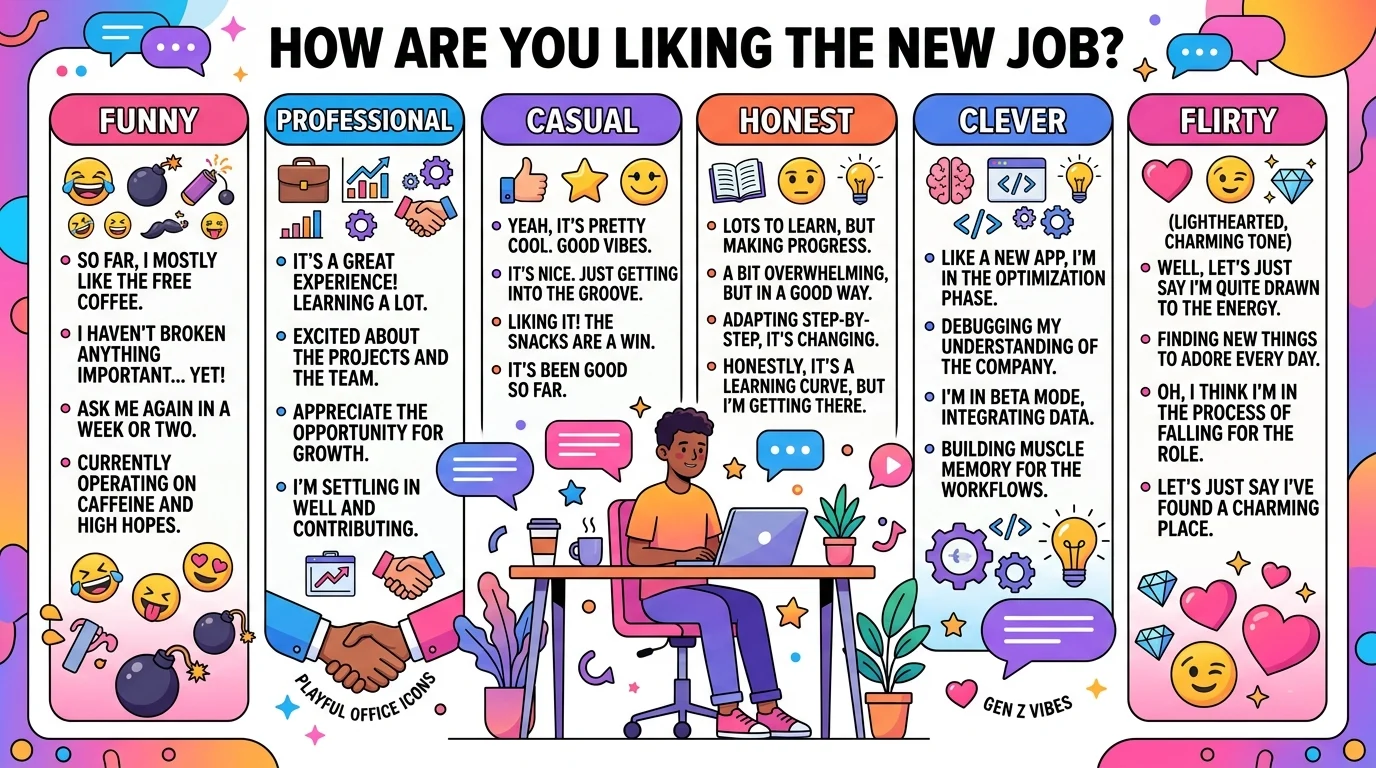
Quick Ans: The best How are you liking the new job replies depend on how things are actually going. Try “I’m really enjoying it so far,” “It’s been a learning curve,” “Honestly, I love it,” “Still settling in,” or “Ask me again after payday!”
Top alternatives: I’m really enjoying it, It’s going great, Still settling in, It’s been a learning curve, Ask me after payday
Starting a new job comes with a whole new vocabulary: onboarding, meetings, passwords, coworkers, and the classic question, “So, how are you liking the new job?” Whether someone asks you over text, in the office, during a coffee break, or in a DM, your answer can say more than just whether you like your workplace. It can show your confidence, sense of humor, enthusiasm, or even how brutally honest you are feeling that day.
The best How are you liking the new job replies sound natural instead of rehearsed. Maybe you love the new role. You are still figuring things out. Maybe the paycheck is doing most of the convincing. Whatever your situation, there is a response that fits. From funny and sarcastic to professional, flirty, positive, and brutally honest, these ready-to-send replies make answering the question easy.
Funny Responses
“So far, nobody has asked me to leave, so I’d call it a win.”
Use this when you want to joke about surviving your first days.
Meaning: You are playfully saying the job is going well enough.
“I’m still waiting for the ‘welcome to your dream job’ part.”
Use this when you want a light joke about adjusting.
Meaning: You are admitting you are still settling in.
“Ask me after my first paycheck.”
Use this when you want a classic workplace joke.
Meaning: You are joking that money will determine your final review.
“Honestly, my coffee and I are carrying the team.”
Use this when you want to exaggerate how busy you are.
Meaning: You are humorously saying the adjustment has been tiring.
“I’ve learned approximately 47 new passwords.”
Use this when the new workplace has lots of systems.
Meaning: You are joking about the chaos of starting somewhere new.
“Still trying to figure out where everyone gets lunch.”
Use this when you want a relatable workplace response.
Meaning: You are joking about learning the social side of the job.
“It’s going well, assuming I know what I’m doing.”
Use this when you want self-deprecating humor.
Meaning: You are joking about the uncertainty of being new.
“I’ve mastered the art of looking busy.”
Use this with a close friend who understands your humor.
Meaning: You are playfully exaggerating your workplace routine.
“My calendar has more meetings than I have thoughts.”
Use this when your new job is meeting-heavy.
Meaning: You are joking about having a packed schedule.
“I’m thriving professionally and emotionally questionable.”
Use this when you want internet-style humor.
Meaning: You are saying the job is fine while joking about the adjustment.
“It’s giving ‘I need another coffee.’”
Use this when the new role is already intense.
Meaning: You are humorously describing the workload.
“I’m currently accepting reviews from people who bring snacks.”
Use this when you want a playful answer.
Meaning: You are joking about what would improve your job experience.
Positive Responses
“I’m really enjoying it so far.”
Use this when the new job has genuinely impressed you.
Meaning: You are saying the transition has been positive.
“Honestly, it’s been great.”
Use this when you want a simple enthusiastic response.
Meaning: You are happy with the new role.
“I’m loving it so far.”
Use this when you are genuinely excited about the position.
Meaning: You feel very positive about your new workplace.
“It’s been better than I expected.”
Use this when the job has pleasantly surprised you.
Meaning: Your experience has exceeded your expectations.
“So far, so good!”
Use this when things are going well without being perfect.
Meaning: You are satisfied with the transition.
“I feel like I made the right choice.”
Use this when you want to express confidence in your decision.
Meaning: You believe accepting the job was worthwhile.
“I’m settling in really well.”
Use this when you are adapting comfortably.
Meaning: You are becoming familiar with the new environment.
“I’ve had a really positive experience so far.”
Use this when you want a polished response.
Meaning: You are pleased with your early experience.
“I’m excited about where this could go.”
Use this when you see long-term potential.
Meaning: You are optimistic about your future there.
“I’m enjoying the people and the work.”
Use this when both the role and team are good.
Meaning: You appreciate the overall workplace experience.
“It’s been a refreshing change.”
Use this when the new job feels noticeably better than the old one.
Meaning: You are enjoying the difference.
“I’m genuinely happy with the move.”
Use this when you want to sound confident and sincere.
Meaning: You feel good about changing jobs.
Casual Responses
“It’s going pretty well!”
Use this when talking casually with a friend.
Meaning: Things are positive overall.
“I’m liking it so far.”
Use this when you want a simple honest response.
Meaning: You are generally enjoying the job.
“Not bad at all.”
Use this when things are decent but you do not want to overhype them.
Meaning: The job is going reasonably well.
“Still getting used to everything.”
Use this when you are new and adjusting.
Meaning: You are not fully settled yet.
“It’s been good! Lots to learn, though.”
Use this when you are enjoying the job but facing a learning curve.
Meaning: You are positive while acknowledging the challenge.
“Honestly, I’m enjoying it.”
Use this when someone asks casually about your experience.
Meaning: You are sincerely pleased.
“It’s different, but I like it.”
Use this when the new workplace feels unfamiliar.
Meaning: You are adapting positively.
“So far, I’m happy with it.”
Use this when you want a relaxed but positive response.
Meaning: You are satisfied with the change.
“I’m still finding my rhythm.”
Use this when you are learning a new routine.
Meaning: You are adjusting gradually.
“It’s been an interesting change.”
Use this when you want to stay somewhat neutral.
Meaning: The experience has been different but not necessarily bad.
“I think I’m going to like it here.”
Use this when your first impressions are positive.
Meaning: You see yourself enjoying the role.
“Ask me again in a few weeks!”
Use this when it is too early to give a final opinion.
Meaning: You need more time before judging the job.
Professional Responses
“I’m enjoying the role and getting settled into the team.”
Use this when responding to a colleague or professional contact.
Meaning: You are adapting positively.
“It’s been a great experience so far.”
Use this when you want to sound polished and positive.
Meaning: You are satisfied with the new position.
“I’m enjoying the responsibilities and learning a lot.”
Use this when discussing professional growth.
Meaning: You appreciate the opportunity to develop.
“The transition has gone smoothly so far.”
Use this when you want a professional, measured answer.
Meaning: Your move into the role has been successful.
“I’m settling in well and enjoying the new challenges.”
Use this when speaking with a professional acquaintance.
Meaning: You are embracing the responsibilities.
“It’s been a rewarding change.”
Use this when the new position has been beneficial.
Meaning: You feel the move has been worthwhile.
“I’m pleased with how things have gone so far.”
Use this when you want a formal but natural response.
Meaning: You are satisfied with your experience.
“I’m enjoying the team and the opportunity to learn.”
Use this when you want to highlight workplace positives.
Meaning: You value both the people and professional growth.
“It’s been a positive transition.”
Use this when you want a concise professional answer.
Meaning: You have adapted successfully.
“I’m enjoying the position and looking forward to taking on more.”
Use this when you want to sound ambitious.
Meaning: You are enthusiastic about future responsibilities.
“There has been a lot to learn, but I’m enjoying the process.”
Use this when the role is challenging but rewarding.
Meaning: You are handling the learning curve positively.
“Overall, I’m very happy with the decision.”
Use this when discussing your career move.
Meaning: You believe the new job was a good choice.
Flirty Responses
“I like it, but I might like talking to you more.”
Use this when responding to someone you are interested in.
Meaning: You are shifting the conversation toward flirtation.
“The job is good, but your questions are more interesting.”
Use this when you want a subtle flirt.
Meaning: You enjoy their attention.
“I’m liking it. Want to hear all about it over coffee?”
Use this when you want to suggest spending time together.
Meaning: You are turning the conversation into an invitation.
“It’s going well. You could come by and judge for yourself.”
Use this when the relationship already has playful chemistry.
Meaning: You are teasing them with an invitation.
“I’m enjoying it, especially when you ask about it.”
Use this when you want a soft romantic response.
Meaning: Their interest makes the topic more enjoyable.
“The job is great, but I wouldn’t mind a distraction from you.”
Use this when you want a bolder flirt.
Meaning: You are saying you would enjoy their attention.
“Pretty good. Are you interviewing me now?”
Use this when you want playful teasing.
Meaning: You are turning their question into flirtatious banter.
“I like it. Maybe you can celebrate my first week with me.”
Use this when you want to suggest meeting up.
Meaning: You are creating a reason to spend time together.
“It’s going well. You asking about it is cute, though.”
Use this when you want to compliment their interest.
Meaning: You find their attention attractive.
“I’m settling in, but I could use a favorite person to make it more fun.”
Use this when you want a romantic hint.
Meaning: You are suggesting you want their company.
“I like it so far. Now tell me when I get to see you.”
Use this when you want to redirect the conversation toward them.
Meaning: You are showing personal interest.
“It’s good, but this conversation just made my day better.”
Use this when you want a subtle romantic compliment.
Meaning: Their message has improved your mood.
Cute Responses
“I’m really liking it so far!”
Use this when you want an upbeat response.
Meaning: You are genuinely enjoying the new role.
“It’s been such a nice change.”
Use this when the transition feels refreshing.
Meaning: You are happy about the new chapter.
“I’m slowly finding my place there.”
Use this when you are still adjusting.
Meaning: You are becoming more comfortable.
“I think I’m going to love it.”
Use this when your early experience has been encouraging.
Meaning: You feel optimistic about the future.
“It’s been good to me so far.”
Use this when you want a warm, slightly playful answer.
Meaning: You are happy with how things are going.
“I’m learning so much already!”
Use this when you are excited about professional growth.
Meaning: You are enjoying the learning experience.
“I’m getting there one day at a time.”
Use this when the job is still new.
Meaning: You are adapting gradually.
“I’m actually pretty happy there.”
Use this when you want an honest but casual response.
Meaning: You are satisfied with the workplace.
“It feels like a fresh start.”
Use this when changing jobs has been meaningful.
Meaning: You see the new position as a positive beginning.
“I’m slowly becoming one of the regulars.”
Use this when you are starting to feel comfortable.
Meaning: You are becoming part of the workplace.
“I think I found a good one this time.”
Use this when the new job feels like a strong fit.
Meaning: You are optimistic about your choice.
“I’m liking the new chapter.”
Use this when you want a warm and reflective response.
Meaning: You see the job as part of a positive life change.
Sarcastic Responses
“Ask me after my next meeting.”
Use this when you want to joke about workplace fatigue.
Meaning: You are pretending one more meeting will determine everything.
“It’s going great, if you ignore the emails.”
Use this when your inbox is overwhelming.
Meaning: You like the job despite the workload.
“I love it almost as much as I love weekends.”
Use this when you want a classic work joke.
Meaning: You are humorously comparing the job with free time.
“The coworkers are still under review.”
Use this when you are joking about meeting a new team.
Meaning: You are playfully evaluating your colleagues.
“I’m enjoying it, but my alarm clock disagrees.”
Use this when early mornings are difficult.
Meaning: You like the job despite the schedule.
“It’s fantastic. My inbox has never been happier.”
Use this when you want dry workplace humor.
Meaning: You are joking about having too much email.
“So far, the paycheck has excellent reviews.”
Use this when money is a major benefit.
Meaning: You are joking that compensation helps your opinion.
“It’s going well, according to my LinkedIn.”
Use this when you want social-media-style humor.
Meaning: You are joking about professional appearances.
“I’m still waiting for the plot twist.”
Use this when everything seems suspiciously good.
Meaning: You are joking that the honeymoon period may end.
“I have not rage-quit, so we’re doing great.”
Use this when joking with someone close.
Meaning: You are exaggerating workplace frustration.
“It’s fine. My coffee is the real employee of the month.”
Use this when you are tired from the new routine.
Meaning: You are joking about relying on caffeine.
“I’m giving it five stars until further notice.”
Use this when you want playful sarcasm.
Meaning: You currently have a positive opinion.
Confident Responses
“I’m really enjoying it, and I know I made the right move.”
Use this when you want to sound certain about your decision.
Meaning: You feel confident about changing jobs.
“I’m settling in quickly and enjoying the challenge.”
Use this when you want to emphasize adaptability.
Meaning: You are confidently handling the transition.
“Honestly, it’s exactly the kind of change I needed.”
Use this when the job has improved your situation.
Meaning: The new role feels like a strong fit.
“I’m excited about what I can accomplish here.”
Use this when you want to sound ambitious.
Meaning: You are focused on future success.
“It’s been a great move for me.”
Use this when you are confident about your career choice.
Meaning: You believe the transition was worthwhile.
“I’m enjoying the challenge.”
Use this when the job is demanding but rewarding.
Meaning: You see difficult tasks as opportunities.
“I’m learning quickly and feeling more comfortable every day.”
Use this when you are adapting well.
Meaning: Your confidence is growing.
“I’m exactly where I need to be right now.”
Use this when the job feels personally meaningful.
Meaning: You are confident in your current direction.
“I’m enjoying the role and already thinking about what’s next.”
Use this when you want to show ambition.
Meaning: You are motivated by future growth.
“It’s challenging, but I’m handling it.”
Use this when you want to sound resilient.
Meaning: You are confident despite difficulties.
“I’m happy with the decision and excited for what’s ahead.”
Use this when you want an optimistic career response.
Meaning: You feel secure about the move.
“I think this role is going to be a great fit.”
Use this when your early impressions are strong.
Meaning: You are confident about your future there.
Honest Responses
“I’m still figuring out how I feel about it.”
Use this when you genuinely need more time.
Meaning: You are keeping your answer honest and open.
“It’s okay so far, but I’m still adjusting.”
Use this when your experience is mixed.
Meaning: You are neither fully positive nor negative.
“I like the work, but the transition has been a lot.”
Use this when the role is good but the change is challenging.
Meaning: You appreciate the job while acknowledging the adjustment.
“Honestly, I’m still on the fence.”
Use this when you have not made up your mind.
Meaning: You are uncertain about the job.
“Some days are great, some are definitely not.”
Use this when the experience varies.
Meaning: Your opinion is mixed.
“I’m enjoying parts of it, but I’m still learning.”
Use this when you want to give a balanced answer.
Meaning: You see both positives and challenges.
“It’s different from what I expected.”
Use this when reality has not matched your expectations.
Meaning: The job has surprised you.
“I’m giving myself time to settle in.”
Use this when you do not want to judge too quickly.
Meaning: You are allowing yourself an adjustment period.
“The people are great, but the workload is intense.”
Use this when the team is positive but the job is demanding.
Meaning: You are giving an honest assessment.
“I’m not completely sold yet.”
Use this when you are unsure about staying.
Meaning: You still have reservations.
“It has potential, but I need more time.”
Use this when the job could become a good fit.
Meaning: You are cautiously optimistic.
“I’m taking it one week at a time.”
Use this when you are unsure about the long-term experience.
Meaning: You are avoiding premature judgment.
Clever Responses
“I’m currently in the honeymoon phase.”
Use this when you are still enjoying the excitement of being new.
Meaning: You recognize that early enthusiasm can change.
“The jury is still out, but the evidence looks good.”
Use this when you want a witty balanced answer.
Meaning: You are positive but still evaluating.
“So far, the vibes are employed.”
Use this when you want internet-style humor.
Meaning: You are joking that the workplace energy is good.
“I’m collecting data before issuing a final review.”
Use this when you want a clever professional joke.
Meaning: You need more experience before judging.
“Early results are promising.”
Use this when you want a concise clever response.
Meaning: Your first impressions are positive.
“The workplace experiment is going surprisingly well.”
Use this when you want playful wording.
Meaning: You are enjoying the experience so far.
“I’m currently accepting evidence that this was a good decision.”
Use this when you want self-aware humor.
Meaning: You are still confirming your choice.
“The vibes have passed the probationary period.”
Use this when you want a clever workplace joke.
Meaning: You are saying the job is making a good impression.
“So far, the professional plot is developing nicely.”
Use this when you want something creative.
Meaning: You are optimistic about your career story.
“My unofficial review is currently four and a half stars.”
Use this when you want a playful answer.
Meaning: You like the job but still see room for improvement.
“I’m cautiously optimistic with excellent coffee support.”
Use this when you want a witty balanced reply.
Meaning: You are positive while acknowledging the adjustment.
“Current status: employed, learning, surviving.”
Use this when you want a concise internet-friendly answer.
Meaning: You are handling the new-job experience one step at a time.
Sweet Responses
“I’m really enjoying it. Thanks for asking!”
Use this when someone genuinely cares about your transition.
Meaning: You appreciate both the job and their interest.
“It’s going well, and it’s nice knowing you asked.”
Use this when responding to someone thoughtful.
Meaning: Their concern means something to you.
“I’m happy with it so far. It feels like a good change.”
Use this when you want to sound sincere.
Meaning: You are pleased with the new direction.
“I’m settling in nicely, and everyone has been so welcoming.”
Use this when the team has made a good impression.
Meaning: You appreciate the people around you.
“It’s been a really positive start.”
Use this when your first weeks have gone well.
Meaning: You feel encouraged about the future.
“I’m enjoying the work more than I expected.”
Use this when the role has pleasantly surprised you.
Meaning: Your expectations have been exceeded.
“It feels good to be starting something new.”
Use this when you are excited about a fresh chapter.
Meaning: You appreciate the opportunity for change.
“I’m grateful for the opportunity.”
Use this when you want to express sincere appreciation.
Meaning: You value the chance to grow.
“I think this is going to be a really good chapter for me.”
Use this when you feel optimistic about the future.
Meaning: You see the job as a meaningful positive change.
“I’m learning a lot, and I’m enjoying the journey.”
Use this when you want a thoughtful response.
Meaning: You appreciate the growth process.
“It’s been good to have something new to look forward to.”
Use this when the job has brought fresh energy.
Meaning: The change has improved your outlook.
“I’m happy so far, and I’m excited to see where it takes me.”
Use this when you want to sound warm and hopeful.
Meaning: You are optimistic about your professional future.
Responses When You Miss Your Old Job
“I like the new job, but I definitely miss my old coworkers.”
Use this when the people from your previous workplace mattered to you.
Meaning: You appreciate the new role while missing old relationships.
“The new job is good, but I still miss the old routine.”
Use this when adjusting has been difficult.
Meaning: You are nostalgic about familiar habits.
“I’m enjoying it, but I’m still getting over my old workplace.”
Use this when you want to be honest with a friend.
Meaning: You are still emotionally adjusting.
“The work is great, but my old team was hard to replace.”
Use this when your previous coworkers were special.
Meaning: You miss the social side of your old job.
“It’s different. I’m happy here, but I still have some nostalgia.”
Use this when you want a balanced answer.
Meaning: You can appreciate both workplaces.
“I’m liking it, although I miss being comfortable with everything.”
Use this when the new role has a learning curve.
Meaning: You miss the familiarity of your old position.
“I definitely miss some things about the old job.”
Use this when your feelings are mixed.
Meaning: You recognize that both jobs have strengths.
“The new place is good, but I still talk about my old team.”
Use this when friendships remain important.
Meaning: You are nostalgic about former coworkers.
“I’m enjoying the change, even if I miss the familiar stuff.”
Use this when you want a positive but honest response.
Meaning: You are adapting while acknowledging nostalgia.
“It’s a fresh start, but I haven’t forgotten the old one.”
Use this when reflecting on your career change.
Meaning: You value your previous experience.
“I’m happy here, but my old coworkers still have my heart.”
Use this when you want a warm, playful response.
Meaning: You miss the relationships from your former workplace.
“I think I can like both jobs for different reasons.”
Use this when comparing the two experiences.
Meaning: You do not feel the need to choose one over the other emotionally.
Responses When You Do Not Like The New Job
“Honestly, I’m still trying to find my footing.”
Use this when the job has been difficult.
Meaning: You are struggling with the transition without sounding overly negative.
“It hasn’t been exactly what I expected.”
Use this when the role has disappointed you.
Meaning: Your experience differs from what you anticipated.
“I’m giving it some time before making a judgment.”
Use this when you are unsure whether to stay.
Meaning: You want more experience before deciding.
“There are some things I really like, but it’s been challenging.”
Use this when your feelings are mixed.
Meaning: You are giving a balanced assessment.
“I’m not sure it’s the right fit yet.”
Use this when you have serious doubts.
Meaning: You are questioning whether the position suits you.
“The adjustment has been harder than I expected.”
Use this when the transition is stressful.
Meaning: The new environment has been difficult to adapt to.
“I’m still figuring out whether I see myself here long-term.”
Use this when you are uncertain about staying.
Meaning: You are evaluating the job’s future fit.
“It’s been a learning experience, to say the least.”
Use this when you want to stay diplomatic.
Meaning: The experience has been challenging.
“I’m keeping an open mind.”
Use this when you do not want to complain.
Meaning: You are still evaluating the situation.
“Let’s just say I’m still reviewing my options.”
Use this when you want a slightly humorous answer.
Meaning: You may be considering other possibilities.
“I’m trying to focus on the positives.”
Use this when the experience has been disappointing.
Meaning: You are deliberately staying optimistic.
“I think I need a little more time before I can answer that honestly.”
Use this when you want to avoid pretending everything is fine.
Meaning: You need more experience to form a clear opinion.
FAQs
What does “How are you liking the new job?” mean?
It simply asks how you feel about your new workplace, role, coworkers, responsibilities, and overall experience.
What is a good reply to “How are you liking the new job?”
Try “I’m really enjoying it so far,” “It’s going great,” or “I’m still settling in, but I like it.” Choose based on how you genuinely feel.
How do I reply if I love my new job?
Keep it positive with “I absolutely love it,” “It’s been amazing so far,” or “I honestly think I made the right move.”
What if I do not like my new job?
You do not have to complain. Try “I’m still figuring out how I feel about it” or “It hasn’t been exactly what I expected.”
What is a funny response to this question?
Try “Ask me after my first paycheck” or “I have not rage-quit, so we’re doing great.” These work best with friends.
How do I answer professionally?
Say “I’m enjoying the role and getting settled into the team” or “It’s been a positive transition so far.”
How do I respond to this question from my crush?
You can make it playful with “The job is good, but I might like talking to you more.”
What if I have only been at the job for a few days?
A simple answer works: “It’s still early, but I’m enjoying it so far.” You do not need to have a final opinion yet.
Is it okay to say I miss my old job?
Absolutely. You can like your new job and still miss your old coworkers, routines, or workplace.
Should I tell someone if I hate my new job?
It depends on who is asking. With a trusted friend, honesty is fine. In a professional setting, keep your response measured and avoid unnecessary negativity.
What is a short reply to “How are you liking the new job?”
Try “I’m liking it so far!”, “It’s going well,” or “Still settling in!”
How can I sound confident when answering?
Focus on what you are learning and enjoying. For example: “It’s challenging, but I’m handling it and enjoying the growth.”
Conclusion
The best answer to “How are you liking the new job?” is the one that actually sounds like you. You can be enthusiastic if the new role is everything you hoped for, honest if you are still figuring things out, or funny if you would rather blame your inbox and caffeine. There is no rule saying your answer has to sound like a corporate press release.
A good reply can also keep the conversation moving, especially when someone genuinely cares about how your new chapter is going. Pick a response that matches your mood, save your favorites, and share this list with someone navigating a brand-new workplace. After all, every new job deserves at least one good answer and maybe several coffees.

Lily Carter creates practical, easy-to-follow content for everyday readers at ResponseCraft.com. She enjoys turning complex topics into clear, actionable advice that helps people make smarter decisions.