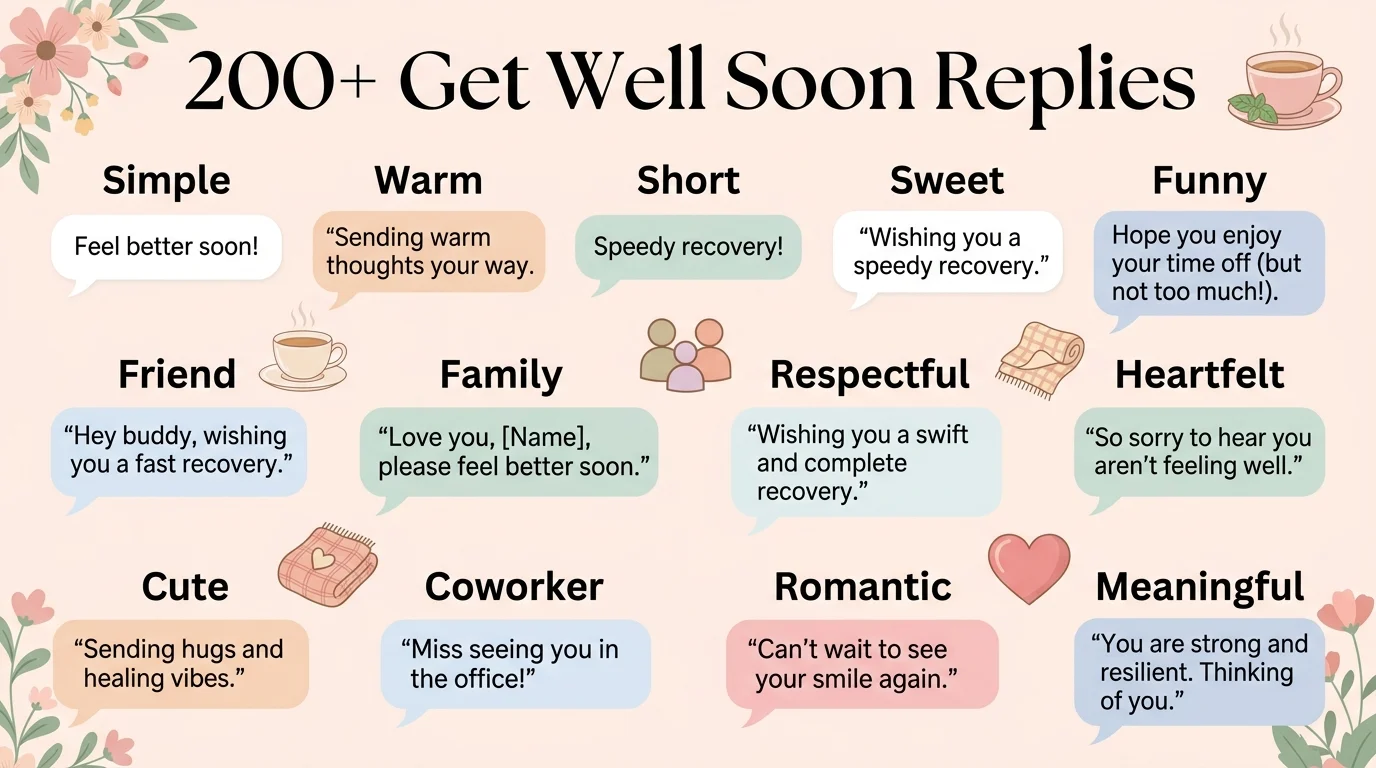
Quick Ans: If someone tells you “Get well soon,” a simple “Thank you so much!” is always a good response. However, you can make your reply more personal depending on who sent the message and how close you are. For example, you could say, “Thank you! I really appreciate you checking on me.” If a friend is being playful, you can answer with something funny. Meanwhile, a family member may appreciate a warmer response, while a coworker may prefer something polite and professional. Therefore, this guide has plenty of Get well soon replies for texts, social media, friends, family, coworkers, partners, and everyday conversations. Simply choose the tone that fits your situation and send it as it is.
Being sick, recovering from an injury, or simply having a rough day can make a kind message feel surprisingly meaningful. When someone says “Get well soon,” they are showing that they care about how you are doing. Naturally, you will want to respond, but finding the right words is not always easy.
Sometimes, a quick “Thanks!” is enough. On the other hand, you might want to sound warm, funny, grateful, cute, or deeply appreciative. Likewise, the ideal response can change depending on whether the message comes from a best friend, parent, coworker, partner, teacher, or someone you are getting to know.
Fortunately, you do not need to overthink it. A good response simply acknowledges their kindness and, when appropriate, lets them know that their message meant something to you. Moreover, you can add humor if the relationship allows it.
So, whether you need a short text, a heartfelt message, or a funny comeback, these Get well soon replies make it easy to answer naturally.
Simple Get Well Soon Replies
Sometimes, simple really is better. After all, when you are not feeling your best, you probably do not want to compose a paragraph just to answer a kind message. These replies are short, natural, and suitable for almost anyone.
- Thank you so much!
Use this when you want to acknowledge their kindness quickly.
Meaning: You appreciate their concern and good wishes. - Thank you, I really appreciate it!
Use this when you want to sound a little warmer.
Meaning: Their message genuinely means something to you. - Thanks! I hope to be back on my feet soon.
Use this when you are recovering and want to mention it.
Meaning: You are hopeful about feeling better soon. - Thank you! That means a lot.
Use this when their message made you feel supported.
Meaning: You value their thoughtfulness. - Thanks for checking on me!
Use this when they have been keeping up with your recovery.
Meaning: You appreciate their continued concern. - Thank you! I’m taking it easy for now.
Use this when you want to give a small update.
Meaning: You are resting and allowing yourself time to recover. - Thanks so much. I appreciate the kind words.
Use this for a polite and friendly response.
Meaning: You are grateful for their encouragement. - Thank you! Hopefully, I’ll feel better soon.
Use this when you want to sound positive.
Meaning: You are optimistic about recovering. - Thanks! I’m doing my best to recover.
Use this when you are still feeling unwell.
Meaning: You are acknowledging their wishes while giving a brief update. - Thank you for your kind message!
Use this when you want a polished response.
Meaning: You appreciate their thoughtful communication. - Thanks! I really needed to hear that.
Use this when their words lifted your mood.
Meaning: Their support was comforting. - Thank you, I’m hoping for a speedy recovery too!
Use this when you want to respond positively.
Meaning: You share their hope that you will recover quickly.
Warm Get Well Soon Replies
A warm response can make the conversation feel more personal. Therefore, these messages are especially useful when someone genuinely cares about you and you want them to know that you noticed.
- Thank you so much for your kind wishes. I truly appreciate you thinking of me.
Use this when you want to express sincere gratitude.
Meaning: You appreciate both the message and the thought behind it. - Thank you! Your message really brightened my day.
Use this when their message made you feel better emotionally.
Meaning: Their kindness had a positive effect on you. - That’s so kind of you. Thank you for checking in on me.
Use this when they personally reached out.
Meaning: You value their effort and concern. - Thank you! I’m resting and taking things one day at a time.
Use this when you want to give a gentle recovery update.
Meaning: You are focusing patiently on getting better. - I really appreciate your thoughtful message. Hopefully, I’ll be feeling like myself again soon.
Use this when you want a sincere and hopeful reply.
Meaning: You are grateful and optimistic about recovery. - Thank you for caring. It means more than you know.
Use this for someone who matters to you.
Meaning: Their concern has emotional value. - Thanks so much! I’m taking plenty of rest and hoping for better days ahead.
Use this when you want to sound positive.
Meaning: You are focusing on recovery and improvement. - Your kind words mean a lot right now. Thank you!
Use this when you are having a difficult recovery.
Meaning: Their support is comforting during a challenging moment. - Thank you! I’m lucky to have thoughtful people checking on me.
Use this for friends or family.
Meaning: You are expressing gratitude for their support. - That means so much to me. Thank you for being so thoughtful.
Use this when you want a heartfelt response.
Meaning: You deeply appreciate their kindness. - Thank you! I’m resting, recovering, and trying to stay positive.
Use this when you want to share your current mindset.
Meaning: You are actively focusing on getting better. - Thanks for the sweet message. I really appreciate your support.
Use this when someone sends encouragement.
Meaning: You value their emotional support.
Short Get Well Soon Replies
When you are tired or simply want to keep the conversation brief, short replies are perfect. In addition, these work well for comments, DMs, texts, and quick social media responses.
- Thank you! ❤️
Use this when you want a tiny but warm reply.
Meaning: You appreciate their kindness. - Thanks so much!
Use this for an everyday response.
Meaning: You are grateful for their wishes. - I appreciate it!
Use this when you want something concise.
Meaning: You value their concern. - Thank you, truly!
Use this when you want brief sincerity.
Meaning: You genuinely appreciate their message. - Thanks! Means a lot.
Use this for a casual but heartfelt response.
Meaning: Their words matter to you. - Thank you! Hopefully soon.
Use this when you are looking forward to recovering.
Meaning: You hope to feel better shortly. - Thanks for caring!
Use this with someone who has shown concern.
Meaning: You appreciate their thoughtfulness. - Thank you! I’m resting.
Use this when you want to acknowledge their wishes and update them.
Meaning: You are taking time to recover. - Thanks, I needed that!
Use this when their message cheered you up.
Meaning: Their encouragement helped emotionally. - Thank you! I’m hanging in there.
Use this when recovery is still difficult.
Meaning: You are managing despite feeling unwell. - Thanks! Feeling hopeful.
Use this when you want to sound positive.
Meaning: You expect things to improve. - Thank you, friend!
Use this with someone you know well.
Meaning: You are adding personal warmth to your gratitude.
Sweet Get Well Soon Replies
Sweet replies are useful when you want to sound gentle and appreciative. Similarly, they work particularly well with people who have made an effort to comfort you.
- Aww, thank you! That was really sweet of you.
Use this when someone sends an especially caring message.
Meaning: You are touched by their kindness. - Thank you! Sending you a big thank-you right back.
Use this when you want a cheerful response.
Meaning: You are returning their positive energy. - That’s so sweet of you. Thank you for thinking of me!
Use this with a friend or loved one.
Meaning: You appreciate being remembered. - Thank you! Your message gave me a little boost today.
Use this when their words improved your mood.
Meaning: Their kindness encouraged you. - You’re so thoughtful. Thank you!
Use this when someone goes out of their way to check on you.
Meaning: You admire their consideration. - Thank you for the lovely wishes. I’m hoping to feel better soon!
Use this when you want to sound cheerful.
Meaning: You appreciate their wishes and share the hope of recovery. - That made me smile. Thank you so much!
Use this when their message cheered you up.
Meaning: Their kindness brought you happiness. - Thank you! I’m definitely saving that kindness for later.
Use this for a playful but sweet response.
Meaning: You are jokingly saying you will remember their kindness. - You’re making recovery feel a little easier. Thank you!
Use this with someone who has been supportive.
Meaning: Their emotional support is helping you. - Thank you! Sending you lots of appreciation.
Use this when you want something affectionate but simple.
Meaning: You are returning their kindness with gratitude. - Your message was exactly the little kindness I needed today.
Use this when you want an emotional response.
Meaning: Their message arrived at a meaningful time. - Thank you for being so caring. It means everything right now.
Use this with someone close to you.
Meaning: Their support feels especially important during your recovery.
Funny Get Well Soon Replies
If you and the sender joke around, humor can make the conversation lighter. However, keep the joke appropriate, especially if the illness or situation is serious.
- Thanks! I’m accepting snacks as part of my treatment plan.
Use this with a friend who enjoys food jokes.
Meaning: You are playfully asking for snacks while recovering. - Thank you! I’ll be back in business eventually.
Use this when you want to joke about recovery.
Meaning: You expect to return to normal soon. - Thanks! My bed and I are currently in a committed relationship.
Use this when you are spending lots of time resting.
Meaning: You are humorously describing your extended bed rest. - Thank you! I’m taking my recovery very seriously, especially the sleeping part.
Use this with someone who knows your sense of humor.
Meaning: You are joking about getting plenty of sleep. - Thanks! Apparently, being horizontal is my main job now.
Use this when you are resting a lot.
Meaning: You are making light of your recovery routine. - I appreciate it! I’m currently accepting sympathy and soup.
Use this with a close friend or relative.
Meaning: You are jokingly asking for comfort and food. - Thanks! I’ll try to recover before my body files a complaint.
Use this when you want playful humor.
Meaning: You are joking about your body needing rest. - Thank you! I’m one blanket and three naps away from greatness.
Use this for a lighthearted message.
Meaning: You are joking about your recovery routine. - Thanks! My current schedule is sleep, snacks, repeat.
Use this when you want a funny short reply.
Meaning: You are playfully describing your routine. - Thank you! I’m recovering with the dedication of a professional napper.
Use this when sleep is a major part of your recovery.
Meaning: You are making your rest sound like a serious profession. - Thanks! I’ll let you know when I’m officially operational again.
Use this with a friend or coworker.
Meaning: You are jokingly comparing yourself to a machine being repaired. - Thank you! My only appointment today is with my pillow.
Use this when you are taking a full rest day.
Meaning: You are humorously saying that rest is your priority.
Get Well Soon Replies For Friends
Friends usually give you room to be casual and playful. Therefore, you can mix gratitude with humor, affection, or a small update.
- Thanks, bestie! I’m resting and hoping to bounce back soon.
Use this for a close friend.
Meaning: You appreciate their concern and expect to recover. - Thank you! Your message definitely made me feel a little better.
Use this when their text lifted your mood.
Meaning: Their support helped emotionally. - Thanks for checking on me! I owe you one.
Use this when a friend has shown extra care.
Meaning: You appreciate their support and intend to return the kindness. - Thank you, friend! I’m taking it easy for now.
Use this when you want to give a simple update.
Meaning: You are resting and focusing on recovery. - Thanks! I’ll be back to annoying you soon.
Use this for a playful friendship dynamic.
Meaning: You are joking that you will return to your usual self. - Aww, thank you! You’re the sweetest.
Use this when your friend sends a caring message.
Meaning: You are showing affection and appreciation. - Thanks! I’m recovering one nap at a time.
Use this when you want a lighthearted update.
Meaning: You are humorously emphasizing rest. - Thank you! I appreciate you checking in on me.
Use this when your friend has been consistently supportive.
Meaning: You value their effort and friendship. - Thanks, buddy! Hopefully, I’ll be back soon.
Use this for a casual friend.
Meaning: You hope to return to normal quickly. - You’re awesome for checking on me. Thank you!
Use this when you want a warm friendship reply.
Meaning: You appreciate their thoughtfulness. - Thanks! Keep sending good vibes, because apparently I need them.
Use this when you want playful humor.
Meaning: You are joking while acknowledging that encouragement helps. - Thank you! Once I’m better, we’re celebrating my recovery properly.
Use this when you share plans with a friend.
Meaning: You are looking forward to seeing them again.
Get Well Soon Replies For Family
Family members often deserve a little extra warmth. In addition, they may appreciate a response that reassures them that you are resting and taking care of yourself.
- Thank you! I really appreciate you checking on me.
Use this with a caring family member.
Meaning: You are grateful for their concern. - Thanks so much. I’m resting and taking good care of myself.
Use this when relatives are worried about you.
Meaning: You are reassuring them that you are recovering responsibly. - Thank you for always caring about me. It means so much.
Use this for a close relative.
Meaning: You appreciate their consistent support. - I’m doing okay and getting plenty of rest. Thank you for asking!
Use this when family members want an update.
Meaning: You are reassuring them about your condition. - Thank you! Your support makes everything feel a little easier.
Use this when you want to express emotional appreciation.
Meaning: Their presence helps you through recovery. - Thanks! I’ll be taking it easy and listening to my body.
Use this when relatives are encouraging you to rest.
Meaning: You are reassuring them that you will prioritize recovery. - Thank you for the sweet wishes. I’m hoping to feel much better soon.
Use this for a warm family exchange.
Meaning: You appreciate their wishes and remain hopeful. - You’re so thoughtful. Thank you for checking in!
Use this when a relative reaches out.
Meaning: You appreciate their effort. - Thanks! Sending you a big hug right back.
Use this for an affectionate family conversation.
Meaning: You are returning their warmth. - Thank you. Knowing you’re thinking of me makes me feel better already.
Use this when their support is especially comforting.
Meaning: Their care provides emotional comfort. - Thanks for being there for me. I really appreciate it.
Use this when a family member has been supportive.
Meaning: You value their presence during a difficult time. - Thank you! I’ll keep resting and hopefully be back to normal soon.
Use this when family members are concerned about your recovery.
Meaning: You are reassuring them that you are taking recovery seriously.
Respectful Get Well Soon Replies
When a teacher, manager, older relative, neighbor, client, or professional contact sends good wishes, a respectful response is usually appropriate. Still, it can sound warm rather than overly formal.
- Thank you very much for your kind wishes.
Use this in a formal conversation.
Meaning: You sincerely appreciate their concern. - Thank you for taking the time to check on me. I truly appreciate it.
Use this when someone personally reaches out.
Meaning: You value their effort and thoughtfulness. - I sincerely appreciate your kind message. Thank you.
Use this for a professional contact.
Meaning: You are expressing formal gratitude. - Thank you. I’m taking some time to rest and recover.
Use this when you want to give a brief update.
Meaning: You are prioritizing recovery. - Thank you for your thoughtful wishes. I hope to be feeling better soon.
Use this for a polished response.
Meaning: You appreciate their message and remain hopeful. - Your kind words are greatly appreciated. Thank you.
Use this when you want a formal tone.
Meaning: You are acknowledging their support respectfully. - Thank you very much. I appreciate your concern and encouragement.
Use this when someone has offered ongoing support.
Meaning: You value both their concern and encouragement. - Thank you for reaching out. I’m focusing on getting some much-needed rest.
Use this for a professional contact.
Meaning: You are taking appropriate time to recover. - I’m grateful for your thoughtful message. Thank you again.
Use this when you want a courteous response.
Meaning: You sincerely value their kindness. - Thank you for your warm wishes. Hopefully, I’ll be back to normal soon.
Use this when you want to reassure someone professionally.
Meaning: You expect your recovery to progress. - Many thanks for your kind words and support.
Use this in an email or formal message.
Meaning: You are expressing sincere appreciation. - Thank you. Your thoughtful wishes are greatly appreciated.
Use this when you want a concise professional reply.
Meaning: You respect and value their concern.
Heartfelt Get Well Soon Replies
Sometimes, a person says something so kind that a basic “thanks” does not feel sufficient. In that case, a heartfelt response can show how much their support means to you.
- Thank you from the bottom of my heart. Your kindness means so much to me.
Use this for someone who has deeply supported you.
Meaning: You feel genuinely touched by their care. - Your message came at exactly the right time. Thank you for being so thoughtful.
Use this when you were having a difficult day.
Meaning: Their support arrived when you needed it. - Thank you for reminding me that I’m surrounded by people who care.
Use this when their message made you feel supported.
Meaning: Their kindness strengthened your sense of connection. - I truly appreciate your concern. Having people like you around makes difficult days easier.
Use this for someone important to you.
Meaning: Their presence provides emotional comfort. - Thank you for your beautiful message. I’ll remember your kindness while I recover.
Use this when you want to acknowledge lasting appreciation.
Meaning: Their support has made a meaningful impression. - Your words brought me comfort today. Thank you for thinking of me.
Use this when their message helped emotionally.
Meaning: Their kindness provided reassurance. - Thank you for being there when I’m not feeling my best. It means more than I can explain.
Use this for a close friend or family member.
Meaning: You deeply value their support. - I’m genuinely grateful for your kind wishes. Thank you for making me feel cared for.
Use this when someone has shown meaningful concern.
Meaning: Their kindness made you feel supported. - Thank you. Your encouragement gives me another reason to stay positive.
Use this when recovery feels challenging.
Meaning: Their words encourage optimism. - I appreciate every kind word and thoughtful message. Thank you for being so caring.
Use this when several people have supported you.
Meaning: You recognize and value their kindness. - Thank you for making a difficult moment feel a little lighter. I’m truly grateful.
Use this when someone helped improve your mood.
Meaning: Their support reduced the emotional weight of the situation. - Your kindness means everything right now. Thank you for being there for me.
Use this for someone especially close.
Meaning: Their support feels deeply important during recovery.
Cute Get Well Soon Replies
Cute replies can keep the mood positive while still showing appreciation. Likewise, they work nicely in casual texts and social media messages.
- Aww, thank you! You just made my sick day a little sweeter.
Use this when someone sends a cute message.
Meaning: Their kindness improved your mood. - Thank you! Sending you a virtual hug back. 🤗
Use this with a close friend.
Meaning: You are returning their affection. - You’re too sweet! Thank you for checking on me.
Use this when someone is being especially caring.
Meaning: You appreciate their tenderness. - Thank you! I’m resting like it’s my full-time job.
Use this for a playful cute reply.
Meaning: You are joking about taking recovery seriously. - Aww, that means a lot! Thank you. ❤️
Use this when their message touched you.
Meaning: You are showing affection and gratitude. - Thank you! Your message brought a little sunshine to my day.
Use this when their text cheered you up.
Meaning: Their kindness made you happier. - You’re officially on my list of favorite people today. Thank you!
Use this with someone you joke around with.
Meaning: You are playfully rewarding their kindness. - Thanks! I’m accepting good vibes and cozy blankets right now.
Use this when you want a cute response.
Meaning: You are joking about what helps you feel better. - Thank you for being so lovely! I appreciate you.
Use this with someone close.
Meaning: You value their kindness and presence. - That was adorable. Thank you for thinking of me!
Use this when the message was especially sweet.
Meaning: Their thoughtfulness made you smile. - Thank you! I’m sending double the good vibes back. ✨
Use this for a cheerful social reply.
Meaning: You are playfully returning their positive energy. - You just earned a giant thank-you from me.
Use this when you want something cute and casual.
Meaning: You are emphasizing your appreciation.
Get Well Soon Replies For Coworkers
Workplace messages usually call for a balance between friendliness and professionalism. Therefore, these replies are warm without becoming too personal.
- Thank you! I really appreciate your kind wishes.
Use this when a coworker checks on you.
Meaning: You appreciate their professional kindness. - Thanks for checking in. I’m taking some time to rest and recover.
Use this when you want to give a brief update.
Meaning: You are prioritizing recovery. - Thank you! Hopefully, I’ll be back at work soon.
Use this when you expect to return shortly.
Meaning: You are optimistic about getting back to your routine. - I appreciate the kind message. Thank you!
Use this for a simple workplace reply.
Meaning: You are politely acknowledging their concern. - Thanks so much! I’m resting up and hoping to feel better soon.
Use this with a friendly coworker.
Meaning: You are grateful and optimistic. - Thank you for checking on me. That was very thoughtful.
Use this when a coworker personally reaches out.
Meaning: You appreciate their consideration. - Thanks! I’m doing my best to recover and get some rest.
Use this when you want to keep the update simple.
Meaning: You are focusing on getting better. - Thank you! I appreciate everyone’s support while I’m away.
Use this when several coworkers have contacted you.
Meaning: You are grateful for workplace support. - Thanks for the good wishes! Hopefully, I’ll be back soon.
Use this for a casual work chat.
Meaning: You hope to return to work after recovering. - Thank you. I’m taking things slowly and focusing on recovery.
Use this when you need more time away.
Meaning: You are calmly explaining your current priority. - Many thanks! I really appreciate you thinking of me.
Use this when you want a polished reply.
Meaning: You value their thoughtfulness. - Thanks! I’ll be back to my usual routine when I’m feeling better.
Use this when you want to reassure coworkers.
Meaning: You expect to resume normal activities after recovery.
Get Well Soon Replies For Someone Special
When the message comes from someone special, you may want your response to sound more affectionate. In addition, a little warmth can make your gratitude feel much more personal.
- Thank you, sweetheart. Your message means so much to me.
Use this for a romantic partner or someone very close.
Meaning: You deeply appreciate their care. - You always know how to make me feel better. Thank you.
Use this when their message comforts you.
Meaning: Their support has a special emotional effect. - Thank you for taking care of my heart while I take care of my health.
Use this for a romantic and affectionate message.
Meaning: Their emotional support matters during your recovery. - Aww, thank you! Having you check on me makes everything feel easier.
Use this for someone you love.
Meaning: Their presence gives you comfort. - Thank you, love. I’m resting, so hopefully I’ll be back to myself soon.
Use this when you want to reassure them.
Meaning: You are recovering while appreciating their concern. - Your message made me smile, which is excellent medicine. Thank you!
Use this when you want romantic humor.
Meaning: Their kindness improved your mood. - Thank you for being so caring. I’m really lucky to have you.
Use this for a close romantic relationship.
Meaning: You feel grateful for their presence. - I appreciate you more than you know. Thank you for checking on me.
Use this when you want a sincere romantic response.
Meaning: Their care has made a strong impression. - Thank you! Your love and support are helping me get through this.
Use this for someone emotionally close.
Meaning: Their affection provides meaningful encouragement. - I’ll get better soon, especially with you cheering me on.
Use this when you want a playful affectionate reply.
Meaning: Their encouragement motivates you. - Thank you for making me feel cared for even when I’m feeling awful.
Use this when someone has been consistently supportive.
Meaning: Their care remains meaningful during difficult moments. - Your message was exactly what I needed. Thank you for always being there.
Use this for someone deeply important to you.
Meaning: You are expressing gratitude for their dependable support.
Meaningful Get Well Soon Replies
A meaningful reply does more than say thank you. Instead, it recognizes the emotional value of someone’s kindness and shows that their message mattered.
- Thank you for reminding me that kindness can make even difficult days feel lighter.
Use this when you want a reflective response.
Meaning: Their kindness helped you emotionally. - I truly appreciate your wishes. Small acts of kindness like this mean a lot during recovery.
Use this when someone sends a thoughtful message.
Meaning: You value their effort and support. - Thank you for thinking of me. Your words are a reminder that I’m not going through this alone.
Use this when you feel supported.
Meaning: Their message made you feel connected. - Your encouragement means more than you probably realize. Thank you for being so thoughtful.
Use this when their message had a strong emotional effect.
Meaning: Their support has significant value to you. - Thank you. I’m grateful for the people who take a moment to send kindness when it matters.
Use this for a thoughtful response.
Meaning: You appreciate their willingness to show care. - I appreciate your warm wishes and the positivity behind them. Thank you sincerely.
Use this when you want something polished and meaningful.
Meaning: You value both their words and their intention. - Thank you for your encouragement. I’m taking recovery one day at a time and staying hopeful.
Use this when you want to share your mindset.
Meaning: You are patiently working toward feeling better. - Your message reminded me to focus on the good people around me. Thank you.
Use this when you want an appreciative reflection.
Meaning: Their kindness helped you notice your support system. - Thank you for caring enough to reach out. I will always appreciate that.
Use this when someone made a special effort.
Meaning: You value their thoughtfulness beyond the moment. - I’m grateful for your kind words. They brought comfort when I needed it most.
Use this when their timing was meaningful.
Meaning: Their message provided emotional comfort. - Thank you for being part of the encouragement that is helping me move forward.
Use this when you are recovering from a difficult situation.
Meaning: Their support contributes to your positive mindset. - Your kindness will stay with me long after I’m feeling better. Thank you sincerely.
Use this for a deeply heartfelt response.
Meaning: You believe their support made a lasting impression.
FAQs About Get Well Soon Replies
What is the best reply to “Get well soon”?
The easiest response is “Thank you so much!” However, if you want to sound warmer, you can say, “Thank you! I really appreciate you thinking of me.” The best option depends on your relationship with the person.
Can I just say “Thank you” to get well soon?
Yes. In fact, a simple “Thank you” is completely appropriate. If you want to make it more personal, add a short sentence such as “That means a lot.”
How do I reply to “Get well soon” from a friend?
With a friend, you can be casual. For example, say, “Thanks! I’ll be back to annoying you soon.” Alternatively, you can keep it sincere with “Thanks for checking on me. I really appreciate it.”
What should I say when my crush says “Get well soon”?
If you want to keep things sweet, try “Thank you! Your message actually made me feel a little better.” This shows appreciation while leaving room for the conversation to continue.
How do I respond to “Get well soon” from my boss?
A professional response works best. For example, “Thank you very much. I appreciate your kind wishes and support.” You can also briefly mention that you are resting and recovering.
What is a funny reply to “Get well soon”?
You could say, “Thanks! I’m currently accepting snacks, sympathy, and premium blankets.” This works well when the person already knows your sense of humor.
How do I reply to get well soon wishes from family?
A warm response is ideal. You could say, “Thank you for checking on me. I’m resting and taking good care of myself.” This both shows gratitude and reassures them.
Can I use emojis in a get well soon reply?
Yes, especially in casual conversations. A heart, smile, hug, or sparkle can add warmth. However, if you are replying to a professional contact, keeping the message simple may be more appropriate.
How do I respond when many people wish me well?
You can send a group response such as “Thank you everyone for the kind messages and good wishes. I really appreciate all the support.” This lets everyone know their kindness was noticed.
What is a heartfelt response to “Get well soon”?
Try “Thank you from the bottom of my heart. Your kindness means so much to me right now.” This works when you genuinely feel touched by someone’s concern.
Should I tell someone how sick I am?
Only if you feel comfortable doing so. You do not need to provide personal details just because someone wished you well. Instead, a simple “Thank you, I’m resting and recovering” is enough.
How can I make my reply sound more personal?
Mention something specific about their message or support. For example, you could say, “Thank you for checking on me yesterday too. I really appreciate you being there.” As a result, your response will feel more genuine than a generic thank-you.
Conclusion
Finding the right Get well soon replies does not have to be difficult. In most situations, a simple “Thank you!” is already enough. However, when someone has gone out of their way to show concern, a warmer response can make your gratitude clearer. Likewise, friends may appreciate humor, family members may value heartfelt reassurance, and coworkers may prefer a professional tone. Therefore, think about who sent the message and choose words that naturally match your relationship. Most importantly, do not feel pressured to write a perfect response. A sincere thank-you, a small update, or even a simple emoji can show that you appreciate the kindness. After all, when someone takes a moment to wish you well, acknowledging that kindness is what matters most.

Emma Writes is a passionate content writer at ResponsCraft.com, creating practical, well-researched articles that help readers make informed decisions. She enjoys turning complex topics into clear, engaging and easy-to-follow content.