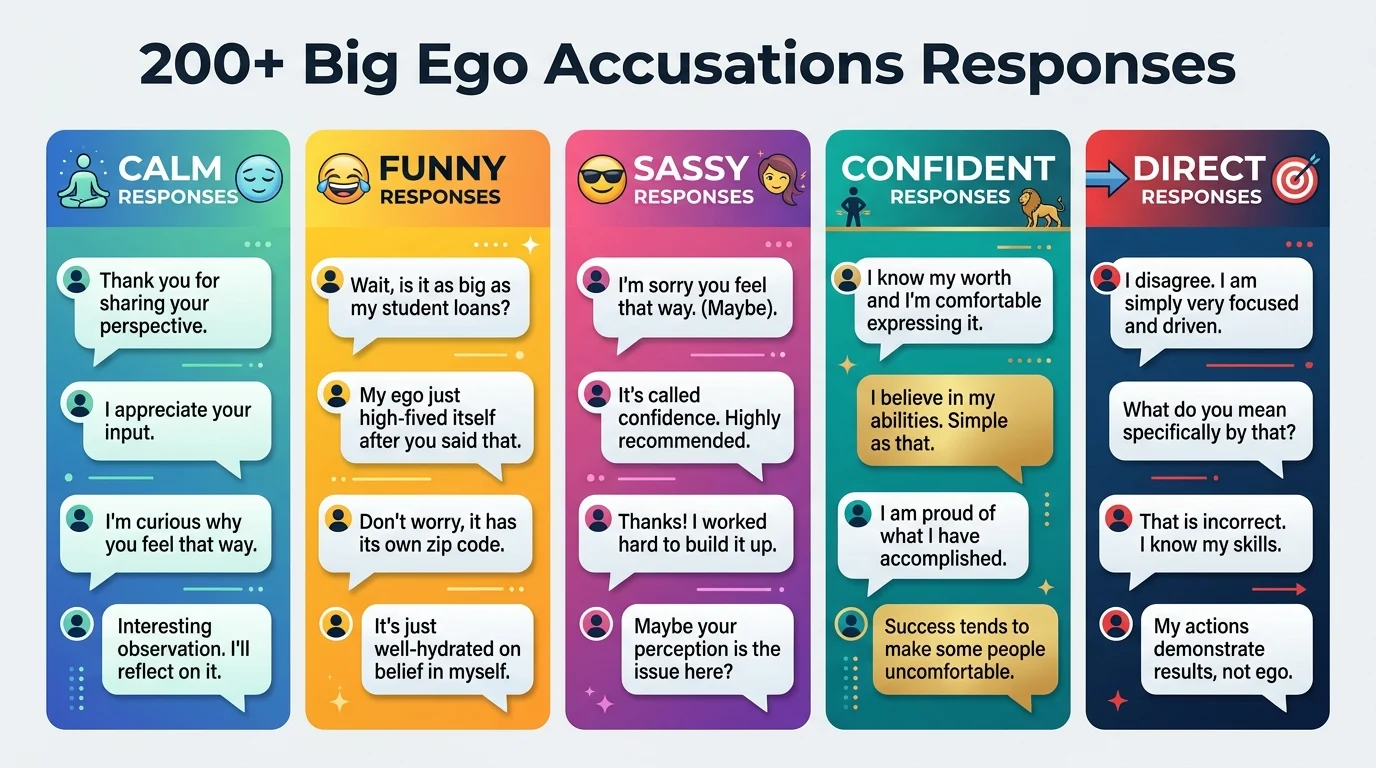
Quick Ans: When someone says you have a big ego, your response can depend on the mood, relationship, and what you actually want to communicate. For example, you can stay calm with, “Confidence and ego are not always the same thing.” If you want humor, try, “My ego has excellent taste, apparently.” Alternatively, if the accusation feels unfair, you can say, “You can call it ego, but I call it knowing my worth.” The key is to avoid turning a small comment into a huge argument. Instead, choose a response that matches the situation. Whether you want something funny, confident, respectful, flirty, sarcastic, short, or thoughtful, the following Big ego accusations responses are designed to sound natural in texts, conversations, comments, and social media replies.
Being told you have a big ego can catch you off guard, especially when you do not see yourself that way. Sometimes the person is teasing you. Other times, they may genuinely think you are acting overly confident. Because of that, your response can completely change the direction of the conversation.
You do not always have to defend yourself immediately. Instead, you can pause, read the tone, and decide what kind of energy you want to bring back. For instance, a playful accusation from a friend might deserve a funny comeback. On the other hand, a serious comment from someone close to you may be worth answering thoughtfully.
Fortunately, there are plenty of ways to respond without sounding defensive. You can acknowledge the joke, explain your confidence, challenge the assumption, or simply laugh it off. Moreover, a good response can show that you understand the difference between confidence and arrogance.
So, whether someone texts “You have such a big ego,” says “Your ego is huge,” or jokingly calls you full of yourself, these replies give you plenty of options.
Calm Big Ego Accusations Responses
Sometimes the best response is calm and mature. Instead of arguing, you can explain your perspective without making the conversation more dramatic.
- I prefer to call it confidence.
Use this when you want to calmly distinguish confidence from ego.
Meaning: You believe self-assurance does not automatically mean arrogance. - Maybe we just see confidence differently.
Use this when you disagree without wanting an argument.
Meaning: You recognize that people interpret confidence differently. - I hear you, but I see myself differently.
Use this when someone makes a serious accusation.
Meaning: You acknowledge their opinion without accepting it. - Confidence does not always equal ego.
Use this when you want a straightforward response.
Meaning: You are pointing out an important distinction. - I am comfortable with who I am.
Use this when someone mistakes self-assurance for arrogance.
Meaning: You are explaining that comfort with yourself is not necessarily ego. - I understand why you might see it that way.
Use this when you want to remain composed.
Meaning: You acknowledge their perspective without agreeing. - I would rather be confident than constantly doubt myself.
Use this when the accusation concerns your self-belief.
Meaning: You value healthy confidence over insecurity. - If I crossed a line, tell me directly.
Use this when you want useful feedback.
Meaning: You are open to correcting genuinely arrogant behavior. - I am confident, but I am still learning.
Use this when you want balance.
Meaning: You can believe in yourself while remaining humble. - You are entitled to your opinion about me.
Use this when you do not want a debate.
Meaning: You are choosing not to argue about someone’s perception. - I do not think highly of myself at everyone else’s expense.
Use this when the accusation feels unfair.
Meaning: You distinguish self-respect from putting others down. - I appreciate the honesty, even if I disagree.
Use this when someone gives direct criticism.
Meaning: You can accept feedback without accepting the conclusion.
Funny Big Ego Accusations Responses
If the person is clearly joking, humor can keep the exchange light. Therefore, these replies work especially well with friends, siblings, and playful conversations.
- My ego has entered the chat.
Use this when you want a quick joke.
Meaning: You are playfully admitting the accusation. - Big ego? I prefer premium confidence.
Use this when you want a clever comeback.
Meaning: You are turning the criticism into a joke. - Someone has to believe in me.
Use this when teasing a friend.
Meaning: You humorously defend your confidence. - My ego pays rent, so it stays.
Use this when you want absurd humor.
Meaning: You are pretending your ego is a permanent roommate. - I call it excellent self-awareness.
Use this when the conversation is playful.
Meaning: You are jokingly reframing ego as self-knowledge. - Sorry, confidence looks good on me.
Use this when you want a cheeky response.
Meaning: You are playfully owning your confidence. - My ego and I are currently negotiating.
Use this for a silly text reply.
Meaning: You are treating your ego like a separate character. - I would shrink it, but it has plans.
Use this when someone teases you about confidence.
Meaning: You are humorously refusing to apologize for yourself. - That sounds like a compliment with extra steps.
Use this when you want playful confidence.
Meaning: You are pretending the accusation is actually praise. - My confidence simply has a strong personality.
Use this for a clever response.
Meaning: You are joking about having noticeable confidence. - The ego department is closed today.
Use this when you want a random funny answer.
Meaning: You are playfully dismissing the accusation. - Please submit all ego complaints in writing.
Use this when you want workplace-style humor.
Meaning: You are making the accusation sound like a formal complaint.
Short Big Ego Accusations Responses
Short replies can be surprisingly effective. In fact, you often do not need a paragraph when one sentence makes your point.
- Confident, not arrogant.
Use this for a direct response.
Meaning: You clearly distinguish your attitude from arrogance. - I call it self-belief.
Use this when you want a positive tone.
Meaning: You see your confidence as healthy self-belief. - Maybe. Maybe not.
Use this when you want playful ambiguity.
Meaning: You refuse to take the accusation too seriously. - I know my worth.
Use this when you want confident energy.
Meaning: You value yourself without needing approval. - That is your perspective.
Use this when you want emotional distance.
Meaning: You acknowledge their opinion without arguing. - Confidence bothers you?
Use this when you want a pointed comeback.
Meaning: You suggest the issue may be their reaction to your confidence. - Noted. Moving on.
Use this when you do not want a debate.
Meaning: You acknowledge the comment and end the discussion. - I can live with that.
Use this when you are unbothered.
Meaning: You are comfortable with how they perceive you. - Fair enough.
Use this when you want to keep things relaxed.
Meaning: You accept that they have a different view. - Confidence has entered the room.
Use this as a playful text.
Meaning: You are jokingly owning your self-assurance. - I have heard worse.
Use this when you are unfazed.
Meaning: The accusation does not seriously affect you. - Still me, though.
Use this when you want casual confidence.
Meaning: You are comfortable remaining yourself.
Confident Big Ego Accusations Responses
When you genuinely believe in yourself, there is nothing wrong with explaining that confidence does not automatically equal arrogance. These responses communicate self-respect without unnecessarily attacking the other person.
- I know what I bring to the table.
Use this when someone questions your confidence.
Meaning: You understand your strengths and value. - Knowing my worth is not an insult.
Use this when the accusation feels unfair.
Meaning: Self-respect should not automatically be treated as arrogance. - I am proud of myself, and that is okay.
Use this when discussing achievements.
Meaning: You are comfortable recognizing your own progress. - I worked for this confidence.
Use this when your confidence comes from experience.
Meaning: Your self-belief developed through effort and growth. - I do not need to pretend I am less capable.
Use this when someone expects unnecessary modesty.
Meaning: You refuse to minimize your abilities. - Confidence is part of who I am.
Use this when you want a simple explanation.
Meaning: Self-assurance is natural for you. - I can be confident and still respect others.
Use this when someone equates confidence with disrespect.
Meaning: You believe confidence and humility can coexist. - I know my strengths without denying yours.
Use this during a serious conversation.
Meaning: Your confidence does not require diminishing anyone else. - I am comfortable celebrating my own progress.
Use this when discussing achievements.
Meaning: You believe recognizing growth is healthy. - I refuse to apologize for believing in myself.
Use this when someone repeatedly criticizes your confidence.
Meaning: You will not feel guilty for having self-belief. - Self-respect can look confident from the outside.
Use this when explaining your behavior.
Meaning: What someone calls ego may simply be self-respect. - I know myself, and I am good with that.
Use this when you want a calm ending.
Meaning: You are comfortable with your identity and choices.
Sassy Big Ego Accusations Responses
A little attitude can work when someone is deliberately provoking you. However, keep these responses playful if you want the conversation to remain friendly.
- You noticed? I must be doing something right.
Use this when someone keeps teasing you.
Meaning: You turn their criticism into playful attention. - Thanks for keeping track of my confidence.
Use this when you want dry humor.
Meaning: You are teasing them for paying so much attention. - My confidence clearly made an impression.
Use this when someone comments repeatedly.
Meaning: You are joking about their focus on you. - I cannot help being comfortable with myself.
Use this when you want confident sass.
Meaning: You refuse to feel embarrassed about self-assurance. - At least I know who I am.
Use this when someone challenges your personality.
Meaning: You value self-knowledge and certainty. - You seem very interested in my ego.
Use this when they keep bringing it up.
Meaning: You are redirecting attention toward their repeated comments. - Maybe my confidence is just unforgettable.
Use this when you want playful arrogance.
Meaning: You exaggerate your confidence for comedic effect. - I will add your review to my collection.
Use this when you want a sarcastic response.
Meaning: You are jokingly treating their opinion like a customer review. - That is quite the detailed ego analysis.
Use this when their comment is overly serious.
Meaning: You are humorously exaggerating their observation. - Good thing I like my personality.
Use this when you want to stay confident.
Meaning: You are comfortable being yourself. - I promise my ego has excellent management.
Use this when you want playful sarcasm.
Meaning: You are pretending your ego is professionally controlled. - Do you want an autograph from the ego too?
Use this when teasing a close friend.
Meaning: You exaggerate your self-importance for humor.
Playful Big Ego Accusations Responses
Playful replies are useful when the accusation is clearly teasing. As a result, you can keep the conversation fun instead of making it unnecessarily serious.
- Only on weekdays.
Use this when you want random humor.
Meaning: You jokingly pretend your ego has a schedule. - It comes and goes.
Use this for a relaxed joke.
Meaning: You playfully avoid taking the accusation seriously. - My ego is on vacation.
Use this when you want a silly response.
Meaning: You jokingly claim you are temporarily free of ego. - We prefer the term confident around here.
Use this with a playful friend.
Meaning: You are jokingly rebranding the accusation. - It is a work in progress.
Use this when you want light self-deprecation.
Meaning: You admit there may be something to the joke without taking offense. - I blame the good lighting.
Use this when someone comments on your confidence.
Meaning: You jokingly attribute your attitude to looking good. - The confidence department is thriving.
Use this when you want a playful answer.
Meaning: You are celebrating your self-belief humorously. - Do not encourage my ego.
Use this when the other person compliments you.
Meaning: You are playfully pretending praise increases your ego. - It is my most loyal personality trait.
Use this when you want absurd humor.
Meaning: You treat your ego as a funny character trait. - I keep it for special occasions.
Use this when teasing someone.
Meaning: You exaggerate how selective your ego supposedly is. - You caught me on a confident day.
Use this for casual banter.
Meaning: You humorously explain your confident mood. - Today the ego has overtime.
Use this when you want a funny text.
Meaning: You are exaggerating your confidence for entertainment.
Big Ego Accusations Responses For Friends
Friends often tease each other about confidence, appearance, success, or personality. Therefore, the best response can be humorous rather than defensive.
- You know me too well.
Use this when a friend accurately jokes about you.
Meaning: You playfully admit they understand your personality. - You say that like it is a bad thing.
Use this when your friend teases you.
Meaning: You are turning criticism into playful confidence. - Friendship means supporting my ego.
Use this for obvious joking.
Meaning: You are humorously assigning your friend a supportive role. - You are just jealous of the confidence.
Use this when teasing a close friend.
Meaning: You are jokingly suggesting they admire your confidence. - I learned it from you.
Use this when you want to turn the joke around.
Meaning: You are playfully blaming your friend. - At least I keep life interesting.
Use this when your friend calls you full of yourself.
Meaning: You frame your personality as entertaining. - You love my confidence really.
Use this when the exchange is affectionate.
Meaning: You suggest their teasing actually shows affection. - Do not pretend you are not entertained.
Use this during friendly banter.
Meaning: You point out that your confidence makes things fun. - I provide the personality around here.
Use this when joking with a close friend.
Meaning: You exaggerate your importance for comedic effect. - Someone has to bring the confidence.
Use this when your friend complains playfully.
Meaning: You jokingly claim responsibility for the group’s confidence. - You would miss it if I changed.
Use this for affectionate teasing.
Meaning: You suggest your personality is part of what they enjoy. - Admit it, you like me this way.
Use this when joking with someone close.
Meaning: You turn their criticism into playful affection.
Big Ego Accusations Responses For Someone You Like
If someone you like says you have a big ego, you can turn the moment into flirtatious banter. However, keep the response aligned with the existing chemistry.
- Maybe you just bring out my confidence.
Use this when flirting with someone.
Meaning: You suggest they influence your confident side. - Only because you keep complimenting me.
Use this when they have been praising you.
Meaning: You playfully blame their attention for your confidence. - You seem to like my confidence.
Use this when there is obvious chemistry.
Meaning: You are teasing them about being attracted to your personality. - Maybe I am just trying to impress you.
Use this when you want direct flirting.
Meaning: You admit that their opinion matters to you. - If I have an ego, you keep feeding it.
Use this when they compliment you often.
Meaning: You are turning their attention into flirtation. - You noticed my confidence. Interesting.
Use this when you want subtle flirting.
Meaning: You are playfully highlighting their attention toward you. - I could tone it down, but where is the fun?
Use this when you want playful confidence.
Meaning: You are keeping the flirtation light. - Maybe I am confident because you are looking.
Use this when the conversation is flirty.
Meaning: You are connecting your confidence to their attention. - You like a little confidence, admit it.
Use this when you want teasing chemistry.
Meaning: You suggest they enjoy your self-assurance. - Careful, compliments will make it worse.
Use this after receiving praise.
Meaning: You are joking that their attention increases your confidence. - I was humble until you showed up.
Use this for playful flirting.
Meaning: You jokingly blame them for your confident mood. - Maybe my ego just wanted your attention.
Use this when you want a cheeky romantic response.
Meaning: You turn the accusation into an admission of interest.
Respectful Big Ego Accusations Responses
Not every accusation needs a clever comeback. Sometimes, especially with family, coworkers, or someone you respect, a measured response works better.
- I appreciate you telling me how it came across.
Use this when you genuinely want feedback.
Meaning: You are willing to hear how your behavior affected someone. - I will think about what you said.
Use this when the comment makes you reflect.
Meaning: You are considering whether there is truth in their criticism. - That was not my intention, but I understand.
Use this when your confidence was misunderstood.
Meaning: You explain your intent while acknowledging their experience. - I never want confidence to become disrespect.
Use this when you want a mature response.
Meaning: You recognize the importance of balancing confidence with consideration. - If I came across that way, I can understand your reaction.
Use this when you want to lower tension.
Meaning: You acknowledge their perspective without admitting wrongdoing. - I will make sure I am not overlooking other people’s feelings.
Use this when the discussion is serious.
Meaning: You show awareness of how confidence can affect others. - I value confidence, but I also value humility.
Use this when explaining your principles.
Meaning: You believe both qualities can exist together. - Thank you for being honest with me.
Use this when the person gives sincere feedback.
Meaning: You appreciate their willingness to communicate directly. - I would rather discuss the specific behavior than use labels.
Use this when the accusation feels vague.
Meaning: You want concrete feedback instead of a general judgment. - Tell me what made you feel that way.
Use this when you want clarification.
Meaning: You are inviting a more useful conversation. - I am open to hearing your perspective.
Use this when emotions are calm.
Meaning: You are willing to listen rather than argue. - We can disagree without making it personal.
Use this when the conversation becomes tense.
Meaning: You want respectful disagreement instead of conflict.
Sarcastic Big Ego Accusations Responses
Sarcasm can be funny when the relationship supports it. Nevertheless, use these carefully because tone can be misunderstood over text.
- Thank you for the psychological evaluation.
Use this when someone analyzes your personality dramatically.
Meaning: You are joking about their seriousness. - I will alert the ego committee immediately.
Use this for playful sarcasm.
Meaning: You pretend your ego requires official management. - Your feedback has been forwarded to management.
Use this when you want dry humor.
Meaning: You jokingly treat their accusation as a formal complaint. - I will schedule a meeting with my ego.
Use this when you want absurd sarcasm.
Meaning: You exaggerate the importance of their comment. - I appreciate the unsolicited personality review.
Use this when someone gives unwanted criticism.
Meaning: You sarcastically point out that their opinion was unrequested. - My ego will be devastated by this report.
Use this when you want playful exaggeration.
Meaning: You pretend the accusation has deeply affected you. - I will take that under dramatic consideration.
Use this for a silly sarcastic response.
Meaning: You are jokingly exaggerating how seriously you will consider it. - Please allow my ego time to recover.
Use this after a teasing accusation.
Meaning: You pretend the comment has wounded your pride. - I will add that to today’s list of concerns.
Use this when you want dry humor.
Meaning: You imply the accusation is not very important. - Breaking news: I have confidence.
Use this for an exaggerated social-media-style joke.
Meaning: You turn the accusation into humorous news. - My ego would like to thank you.
Use this when someone keeps talking about it.
Meaning: You jokingly suggest their attention is flattering. - I am sure my ego appreciates the attention.
Use this when you want a calm sarcastic reply.
Meaning: You imply their repeated comments are giving your ego attention.
Thoughtful Big Ego Accusations Responses
Sometimes the accusation makes you wonder whether your behavior really has been too self-focused. In that situation, thoughtful answers can open a productive conversation.
- Maybe there is something I should reflect on.
Use this when you want to consider the criticism.
Meaning: You are willing to examine your behavior honestly. - I do not want confidence to make me dismissive.
Use this when you value personal growth.
Meaning: You recognize that confidence should not reduce empathy. - I appreciate the perspective, and I will think about it.
Use this after serious feedback.
Meaning: You are taking their words seriously without reacting defensively. - Perhaps my confidence came across more strongly than I intended.
Use this when your tone may have been misunderstood.
Meaning: You recognize that intention and impact can differ. - I can believe in myself while staying open to correction.
Use this when discussing personal growth.
Meaning: Confidence and self-reflection can coexist. - I never want people to feel overlooked around me.
Use this when the accusation involves other people.
Meaning: You care about how your confidence affects others. - That is worth discussing instead of assuming.
Use this when you want a deeper conversation.
Meaning: You prefer specific communication over labels. - I am confident, but I am not above learning.
Use this when you want to sound mature.
Meaning: You believe self-assurance should not prevent growth. - Maybe we can talk about what made you feel that way.
Use this when you want clarity.
Meaning: You are inviting an honest discussion. - I would rather understand than argue.
Use this when the conversation is becoming tense.
Meaning: You prioritize understanding over winning. - I can accept feedback without accepting every conclusion.
Use this when you disagree respectfully.
Meaning: Listening does not require total agreement. - I know myself, but I am still growing.
Use this when you want balanced confidence.
Meaning: You can be secure while recognizing room for improvement.
Comebacks To “You Have A Big Ego”
If someone uses the exact phrase “You have a big ego,” these replies give you quick options. Choose based on whether you want to be funny, confident, calm, or slightly cheeky.
- And yet, here you are talking about it.
Use this when you want playful confidence.
Meaning: You point out their attention to your personality. - Maybe I just have healthy confidence.
Use this when you want a calm response.
Meaning: You distinguish self-belief from arrogance. - I prefer confidence with good manners.
Use this when you want balanced wording.
Meaning: You value confidence without disrespect. - Big enough to know my worth.
Use this when you want a confident comeback.
Meaning: You connect the accusation with self-respect. - My ego says thank you.
Use this when the tone is playful.
Meaning: You turn the accusation into a joke. - You make it sound like a full-time job.
Use this when you want humor.
Meaning: You exaggerate the supposed size of your ego. - Maybe you just caught me feeling myself.
Use this when the conversation is casual.
Meaning: You admit to having a confident moment. - I will try to survive the accusation.
Use this when you want dry humor.
Meaning: You are pretending the comment is dramatic. - At least I am not pretending to hate myself.
Use this when the conversation is about self-esteem.
Meaning: You defend positive self-regard. - Confidence looks different on everyone.
Use this when you want a neutral response.
Meaning: You suggest that people interpret confidence differently. - Maybe you are just not used to it.
Use this when you want a cheeky response.
Meaning: You suggest your confidence is unusual to them. - I can handle your opinion.
Use this when you want to end the exchange.
Meaning: You show that their accusation does not control your emotions.
FAQs About Big Ego Accusations Responses
What is the best response to “You have a big ego”?
A balanced answer is “I prefer to call it confidence.” However, if the person is joking, you can respond with something playful such as “My ego says thank you.” The right answer depends on the tone.
How do I respond without sounding defensive?
Keep your answer short and calm. For example, “I understand why you might see it that way, but I see it as confidence.” This acknowledges their perspective without immediately becoming argumentative.
What is a funny response to a big ego accusation?
Try “My ego has entered the chat.” Alternatively, you can say, “Please submit all ego complaints in writing.” These work best when the original comment is clearly playful.
Is confidence the same as having an ego?
Not necessarily. Confidence generally refers to belief in your abilities or worth, while an accusation of having a big ego often suggests excessive self-importance. The distinction depends on behavior and context.
What should I say if someone I like calls me arrogant?
You can keep it light by saying, “Maybe you just bring out my confidence.” If the comment is serious, however, asking what behavior gave that impression may lead to a better conversation.
How do I answer a friend who says I am full of myself?
If they are joking, humor usually works well. You could say, “You know you would miss it if I changed.” If they seem serious, ask what specifically made them feel that way.
Should I apologize for being confident?
You do not automatically need to apologize for confidence. However, if specific behavior was dismissive or disrespectful, acknowledging that behavior can be appropriate. Confidence and consideration can exist together.
What if the accusation is genuinely hurtful?
Instead of immediately firing back, explain how the comment affected you. For example, you can say, “I am open to feedback, but I would rather discuss the specific behavior.” This keeps the conversation constructive.
Can I use sarcastic responses?
Yes, but context matters. Sarcasm can be entertaining with close friends, while coworkers or unfamiliar people may misunderstand it. Therefore, consider the relationship before using a sharper comeback.
What is a confident response without being rude?
Try “I know my worth, but I also respect yours.” This communicates self-confidence while making it clear that you do not need to diminish anyone else.
How can I tell whether someone is teasing me?
Look at the surrounding conversation. Their wording, emojis, previous jokes, tone, and relationship with you can provide clues. If you are unsure, a simple “Are you actually serious?” can clarify the situation.
What if they keep accusing me of having an ego?
At that point, ask for specifics. Saying “What exactly am I doing that gives you that impression?” can move the conversation away from labels and toward concrete behavior.
Conclusion
Getting accused of having a big ego does not automatically require a defensive response. Instead, you can choose your words according to the situation. If the comment is playful, a funny comeback can keep the conversation light. If it is serious, a calm response can create room for honest communication. Meanwhile, confident replies can remind someone that self-respect is not automatically arrogance. Most importantly, you do not have to prove your personality in every conversation. Sometimes, a simple “I see it as confidence” is enough. Other times, listening to the feedback can help you understand how your behavior comes across. Ultimately, the best response is the one that sounds natural to you and fits the relationship.

Lily Carter creates practical, easy-to-follow content for everyday readers at ResponseCraft.com. She enjoys turning complex topics into clear, actionable advice that helps people make smarter decisions.